Amazon

My new job at the Amazon packing factory

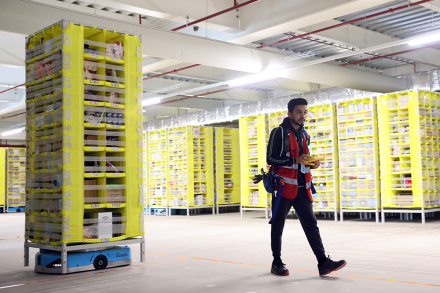
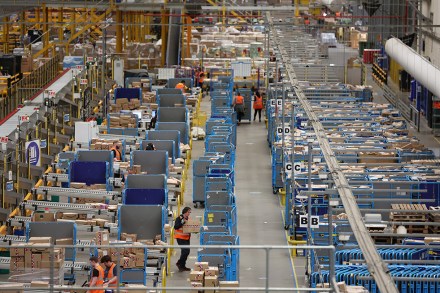
What will you do if it all goes wrong? I have a back-up plan. Working for Amazon. Its Luton warehouse offers tours to the public, and I went along to see what my future may hold. The vast hangar sits in a field of mega-sheds near the M25 where built-up London peters out into scrub and green farmland. I arrived at a bright-yellow security gate where I was greeted by Amin and Sophie who seemed thrilled to welcome our party. Six in all. Sophie asked us – or perhaps ordered us – to deposit our phones in a locker whose key she retained during our visit. Amin explained the rules. Follow me. Walk within the blue lines. Ascend staircases on the left. Use the handrail. Off we went.

Will robots simply bore us to extinction?

A few years ago, when ChatGPT and Claude were beginning to take off, some tech leaders seemed to develop a curious interest in oceanography. Consider, for instance, the Microsoft CEO Satya Nadella’s suggestion in 2023 that AI ought to be compared to a ‘tidal wave’; or Mustafa Suleyman’s book on AI, The Coming Wave (2024), in which the DeepMind co-founder talks urgently about an ‘impending deluge’ (while repeatedly warning us that the ‘wave is coming’, and, even more alarmingly, ‘the coming wave really is coming’). It didn’t take long for the analogy to spread. The IMF’s Kristalina Georgieva would liken the technology to a ‘tsunami hitting the labour market’.

How the 18th-century Panopticon inspired today’s giant distribution hubs

The future of work is increasingly on our minds. Now that AI is coming for our jobs, will we end up supervising or being supervised by it? One way of spending the time freed up by smart tech is to read Control Science, an economic history showing how work rules were established and have since come to dominate our lives. The book’s timeline covers the past 400 years, its settings ranging across the world from North America to Europe to Japan and back to the US. A historian of labour, Henry Snow dissects four entrenched ideas: that society is a mere collection of individuals; that they are solely driven by selfishness; that they are therefore incapable of self-administered planning; and that ‘everything is – and should be – a market’.

Why Venice deserves Jeff Bezos’s wedding

13 min listen

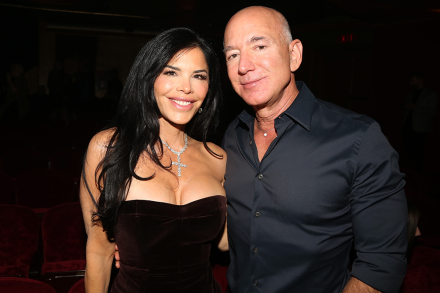
Jeff Bezos is getting married in Venice – but not everyone is celebrating. Venetians have staged small protests, accusing the billionaire of symbolising the city’s takeover by the ultra-rich. But is this anything new? Associate editor Owen Matthews joins Freddy Gray to discuss.

Letters: Leave our soldiers alone

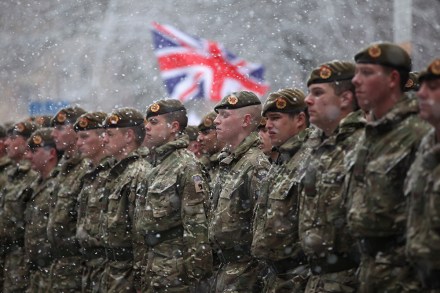
Military farce Sir: Your leading article (‘The age of realism’, 1 March) argues that the government must invest in the UK’s ‘thinned-out infantry ranks’. This is certainly true, but it does pass over, in my view, the more fundamental issue of the broken recruitment system. My own application to join the Royal Air Force was rejected on the basis that my mother is Polish. Given that Poland is an ally, this seems a curious justification for disqualification. I was born and educated in London, my mother having moved to the UK with my English father 30 years ago. Clearly I am not a security threat, but because ‘computer says no’, I will never be able to enlist. It is, then, with amusement and some frustration that I often read of the ‘recruitment crisis’.

Make Bond great again

One of the great recurring James Bond tropes is to make it look as though 007 has actually been killed before the film’s title credits. You Only Live Twice, From Russia with Love and Skyfall all begin with Bond in a position where his demise seems inevitable. Of course, he always turns up alive. (Quite what the rest of the film would consist of if he didn’t is anyone’s guess: perhaps Moneypenny dealing with probate or M arranging one of those ghastly direct cremations.) Now, however, we may have reached a danger from which even Bond cannot wriggle out. Amazon, the company responsible for one of the biggest flops in TV adaptation history, the Middle-earth prequel series The Rings of Power, has paid more than $1 billion to take ‘creative control’ of the Bond franchise.

Do you have a ‘story’?

As someone who worked full time in the office for 24 years and has now worked full time from home for nearly 21 – always, in both periods, on the staff – I can see both sides of the argument. But I do think the sequence matters. I would have had no idea how to work for my employers if I had begun at home. Indeed, the entire concept of a newspaper then – and even, to a large extent, now – depends on its collective capacity to find, write and edit news fast. Much of that stimulus comes from being in the same building. On Monday, Andy Jassy, the CEO of Amazon, wrote a longish letter to all employees about work methods. He praised his company’s ‘culture’, but asked whether it is best set up to ‘invent, collaborate, and be connected enough to each other’.

How did we ever come to accept the inhumane excesses of capitalism?

What was neoliberalism? In its most recent iteration, we think of the market seeping into every minute corner of human existence. We think of privatisation, off-shoring and the parcelling out of services to the highest bidder. Neoliberalism takes the proud liberal individual – in pursuit of his or her happiness, rather keen on freedom – and shreds them through a mean-spirited calculator to come up with some sort of shrunken market midget, an efficient risk-evaluating robot. Neoliberalism takes the proud individual and shreds him or her through a mean-spirited calculator Yet even though the market is supposed to be the arbiter of everything, repeated state intervention appears to be necessary to sustain this otherwise perfect economic vision.

Is Amazon wasting Phoebe Waller-Bridge’s talents?

The Tomb Raider franchise seems to have been a graveyard for oddly overqualified people. Angelina Jolie played the character of Lara Croft twice after winning an Oscar, and subsequently Alicia Vikander gave the English aristocrat-turned-global adventurer a go. Neither left much of a mark – which is why it is all the more surprising that Fleabag creator and star Phoebe Waller-Bridge is to write the scripts for a new Amazon series based on the video game. It has been wryly observed that, despite her heroics in the forthcoming Indiana Jones film, Waller-Bridge herself is not expected to play Lara Croft. That’s a disappointment for those of us who would enjoy a mixture of arch smirks to the camera and jokes about kinky sex from the globe-trotting, shorts-clad daredevil.

My childhood Cold War fears are back

On the day before my seventh birthday, which I spent at my grandma’s in Yorkshire, a young man named Raymond Jones walked into North End Music Stores in Liverpool and asked the guy behind the counter for a record on which an obscure local group called the Beatles provided the backing track for a song titled ‘My Bonnie’. The guy behind the counter was the shop’s manager and the son of its owner. His name was Brian Epstein, and as a restless budding entrepreneur he felt he should be alert to what was going on around him. Because of young Raymond’s evident enthusiasm, Brian made a note on a piece of paper saying: ‘The Beatles? Check on Monday.’ Which he did. Intrigued by what he saw, he wondered if he should become their manager.

Do we still need explorers today?

In November 2017 Benedict Allen found himself at the centre of a media frenzy. He’d been in Papua New Guinea (PNG) on a one-man expedition and hadn’t been heard of for weeks. Declaring him ‘lost’, several papers turned on him, accusing him of being overprivileged and imperialistic. One even suggested the whole thing was a stunt. It didn’t help that he was picked up by a helicopter, sent by the Daily Mail. This was a story the paper’s rivals wanted to spoil. Explorer is Allen’s account of that journey and how it all began. It’s no excuse or apology, but is written with anger and passion. The story begins in adolescence, with a boy who was idealistic, stubborn and determined to travel the world alone and in his own way.

The snobbery of Extinction Rebellion’s Amazon blockade

Every week brings fresh proof of what a bunch of bourgeois snobs Extinction Rebellion are. The latest exhibit is their blockading of Amazon’s main distribution centres. The eco-loons and their apologists are dressing this up as a principled stand against venal capitalism. Pull the other one. This is just a noisy middle-class moan about the greedy masses and all the ‘crap’ we’re planning to buy on Black Friday. Yes, not content with irritating deliverymen, builders and other productive members of the working classes by plonking themselves on the M25 and other major roads a few weeks ago, now XR is trying to stop us from getting the things we’ve ordered off Amazon.

Can Boris Johnson salvage COP26?

It’s day two of COP26 and so far the climate summit in Glasgow has made news for travel chaos, Greta Thunberg’s swearing and the Archbishop of Canterbury’s unfortunate ‘Nazi’ climate comparison. There was some disappointment among government officials on Monday when India only set a target of 2070 to reach net zero, but ministers are hopeful that today – which is the last full day many world leaders will spend at the two-week summit – will see better headlines. This is also the first agreement Boris Johnson can really shout about The first of which is an agreement between more than 100 world leaders to end and reverse deforestation by 2030.

Dave Eggers cancels Amazon

Selling books through Amazon is now part and parcel of a working author’s life. It would be a brave writer who decided to refuse to allow their work to be sold through earth’s biggest retailer. But that is exactly what Dave Eggers has done with his new book, The Every, which he has decreed can only be purchased from independent bookstores. Sorry, Jeff Bezos; this one’s not for you. It is hard to dismiss his decision to eschew Amazon as simply a quixotic act of rebellion by a washed-up has been Eggers has form in this regard.

Bitcoin’s whiplash volatility is still a problem

Crypto markets were in a tizzy over the past week following rumours – later quashed – that Amazon was planning to accept bitcoin for payments. Last Thursday, Amazon posted a job opening for a digital currency and blockchain lead, prompting a media frenzy that culminated with a report that the company would accept bitcoin payments by the end of the year. Bitcoin prices had been declining since April, but they surged by almost 15 per cent to hit £29,000, before moderating to around £27,000 yesterday after Amazon denied the report, saying the speculation around specific plans for cryptocurrencies was not true.

This film deserves all the awards and praise: Nomadland reviewed

Nomadland won multiple Oscars including Best Picture, Best Director and Best Actress, and if there’d been an award for Best Film In Which The Woman In Her Sixties Isn’t The Least Developed Character In The Screenplay, Hallelujah, About Time, it would have scooped that too. Not much competition, regrettably, but you have to admire the film just for that, plus there is much to admire generally. It is based on the non-fiction book Nomadland: Surviving America in the Twenty-First Century by the journalist Jessica Bruder, who spent months living with older Americans who, out of economic necessity, eke out a living while travelling from place to place for seasonal employment.

The BBC needs to face up to the truth about the licence fee’s future

It won’t come as much of a surprise to learn that the National Audit Office thinks the BBC faces 'significant' uncertainty over its financial future due to changes in viewing habits. The NAO’s findings are about as ground-breaking as your average anodyne Beeb drama, but they do tighten the cilice on a funding model that is impossibly outdated in the 21st century.  In the past decade alone, there has been a 30 per cent decline in BBC TV viewing; on average, the amount of time an adult spent watching broadcast BBC TV fell from 80 minutes per day in 2010 to 56 minutes in 2019. When it comes to younger viewers, the NAO’s findings are ever more troubling for the BBC: in the UK, 18-34 year olds now watch seven times as much Netflix and YouTube as BBC1 content.

Why charity begins in shops

When everything re-opened after the first lockdown, I didn’t immediately head to a restaurant, bar or hairdresser. I went to the Second Chance charity shop on Blackstock Road in north London. It wasn’t that I was feeling particularly charitable. If anything, my visit came from a place of selfishness. I wanted to rootle around, alone, and find something unexpected — and probably pointless — in the piles of bric-à-brac. Out I came with a milk jug (£2.50) and a book titled Cool Names for Babies (50p) written by two women called Pamela Redmond Satran and Linda Rosenkrantz. I instantly felt better, as though the past few months had been a bad dream. I can’t be the only person who has missed this sort of experience.

What to watch on Amazon Prime this Autumn

Whether you’re stuck at home in quarantine or just looking to spice up those weekday evenings, there’s plenty coming to Amazon Prime over the autumn. Here’s our round-up of the shows and films you don’t want to miss: The Boys (Season Two), 4 September https://www.youtube.com/watch?v=MN8fFM1ZdWo Set in a parallel universe in which superheroes are real – and form a crucial part of America’s police industrial complex – The Boys is a smart and timely satire that packs a serious punch. Don’t let the familiar capes and claws aesthetic fool you: this is no Marvel rip-off. For all their YouTube-friendly stunts, this is a series about how latex-clad ‘supes’ aren’t always as wonderful as they make out – a fact hidden by their shadowy corporate backers.

In defence of Amazon

We should take heart from BP’s £5.1 billion second-quarter loss, accompanied by a halving of its dividend. What’s good about that? Nothing — except that the loss reflects a write-down of the value of oil and gas assets that shifts the company to a more realistic footing for an extended period of low oil prices and reduced demand, indicating resilience rather than impending doom. In recent times, BP has lived through Deepwater Horizon, history’s most politicised oil-rig disaster, and extricated itself from TNK-BP, history’s nastiest Russian joint-venture. It operated when oil was below $20 a barrel in 2001 and when it hit $147 in 2008. It has plans to achieve net zero carbon by 2050.