Aldous huxley

Our brave new world

From our US edition

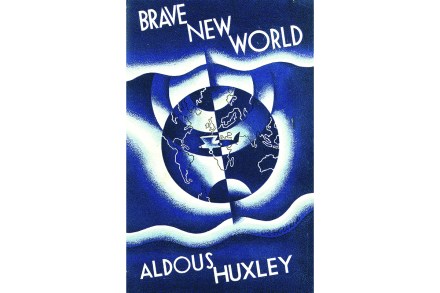
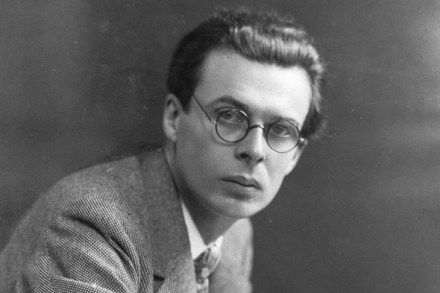
In 1961, just two years before he died in Los Angeles, the polymath, philosopher and novelist Aldous Huxley gave humanity a warning. Much of his prophecy about society in Brave New World had come to pass, he said, which made him even more certain that the standout problem of the future would be our inability to resist becoming enslaved to our own technology. Now, more than 60 years after his death – and with an entire generation of children frying their brains with smartphones and nobody able or willing to do anything to stop them – it is hard to deny that he was onto something. The man was destined to be a prophet for our gadget-addled age.
Technology

Culture clash: Sympathy Tower Tokyo, by Rie Qudan, reviewed

Language, it has been said, is the only true democracy – changed by the people that use it. But as with any democracy, there is plenty of disagreement about what alterations are either possible or permissible. Japanese uses three distinct writing systems – kanji, hiragana and katakana – and the relationship between two of them, kanji and katakana, is a key theme of last year’s prizewinning speculative fiction Sympathy Tower Tokyo by Rie Qudan – a lyrical, witty, satirical but meditative and meticulous text, now published in Jesse Kirkwood’s vibrant and faithful English translation. We are in the sprawling metropolis of Tokyo in the lightly altered mid-2020s.

‘Loved ones’ are everywhere at this time of year

‘My heart will melt in your mouth,’ said my husband gallantly, unwrapping some leeks from a copy of the Sun which bore this suggestion: ‘Create a special Valentine’s Day message for a loved one with this decorate-your-own gingerbread heart, £2, new in at Morrisons.’ Loved ones, even dogs and cats, are fair game for hearts at this time of year. The astrologer Russell Grant warns Pisces about ‘a loved one’s wellbeing weighing on your thoughts’. At other times, loved ones are dead, the phrase being used without irony in broadcast reports of air disasters, war and inheritance tax. It annoyingly presumes that all relations who die are loved. The Oxford English Dictionary finds examples of loved one from the 18th century onwards.

The 2024 regime referendum

From our US edition

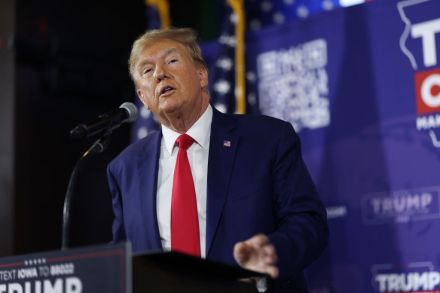
The 2024 election will be a referendum on Joe Biden, but it’s also a referendum on a regime. This is how both sides see it. Liberal democracy itself is at stake according to progressives. For Trump supporters, the question at issue is legitimacy of the Deep State. These are different names for the same thing: a leadership caste and its ideology of government. In practice, liberal democracy means a democracy in which liberals never lose power.

regime

Nymphomaniac, fearless campaigner, alcoholic – Nancy Cunard was all this and more

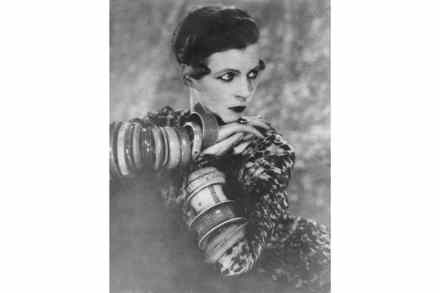
The title of Anne de Courcy’s riveting new book might give the impression that Nancy Cunard had no more than five lovers. In fact she had many, many more. Born in 1896, Nancy was the only child of fantastically ill-matched parents. Her mother, Maud – she later changed her name to Emerald – was an American heiress and socialite. Her father, Sir Bache Cunard, was a fox-hunting squire busily engaged in spending the fortune he inherited as the grandson of the founder of the shipping line. Maud neglected Nancy, leaving her in the charge of an odious governess. The only person who had any time for the lonely little girl was the writer George Moore, her mother’s lover. Some said he was Nancy’s father, but this seems unlikely.

How science fiction novels read the future

From our US edition

The pandemic is not quite over, but we are getting used to its inconveniences. What disaster will be next? An antibiotic-resistant strain of the bubonic plague? Climate collapse? Coronal mass ejection? Will the next catastrophe be natural — perhaps a massive volcanic eruption, the likes of which we have not seen for more than two centuries, since Tambora in 1815? Or will it be a manmade calamity — nuclear war or a cyberattack? And might we inadvertently descend into a new form of AI-enabled totalitarianism in our efforts to ward off such calamities? To all these potential disasters it is impossible to attach more than made-up probabilities. So what can we do about them? The best answer would be that we should strive to imagine them.

science fiction

The deep state is no conspiracy theory

From our US edition

In 1958, Aldous Huxley foresaw a congestion of power able to shape and defy popular will. “Under the relentless thrust of accelerating over-population and increasing over-organization, and by means of ever more effective methods of mind-manipulation, the democracies will change their nature,” he predicted. “The quaint old forms—elections, parliaments, Supreme Courts and all the rest—will remain. The underlying substance will be a new kind of non-violent totalitarianism.” The changes, according to the author of Brave New World, would be almost imperceptible. “All the traditional names, all the hallowed slogans will remain exactly what they were in the good old days. Democracy and freedom will be the theme of every broadcast and editorial,” he continued.

aldous huxley brave new world

Driven to distraction — the unhappy life of Vivien Eliot

Do you think your mother slept with T.S. Eliot? That was the question I needed to ask the 98-year-old in front of me. It wasn’t easy. I’d never met him before. After some preliminary chat, though, I realised this affable man knew exactly where our conversation was heading and had pondered the question a good deal himself. The barrister Jeremy Hutchinson — Baron Hutchinson of Lullington — was the son of Mary Hutchinson, Eliot’s close friend. Infatuated with the poet for a time, she had met ‘Tom’ and his wife Vivien before Vivien’s adultery with Bertrand Russell, and some years before the publication of The Waste Land in 1922.

Sybille Bedford — a gifted writer but a monstrous snob

Sybille Bedford died in 2006, just short of 95. She left four novels, a travel book, two volumes of legal process and a memoir. Selina Hastings has written a wonderful biography, with lashings of lesbian lovers, which provides a soundtrack to one version of the 20th century. Born German in 1911, Bedford grew up in a schloss in Baden’s Feldkirch, near the French border, her father a Bavarian Catholic baron and old soldier, her mother a beautiful and unstable bolter. ‘Her childhood,’ writes Hastings, whose previous books include lives of Nancy Mitford, Somerset Maugham and Evelyn Waugh, ‘was both intellectually inspirational and... emotionally deprived.’ Both parents were wealthy.

Dedicated to literature

From our US edition

The convention is that if you happen to meet authors and have just bought or acquired a book of theirs, you ask them to sign it. Particularly stuffy authors might refuse, but in most cases they feel flattered and duly inscribe your name and theirs on the title page or the flyleaf of the book in question. If the mood is right, they may add ‘with best wishes’ or something of the sort. At a superficial level, of course, such signatures are only the equivalent of an autograph album. There’s more to it than that, however. Added value perhaps, but association certainly. The human race lives by the stories we tell ourselves about our identity and our purposes, and that signature helps to make the author’s story part of the reader’s story.

signatures david pryce-jones

Brave New World Revisited, revisited

From our US edition

When the West’s Days of Reckoning came in 2016, we naturally turned to George Orwell, master of modern dystopia, to make sense of Trump, Brexit and the return of the far-right in Europe. We took to the streets — or rather Twitter — crying, ‘It’s just like 1984!’ Dystopia had made a comeback. We lapped up The Handmaid’s Tale, Black Mirror and Blade Runner 2049 with gleeful horror. Our concern shot Orwell’s novel to the top of Amazon’s chart. These are cautionary tales for dangerous times. Stories of science-fictional wastelands, malevolent totalitarian governments and vengeful AI that warn us of what we might become. Yet we often ignore Aldous Huxley’s Brave New World. This is curious.

aldous huxley brave new world