Africa

High life | 1 February 2018

Gstaad I caught a whiff of it as it rolled in from the east, the smell of hypocrisy being different from others that penetrate our olfactory nerves in everyday life. It was coming from Davos and it had a Graeco-Roman flavour to it. The prime ministers of those once upon a time great countries, Greece and Italy, asked for a Marshall Plan for Africa to solve the root cause of the migrant crisis that threatens the old continent’s existence. Just think of it, dear readers. Tsipras and Gentiloni, the former a liar, the latter unelected, both leading two basket-case countries, asking for a vast programme of wealth transfer so that Europe and the rest of the world can enjoy visits by African oligarchs, colonels, generals and their whores enjoying their new-found wealth.

Stop trying to make football perfect

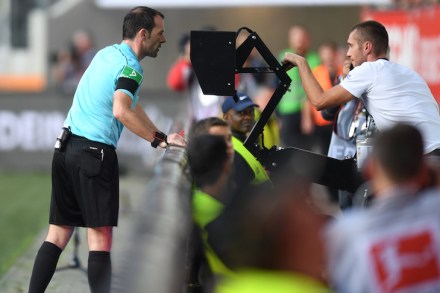
They’ve got this new thing in football. It’s called the Video Assistant Referee and it is designed to make the game, at the highest level, pristine and free from human error. This is, to my mind, a mistaken aspiration in a game that relies on human error for its excitement, especially when the England goalkeeper Joe Hart is playing. Anyway, what happens is this. When the referee isn’t sure about some crucial incident on the pitch, he summons another referee via a headset to help him. The other referee is many miles away, watching the match on the television. The ref stops the game and wanders over to have a look at a video screen by the side of the pitch.

The call of the wild | 4 January 2018

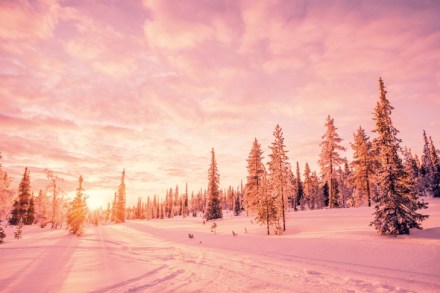
As Sini harnessed up the huskies they were all yelping with excitement, but once we set off and the forest closed in around us they fell silent. Now the only sound was the soft patter of their paws as they raced ahead, dragging our wooden sledge through the snow. It felt good to be back in Lapland, the last wilderness in Europe, where temperatures can drop to –40C, where the population density is barely one person per square kilometre and where the natural world still reigns supreme. I’d been to Lapland once before, husky sledging, but that was across the border in Sweden, 300 miles away.

Wild life | 13 December 2017

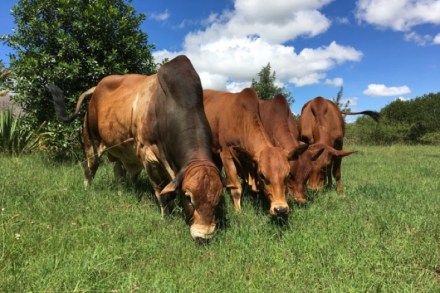
Laikipia, Kenya   The zebra lacks a rumen and eats at least twice as much as a cow. On our modest Kenyan ranch we run several hundred head of Boran cattle. In our arid conditions, this number is carefully calculated on a stocking rate of so many beasts to the acre. If you add hundreds of zebra to the pasture you swiftly finish your grass. During this year’s drought, and the chaos beyond our boundaries, wild animals were poached and they starved. Many arrived on the farm so desperate that they smashed through walls and fences to get in to where it was safe. I let them stay. The elephants came and went as they pleased, barging through any barrier.

The era when you could love a car is over

There are four of us in this relationship: my partner and I, his horse and my truck. His horse is 12, my truck 18. I’m jealous of his horse. He’s beastly about my truck. In our household Julian has only to say ‘nitrogen dioxide’ over dinner and my jaw tightens. ‘Particulants’ saps my appetite. ‘Scrappage scheme’ will drive me from the table. But, yes, I cannot dispute it: my beloved machine is a filthy polluter. The grey 1999 Vauxhall Brava five-seater ‘king-cab’ pickup illuminates every red light on the Guardian environmentalist George Monbiot’s dashboard. It’s noisy, smelly and smoky, and it’s older-generation diesel. But it’s my faithful friend and has barely done 100,000 miles.

Wild life | 5 October 2017

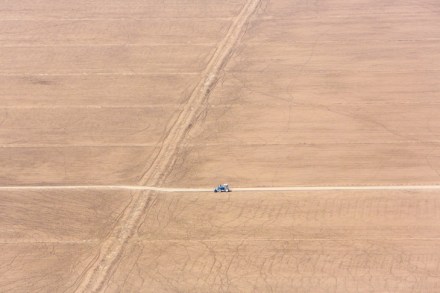
Laikipia Ripping up the black cotton soil on the farm’s high savannah I get a sense of what it must have been like to be a sodbuster on the Great Plains of America 150 years ago. Riding my big yellow tractor I find it thrilling to plunge through virgin land that has been innocent since time began, but it also makes me feel intensely sad that it had to come to this. Through the clouds of dust and diesel fumes I can see a giraffe pouting at me from above a stand of acacia trees that will soon be torn out. Herds of zebra, oryx and eland are retreating as the lines of freshly turned tilth advance across tawny grasslands stretching northwards all the way to Ethiopia. I am destroying wildness in order to survive. We never built a safari camp for tourists.

High life | 28 September 2017

I think this week marks my 40th anniversary as a Spectator columnist, but I’m not 100 per cent certain. All I know is that I was 39 or 40 years old when the column began, and that I’ve just had my 81st birthday. Keeping a record is not my strong point, and it’s also a double-edged sword. I once planned to publish my diary, but then I stopped keeping one. I’d found passages in it that were dishonest, written in the heat of the moment, most likely under the influence, and the result was a bum-clenching embarrassment. Now I don’t use any social media, certainly not Twitter, Facebook or Instagram, being a firm believer that Zuckerberg and Bezos should be locked up for life (Zuckerberg for not doing enough to tackle terrorist content).

Wild life | 29 June 2017

Laikipia, Kenya   During our evening walk on the farm, Claire kept looking around nervously instead of engaging in conversation. At one point the dogs ran ahead, probably thinking that they were after the scent of a rabbit. Seconds later, they tore back past us, leaving a trail of dust, and heading after them came a bull elephant moving at quite a pace, trunk up, ears flapping. Claire took off after the dogs and I followed, briskly but grumpily. I had been irritated by Claire’s anxiety in the bush, excited by the story of an incident that had happened a few days before, when an elephant had charged and completely flattened a man on the plains nearby. It was probably the same elephant and, I grudgingly had to admit, she was right.

Party piece

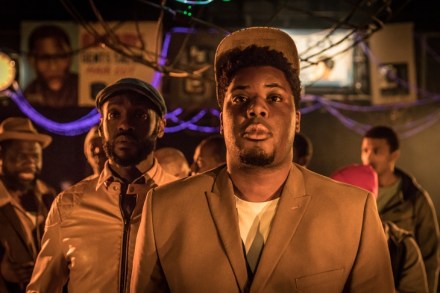
The National Theatre could hardly resist Barber Shop Chronicles. The play shines a light on a disregarded ethnic community, black urban males, who like to hang around in barber salons seeking friendship, laughs and tittle-tattle. Setting the play in a single venue would just be a sitcom, like Desmond’s, so the show establishes a series of shops stretching from London to the capitals of various sub-Saharan nations. This makes it a global epic. In theory, at least. In fact, it’s still a sitcom with some melodramatic bits on the end. The disjoined structure is tiresome at first as the action keeps legging it from Britain to Nigeria and Ghana and back again. Inevitably, the intellectual level is pretty undemanding, somewhere between music-hall and panto.

Libya’s best hope

We were in a detention centre for migrants in Tripoli and we came to a big locked door. It was impressively bolted and padlocked. Someone murmured that we didn’t have time to look inside. But I felt somehow obliged to do so. Outside in the sun I had already said hello to about 100 migrants — almost all of them from West Africa: Guinea-Conakry and Nigeria. They were sitting on the concrete in rows, their heads in their hands; the men in one group, and about half a dozen women a little way off. They had been here for months, in some cases, and they wanted to go home. Kwasi Kwarteng and Kim Sengupta consider the future of Libya: ‘J’ai faim,’ said one of the men. ‘C’est pas bon ici,’ said another.

The lords of poverty

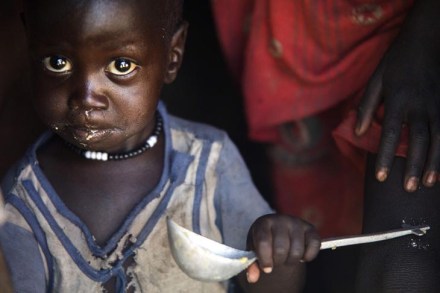
 Kenya I met Dr Tom Catena in Sudan’s Nuba Mountains — the site of an African war and famine few have even heard about — in a hospital overflowing with children. I saw bombs had ripped away their arms, flying shrapnel had taken out a baby’s eye, anti-personnel mines had shredded legs to jagged bone and ribbons of gangrenous flesh, infants suffering kwashiorkor and the other horrors of malnutrition. Inspired by St Francis of Assisi, ‘Doctor Tom’ has worked almost every day, all day, since he arrived as the only surgeon for the Catholic hospital in Nuba nine years ago. I asked him: ‘Why do you stay?’ He replied: ‘There’s no other option. You leave and abandon everyone here or you stay and keep going.

Remembering Tristan Voorspuy, who was recently killed in Kenya

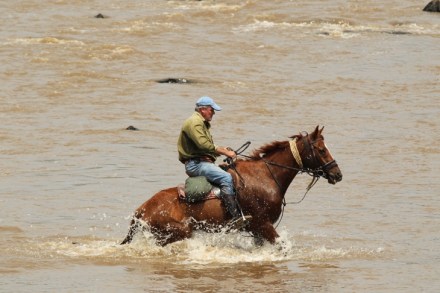
After he left the Blues and Royals in 1981, the young Tristan Voorspuy drove a motorbike from London to Cape Town. Thus began his love of Africa. He also learnt to fly, and arranged to travel alone to Kenya from England in a single-engine aeroplane, using only a schoolboy atlas. Luckily, his brother Morvern, a professional pilot, heard of this plan and prevented it. But Tristan reached Kenya by other means, and became a Kenyan citizen. For 30 years, he was a leading conservationist there and set up and ran the accurately named firm Offbeat Safaris, which allows guests to ride among the great beasts of Africa.

The Spectator’s Notes | 9 March 2017

After he left the Blues and Royals in 1981, the young Tristan Voorspuy drove a motorbike from London to Cape Town. Thus began his love of Africa. He also learnt to fly, and arranged to travel alone to Kenya from England in a single-engine aeroplane, using only a schoolboy atlas. Luckily, his brother Morvern, a professional pilot, heard of this plan and prevented it. But Tristan reached Kenya by other means, and became a Kenyan citizen. For 30 years, he was a leading conservationist there and set up and ran the accurately named firm Offbeat Safaris, which allows guests to ride among the great beasts of Africa.

Wild life | 9 March 2017

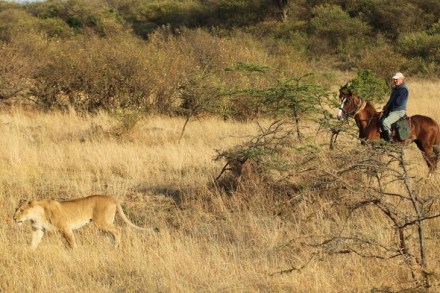
Laikipia On Tristan Voorspuy’s hell-for-leather riding safaris across Kenya’s savannah, he cracked a bullwhip at predators that tried to eat his guests. One time a lion chased American actress Glenn Close on her horse and Tristan said, ‘We nearly lost her.’ They all joked about it that night around the campfire. Tristan was among the last of the stylishly mad people in Kenya. He once rode his horse into the bar at the Muthaiga Club during a stag party. From the saddle, he toasted the groom, his steed defecated on the parquet and off he trotted between astonished drinkers into Africa’s night. Tristan was a gentleman and well read.

Wild life | 9 February 2017

 Laikipia plateau, Kenya My great-grandpa Ernest Wise was an engineer who sailed to South Africa towards the end of the 19th century to build Cecil Rhodes’s Cape-to-Cairo railway. Although that project never took off, he decided to stay on in the continent — and he prospered. A cousin recently sent us a photograph of Ernest and his six children, taken in the 1890s at his home in Pretoria. Ernest wears a humorous expression and he looks as if he is about to speak to me, still in Africa 130 years later. I imagine him saying, ‘What, my boy — still there?’ The Wise family image is among the photographs and paintings at home on the farm in Laikipia that we have started to move to safer ground elsewhere.

Low life | 26 January 2017

‘If life is a race, I feel that I’m not even at the starting line,’ I said to the doctor in French. (I’d composed, polished and rehearsed the sentence in the waiting room beforehand.) She was a sexy piece in her early fifties with a husky voice. She listened to my halting effort to describe my depression with a smile playing lightly over her scarlet lips as though I were relating an amusing anecdote with a witty punchline lurking just around the corner. I further explained in French that I had been properly but briefly depressed once before, about 15 years ago.

Wild life | 12 January 2017

We had my parents-in-law Gerry and Jean to stay with us on the farm over Christmas and being in a remote place in Africa, things often go wrong. A few days into the festivities the solar-powered electricity broke down and so did the solar water-heater. As we sat in darkness, after cold showers, Gerry said, ‘It reminds me of Ronnie and Doreen.’ In 1968, Gerry said, he was working for Kellogg’s, selling cornflakes all over the British Isles, Jean was raising two children and they lived in a semi in Billingshurst. Ronnie next door used to fiddle the electric meter. He offered, ‘Shall I do yours, Gerry?’ ‘No thank you, Ronnie,’ said Gerry, who has played a straight bat all his life.

Morocco: A match made in heaven

I’m sitting by the pool in a lush Moroccan garden playing chess with Nigel Short, and I feel like an amateur boxer who’s stepped into the ring with Mike Tyson. This is the man who took on World Chess Champion Gary Kasparov. He could destroy me in an instant. Actually, there’s no need. In a few moves I’ve destroyed myself. After this chess weekend at Ezzahra, a chic retreat in Marrakech, I’d hoped to show Britain’s greatest grandmaster how much I’ve learnt. Instead, I end up playing like a complete idiot. Thankfully Nigel is a perfect gent, accepting my abject resignation with good grace, and my humiliation is soon forgotten over a delicious dinner on the poolside terrace.

Exodus from Gambia

A ticket to paradise comes very cheap in Gambia — as long as you’re headed in the right direction. Thomas Cook charges just £230 for the six-hour flight from Gatwick to West Africa, and in the cheaper hotels along the cream-white palm beaches, a week’s stay costs even less. For the 100,000 Europeans who flock here each year — half of them Brits — it’s a much loved, if slightly tatty, African Benidorm, where donkeys can be found not in the souvenir shops but grazing rubbish on the streets outside. For the equally large numbers of Gambians seeking desperately to go the other way, however, the ticket is far pricier.

Wild life | 17 November 2016

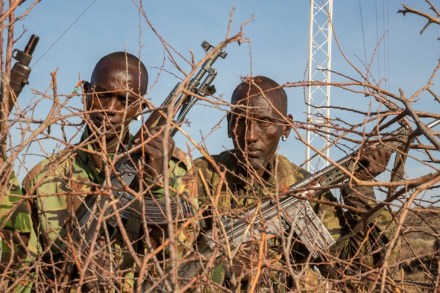
 Aero Club of East Africa   The world looked so clean and untroubled during the flight in Bob’s light aircraft to George’s memorial at the Aero Club of East Africa. It was a relief to get away from the farm for a few hours. On 27 October a mob of 300 Samburu warriors armed with spears and knives cut down our boundary fences and invaded with 10,000 cattle. Since then they’ve hurled javelins and rocks at us, flattened pastures to dust, destroyed 15 kilometres of fencing, smashed windows, demolished huts, robbed what they could, cut water pipes, broken machinery and threatened our staff with murder until half of them ran for their lives. For days before the invasion we received calls from friends saying that politicians were urging the mob to hit us.