Afghanistan

Can the Afghan police be trusted?

Lindsey Hilsum, Channel 4’s Helmand correspondent asked local Police Chief, Colonel Asadullah Shirzard, if the police were sufficiently free from corruption to manage the forthcoming election. The corpulent Colonel declaimed:  “We have eradicated corruption in our police force!” This is a seminal moment. Rudy Giuliani couldn’t do it, Sir Ian Blair failed, though that’s no surprise, and moving around Venezuela will confirm that even Hugo Chavez can’t stop his police taking a cut from the downtrodden population. But in war-torn Helmand, the perfect police force has been born.

Another example of why the US needs more troops in Afghanistan

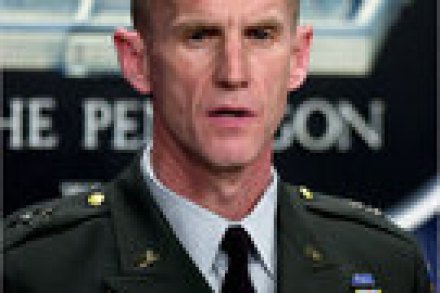
The Wall Street Journal’s write up of its interview with the new US commander in Afghanistan, General McChrystal, demonstrates why more troops are needed in Afghanistan. The Journal concentrates on the suspicion among some in military circles that the Taliban are using the American emphasis on Helmand to strengthen their grip on Kandahar, the capital of the South and the Taliban’s traditional stronghold. The paper reports that the Taliban are setting up shadow government and court system there. However, McChrystal can’t move troops there until the planned reinforcements arrive as those deployed in Helmand ‘have already set up forward operating bases and recruited help from local tribal leaders, who have been promised American backing.

Splits emerging in Pakistani Taliban

Splits appear to be emerging in the Pakistani Taliban after a US drone-strike reportedly killed its leader. The New York Times says that a ‘Pakistani government official and an intelligence official said Hakimullah Mehsud, a young and aggressive aide to the former Taliban leader, had been shot dead in a fight with Waliur Rehman, another commander who was seeking to become the leader.’ As a US official tells the paper, splits within the group can be exploited by the US and the Pakistanis. Also anything that limits the Pakistani Taliban’s effectiveness is to be welcomed—the Pakistani state fully collapsing under jihadi pressure is the nightmare scenario. However, a split within the movement could give more power and influence to al Qaeda.

Preparing for a lengthy presence in Afghanistan

So what do we learn from the Times's interview with David Richards, the man who is set to replace Richard Dannatt as the head of the British Army?  Both a little and a lot.  Most of the piece is made up of nice anecdotes and flatering quotes about the general, and he deflects a lot of the weightier questions with utterly uncontroversial answers - i.e. declining to say whether the army is properly resourced, and adding that "our own tactics must reflect the equipment and troop numbers we have."   But some of his responses are much more eyecatching; as when he claims the "whole process [in Afghanistan] might take as long as 30 to 40 years."  Sure, that's hardly a new contention; but it's important - encouraging, even - that the incoming head of the army is making it.

How Cameron should structure his national security team

Reports that the Tories are thinking about appointing a Minister for Afghanistan raise the broader question of how they should structure their national security team. Though the Tories bang on about their idea of setting up a National Security Council, there has been precious little detail given  of how it would work, how it would be different than the Foreign and Defence Policy Secretariat in the Cabinet Office and who would staff it. The National Security Council should be led by a minister, sitting in either the Commons or the Lords, who would also act as the National Security Adviser to the Prime Minister, supported by a National Security Director, from the ranks of the Civil Service.

Will the Obama administration deny requests for more troops in Afghanistan?

Frederick and Kimberly Kagan, two of the people involved in devising the surge strategy in Iraq which so transformed the security situation there, have a strong piece in the Weekly Standard arguing that the Obama administration is in danger of repeating in Afghanistan the mistakes the Bush one made in Iraq: not giving the commander on the grounds the tools they need to do the job. The Kagans’ concern has been caused by strong hints from the Obama administration that it is not minded to send any more troops to Afghanistan whatever the review initiated by the new US commander there, General McChrystal, says. (The deadline for McChrystal to make his requests has been pushed back until September). If McChrystal thinks he needs more troops, he should not be denied them.

Mehsud’s death is a massive blow to the Taliban 

If Baitullah Mehsud, the leader of the Pakistani Taliban, has been killed that is a major success which should help both in the fight against the Taliban in Pakistan and Afghanistan; Mehsud had up to 20,000 fighters under his command. It appears that a drone hit his father in law’s house while he was there receiving medical treatment. One of his wives is reported to have also been killed in the strike. Drones are a controversial part of the US arsenal, some argue that the collateral damage they inflict turns the population against the coalition and so make them not worth using. But for this kind of operation they are invaluable.

Richard Dannatt is “playing politics” too

General Richard Dannatt may well be correct to demand additional men and equipment for the Afghan campaign and the military has certainly been ill-served by this government (though not only by this most recent ministry). But when the accusation of "playing politics" is thrown around let's not forget that the good General is perfectly adept at playing that game himself. Perhaps it really is the case that he can only tour Afghanistan in an American helicopter. Perhaps it is even "self-evidently" the case that he's only using a US chopper because there aren't any British ones. As I say, this could all be true but it is also most convenient for General Dannatt that it be seen to be true. In other words, he's "playing politics" too and trying to increase pressure on the government.

Helicopters hover over PMQs<br />

One of the strangest and most dramatic parliamentary terms ended today in bizarre fashion. The fiasco over fiddled expenses has preoccupied Westminster for months but it was helicopters in Afghanistan that dominated PMQs. From whoppers to choppers. The Speaker seems to have ruled against public lamentations over battlefield casualties and, without these solemnities, our MPs had more time to ask questions and the PM had more time to avoid answering them. David Cameron said the Afghan mission needed, ‘a tighter definition, greater urgency and more visible progress,’ in order to maintain public support. Brown’s definition was looser rather than tighter.

PMQs live blog | 15 July 2009

Stay tuned for live coverage of PMQs from 1200. 1202: And we're off.  John Maples asks Brown to clarify our objectives in Afghanistan.  Brown says that "since 2001, our main objective has been to stop terrorism". 1204: In response to a question from Anne Begg, Brown says he is "committed to increasing the diversity of Pariament". 1205: Cameron now.  He asks whether to maintain support for the Afghanistan mission, we've got to "make more visible progress".  Brown repeats his point about "tackling terrorism," and that the mission also aims to bring "social and economic development" in the country.  He adds that the Government will review "equipment and resources" after the Afghan elections.

Time for a British Manley Commission?

If the government wants to stem the haemorrhaging of elite support for NATO’s Afghan mission, there is one major thing it can do at this stage: establish a British version of the Manley Commission. In Canada, ex-Deputy Prime Minister John Manley was asked by the Harper government to take a hard look at Canada’s role is Afghansistan, and lay out a clear plan. Its work effectively rebuilt Canadian support for the war effort. The Brown Government is simply not trusted to give an honest assessment of what is happening on the ground or give the military what it needs. The Defence Secretary is an unknown entity outside of Westminster (and even inside), and can hardly be expected to succesfully champion something as contentious as the war.

The UK “surge” debate

The support for Britain's involvement in Afghanistan is, for the first time, showing major signs of fraying. Nick Clegg broke ranks with the other party leaders last week, and this weekend the total number of British deaths went beyond the number of soldiers killed in Iraq. Understandably, the Sunday papers are filled with stories about the lack of troops and kit. The Observer reports that an emergency review is taking place in the MoD to see if more soldiers need to be sent out. So what to make of it all? First of all, it is clear that there were too few troops and civilians deployed to start off. I have given my take on what went wrong initially in Helmand to the Foreign Affairs Committee, as have some of the protagonists like Ed Butler.

So who’s really “playing politics” over troop numbers?

Just when you thought Brown's government couldn't sink any lower, you go and read the Sunday Times's lead story today and the comments it contains from "senior Labour figures", including a minister.  Here are the first few paragraphs: "Senior Labour figures accused the head of the army last night of playing politics as he said that there were too few troops and helicopters in the Afghan war zone. One minister expressed fury that General Sir Richard Dannatt, the chief of the general staff, had attended a private dinner with Tory MPs and suggested an extra 2,000 troops were needed in Helmand province. The general’s remarks put him at odds with the official government line, that the 9,000 British troops already in Afghanistan are sufficient to cope with the offensive.

National security priorities: your say

Watch out: it's security review season. The Brown government is about to issue a second version of its National Security Strategy. You can expect Pauline Neville-Jones to put out a revised version of the paper she did for the Tories a while ago. The Obama administration is set to launch a new "Quadrennial Diplomacy and Development Review," to be headed up by Deputy Secretary of State Jacob "Jack" Lew and Policy Planning chief Anne-Marie Slaughter. While NATO has just begun work on its Strategic Concept, and Russia recently updated its National Security Strategy. Oh, and the EU disseminated a new Security Strategy under the French EU Presidency, which also saw the French government issue its Livre Blanc, a national security-type document.

The Lib Dems threaten to go AWOL 

Though Nick Clegg has greater pre-existing international experience than either David Cameron or Gordon Brown (having worked in Brussels), he cannot help but see international affairs through a narrow political lens. Last year it was Israel's targetting of Hamas, now it is Nato's Afghan mission. Clegg wants the British troop contribution to ISAF either massively expanded or for the boys to come home. Simple enough. But it is also a sign that the Lib Dems, despite having such foreign policy luminaries like Ming Campbell on their benches, lack depth. It would be great for the number of British troop in Helmand to be expanded. But with almost 9000 troops already deployed, any uplift is likely to be limited.

The Hattie show

I’d be tempted to call it listless. But everyone was reading from lists. At today’s rather sleepy PMQs I counted six MPs who recorded their sympathy for those affected by the recent tragedies in Afghanistan and Camberwell. The Speaker needs to act or these sessions will turn into Prime Minister’s Condolences. Gordon Brown’s in Italy, saving the world, so Harriet Harman took his place and gave her much-loved impersonation of a rather tetchy duchess supervising the kitchen while Cook recovers from hives. William Hague, unsurprisingly, took her to task on the government’s investment plans and invited her to ‘translate into plain English’ the Prime Minister’s claim that spending in 2013 would rise by ‘zero percent’.

Defence review: your say

So, a Defence Review has been set in motion even though the Government has for a long time said they would hold off from ordering such a study. But with the operational pressure growing, the financial situation dire, and clamour from the likes of George Robertson and Paddy Ashdown for a security rethink, the Government has been left with little choice. Kick-starting the review process also has the advantage of robbing Liam Fox, should he become Defence Secretary, of a "Bank of England moment" - i.e. a quick, early governmental decision that delivers some new momentum for Team Cameron. And Defence Secretary Bob Ainsworth needed to do something to stem the growing scepticism with which his appointment has been met.

NATO navel-gazing

Right now I'm sitting at an event in Brussels to launch NATO's new Strategic Concept, featuring ex-US Secretary of State Madeleine Allbright, the current and future NATO Secretaries-General, the senior NATO military commander, Admiral Stavridis, and 400 of NATO's Best Friends Forever. The Strategic Concept, what is that? It is the alliance's main strategic document, meant to update NATO's view on threats and challenges. The last one was agreed more than a decade ago. But implementing out the new strategy isn't going to be easy. The alliance is divided into at least three. Those who fret about Russia's agressive behaviour. Those who think expeditionary operations are key. And, finally, those who belong in neither group. Members of the last contingent want to do as little as possible.

When Bad History Meets Warmongering

I should probably be inured to articles arguing that even though europe endured "two twentieth-century apocalypses that left it depopulated and permanently traumatized" it is wrong for europeans to have drawn any conclusions, or learnt any lessons, from the First and Second World Wars. And yet, I'm afraid, I continue to be irritated by such pieces, not least because they invariably demand that europeans prove their moral seriousness by going to war more frequently, regardless of the cost or even the cause involved. Equally, it's startling quite how many people never met a war they couldn't embrace and champion. Michael Oren, historian and prospective Israeli ambassador to Washington, seems to be one such chap.

Tory Cuts and British Defence Policy

More riffing on Nelson! Fraser, that is. His Telegraph article and subsequent Coffee House post on future spending cuts argue that the Tories are, defensively, planning to leave the NHS budget untouched (and international development!) and that doing so will require 10% cuts across every other department. Including defence. Since most people would, I think, accept that the armed forces are under-funded and over-stretched as it is, imposing further cuts surely and necessarily demands a reappraisal of current commitments and future capabilities. But do we hear anything of that from the Tories? I'm not sure we do.