Afghanistan

The Biden admin was prepared to leave our Afghan allies behind

The administration’s utter failure to plan for the inevitable Afghanistan evacuation meant that it had barely enough resources to focus on getting (some) US citizens out of the country. If the government was the only actor calling the shots — normally standard procedure in war zones, to say the least — then the tens of thousands of Afghan allies who had risked their lives based on years-long US promises of loyalty would be on their own.  Colonel Seth Krummrich, a twenty-two-year Green Beret who served as the chief of staff for Special Operations Command Central (SOCCENT) during the withdrawal, told us that US special forces had had just enough capacity to rescue Americans stranded across the country, but evacuating SIV applicants was simply beyond their bandwidth.

afghan allies biden

Exclusive: How Covid protocol disrupted the Afghanistan withdrawal

The Biden administration’s Covid obsession interfered with the execution of the Afghanistan evacuation, just as it had with Special Immigrant Visa applicants’ evacuation planning. The administration’s Covid vaccination requirements deprived critical units of key personnel. The problem was especially acute for the Marines in 2/1. From April to October 2021, the battalion rotated in as the combat arms unit of the Special Purpose Marine Air-Ground Task Force — Crisis Response — Central Command (SPMAGTF-CR-CC). In classic military fashion, the task force has an eleven-word name but a straightforward mission: part of the battalion safeguards embassies in the region, and the other part serves as the region-wide “Oh, shit!” response team.

U.S. Army soldiers are briefed on COVID-19 quarantine procedures after returning home from a 9-month deployment to Afghanistan on December 10, 2020 (Photo by John Moore/Getty Images)

Seeking accountability for Afghanistan with the Gold Star families

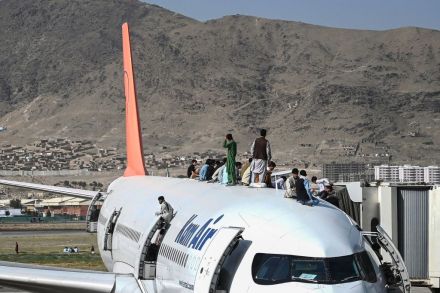
Escondido, California “I will fight till my last breath to get the truth,” said Coral Briseño, the mother of Humberto Sanchez, who was killed in Afghanistan during the Biden administration’s chaotic withdrawal. Her son told her that if he didn’t come back, he wanted her to tell his story.  Briseño and her fellow Gold Star family members had their first opportunity to address the nation in a hearing that was aired live on Fox News — but completely absent from CNN, ABC, NBC and CBS.  The field hearing marked the first time the group of parents addressed the public as one. The chaotic exit from Kabul, marred by suicide bombings and people falling off of planes, was praised by everyone from the president to his top military brass as historically successful.

gold star afghanistan

Afghan leaders say country is a terror haven

The Biden administration is using every tool at its disposal to paint a rosy picture of Afghanistan as a terrorist-free state as the two-year anniversary of its disastrous withdrawal approaches. But a coalition of Afghan generals, diplomats and civil servants is writing to Congress to explain that in reality, “today’s Afghanistan under the Taliban and their al-Qaeda allies, is again the greatest terrorist safe haven in the world.

afghan taliban

The military recruitment drought is a national security crisis

“Leave no one behind” has been the American warrior’s ethos for decades. It is ingrained in the Army Ranger’s Creed: “Leave no fallen comrade behind.” It is the reason they searched so desperately for Navy Seal Marcus Luttrell, the Lone Survivor, and so many others throughout our country’s history who have been separated from the team in the heat of battle. As a midshipman at the United States Naval Academy, the Marines who trained us beat accountability into us to ensure we take care of our own — always.  These are the core values service members carry with them, and these are the values that attract young Americans to join the armed forces. That is, until Joe Biden became commander-in-chief.

military recruitment drought

John Kirby’s Clean-Up on Aisle Kabul

I almost feel sorry for John Kirby, the National Security Council spokesman tasked with tidying up after the icky messes deposited about the landscape by Joe Biden.  Let me emphasize the adverb “almost.” Kirby’s job is unenviable. Basically he has to lie and pretend that his boss and that excruciating, illiterate muppet of a press secretary, Karine Jean-Pierre, make sense. It’s always a horrible goulash that Kirby has to contend with. He has my sympathy for that.  But yesterday, when Kirby stood before the press to answer questions about the administration’s report on Ameirca’s humiliating flight from Afghanistan in August 2021, his performance was not just cringe-making. It was infuriating.

john kirby afghanistan

The UN’s constant famine crisis problem

David Beasely, head of the UN’s World Food Program, has said that 350 million people are at risk of hunger and 50 million are “knocking at famine’s door.” Cockburn sees this as a serious humanitarian issue, which is why he is also concerned about the UN’s growing messaging problem. For years, the UN has raised the alarm about impending famines, but in most cases — either because of its efforts or other factors — such catastrophes have not yet come to pass. This is excellent news, and speaks to the skill and dedication of aid workers both in the UN and beyond — but it also risks creating the false impression of crying wolf. Since the US withdrew in 2021, Afghanistan has been in a dire state.

un world food famine crisis

A history lesson for Joe Biden

Some moderately clever people, reflecting on the confusing morass of current events, knowingly quote George Santayana’s most famous observation: that those who cannot remember the past are condemned to repeat it. Since the past is largely an almanac of unfortunate (not to say horrific) events, the idea that we are “condemned to repeat it” concentrates the mind in approximately the way Dr. Johnson said the prospect of hanging in a fortnight tends to do. But of course the past never really repeats itself. When it comes to history, Heraclitus rules: you cannot step into the same river twice, mon brave. Moreover, as that sage of Ionia said, “the true nature of things loves to conceal itself.

Vladimir Putin

It’s time for Congress to take back its war powers

On March 29, more than twenty years after the United States commenced Operation Shock and Awe in Baghdad, the Senate made history by repealing the military force authorization that green-lit the operation. The bill, which also aims to kill a previous 1991 authorization for the use of military force, or AUMF, against Iraq during the Gulf War, now heads to the House of Representatives where it faces an uncertain future.  On the face of it, repealing both measures would seem like an ordinary event. Saddam Hussein, after all, has been dead for over sixteen years, hanged by an Iraqi court for a litany of crimes against his own people. His regime dissolved within three weeks of the 2003 invasion.

state of the union

How to win the war that everyone is losing

Russia is losing the war in Ukraine. So is Ukraine. And so are we. Imagine the good guys win tomorrow. What exactly will we have won? Ukraine was the poorest country in Europe even before the war. Afterward it will remain as dependent on American dollars as it is now — and on American arms. Russia will not have disappeared, after all. The last war-torn and impoverished country that required open-ended American support was Afghanistan. Yet all the weapons and funds we lavished on Hamid Karzai and Ashraf Ghani failed to keep the Taliban at bay after we left. The money also didn’t help with Afghanistan’s corruption problem. Will it help with Ukraine’s? In 2021, Transparency International ranked Ukraine second only to Russia as the most corrupt country in Europe.

war

How Afghanistan erred by thinking Biden would never leave

By now, the American troop withdrawal from Afghanistan is etched into history as a failure — one that punctured the Biden administration’s self-professed persona as a collective of calm and cool national security veterans. The Taliban’s rapid capture of the entire country, coinciding with the meltdown of the US-funded Afghan security forces and the awful optics of desperate Afghans trying to get on a flight out of Kabul, will be examined by historians for decades. The history-writing is already well underway. On February 17, the GOP-held House of Representatives sent letters to several government departments demanding any and all records related to the withdrawal.

Will Biden’s Ukraine visit matter?

Kharkiv, Ukraine President Joe Biden on Monday showed the world that, as Volodymyr Zelensky said in his London speech two weeks ago, we do not need to be afraid of Moscow. Or maybe we don't need to be afraid so long as Biden is on Ukrainian soil. As I write this, Biden's train has likely crossed into Polish territory, and, on cue, the air-raid alarms are wailing across all of eastern Ukraine. No one I know in Ukraine, where I’ve been since the pandemic and throughout every minute of this war, thinks that Biden's visit accomplished something magical. But it did serve a crucial purpose: boosting the spirits here, amid a week full of warnings that Moscow will do something awful.

The virtues of American ‘nation-building’

Newly minted senator JD Vance of Ohio has wasted no time in extolling the virtues of a soft isolationist foreign policy. In a January 31 op-ed for the Wall Street Journal, Vance endorsed Donald Trump for president largely because Trump isn't a hawk. A prominent member of the GOP's national conservative wing, Vance has made skepticism of American leadership abroad a centerpiece of his political identity. The senator attacks the “bipartisan foreign policy consensus that has led the country astray many times.” Never mind that the so-called "consensus" only really exists under extreme circumstances, such as after the 9/11 terror attacks. Think of the deep divide between right and left over how to deal with Cuba and Saudi Arabia, for example.

Trump is wrong that the US should negotiate peace in Ukraine

The GOP’s foreign policy doves and soft isolationists have grown stronger, with 40 percent of “Republican and Republican-leaning independents” saying the US is giving too much aid to Ukraine. Former president Donald Trump has now taken up the mantle of this movement, firmly anchoring himself to the anti-Ukraine aid faction of the party. Trump recently gave an interview to radio host Hugh Hewitt in which he made one thing clear: he’s no fan of aiding Ukraine. Asked about sending F-16s, Trump said, “I think the United States should negotiate peace between these two countries, and I don’t think they should be sending very much.” When Hewitt asked if the former president would cut aid to Kyiv, Trump responded, “we’ve got to make peace.

Could Joe Biden’s Ukraine support define his presidency?

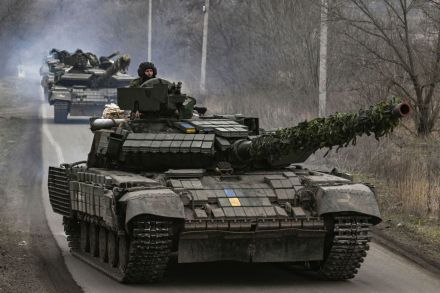
With his whirlwind visit to Washington, Volodymyr Zelensky cemented his bromance with Joe Biden. Even as MAGA Republicans have been sniping at Ukraine — Donald Trump, Jr. derided Zelensky on Wednesday as an “ungrateful welfare queen” — Biden declared that he will support Ukraine “as long as it takes.” Welcoming his Ukrainian counterpart to the White House, he went out of his way to depict support for Ukraine as bipartisan and unflinching. Like Herman Melville in his novel White-Jacket, Biden believes that “we bear the ark of the liberties of the world.” The Russian invasion and Ukrainian defiance are the making of Joe Biden’s presidency. Biden may well go down in history as the man who finally drove the stake through the heart of the Russian empire.

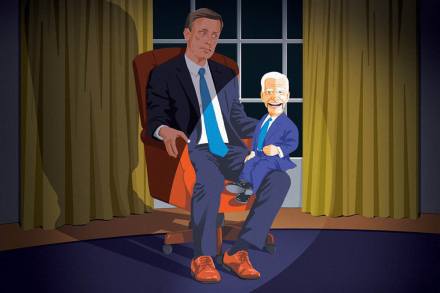
Biden and Zelensky

How the US failed to stop OPEC from cutting oil production

Near the top of President Biden’s to-do list for the past few months has been to keep gas prices down. On Wednesday, this was dealt a likely fatal blow by the Organization of Petroleum Exporting Countries, or OPEC, which, led by Saudi Arabia, agreed to cut its overall production by two million barrels per day. In actuality, the cut will mean a reduction of more like one million barrels per day if it's taken into account that OPEC has been underproducing compared to its previously stated production goals. Still, this is a significant cut, and the effects on oil markets are already being felt.

The fight for the burn pits veterans isn’t over yet

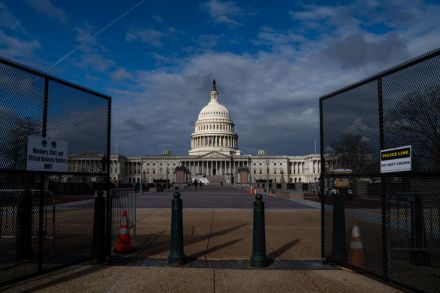
On July 28, 1932, the United States military attacked its own veterans. The desperate former soldiers, who had survived the horrors of World War One, had dug in for months in Washington, DC to get the bonuses that had been promised to them by Uncle Sam. Yet instead of paying the money they were entitled to, the Hoover administration dispatched General Douglas McArthur, who led against them four troops of cavalry, four companies of infantry, a machine gun squadron, and six tanks. Ninety years after the infamous attack on the Bonus Marchers, dozens of veterans camped out on the steps of the Capitol building for several days. These veterans were not routed, thankfully.

The missing Biden foreign policy

What is Joe Biden's foreign policy? It's a trick question, because he has no actual policy, no plan, no careful set of chess moves a step ahead of his adversary. America suffers for it. Biden's foreign policy initially began and ended in Afghanistan with the disastrous withdrawal that left refugees strewn across the globe. There were years, then months, then weeks, then days to plan the NEO — the noncombatant evacuation order — and plenty of planning books for one sitting on desks in places like Seoul.

One year later, Biden is right to have left Afghanistan

A year ago today, the Taliban captured the northern Afghan city of Kunduz, dealing the US-supported Afghan government an embarrassing blow and setting in motion a blitz across the country that would eventually send Afghan President Ashraf Ghani and his closest aides into exile. A week later, Taliban fighters entered Kabul virtually unopposed. American forces would leave the country two weeks later, cutting the cord on a two-decade war that cost the US over $2 trillion and tens of thousands of casualties. "We succeeded in what we set out to do in Afghanistan over a decade ago,” President Biden said from the White House last August 31. "Then we stayed for another decade. It was time to end this war.” Much has changed since the troops left.

No one wants to join the military anymore

Last week marked the 246th birthday of the United States. This year also marks, according to Lieutenant General Thomas Spoehr of the Heritage Foundation, when we “question the sustainability of the all-volunteer force.” As reported in late June by NBC, all branches of the military are falling short of their 2022 recruiting goals. The Army, for instance, has met only 40 percent of its enlisted recruitment target for the fiscal year, which for the military services ends on September 30. Those in the Pentagon tasked with attracting candidates have listed reasons they are struggling to meet their mission: lack of eligibility, Covid restrictions putting a damper on outreach, competition from a robust civilian employment market, and a lack of a desire to serve.

military