Afghanistan

Afghanistan, one year on

From our UK edition

Afghan women’s meetings on Zoom with their supporters outside the country often now end in tears as the stories of Taliban rule are too hard to bear. One prominent regional woman’s leader was beaten by her own younger brother. He said she could not go out on her own without a male relative and needed to cover more of her face and head. ‘I brought him up as if I was his mother,’ she said in shock and humiliation. This is self-policing of a society in fear. It is a year since President Ashraf Ghani fled the country, telling no one and precipitating the swift collapse of his government.

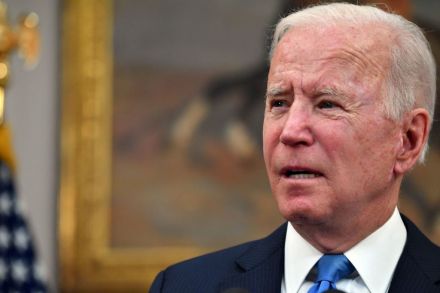
One year later, Biden is right to have left Afghanistan

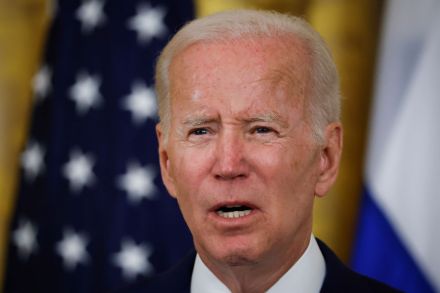
A year ago today, the Taliban captured the northern Afghan city of Kunduz, dealing the US-supported Afghan government an embarrassing blow and setting in motion a blitz across the country that would eventually send Afghan President Ashraf Ghani and his closest aides into exile. A week later, Taliban fighters entered Kabul virtually unopposed. American forces would leave the country two weeks later, cutting the cord on a two-decade war that cost the US over $2 trillion and tens of thousands of casualties. "We succeeded in what we set out to do in Afghanistan over a decade ago,” President Biden said from the White House last August 31. "Then we stayed for another decade. It was time to end this war.” Much has changed since the troops left.

No one wants to join the military anymore

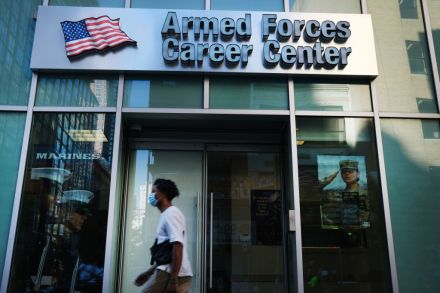
Last week marked the 246th birthday of the United States. This year also marks, according to Lieutenant General Thomas Spoehr of the Heritage Foundation, when we “question the sustainability of the all-volunteer force.” As reported in late June by NBC, all branches of the military are falling short of their 2022 recruiting goals. The Army, for instance, has met only 40 percent of its enlisted recruitment target for the fiscal year, which for the military services ends on September 30. Those in the Pentagon tasked with attracting candidates have listed reasons they are struggling to meet their mission: lack of eligibility, Covid restrictions putting a damper on outreach, competition from a robust civilian employment market, and a lack of a desire to serve.

military

Don’t expect much from Biden’s Middle East trip

It took Barack Obama less than three months to fly to the Middle East for a visit, landing in Iraq to visit the tens of thousands of US troops stationed there at the time. Donald Trump’s first overseas trip as president was to the Kingdom of Saudi Arabia (also three months into his tenure), where he basked in the limelight, watched in awe as his face was plastered on buildings in Riyadh, and hovered over a glowing orb with King Salman. Now, eighteen months into his presidency, Joe Biden will be spending a few days this week in the region, making stops in Israel, the West Bank, and Jeddah, Saudi Arabia, for a summit of the Gulf Cooperation Council.

The Taliban’s rough year in power

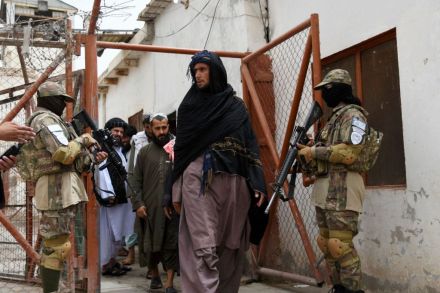
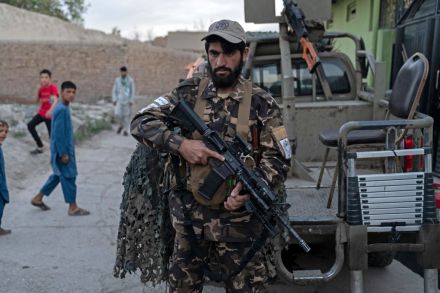
Next month will mark the first anniversary of the Taliban’s second stint in power in Afghanistan after a twenty-year insurgency against the US-backed government. In August 2021, Taliban fighters, flush with captured American military equipment and the jubilation of victory, were openly walking the streets of Kabul. While the disgraced Afghan president, Ashraf Ghani, was preparing for a life of exile in the United Arab Emirates, Taliban officials were converting his offices into their headquarters. The Taliban’s first year in power, however, hasn’t been pretty. The group has quickly come to understand that administering a poor and faction-prone country is a lot more difficult than taking up arms against a deeply unpopular, corrupt, foreign-dependent government.

What happens to US fighters captured in Ukraine?

Alex Drueke and Andy Huynh are two former American military members now in Russian custody, captured by the Russians in Ukraine, where they were fighting for the Ukrainian government. What is going to happen to them? The most likely thing is that both men will eventually be traded to the US in return for captured Russians. Prisoners are very valuable and rarely wasted in executions unless those carry much more value than the prisoners held by the other side. The deal may be public or secret, and the US can expect to pay a premium. Israel usually releases ten or more Palestinian prisoners in exchange for one of its captured troops.

Russia is sidestepping American oil sanctions

When the European Union finally made the decision to ban 90 percent of Russia’s crude oil imports by the end of the year, the bureaucrats in Brussels were jubilant. The EU’s adoption of oil sanctions was thought be a big blow to Russian President Vladimir Putin, who depends on the revenue generated by his country's oil exports to fund his war in Ukraine. It doesn’t take a genius to figure out why European officials were so thrilled. The EU imported 2.2 million barrels per day of Russian crude last year, amounting to tens of billions of dollars in profits for the Kremlin every month.

America the busybody neighbor

Imagine a neighbor who is constantly in everyone’s business. Perhaps you have such a person, or persons, in your own community. The neighbor complains about the paint colors of shutters, the height of lawn grass, and the number of cars parked on the street. You better hope he doesn’t find out about your backyard chicken coop if it's prohibited in your county. It’s bad enough to have neighbors like this, constantly on the alert, monitoring everyone’s behavior, and complaining to everyone in earshot. But imagine if an entire country was like this. Actually, you don’t have to imagine. For that is America — at least the foreign policy establishment and the powerful elite institutions like corporate media and the academy that influence it.

neighbor

The Taliban’s Afghanistan quagmire

Hibatullah Akhundzada is a secretive man who is only occasionally heard and seldom seen. But on May 1, the Taliban’s supreme leader was delivering a sermon in Kandahar’s central mosque, bragging about his organization’s supposed successes. “Congratulations on this victory, freedom and success,” said the reclusive Akhundzada, surrounded by armed bodyguards. Nine months after the Taliban captured Afghanistan and forced the hapless Ashraf Ghani to flee the country in a helicopter, its chief official remains content with relishing the past. But truth be told, the Taliban has nothing to brag about.

Is Joe Biden’s Easter bunny running the country?

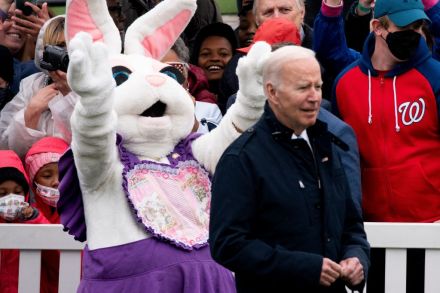
Cockburn has long regarded the Easter bunny as the least convincing of all the holiday-themed characters. Give him jelly beans, malt eggs, even a couple verses from “All Creatures of Our God and King” — but leave the giant rabbits out of it, says he. That’s why he was so alarmed by video that emerged from the president’s annual Easter egg roll on Monday. The footage shows Biden chatting with a reporter who asks him a question about Afghanistan. He’s just beginning to answer when suddenly the White House’s resident Easter bunny lunges between him and the press. The creature turns to Biden and waves, while the leader of the free world turns obediently and walks away. Far be it from Cockburn to deny that the rotund rabbit had a point.

Remember Afghanistan?

For Americans, neglecting Afghanistan has long been the norm. Almost from its inception, it was the forgotten war, fought “over there so we do not have to face them” here, as President George W. Bush once put it. It was a campaign to crush the Taliban only to abruptly become a democratic nation building project and then just as quickly be sidelined for the “real war” in Iraq. Even as far back as 2009, when the United States still had 62,000 troops in the country, David Folkenflik, NPR’s media correspondent, was asking, “Hey, Media: Where’s the Afghanistan Coverage?” This all appeared to change last August — at least for a time.

A letter won’t educate Afghan girls

From our UK edition

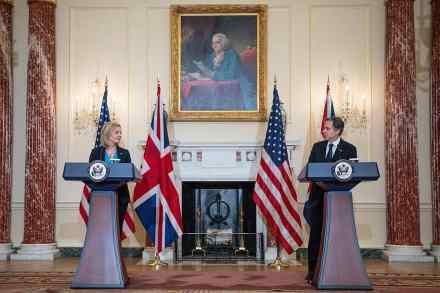
Well, that’ll show ‘em. Liz Truss has released a joint statement with US Secretary of State Antony Blinken declaring themselves ‘united in our condemnation of the Taliban’s decision not to reopen secondary schools to Afghan girls’. Also united are the EU high representative and the foreign ministers of Canada, France, Italy, Japan and Norway. The authorities in Afghanistan issued an order earlier this week suspending the planned return to school of female pupils, citing the need for a decision on uniforms for girls that are compliant with ‘Sharia law and Afghan tradition’. Team Euro-America: World Police say the Taliban’s U-turn ‘contradicted its public assurances to the Afghan people and to the international community’.

A Canadian’s experience of the migrant’s ordeal

From our UK edition

No one boards an overladen dinghy and sets out across a choppy sea without very good reason. Laden into migrant boats go backstories as well as bodies: tales of war-hit homes and bloodied police cells, of empty larders and decrepit schools. But illegal migration is as much about what lies ahead as what’s left behind: the hope of a better life, the chance to start anew. That was certainly the case with Omar, a young Afghan taxi driver and former interpreter. Back when the Canadian-born freelance correspondent Matthieu Aikins first arrived in Kabul, the Corolla-owning Omar had been a single gung-ho guy about town. Seven years later, with foreign troops drastically reduced and dollar contracts hard to find, life was looking far less rosy.

Could an uprising succeed against the Taliban?

From our UK edition

The social media accounts of the new so-called ‘National Resistance Front’ (NRF) in Afghanistan give the impression of a raging insurgency already taking place against the Taliban. The talk is of ‘intense clashes’, with the Taliban suffering ‘heavy casualties.’ There are exaggerated accounts of running battles and successful ambushes against the Taliban across the north and east of the country, in particular in the Panjshir Valley, a long narrow region surrounded by mountains on all sides, not far north of Kabul. It was here that the NRF first raised its flag last summer as the country collapsed in the face of a Taliban assault. That flag is one of the problems facing those trying to organise effective military opposition to the Taliban.

Operation Save Big Dog and the real scandal of Boris’s leadership

From our UK edition

There is a theory which states the primary reason for Boris Johnson’s political longevity is that there are simply so many scandals that the latest infidelity drives the last one from public consciousness before it really has time to sink in. 'Who paid for his wallpaper? Meal delivery? He had a party while forcing the country into social isolation and atomisation? How many parties— what do you mean the police are investigating him?' At this point, it seems like the revelation most likely to do him in will be the discovery that, at some point in the last two years, Boris Johnson sat quietly in a room and diligently worked through an afternoon without once breaking from his papers to do something outrageous.

The decline of drone killings

On the very same day that Joe Biden was inaugurated, he imposed an order on the national security bureaucracy that received little attention at the time: drone strikes in Yemen and Somalia were to be curtailed until further notice. If American commanders wanted to strike a target in those countries, they would have to bring the request directly to the White House for debate. The new, temporary guidelines would be in place until the Biden administration completed its inter-agency review on America's policy of targeted killings. That review is still in the process of being finalized. And while we don’t necessarily know what the Biden administration’s new rules and procedures will be, we do know that the White House is ramping down the pace of drone strikes.

The next chapter in American foreign policy

The new year begins a new chapter in American foreign policy. For the first time since 2001, we are not at war in Afghanistan. More than that, we no longer have an architectonic strategy for our role in world affairs. We had one during the Cold War: to win it. And we had one afterward, too: a decade before 9/11, our policy elite had already committed to the idea that we must police the world for the good of the liberal international order. The lead-up to the first Gulf War was the opening paragraph of that chapter, the ignominious retreat from Afghanistan its last line. Our policy mandarins have not changed their minds, but the world has changed too much for their grand design to have any meaning in 2022.

foreign policy

Most-read 2021: The shameful evacuation of Pen Farthing’s pets from Afghanistan

From our UK edition

We're closing the year by republishing our ten most popular articles in 2021. Here's number five, James Kirkup on the Afghan doglift: Two stories on the Afghan evacuation today combine to leave me full of bewildered rage. The first, from the Times: Britain may have to leave 1,000 Afghan support staff behindUp to 1,100 Afghan citizens entitled to come to the UK are likely to be left behind as British forces withdraw from Afghanistan in the next 48 hours.The RAF was expected last night to complete the evacuation of 15,000 Afghan and British citizens from Kabul airport despite the terrorist attacks. The military will have pulled out by the end of the weekend.

What happens to Afghan migrants when they reach the UK?

From our UK edition

Migrants continue to cross the Channel and to reach Britain by other means. But what happens once they arrive? The answer for many is a new life of boredom and endless waiting. Dotted around the south coast are hotels where these people are housed, hidden out of sight. I went to meet some of them. A dozen Afghan families have ended up at a hotel three miles from Canterbury. The new arrivals numbered about 35 in all, including children, and the hotel seemed delighted to welcome them. ‘We are proud,’ said a poster in the lobby, ‘to be part of the programme to resettle the Afghan community in the UK.’ I got chatting to the men by offering free cigarettes in a porch outside the lobby.

No, the media doesn’t treat Biden worse than Trump

A Washington Post opinion writer believes that President Biden is receiving worse treatment from the media than Trump did. It is a laughable theory, so naturally the media loves it. Dana Milbank’s piece is headlined, “The media treats Biden as badly as — or worse than — Trump. Here’s proof.” Using a data analytics unit, called forge.ai, the writer claims he was able to confirm his sneaking suspicion: journalists are being meaner to the “empathizer-in-chief”, as the Hill once dubbed Biden, than they are to “The Monster Who Feeds on Fear”, as the New York Times once dubbed Trump.

american media biden