Features

Why is America always at war?

Sizable minorities on both the left and the right want America to intervene in fewer foreign conflicts and to exercise more restraint in foreign policy. In the 2006 midterm elections, antiwar voters contributed to the Republicans’ loss of both houses of Congress. They also helped defeat Hillary Clinton in the 2008 Democratic presidential primary contest and the Republican nominee, John McCain, at that year’s general election. While McCain styled himself a “maverick,” the label could be more accurately bestowed upon the anti-interventionist Republican Ron Paul, who shocked the GOP establishment by showing that an unstinting critic of the Iraq War could mount an insurgency within the party of George W. Bush.

Kim Jong-un’s sister or daughter? Only one can survive…

As a birthday treat, a good father might take his ten-year-old daughter to the ballet or a Disney movie. Three years ago, North Korea’s ruling dictator Kim Jong-un (“Brilliant Comrade”) took his ten-year-old daughter Kim Ju-ae to the launch of an intercontinental ballistic missile. It was her first public outing. Subsequent kiddie treats have included visits to the mausoleum that houses the bodies of her grandfather, Kim Jong-il (“the Dear Leader”), and great-grandfather, Kim Il-sung (“the Great Leader”). She also got to stand at military parades, inspect nuclear facilities and make an official visit to Beijing. In the North Korean media, Kim Ju-ae is referred to as the Supreme Leader’s “beloved” or “precious” daughter.

How the poor survived in ancient Rome

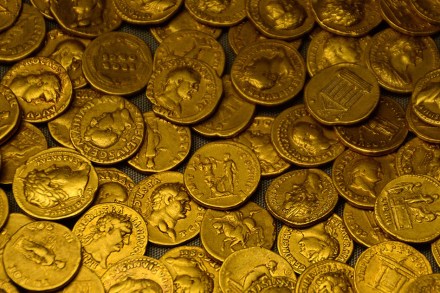
Those for whom the welfare state does not provide as much welfare as they would like might care to reflect on the plight of the Romans, for whom there was no such thing as the welfare state. A superb monograph by Kim Bowes, Surviving Rome: The Economic Lives of the Ninety Percent, drawing on papyrus and other finds from across the Roman and Egyptian worlds, shows in fascinating detail how the poor survived. She defines the poor as the c. 90 percent who “worked with their hands,” most of whom were farmers renting their farms (rents were not cheap). One Soterichos rented a number of small, scattered plots, with small yields, and died in debt. His wife and children budgeted carefully and started breeding farm animals (very profitable).

Those who believe in liberalism must now fight for it

I’m conscious that, just as the easiest way to lose an argument is to mention Hitler, so the easiest way to lose journalistic credibility is to invoke the 1930s. Yet the similarities to our own dismal decade are now too numerous to ignore. There is the same collection of morbid symptoms: the rise of strongmen, the collapse of the political center, the intellectual organization of political hatreds. Even more worryingly, there is the same sense of hurtling toward global conflagration. The similarities begin with the disintegration of the international order.

Greek tips on how to beat Iran

In 500 BC, Persia (modern Iran) was the most powerful state in the known world, ruling an area of more than two million square miles from the Balkans and Egypt to central Asia (nearly half of the world’s population). In 499 BC, Athens and a number of other Greek states rebelled against its empire and incredibly defeated it in the ensuing Persian Wars (390-379 BC). The Greek historian Herodotus (d. c. 425 BC) wrote up those wars after traveling extensively around the whole region. He was as fascinated by different cultures as he was by the war itself, contrasting the Persian way of life with the Greek. For example, he said that Persians did not put up statues or temples or altars, or treat their gods as human in nature, as the Greeks did.

neocon

I spent 25 years fighting neocons. Then Trump became one

Like everyone, I’m glued to the news coming out of Iran. I’m experiencing some depression, as one might, upon realizing that much of what one has worked on for 25 years has suddenly gone up in smoke, destroyed when Donald Trump discovered he was pretty much a neocon after all. Like everyone else, I have no idea what will happen in Iran, whether Trump’s bombing and perhaps breaking apart a very unpopular regime will lead to something better, or just chaos, a failed state spitting out a cohort of embittered men.

el mencho

El Mencho is dead. What’s next for Mexico?

For as long as there has been a Mexico, there have been cartels. Geography is not always destiny, but in Mexico’s case it has been stubbornly close. For centuries, states have tried to impose order on Mexico’s northern frontier. None have succeeded. Power in Mesoamerica always radiated outward from the Valley of Mexico. The Aztecs built their empire there. The Spanish consolidated their rule there. The modern Mexican state governs from there. To the north lies a harsher landscape – arid, mountainous, thinly populated and historically resistant to centralized control. Deserts and mountains provide space. Space creates autonomy. Autonomy, in weakly governed regions, creates opportunity for dissent, for rebellion, for smuggling, for criminal enterprise.

Could Labour lose London?

After Gorton and Denton, where next? The scale of the Green triumph in Manchester has sent shockwaves through Sir Keir Starmer’s party. Much has been written about looming losses in Cardiff and Edinburgh. But the Greens – with their appeal to urban professionals, young Muslims and the economically disaffected – pose a threat in the place that many took to be Labour’s strongest heartland: London. "We have almost as many MPs there as Scotland and Wales combined," notes one aide. "Some are getting a bit nervy." Jitters are understandable. For ten years, Labour has ridden a wave of post-Brexit cosmopolitan feeling to boast ever-greater gains and now has 58 MPs in Greater London. At London’s last local elections, Labour won 62 percent of council seats.

labour london
britain

If only Britain was as important as Iran thinks it is

I am becoming rather fond of Prime Minister Starmer’s major foreign policy announcements. In early January, after US forces swooped into Venezuela and took President Maduro to New York to face trial, Keir Starmer was keen to get straight out in front of the cameras. There he said that he wanted to stress that "the UK was not involved in any way in this operation." As though the whole world had been expecting to hear that the British armed forces were indeed central in snatching the narco-terrorist from Caracas. This week it was again Starmer’s turn to stand behind a podium, British flags behind him, and deliver another statement that absolutely no one thought necessary. Speaking about the US-led strikes on Iran, he announced solemnly: "I want to set out our response.

Won’t someone please think of Dubai’s influencers?

The human spirit is incredibly resilient really. Even in the depth of our concern over the Israeli-American war against Iran, the worry about what might come next, we can still find time to feel a warm and comforting sense of schadenfreude over the large number of British women with stapled-on lips who are cowering in their Dubai apartments as the Iranian shells come raining down. The name under which these women collectively labor is "influencer," a term which, like "content creator" is close to meaningless and both could be usefully replaced by "shitgibbon" or "unemployable." We laugh at their sense of entitlement, their shock that the real world has intruded upon their private Idaho You do not know these people, any of them, I suspect.

dubai
energy

The Iran war has exacerbated the failure of European energy policies

The history of the global trading system is a story of narrow and vulnerable waterways: the Suez and Panama Canals, the St. Lawrence Seaway, the Straits of Dover and the Skagerrak, which defends the entrance to the Baltic. But none has the power to seize up the global economy as much as the Strait of Hormuz. Barely 30 miles wide at the narrowest point and bounded on one side by the state of Iran, this passage is used for a quarter of the world’s oil supplies and a fifth of its liquified natural gas (LNG).

Israel wants to destroy Hezbollah once and for all

At around 2:30 a.m. on March 2, Israel bombed Beirut’s mostly Shia southern suburbs in response to a Hezbollah rocket attack on northern Israel. The road heading into Beirut from South Lebanon and the city’s southern suburbs was jammed with cars filled with Lebanese fleeing further reprisals. Some 52 civilians were killed and 154 injured, a hefty butcher’s bill even in this part of the world. Most Lebanese are happy Hezbollah has been defanged, even if they wish it wasn’t thanks to Israel Hezbollah’s actions were a demonstration of their ongoing support for Iran, but goading Israel was a cataclysmic miscalculation.

neoconservative

America’s last war in the Middle East

Win or lose, Donald Trump has begun the last war the United States is ever likely to fight in the Middle East. That might sound wildly optimistic, but what it really means is that war with Iran has been decades in the making. If the mission succeeds, it will mark the end of an era. And if it fails, this war will have exhausted what’s left of America’s willingness to remake the region by force. It’s not just that Iran puts the case for regime change to the ultimate test. America’s relationship with Israel is also on trial.

Kid Rock’s political evolution

The celebrity circles surrounding the second Trump administration are pretty thin. Sylvester Stallone, Jon Voight, Adam Sandler’s close friend Rob Schneider and a scant few others support the President in ways loud and quiet. But other than pop star Nicki Minaj, whose residence in Trumpistan has caused a lot of head-scratching, no entertainment celebrity occupies a more prominent place in the MAGA firmament than the musician Robert Ritchie, better known to the world as Kid Rock. “I call him Bob,” Trump once said. Kid Rock, the second most famous white rapper from Detroit, has long been in Trump’s social circles. He was a guest at Mar-a-Lago before either he or Trump became political figures.

Am I a Zionist?

The death of Quentin Deranque is strangely under-reported here. He was a 23-year-old beaten up in Lyon on February 12 by supporters of the main party of the left, Jean-Luc Mélenchon’s France Insoumise (FI). He had been part of a group escorting what the BBC website calls "far-right feminists," helping them protest against the visit to a university by a far-left politician. There was a fracas in the street with masked opponents connected with the Young Guard, a leftist FI-related group declared illegal last year. Deranque died of his injuries two days later. One of those arrested is a special adviser to an FI deputy.

Conspiracy culture will never be satisfied

American conspiracy culture is a tradition with a long lineage, though not a simple one. It runs through the John Birch Society and Mae Brussell, through Bill Cooper and Alex Jones, into QAnon and beyond. There are other tributaries – black nationalist suspicion of COINTELPRO, evangelical end-times theology, militia movements, UFO subcultures – but one dominant current exists in every conspiracy: it speaks from below. The conspirators operate as the hidden orchestrators of surface reality. The deep state, the intelligence agencies, the Fed, the media – at worst, Jews – all sit above normal people, controlling their world. The people telling these stories understand themselves as excluded from power.

Are aliens really out there?

We have all wondered if we are alone in the cosmos; if beings born under the light of another star embark on fabulous voyages between the stars to reach us – their cosmic cousins. Those who believe the Earth has been visited by aliens must think all their dreams are coming true. The recent rumors are that Donald Trump will break the “truth embargo” and make an alien disclosure speech on May 1. Then there is Steven Spielberg’s film about aliens, Disclosure Day, due out in the summer. This is surely no coincidence. The UFO community is a money-making juggernaut that cannot change direction YouTuber Brian Tyler Cohen recently interviewed Barack Obama and asked what many people want to know from a US President, current or former: are aliens real? All presidents are asked this.

Screens in schools have been a catastrophic failure

About a decade ago, the people I dreaded meeting most at parties were the ed tech evangelists – men and women who lit up with zealous excitement about bringing screens into schools. If only every schoolchild had a laptop, they thought, then humanity could flourish, nurtured by the great river of the internet and by an exciting stream of educational apps. It was as if a school laptop was a Mary Poppins bag out of which whatever they most wanted was sure to appear. For the ed tech utopians of the right, what they dreamt of was a great stream of savvy little Einsteins, liberated from turgid teachers. For those on the left, it was about equal access, fairness, "pupil-centered learning.