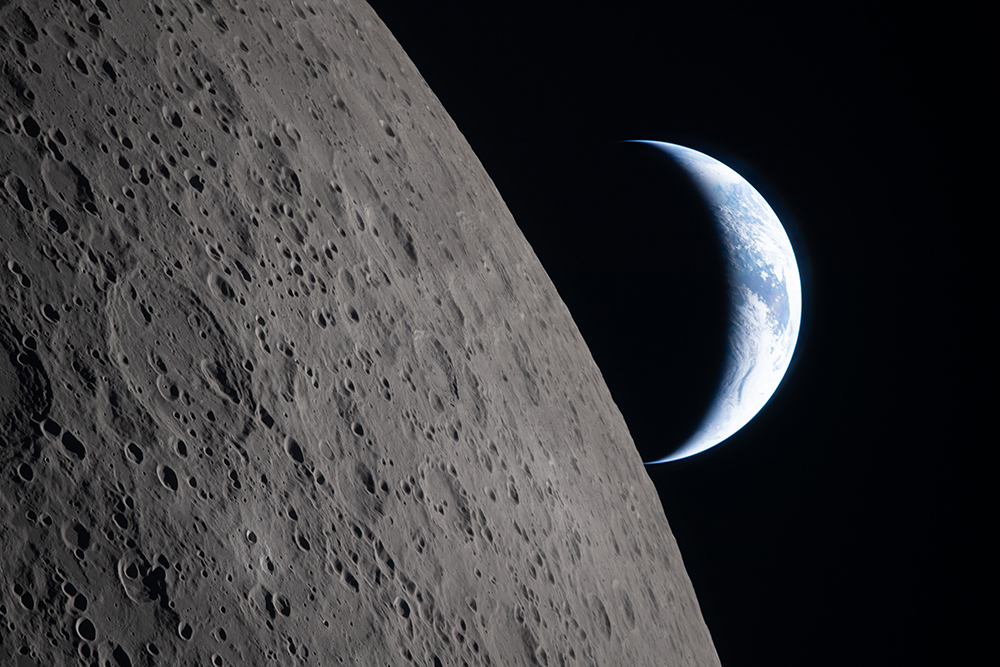

Apollo, Artemis, and Orion have not been named at random. The first two are brother and sister, and all three are known in myth as hunters – which is what the astronauts are. Ancient Greeks would have been very envious of them.
The satirist Lucian (c. AD 125-180) had great fun with space travel. In his True History, he describes how he sets off with his companions to sail the Atlantic when suddenly a typhoon whirls them up to the Moon, but after many adventures he is able to return and describe what he saw.
There are no women, but men act as wives. They produce children in the calf of the leg. The children are born dead but brought to life by breathing in the wind. Men then become husbands. Their noses run with honey and when they exercise, they sweat milk. Their bellies are like shaggy pockets. They keep things in them, and children climb in when they get cold. Bald and hairless men are thought beautiful. When men die, they vanish in a puff of smoke. And so on.
Another of his satires features Menippus, who, despairing of philosophers’ nonsense, flies up to Olympus to get the truth. He finds Zeus listening to prayers by removing the lids from the wells through which humans access him. They make impossible demands. Some sailors want the south wind to blow, others north; some farmers want rain, laundrywomen want sunshine. When two men make contrary prayers and promise equal sacrifices, Zeus has no idea which one to choose, so suspends judgment just like philosophers. He then turns his attention to omens, the flights of birds, sacrifices, covenants and people swearing oaths. That done, he’s had enough for the day and goes off
for dinner.
Next day Zeus summons all the gods and, referencing Menippus, asks them what to do about the different schools of philosophy, which tell absurd stories about gods, scorn mankind, preach virtue and restraint (but not for themselves) and even claim they have no interest in worldly matters. Do away with the lot, the gods agree, but only after the next festival – a message which Menippus says he will be delighted to convey.
Perhaps astronauts will need to go much further for their experiences to be quite as memorable.






Comments