Books and Arts

The buildings Richard Nickel championed

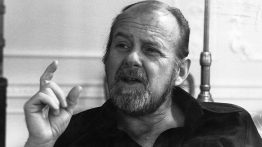
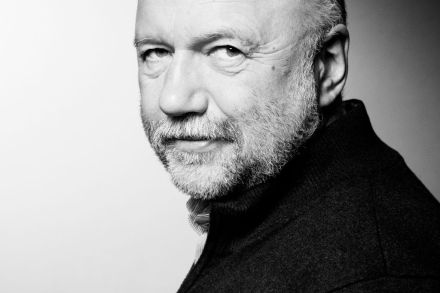
Perusing the listings of a recent auction, I noticed an intriguing, relatively flat piece of copper-plated cast iron featuring intricate foliate and geometric designs. It was a baluster designed by the firm of Adler & Sullivan in 1893 for the old Chicago Stock Exchange. The 1972 demolition of that building, thanks to the “urban renewal” undertaken by many progressive American cities during the mid-twentieth century, led to this bit of architectural salvage coming up at auction many years later. It also led to the death of an idealistic photographer and activist named Richard Nickel. When Nickel (born in 1928) was killed on April 13, 1972, his body was not recovered for weeks.

nickel

The heart of The Rings of Power

“Ours was no chance meeting. Not fate, nor destiny,” Galadriel says. “Nor any other words Men use to speak of the forces they lack the conviction to name.” The line is a bit pompous, but then so is the hotheaded elven warrior (Morfydd Clark) who speaks it in Amazon’s Lord of the Rings: The Rings of Power. Pomposity aside, Galadriel’s words reveal why the work of J.R.R. Tolkien is unique in a crowd of fantasy competitors. Anyone can give us elves and dragons and wizards. But few can match the anguished, longing note of hidden Providence in Tolkien’s Middle-earth. The Rings of Power has not yet achieved such depths of feeling — perhaps it will not be capable of doing so — but it has shown prudence in its stewardship of the story’s heart, which is encouraging.

lord of the rings of power

Is this Tom Stoppard’s last act?

The London premiere of Leopoldstadt in 2020 made this decade the seventh in which a new Tom Stoppard play has been delivered unto the world, and since the playwright has suggested it may be his last, some words about his legacy seem to be in order. Stoppard is often regarded as the greatest English playwright of the later twentieth century. Harold Pinter is the other popular choice. Both men picked up where Pirandello, Beckett and the absurdists left off. Their respective approaches form two sides of the same post-existentialist coin. Stoppard made his name with the expanded footnote: plays in which a sidelight takes center stage, often bristling with comedy, like the metatheatrical Rosencrantz and Guildenstern Are Dead (1966) or The Real Inspector Hound (1968).

Leopoldstadt

At eighty, Casablanca embodies Hollywood high style

In considering what makes a masterpiece of film, the critical community has its shortlist of highly artistic favorites: Citizen Kane, Vertigo, Battleship Potemkin, the like. But in the hearts and minds of average moviegoers, another kind of picture has come to encapsulate “the big screen”: one with less aesthetic ambition, perhaps, but an exceptional dose of romance and style. For this set, Casablanca remains something like the main attraction. Eighty years ago this November, Warner Bros.

casablanca

Free expression after the Rushdie attack

In an interview with Stern magazine at the end of July, Sir Salman Rushdie was asked about the current circumstances of his life. Given that this is a question that he has faced since 1989, Rushdie might have been expected to respond with boredom, even irritation — as, understandably, he has done in other public conversations, when the subject of the fatwa that he has been under for nearly three and a half decades has been raised by an inquisitive or prurient journalist — but he responded with reasonably good cheer. Describing his everyday existence as “very normal,” he even ventured a light-hearted remark, saying, “A fatwa is a serious thing. Luckily we didn’t have the internet back then. The Iranians had to send the fatwa to the mosques by fax.

Rushdie

Bob Dylan, the song and dance man

In Folk Music, Greil Marcus has captured an entire world of the creative and cultural development of the artist known as Bob Dylan in a single book. Marcus not only tells a Bob Dylan biography through the study of seven songs, he also creates an autobiography of his own long career as a writer on music and America — as well as a rich history of American folk songs and the new life they engendered as Dylan sat down to write his own. How does Marcus do it? I’ve often wondered as I’ve read him in the past. This time, I have no answers at all, only admiration and respect. It is far from unusual for other biographies of Dylan — and there are a shelfful — to tell you more about the biographers than their subject.

Dylan

Exploring the decline of Britain’s birds

You can forgive those Brits who forget they live on an island. Motorways, next-day delivery and WiFi all distance residents of the United Kingdom from the physical margins of their country, but the limitations of geography are at the heart of a rhapsodic book that traces the astonishing declines of the British Isles’ native birds. In Search of One Last Song is the debut book by Patrick Galbraith, the editor of Shooting Times, the UK’s largest-circulation hunting and shooting publication. This earthy travelogue transports readers to foggy moors and wind-blasted coastlines and gentle fields across Great Britain as Galbraith pursues leads of flocks in utter trouble.

birds

Has the American novel abandoned God?

I have always thought “Call me Ishmael” to be a rather camp introduction to a novel. Given the line’s conspiratorial intimacy, I have long imagined it whispered by a drag queen in a dive bar at 3 a.m. This, however, is the fault of my own unseriousness. The resonance of the name Ishmael — Abraham’s illegitimate son by Hagar who is destined to wander the desert — remains the opening example of one of the clearest, cleverest and most consistent of themes in Herman Melville’s magnum opus Moby-Dick, namely, the quest for God. Religion runs through Moby-Dick. We might almost say that the Bible haunts it. There are the names, mostly of Biblical characters, and even the direct invocation of prophets: Ezekiel, Elijah and, of course, the ur-whale wrestler, Jonah.

God
penguin

A haunting novel remembers 1990s Ukraine

"They don’t treat people nowadays, let alone penguins.” When Americans ask what went wrong after the fall of the Berlin Wall, this wry comment on the state of Ukrainian healthcare in the 1990s isn’t a bad place to start. It’s also typical of the darkly funny Death and the Penguin, an account of a young writer in Kiev and his pet penguin, Misha, formerly of the city zoo. Did I say Kiev? Of course I meant Kyiv. It has lately become unfashionable to mention the commonalities between Ukraine and Russia, lest you give aid and succor to Vladimir Putin. But Putin’s propaganda resonates because it contains a grain of truth. Despite war and ethnic conflict, Russia and Ukraine have a great deal of shared history.

sergent

John Singer Sargent comes to Spain

One of the great achievements of Spanish art is in its use of black. No other national school harnessed the dark arts to such effect. In Spanish painting, the color black might convey shadow, or the mystery of the unseen, while at the same time presenting a brooding presence, a dark mass right there on the surface. Just look at “Las Meninas,” Diego Velázquez’s masterpiece of 1656. Now consider the subject. Is it the five-year-old infanta? Her ladies in waiting, the “Meninas” of the title? The painter portrayed at his easel? The infanta’s royal parents in the reflection of a mirror? Some unseen viewer interrupting this tableau?

kimono

Kimono Style is more than just East-meets-West fashion

It is not easy to achieve serenity in Manhattan, but after living in a hectic part of Midtown, I have managed to find a few peaceful places dotted around the island. Central Park’s well-groomed Conservatory Garden makes the cut, as does Gramercy Park (if you can find a key), but perhaps the most tranquil destination of all is the Asian Wing at the otherwise bustling Metropolitan Museum.

train

Bullet Train is an unabashedly manly palette cleanser

David Leitch’s new action movie Bullet Train is noisy, bloody, jokey, highly derivative and, in its plot machinations, positively Delphic. It has the character of a cinematic testosterone injection. Yet, in the Year of Our Lord 2022, when American mass media has been overtaken by a spirit of androgynous wokeness, this unabashedly manly flick works more like a palette cleanser. Based on the novel Maria Beetle by Japanese author Kotaro Isaka, Bullet Train stars Brad Pitt as an American assassin living in Japan. As the picture opens, the executioner has a run of bad luck and wants to get out of the whole shady business.

bodies

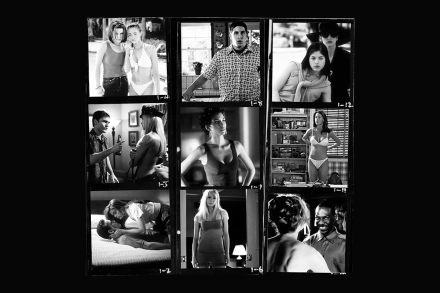
Bodies Bodies Bodies cancels its characters to death

Movies that define an era — Fast Times at Ridgemont High, Easy Rider, Casablanca — rarely get stuck there, even if anachronistic references and jokes fly by without notice today (does anyone watching Fast Times today know what a mimeograph is?). Annie Hall and Nashville are as particular to mid-1970s America as they are timeless works of art, both emotional panoramas of a period filled with affluent and successful but unhappy people, confused and eventually destroyed by their own wandering eyes and broken hearts. You didn’t have to have lived through the disappointment of the late 1960s — Vietnam, all of the assassinations — to feel the exhaustion and disillusionment of these films: it’s in every frame, often unsaid.

A visit to Louis Armstrong’s old home

The New York Times recently started a new series about introducing a friend to jazz in five minutes with a tribute to Duke Ellington. In many ways, Ellington is a sound choice. He was the bandleader par excellence, a brilliantly inventive composer who formed much of the modern jazz vocabulary. But matters can’t rest there. In any assessment of jazz’s founding fathers, Louis Armstrong has to stand as the most influential figure. Both his trumpet and voice are simply inimitable. A recent visit to his modest home, which is now a museum, during a trip to New York with my family offered a reminder of the magnetic attraction Armstrong continues to exert.

armstrong

Weighing in on the unauthorized Hamilton

It was probably inevitable that the culture wars would come for Hamilton. The show had something for everyone — parents and kids, pop-culture enthusiasts and history buffs, right and left. It was the unifying, twenty-first-century Great American Musical, if we could keep it. We couldn’t, of course, and the dustup over a rogue Hamilton production in early August at The Door Christian Fellowship Church of McAllen, Texas, gives one indication why. The non-denominational church, situated not ten miles from the Mexican border at the very southern tip of Texas, presented a modified version, censoring risqué sections and making secular bits Jesus-centric. One scene has our hero Alex repenting his sins (his capitalism?

Hamilton

The deeply human Walking Dead

It was the middle of July 2007. The dead-summer streets of Phoenix, Arizona, were fairly smoldering, so I went into a comic-book shop to beat the heat. I was shipping out to Iraq with the Marine Corps in two days and needed something to distract me. Indulging in a bit of casual melodrama, I asked the half-stoned employee behind the desk what he would read if he had two days to live. Without a second’s pause, he gave a knowing smile and said: “The Walking Dead, man.” Robert Kirkman never expected his comic to turn into the dominant media phenomenon it has become over the past two decades. But nerd culture has a funny way of jumping the bridge into mass media.

walking dead

No stone unturned

There are so many examples of narcissism-on-steroids that litter Rolling Stone magazine founder Jann Wenner’s memoir that it’s difficult to point out just one. But the following is typical: in 2001, Wenner was invited to a recording session for his friend Mick Jagger’s solo album Goddess in the Doorway. Wenner, long out of practice in writing for his magazine — clear prose was never his forte — submitted a review to his editor, who, knowing of the friendship, gave the album four stars. Wenner intervened, bumping it up to five stars, and reflected: “There was some snickering [in the office] about being on Mick’s leash, but so what, and what if I were?” Wenner’s torturously long memoir is a very bad book.

wenner

Porn again

The virtue of chastity is often confused with the state of virginity, or the practice of abstinence. For the Christian man or woman, chastity is more a frame of mind, an integrated approach to love and sex. While virginity or abstinence can result from chastity, they are themselves beside the point. Naturally, these distinctions are lost on the “sex-positive” movement, which tends to reject religious views of sex out of hand as repressive and weird. In her memoir Rated X: How Porn Liberated Me from Hollywood, Maitland Ward tells the story of how she went from being a struggling, miserable actress to a successful, “happy” porn star.

porn
waste land

T.S. Eliot’s The Waste Land at 100

In the United States a century ago, a single poet dominated the literary sphere. He was not only the recipient of the first ever Pulitzer Prize for Poetry — which he would win twice more during the course of an internationally distinguished career — but would be nominated for the Nobel Prize for Literature on four separate occasions. He was beloved by presidents, described by one admirer as “more artful than Hardy and more coy than Frost” and found himself one of the bestselling writers in America. His reputation seemed assured forever.