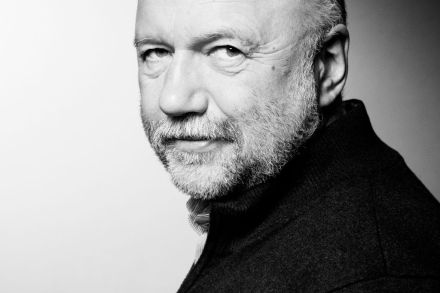
Fred Sculthorp

Fred Sculthorp is a writer living in England.

The loneliness of the digital nomad

From our UK edition

Young people have always wanted to leave Britain. Once upon a time, they joined the merchant navy. In the 1970s, they headed to Australia. Leaving seems mysterious and risky. It’s boring to never want to escape. ‘I just got back home after being in England for two days,’ said the former Geordie Shore star Sam Gowland, who lives in Bali. ‘What a depressing, grey, cold, gloomy, miserable × 100 place. If it’s possible, and you’re at an age where you can, move abroad.’ I could sustain a pale imitation of the life of a 19th-century Mexican silver magnate from two hours of Zoom work Today, influencers offer advice for those looking to become digital nomads. The website Nomad List recommends an array of destinations, including ‘Places with Attractive Women’.


Why France can’t save us

From our UK edition

From an early age, my grandparents tried to save me the pitfalls of a lower middle class English existence by initiating me into the joie de vivre of France. Across the channel I would be ferried, left to the continental sophistication in a Calais bistro some 20 minutes from the ferry terminal. There I would watch my grandfather scoff a bowl of moules and cheap rose and flirt with the waitress. My grandma would beam upon the scene. This was the first of many escapades to the continent, a saving grace for the mediocrity and dullness that stalks the English petit bourgeoisie.  We might like to joke about invading our oldest enemy et cetera, but culturally we revere and adore the French. But I still don’t understand the appeal.

How refugees saved a town in upstate New York

Utica was once home to the American Nightmare. In the 1960s, the upstate New York city was a vibrant manufacturing hub, home to 100,000 people. Then the great unwinding began. General Electric pulled out in the early 1990s, and shortly after that the Air Force base closed. Entire streets burned as fleeing residents tried to claim insurance payouts. Families moved out as gangs from New York City moved in. Walking through the rubble in 1999, the mayor joked to an interviewer he had been having a nightmare of his own: “I dreamed I was the mayor of the city of Utica.

refugees

Andrey Kurkov brings clarity to the Ukraine invasion

"War and books are incompatible,” decided Andrey Kurkov, one month into Putin’s war against Ukraine. Reading his Diary of an Invasion, it’s not hard to see why he thinks so. Homes are evacuated; air raid sirens go off day and night. You get shelled. There is a never-ending cascade of bad news: about friends, about war crimes, about the possibility of nuclear catastrophe. The loss of luxuries. No tonic water, no whiskey-and-soda. There isn’t much time to think. Kurkov’s book came to the attention of the West when it was published in the UK last September. Since then, it has emerged as one of the first serious works of literature to come out of Ukraine since the invasion.

kurkov