Wild life

Wild life | 17 November 2016

 Aero Club of East Africa   The world looked so clean and untroubled during the flight in Bob’s light aircraft to George’s memorial at the Aero Club of East Africa. It was a relief to get away from the farm for a few hours. On 27 October a mob of 300 Samburu warriors armed with spears and knives cut down our boundary fences and invaded with 10,000 cattle. Since then they’ve hurled javelins and rocks at us, flattened pastures to dust, destroyed 15 kilometres of fencing, smashed windows, demolished huts, robbed what they could, cut water pipes, broken machinery and threatened our staff with murder until half of them ran for their lives. For days before the invasion we received calls from friends saying that politicians were urging the mob to hit us.

Wild life | 20 October 2016

Kenya A woman’s bottom cheered me up recently. The lady was walking ahead of me in a Kenya street and she was wearing a kanga — a local garment worn like a bath towel and printed with colourful geometric designs. A kanga is traditionally emblazoned with a Swahili proverb or scrap of esoteric advice, making it a bit like a wearable fortune cookie. This one had written neatly across it: Huwezi kula n’gombe mzima halafu ukasema mkia umekushinda — which roughly means, ‘Don’t eat a whole cow and then say you’re defeated by the tail...’ Persevere! Never give up! That was the message I took home to the farm. I became a farmer in Kenya almost by mistake.

Wild life | 22 September 2016

Laikipia   For a rancher north of Mount Kenya, a man’s best legacy might be a good bloodline of Boran beef cattle. For years I wanted to buy a bull from George Aggett. His Borans are wide and deep and they are natural polls, that is, they are born hornless. George’s grandfather settled on the Laikipia plateau in 1920 and for nearly 100 years the Aggetts had kept almost a closed herd. I heard they never, ever sold bulls, and so it took me a long time to pluck up courage to approach George, an ex-Royal Marine with steely eyes and a fighter’s frame. When we acquired our first few cows a long time ago, the craggy man who sold them to us observed (and it was not a question), ‘You’re not a proper farmer.

Wild life | 25 August 2016

Kenya When the late Tom Cholmondeley walked into his cell after being accused of murder in Kenya’s Rift Valley, etched onto the wall were the words Ubaya ya jela ni kishoga — Swahili for ‘the worst of jail is buggery’. During an incarceration of 41 months in Kenya’s Kamiti Maximum Security Prison he endured both squalor and terror: men beaten to death, hunger, 92 inmates to a single latrine bucket, cold, dirt, rats, lice and bedbugs — which leave a line of three bites known as breakfast, lunch and dinner. While facing the death penalty or life imprisonment, he saw his two young sons for just 30 minutes a time on two occasions due to prison rules that disallowed visits by children.

Wild life | 14 July 2016

Gilgil, Kenya   At our Gilgil hut in the Rift Valley I’ve had a new flower garden planted to welcome my wife Claire home from England. Here at 7,000 feet in Africa, temperate and tropical species grow together: roses and aloes, pears and bananas. In midwinter, when she went under the knife, I was back in Kenya, trucking in gardenias, honeysuckles and hydrangeas. During springtime in her chemotherapy pod, as the red liquid dripped into her arm, I was talking with our landscaper Eileen about marguerites, birds of paradise and camellias. When Claire was pinned down by radiation earlier this summer, at our hut the rains were drenching new lilies, the giant iris, lavender and buddleias. Now at last she’s home. In some ways Claire prefers Gilgil to the ranch.

Wild life | 16 June 2016

Kenya As soon as I pulled out of town, I knew I had made a mistake taking on the new Chinese road through the badlands after dark. The route into northern Kenya was still under construction, making it an assault course of bumps, diversions and zigzags between mounds of murram. I made what speed I could in the Cruiser but on a lonely stretch of track I saw the flicker of brake lights up ahead and slowed to a dawdle behind a black city car. I was two minutes into Tannhäuser ’s rousing ‘Pilgrims’ Chorus’ on the stereo up loud and wanted badly to overtake when to my right I saw red sparks and heard the report of a rifle. A bandit ambush! I floored the accelerator and out of the corner of my eye I saw the flash of a second shot.

Wild life | 19 May 2016

   Nairobi The gangsters hadn’t heard of Brexit. ‘What is this “Breaks it”?’ they asked my friend hours after kidnapping him at gunpoint. At dusk my mate had been driving in Nairobi, with the Wings song ‘Band on the Run’ playing. He pulled over to answer his mobile when a man appeared at his side with a pistol. After letting him and two others get in, my friend was directed to an insalubrious Nairobi postcode, frogmarched up five floors and then beaten on the arms and knees with a golf putter. Big Gangster emptied his pockets and went carefully through his iPhone emails, messages and contacts list. ‘They got to know where I worked, where I lived, everything.

Wild life | 21 April 2016

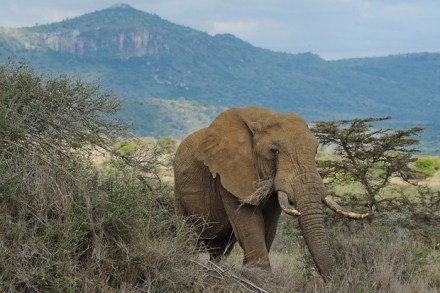
   Laikipia I sip my Tusker beer on the veranda, staring at the elephant. He’s not the elephant in the room. He’s the elephant on what should be my croquet lawn. I thought he might go away, but he hasn’t. Instead he’s brought his friends — more and more of them as time goes by. They say the elephant will become extinct within a few years. Across Africa, poachers are decimating elephants — just not here, where they apparently feel safe enough to crap on my sward. Today, the fashionable argument promoted on Twitter, and followed by princes and prime ministers, is to burn all stockpiles of seized ivory in the world. This, they argue, will help shut down the illegal trade in ivory.

Wild life | 23 March 2016

Laikipia ‘Awayoo,’ was how our head stockman Apurra said ‘how are you?’ in his texts from Pokot country, where I had sent him on a mission to search for thin tribal steers for us to buy. Now that we have plenty of pasture, we are looking for large-framed beasts that we can fatten and sell to the butchers. ‘Boss, Awayoo,’ Apurra’s message asks, with news that he has gathered a good mob of steers that are now being trekked to the farm. When we first completed the electric fence, which now extends 15 kilometres around the entire ranch perimeter, I thought that was largely the end of the game for wildlife. Electricity flows like a river, a 6,000-volt stream, enough to kill an entangled zebra.

Wild life | 11 February 2016

Nairobi Nairobi’s old avenues were designed to be wide enough for a wagon and several span of oxen to U-turn in them. Even so, in our modern era the matatu communal taxis frequently manage to create a traffic jam out of nothing so nobody can go anywhere, sometimes for hours. So I’m waiting patiently in a jam on Uhuru Highway thinking of Hardy’s poem ‘He Fears His Good Fortune’: There was a glorious time At an epoch of my prime; ...And sweetness fell around Like manna on the ground. And I look up into the fever trees.

Wild life | 14 January 2016

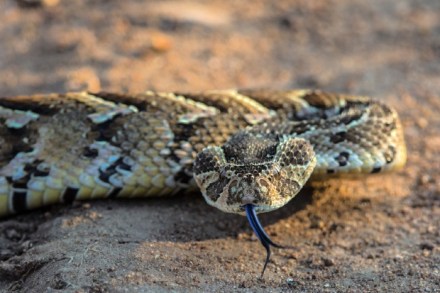
On New Year’s Day I took the family out for an evening walk on the ranch. Along the verges, lush after rains, I urged our children, Eve and Rider, to help me collect specimens of different plants, or identify wildlife spoor or scat. I wore shorts and flip-flops. As usual I was talking too much to my wife Claire, when I was stunned into silence by Eve, who cried out loudly, as if the world was ending, and pointed at the ground in front of me. I froze. I had not looked where I was going and my right foot was about six inches from the head of a puff adder, fat and four-foot long. I recoiled and my herpetologist pals will be annoyed to hear that on an automatic impulse I killed the beautiful creature. Usually, I would never hurt a snake. I felt it was a matter of survival.

The James Herriot of Africa

Great Rift Valley The mare hangs her head; her neck is swollen, her eyes bloody red, crammed by flies. She has horse sickness, a mainly tropical disease transmitted by midges. ‘All OK?’ asks the stud manager. ‘Not at all,’ says Hugh Cran. ‘Horse sickness is very serious, with a high mortality. We shall have to see.’ The manager looks worried, but at least he was able to call out Hugh, who for nearly 50 years has been a farm and family vet in Kenya’s Rift Valley. A dog disembowelled by hippo tusks, snakebite, big wild beasts, sick camels, exotic tropical plagues, mad upcountry ranchers, the perils of the equatorial road. Hugh has led an adventurous, unique life devoted to helping animals.

The Kenyan night is like a busy shipping lane, but silent

Night falls like a fire curtain at seven and I go to bed not long afterwards, serenaded by bullfrogs after rain. Having risen long before dawn, ranchers tend to sleep early, following a thin gruel of a supper. In upcountry Kenya it used to be that pyjamas and dressing-gowns were permissible for even quite posh dinners. Once in a blue moon, one might keep a farmer awake with good whisky or rugby to watch. Sometimes, once an evening gets going, by night’s end there’s reeling and the light bulbs are being used for target practice. Not more than once or twice in a year, mind you, or this can crowd out a man. Not an hour after I’ve shut my eyes I wake again. From below my window come vaguely Jurassic, subsonic rumbles.

What Ryszard Kapuscinski airbrushed out of his bestselling book

I once found myself on a lonely road in southern Ethiopia with the famous Polish author Ryszard Kapuscinski. We were travelling through bandit country when we got a puncture. We had a rendezvous at a bush airstrip with an aircraft that had to take off before night closed in. It turned out Ryszard had no clue about changing tyres and, whereas I was quite happy to break open the beers and sleep in a ditch, he fretted about missing tea with the lady relatives of Emperor Haile Selassie back in Addis Ababa. I realised he was scared.

Wild life | 24 September 2015

   Laikipia A lion has just mauled and partially eaten a warrior who tried to throw a spear in my guts while trespassing on my farm a few months ago. This man was from the same gang that in April attacked me with rocks and smashed up my left hand so badly the doctors were hours away from amputating two or three of my fingers. Apparently, the spear thrower was up to no good again, on private land some distance from here some nights ago, when a lion slunk out of the darkness and jumped on his back. It then moved to his buttocks, on which it began feasting. It was all up for the lad and you might as well have said, ‘Yon lion’s ’et Albert — and ’im in his Sunday clothes, too...

Man’s greed and gain

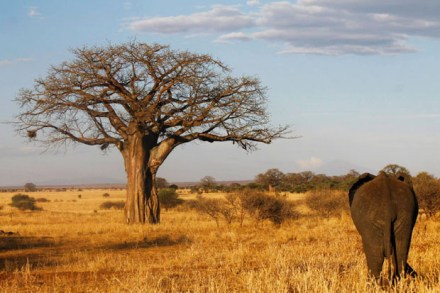
Laikipia An elephant can break through an electric fence by pulling out the posts, pushing younger, more stupid animals into the wire — or by simply sitting on the fence. I do hope they will play such tricks on us, now that high-voltage wires enclose most of the ranch, leaving only a few corridors for animals to pass through. The wilderness has become the territory of humans, a farm to produce food, no longer the land of elephants. Before the second world war, when Africa swarmed with wildlife, there was a bull elephant on Kilimanjaro known as the Crown Prince. It had huge tusks. My father once tracked the Prince for many hours through the forest at great speed.

Wild life | 16 July 2015

Laikipia A quarter of a century ago I met two young South African men who had ridden their ponies 1,700 miles from the Kalahari desert to Kenya. They were on their way to Sudan. They carried all their needs on their tough Botswana cattle station ponies, with one spare horse following behind. Their saddlebags were filled mainly with horse feed. Their only clothes were shorts, flip-flops, bush shirts, one blanket and one coat each. This was from the time before mobile phones. In the year it had taken them to reach Kenya they had spent perhaps £150. Along the road they gladly accepted the kindness of strangers for a beer, a bath or a meal, but they were just as cheerful sleeping out in the bush by a campfire with their ponies tethered nearby.

Wild life | 18 June 2015

Laikipia, Kenya   Out cross-country running on the farm in Kenya recently, I came face-to-face with a gang of bull elephants. I zigzagged away from them, keeping downwind, jogged on for a bit, then found myself following the tracks and fresh dung of a herd of buffalo. I paused my stopwatch, had a think then continued at a timid pace while looking around fearfully. The night before I had heard lion and hyena, so as I ran I imagined the yellow eyes that might be following the form of a 50-year-old man huffing, puffing and advancing at a stumble — easy prey, but chewy old meat. I studied the ground ahead of me, checking for the camouflaged signature of a puff adder or the coiled spring of a cobra.

Wild life | 21 May 2015

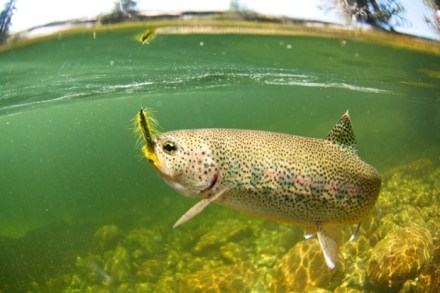
 Nairobi Trout were first introduced into Kenya’s highland streams in 1905. Men like Ewart Grogan, ‘baddest and boldest of a bad bold gang’, shipped Loch Leven fingerlings in ice-packed chests to Mombasa and then up to the Rift Valley on the Lunatic Express. From there, porters carried them up into the misty, forested Aberdare and Mount Kenya slopes. Rivers with now legendary names such as Amboni, Gichugi and the two Mathioyas were stocked — and our fly fishers’ paradise was born. Last week in Nairobi, the Kenya Fly Fishers’ — the oldest club of its kind in all of Africa — held its 95th annual dinner. It was a strictly male affair, more than 100 members and their guests. Visually it was pure H.M. Bateman.

Wild life | 23 April 2015

 Laikipia When I was a boy in Devon we had an orchard. On a string of autumns, as the fruit ripened, the orchard became a battlefield of apples between my two brothers and me. My older siblings could launch apples at me with such force they fizzed like bullets through the air. A hit with an unripe Russet or Pippin could hurt like hell, so I became adept at dodging incoming missiles. A childhood of scrumping came in handy this month when a mob of Samburu tribesmen attacked me. In what has become a routine activity at home these days we were attempting to prevent trespassers flooding into our farm pastures. I called the police, while the three spearmen I encountered phoned their cohorts.