Wild life

Wild life | 28 June 2018

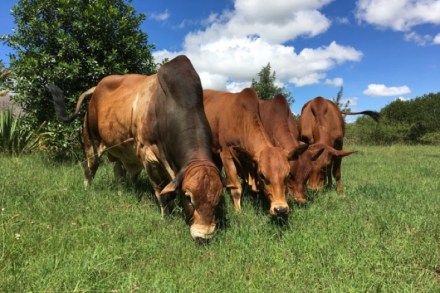
Laikipia, Kenya A minotaur head glowers at me through the bathroom window while I am brushing my teeth in the morning. It’s George the bull, who wants his ears scratched. After I get dressed, it’s time to select a cattle stick, known here as a finbo, from an umbrella stand stuffed with crooks, wands, withies, shillelagh-like cudgels and rods that a biblical prophet might have forgotten had he come to supper. I choose my favourite, a finbo that balances perfectly in the hand like a drum major’s malacca cane. Outside, a Jersey bullock is sprawled on the garden path, chewing the cud.

Wild life | 31 May 2018

Laikipia I wake at 4 a.m. these days. At that time you might hear a lion or a braying zebra, but the birds and bullfrogs are quiet under the constellations. False dawn comes an hour later with the liquid song of sandgrouse and the bustards cackling as they angle into the first light. Just before sunrise the birdsong becomes a sound cloud rising from the valley up on to the plains. The cattle spill out of the boma bellowing and mooing and then later, at seven, comes the sound of men’s voices arriving at work, diesel engines warming up, chickens, dogs barking. My father used to rise at 5.30 a.m. — but he always had a siesta after lunch, wherever he was in the world. When I was youngI often saw the dawn only because I had not yet gone to sleep.

Wild life | 3 May 2018

Laikipia, Kenya Neighbours Tom and Jo came by with a bucketful of wild African mushrooms, which they had collected in old cattle bomas on the way to the farm. I asked: ‘How do you know they are not toadstools?’ Tom said you could peel the caps, the gills were dark brown, not white, there was a ring around the stem like a Jacobean ruff — and they did not smell poisonous. ‘Fine,’ I said and into a great pot they went with butter and parsley from the garden. Everything else for supper was from the garden too — even the road runner cockerel — except the flagons of wine brought by guests David and Kate, also from a farm only two hours’ drive away. The mushrooms were delicious.

Wild life | 5 April 2018

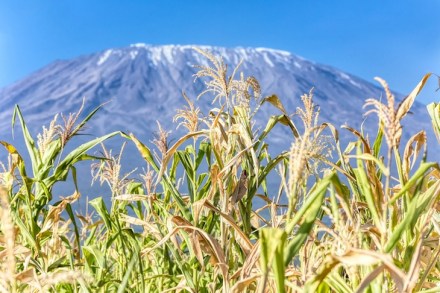
Laikipia, Kenya Erupe is a Kenyan farmer. He owns a smallholding of a few acres not far from my own place. When we meet our talk is usually about the vagaries that preoccupy farmers: crops, rain, livestock diseases and market prices. On his little patch he built a dwelling from mud and wattle with a corrugated iron roof. Inside, a picture of Jesus on the wall stared down on the poor but growing family, their only possessions a couple of beds, a chair, a radio and some faded photographs of relatives. Outside the hut my friend grew an avocado tree, bananas, a guava and a small patch of blue gums for shade and firewood. Beyond that he and his wife had tilled the soil with jembe mattocks. They planted maize and beans.

Wild life | 8 March 2018

Laikipia Off Madagascar the other day the Indian Ocean gave birth to a little storm called 11S. As its gyre turned clockwise over the sea, 11S gained momentum until it was a huge vortex of thunder and lightning christened Tropical Cyclone Dumazile. Like a naughty lover yanking away the shower curtain so that everything in the bathroom is sprayed with hot water, Dumazile pulled the entire weather system of mainland Africa eastwards. The effect was to suck the clouds from the steamy jungles of Congo’s river basin across the equator and dump their entire contents over our farm in highland Kenya. There was I enjoying the dry season. ‘How’s the farm?’ asked people through February. ‘Dry,’ I said.

Wild life | 8 February 2018

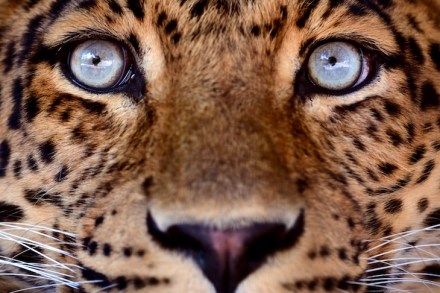
Laikipia I woke with the breath of a leopard a few feet from me as I lay in my bed. Before he came there were the sounds of Laikipia’s darkness: nightjars, insects, a wandering hyena. Then it all went abruptly silent and I heard him exhale, just on the other side of the bedroom door. I got out of bed and listened to him snuff the air. A hiss came from the back of his throat, then a deep-throated cough. Our three dogs sat up in their baskets, ears up, hackles raised, silent and staring. At dusk I had put them — Jock, the labrador, Sassy the collie, and our mongrel bitch Potato — in the bedroom to sleep close to me because the leopard had been after them for a string of nights. A leopard loves nothing more than a dog to kill.

Wild life | 11 January 2018

Kenya  First comes a distant hum, rising in volume until I hear it coming straight at me like Niki Lauda behind the wheel of his Ferrari. The blue sky darkens. I duck as swarming bees zoom overhead, trailing their queen. They are gone again in a second, coiling off in a shadowy murmuration across the veldt. After the rains, several swarms hurtle over us daily looking for homes, criss-crossing in the air. When bees nest in our farmstead walls we leave them be. Anybody who has had bees live under the eaves will know how cosy it is to lie in bed at night, listening to the soporific thrum of countless beating wings.

Wild life | 13 December 2017

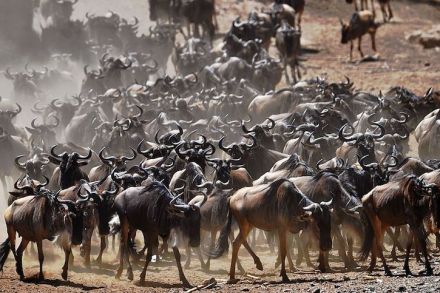
Laikipia, Kenya   The zebra lacks a rumen and eats at least twice as much as a cow. On our modest Kenyan ranch we run several hundred head of Boran cattle. In our arid conditions, this number is carefully calculated on a stocking rate of so many beasts to the acre. If you add hundreds of zebra to the pasture you swiftly finish your grass. During this year’s drought, and the chaos beyond our boundaries, wild animals were poached and they starved. Many arrived on the farm so desperate that they smashed through walls and fences to get in to where it was safe. I let them stay. The elephants came and went as they pleased, barging through any barrier.

Wild life | 2 November 2017

Laikipia   Flying home across Laikipia’s ranchlands with Martin after a farmers’ meeting, I see the plateau dotted with cattle and elephants. Stretching away towards the north, it is all green after good rains. I think to myself that farming is hard enough without having to deal with toxic politics: will there be a drought, and what about the ticks, or foot-and-mouth disease; will your cattle get rustled, or flocks of quelea and hordes of zebra devour your crops? After months of politics in Kenya, the news comes in that Uhuru Kenyatta has been declared our president again. This comes as a great relief because most people in Kenya are exhausted by politics after months of crisis. We just want to get back to work. Everybody is broke.

Wild life | 5 October 2017

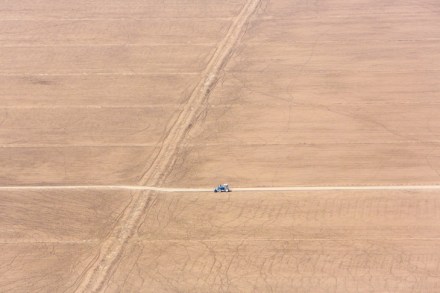
Laikipia Ripping up the black cotton soil on the farm’s high savannah I get a sense of what it must have been like to be a sodbuster on the Great Plains of America 150 years ago. Riding my big yellow tractor I find it thrilling to plunge through virgin land that has been innocent since time began, but it also makes me feel intensely sad that it had to come to this. Through the clouds of dust and diesel fumes I can see a giraffe pouting at me from above a stand of acacia trees that will soon be torn out. Herds of zebra, oryx and eland are retreating as the lines of freshly turned tilth advance across tawny grasslands stretching northwards all the way to Ethiopia. I am destroying wildness in order to survive. We never built a safari camp for tourists.

Wild life | 24 August 2017

Indian Ocean coast Like most men I wonder if I have been much good as a father, but one thing I got right was that I gave our children, Eve and Rider, the Indian Ocean. Before they could even walk my Claire taught her babies to feel happy splashing about in the sandy coral pools below my mother’s house, and this was where she taught them first to swim. They were still tiny, with curly blond locks, when they ran at the roaring breakers on the beach, getting completely lost in the white foam, then bobbing up to the surface with squeals of delight. They made up names for waves: small ones were ‘tippitisers’, a big one was an ‘abragabir’ and a huge one was called ‘Mickey Mouse Club’. They both grew up winning swimming races at school.

Wild life | 27 July 2017

Kenya   We are on the beach, where our home is full of dystopian stories. My daughter Eve is whizzing through her A-level summer reading list, and as we share her books around we all have our noses in post-third world war Australia, the Republic of Gilead, in a submarine London and totalitarian future states. The novelist Lionel Shriver, an author of dystopias herself (with whom I once shared a house in Nairobi, before she called me a ‘spiritual pygmy’ in the dedication of her book Game Control ) says, ‘The greatest joy of dystopian fiction is that it’s make-believe. We can experiment with disaster imaginatively, close the book, then mix that martini.

Wild life | 29 June 2017

Laikipia, Kenya   During our evening walk on the farm, Claire kept looking around nervously instead of engaging in conversation. At one point the dogs ran ahead, probably thinking that they were after the scent of a rabbit. Seconds later, they tore back past us, leaving a trail of dust, and heading after them came a bull elephant moving at quite a pace, trunk up, ears flapping. Claire took off after the dogs and I followed, briskly but grumpily. I had been irritated by Claire’s anxiety in the bush, excited by the story of an incident that had happened a few days before, when an elephant had charged and completely flattened a man on the plains nearby. It was probably the same elephant and, I grudgingly had to admit, she was right.

Wild life | 1 June 2017

The guests at my brother-in-law Rick’s 70th birthday lunch party were distinguished, silver-haired, well heeled. Long before Rick rescued the Rothschild’s giraffe from extinction, and did so many other things for wildlife conservation in Africa, I remember him and his friends in the 1970s. The chap sitting opposite me at table, now big in IT, had once been a hard-core hippie with heavy-lidded eyes like the stoned rabbit in Magic Roundabout. A coffee baron, now discussing ‘aromatic compounds’, once wore a headband, blue-tinted shades and hair down to his bum, and a man who is today a company chairman I picture still in his Afghan fur-trimmed coat, going barefoot.

Wild life | 4 May 2017

Laikipia, Kenya On my way home to the ranch, I stopped for a beer with my neighbour Martin. It was twilight and large herds of cattle were being brought into the yards around Martin’s house for the night. Pokot militias had been attacking for days, trying to rustle cattle and shooting at anybody in sight. Gunmen had a few days before shot Athaju Eloto, one of Martin’s farm workers. Doctors extracted a bullet from near Eloto’s spine but he later died. The bandits had also killed a police officer on the farm during operations to remove the attackers. In a nearby village full of smallholders, Pokot attackers had murdered a policeman and taken two others hostage; their bodies were later discovered burned and stripped of weapons and uniforms.

Wild life | 6 April 2017

Laikipia, Kenya   For weeks the farm has been in the eye of a storm, with violence swirling all around us in clouds of dust kicked up by multitudes of cattle. Last week to the west, tribal invaders burned down Kuki Gallmann’s tourist lodge overlooking the Mukutan Gorge. On Sosian ranch to the south our neighbours are bravely pushing on a month after the invaders murdered Tristan and burned down several homes. To the east on Suyian ranch, Anne’s safari lodge — the loveliest camp I ever saw in Laikipia — also lies in ashes. To the north invaders are still poaching elephant, as they are everywhere around us, spraying bullets into their legs and then hacking out the tusks.

Wild life | 9 March 2017

Laikipia On Tristan Voorspuy’s hell-for-leather riding safaris across Kenya’s savannah, he cracked a bullwhip at predators that tried to eat his guests. One time a lion chased American actress Glenn Close on her horse and Tristan said, ‘We nearly lost her.’ They all joked about it that night around the campfire. Tristan was among the last of the stylishly mad people in Kenya. He once rode his horse into the bar at the Muthaiga Club during a stag party. From the saddle, he toasted the groom, his steed defecated on the parquet and off he trotted between astonished drinkers into Africa’s night. Tristan was a gentleman and well read.

Wild life | 9 February 2017

 Laikipia plateau, Kenya My great-grandpa Ernest Wise was an engineer who sailed to South Africa towards the end of the 19th century to build Cecil Rhodes’s Cape-to-Cairo railway. Although that project never took off, he decided to stay on in the continent — and he prospered. A cousin recently sent us a photograph of Ernest and his six children, taken in the 1890s at his home in Pretoria. Ernest wears a humorous expression and he looks as if he is about to speak to me, still in Africa 130 years later. I imagine him saying, ‘What, my boy — still there?’ The Wise family image is among the photographs and paintings at home on the farm in Laikipia that we have started to move to safer ground elsewhere.

Wild life | 12 January 2017

We had my parents-in-law Gerry and Jean to stay with us on the farm over Christmas and being in a remote place in Africa, things often go wrong. A few days into the festivities the solar-powered electricity broke down and so did the solar water-heater. As we sat in darkness, after cold showers, Gerry said, ‘It reminds me of Ronnie and Doreen.’ In 1968, Gerry said, he was working for Kellogg’s, selling cornflakes all over the British Isles, Jean was raising two children and they lived in a semi in Billingshurst. Ronnie next door used to fiddle the electric meter. He offered, ‘Shall I do yours, Gerry?’ ‘No thank you, Ronnie,’ said Gerry, who has played a straight bat all his life.

Wild life | 8 December 2016

 Kenya I realised I had fallen from grace when we were dropped from the Queen’s birthday party guest list at the British High Commission in Nairobi. I wondered what offence I had caused to the recently arrived plenipotentiary. I worried that it was because one evening, while jogging in the diplomatic suburb of Muthaiga, I had passed him going at a slack pace and barked, ‘Giddy up!’ I have always been so fond of our British HCs. I picture them to be like Waugh’s ambassador to Azania, Sir Samson, less engrossed with unfolding revolutions outside than with playing with his rubber dinosaur at bath time, which he sat on ‘and let it shoot up suddenly to the surface between his thighs ...