Wild life

A binge on alcohol and meat, plus hired sex and lodging — all for £1.50

 Kenya Home is beyond the perimeter of modern Kenya and way off the grid. When the ancient generator goes off in the evening we are left with a sky of untarnished constellations reflecting down on the star-spotted nightjars. Until morning we burn hurricane lamps of the Dietz ‘old reliable’ type. These run on kerosene. When we ran out of this I asked one of the young shepherds called Captain to cycle to the nearest village, which is about 15 kilometres away, on an urgent mission to buy more. ‘Please buy ten litres of paraffin,’ I said. I gave him 1,000 bob, about £7, and asked him to bring change and a receipt.

Wild life: Could I ever revive the Pinguaan Springs?

Il Pinguaan Springs When I first saw the Pinguaan Springs they were small, fetid bogs set about with papyrus, the haunt of mercury-coloured frogs and dragonflies. I wondered why they were regarded as so important that you could find them on any half-decent map of Kenya. Without water, the farm we were building could never stir into life. In those days I did not know what to do. For two years we collected water in jerricans and loaded them on to donkeys to be trekked to the tent where we lived. Baboons defecated in the spring pools. We all came down with Giardia. On many of our adventures we were alone and I was foolhardy. Our neighbours regularly had to save our lives when bandits came, charging over the hill in response to radio alarms.

Wild life: Leopard on a hot tin roof

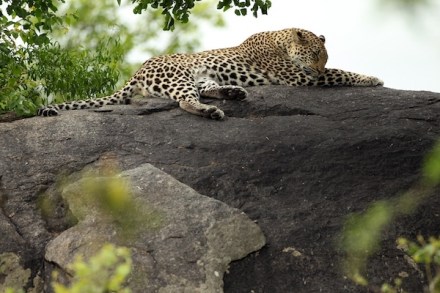
A leopard has been on the rampage night after night. We know her because she often lurks in the woods behind the farmstead, between the beehives and the old long-drop hut. Very occasionally, at dusk, she’s spotted lying on the hot tin roof of the big water tank on the hill above the woods — but for weeks around midnight she’s been prowling up to the goats’ boma. She leaps over high thorns and razor wire and dry-stone walls, struts along the top of the enclosure and then pounces. Livestock erupt in panic, the night watchmen shake themselves from their deep slumber and roar and rush about. The she leopard, out to feed a litter of cubs, I think, is disturbed, abandons the throat of her already killed prey in disgust and slinks off to hunt something wilder.

Wild life | 18 April 2013

Colobus monkeys in the forest were throat singing like Tibetan monks. Mist rose from the Kericho tea gardens above us in the gloaming. My son Rider gazed longingly at the water. For a ten-year-old boy obsessed by fishing, patience is impossible. He yearns for that trout with every atom of his being. I was just trying to coach him on the joys of fishing even if one never caught a thing when the clouds above us tore apart with the noise of a B-52 bombing run, followed by rain that came in grenade-sized drops — and then the rod in Rider’s hand quivered and bent down as a rainbow trout hit the fly and stripped out line all the way to the backing. Panic erupted as I barked orders and, realising it was a good fish, tried to grab the rod from Rider’s hands.

Wild life | 21 March 2013

Rift Valley ‘We’re on the frontline,’ I said. ‘And however many guns we had, it wouldn’t be enough against the cattle rustlers.’ ‘Yes,’ replied my friend Jamie, a shareholder in our farm. ‘You’re low-hanging fruit.’ I showed him the bullet holes riddling my Land Cruiser, and told him again about the ambush, the raids, how farm manager Celestina was having a nervous collapse, how the police never came to our rescue. ‘Jamie, we might have to give up the cattle,’ I said. ‘It will break my heart — this is what I had instead of a mistress to get me through middle age.’ ‘Aidan,’ he said, ‘they’re cows.

Wild life | 21 February 2013

Rift Valley I am training for a half-marathon on the slopes of Mount Kenya in June and I must prepare myself for failure. I may not even make it to the starting gun because at 47 I can look back on a life littered with unfinished book projects, smashed resolutions and missed deadlines. Since I last ran cross-country at school I’ve drunk around 10,000 bottles of wine and at least 1,000 litres of vodka.For about 15 years, I smoked a pack of fags a day, so that’s 110,000 cigarettes. After school I rarely took exercise unless it involved chasing women, shooting birds, or running away from people shooting at me. Until now I have been able to delude myself that I am tough, frightfully tough, because I have ‘good genes’.

Will I survive my mid-life marathon?

Rift Valley ‘I’ve got a brilliant idea,’ said Jools on the phone, his voice characteristically rising like a commentator on the Grand National as Red Rum comes in for the finish. ‘Tell me,’ I said. ‘We buy land in Kenya — and then sell it.’ ‘Genius,’ I said. Exclaimed Jools, ‘I know! And I’ll give you ten per cent!’ I have been telling Jools to buy land in Kenya for ages. Property prices are rising faster here than anywhere else in the world. I know a great deal about buying houses in these parts. It seemed natural that he would want me to advise him on such a business even if he appeared to have forgotten I’d suggested it to him in the first place.

Wild life | 12 December 2012

Gilgil, Kenya Pembroke House, our children’s school, is a little slice of England set in Kenya’s Rift Valley. In the shadow of extinct volcanoes they play cricket on extensive grounds. They learn Latin within miles of soda lakes swarming with pink flamingos. The pioneering, resourceful spirit of Pembroke is symbolised in the school’s Christina chapel, with owls in the bell tower, built entirely by a former generation of under-13s. Our son Rider and daughter Eve are enjoying a privileged, magical upbringing. This week children from a rather different, impoverished background joined them for carol singing and mince pies out under the tropical night sky. These are the kids from the Restart Centre, located only a mile or so from Pembroke.

Wild life | 15 November 2012

Northern Kenya If I go out in darkness I dread neither the leopard nor the lion but I recoil from the aardvark: for me a terrifying creature. The ant bear, or earth pig, is a living fossil with snout of pig, a serpent’s tongue, ears of a rabbit and a kangaroo’s tail. A sangoma’s charm made from aardvark body parts gives the wearer powers to glide throwugh walls at night; ideal for thieves and seducers of guarded virgins. But who would wish to encounter an aardvark down a dark hole at night, this creature the size of a woman with vicious talons? I think about this whenever I pass an aardvark’s hole, and I remembered it a few days ago when tribal cattle rustlers in the depths of the Rift Valley ambushed a column of Kenyan police, slaughtering dozens.

Wild life | 18 October 2012

Mogadishu I return to Mogadishu to find it’s calm – only a few assassinations, hit-and-run attacks, IEDs or suicide bombs — and at last most Somalis seem ready for peace. I’ve covered events here for 21 years and love imagining an end to war in this delightful city. I also know that it’s during times of calm, when you drop your guard — forgetting that there’s one rule for Somalis and another for foreigners — you end up dead. Mogadishu is a town I know so well I could find my way around it blindfolded. Sadly, since the early 1990s I haven’t been able to wander about on my own. High seas piracy is declining, but land-based gangs and Al-Shabaab insurgents still see Westerners like me as worth a few bob in ransom.

Wild life | 19 September 2012

He was under a tiny patch of shade under a tree in one of the earth’s remotest spots. At Nadapal, the Kenya–South Sudan border, you might expect to meet the ghost of Chatwin, but not a dead ringer for Peter Sellers dying of thirst. ‘You English? Ach great,’ he croaked as he loaded his Samsonite suitcase into our Land Rover. ‘I love the English.’ ‘Scottish, actually,’ said Ken, at the wheel next to me. I stayed quiet, immediately disliking him. ‘The name’s Eddie.’ He extended a trembling hand. We could see he was very ill. He drank pints and pints of water but wouldn’t eat though he was so clearly starving. An endless road opened out in front of us, lined by anthills with elephant-trunk chimneys pointed skywards.

Wild life | 25 August 2012

Kigali Eighteen years after Rwanda’s bloodbath I disembarked from my flight and was surprised to see that mortar craters no longer pitted the airport tarmac. At a city café where I recall Hutu militias swigging lager next to a pile of severed hands, I saw a pretty blonde in a short dress, shades, red lipstick, reading a book. My sniper alleys were lined with streetlights where young Rwandans walked home from work; the dunes of stinking corpses had become business parks. My contact hadn’t changed a bit. He still smokes like a soldier but his hair, like mine, is turning white prematurely. His kids came with him to collect me from the hotel. ‘Did your father tell you what he did in the war?’ They shook their heads. ‘He never talks about it.

Wild life | 28 July 2012

Kenya coast A loud crash woke us in the middle of our first night at the beach house. ‘Robbers must be trying to break in,’ said Claire, kneeing me in the back. ‘Go and see.’ I was groggy. It had been a 12-hour drive from the Rift Valley to the coast, with several near collisions involving Congo-bound juggernauts. The children had rioted in the back of the car. I tiptoed into the dressing-room, from where the explosive noise had come. Our clothes were in a heap on the floor. The wardrobe had imploded. On closer inspection I saw that in the year since we had last been here termites had eaten the entire thing, leaving only the ghostly form of household furniture in paint and slivers of wood. And so our holidays begin. The fridge doesn’t work.

Wild life

Laikipia My new pride and joy is a pedigree Boran bull named Woragus 317. We know him as Ollie. Sired by the famous 956 Segera from the legendary Gianni line, he was bred on Mark and Nicky Myatt-Taylor’s stud in Tanzania’s distant southern highlands. I recklessly bought him on the strength of a photograph, bidding by email at a recent Boran Cattle Breeders’ Society of Kenya auction. I was in the bush in South Sudan when I heard I had won — and then it sank in that Ollie has cost me the price of a Volkswagen, or a family holiday to Bali. The Boran is ‘God’s gift to cattlemen’, the experts say. It is the finest of all Africa’s zebu-type beef breeds: hardy, fertile, docile, with ‘excellent fleshing qualities’.

Wild life | 26 May 2012

Juba After an all-night rainstorm in Juba I woke to see the mosquito that bit me in the dark. Now, several days later, a fever returns to me like an old friend met on the road in Africa. Malaria. I can detect the signs without even having a blood test — the suicidal depression, the shivers, the backache, the halo of fire in the brain. I know how to treat myself with the right drugs and it doesn’t scare me at all. In a couple of days I’ll be right as rain. What scares me more is if it’s not malaria. In South Sudan I once had a fever that came with a port wine skin rash that covered my body for weeks. It foxed doctors from Nairobi to London. I had a disease unidentified by science! I was unable to walk but the temperature was low enough for me to be able to read.

Wild life | 28 April 2012

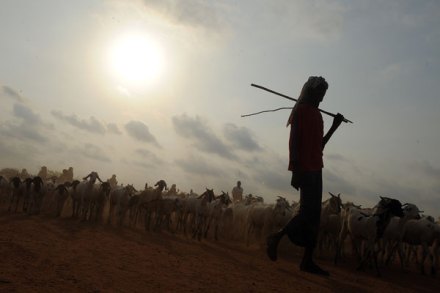
Laikipia, Kenya Darkness was closing in and one of the sheep was lost. A search party formed. On my Kenya farm big cats, African wild dogs and hyenas abound. Livestock left out overnight are almost sure to be devoured by morning. I’ve had a blind cow grazing in the safety of the garden croquet lawn pounced upon by eight lions and turned to a pool of gore between the peg and the hoops. From dusk to dawn we protect our cattle and sheep in a boma, or night enclosure. The lions go upwind and pee to spook cattle into a stampede from a thorn boma, but ours are made from sturdy Welsh-style dry-stone walls that will prevent any sort of break-out. In the gloaming we spread out into the grasslands.

Wild life | 31 March 2012

I looked at the bomb craters and their shrapnel blast patterns. Dozens of metres away, rocks and tree trunks were spattered and split from daisy level upwards. I gulped. ‘Say we hear a Sukhoi jet. How many seconds do we have?’ ‘Little time,’ said our rebel guide. ‘Maybe you see them before you hear them.’ ‘So what do we do?’ ‘Take cover in a river bed or a foxhole,’ the rebel said, pointing at the utterly flat, exposed land around us. ‘Tuck your arms beneath your body to protect your limbs,’ said my producer Daniel. ‘No,’ said Ken the fixer. ‘Wrap your arms round your head to protect it.’ My instinct would be ‘run’.

Wild life | 25 February 2012

Kenya   At Nairobi’s Muthaiga Club this week I bumped into Stanley Johnson, author of the superb memoir Stanley, I Presume and father of Britain’s future prime minister. Mr Johnson and I have an English education in common. Apart from Oxford and Sherborne, we attended the prep school Ravenswood, on the edge of Exmoor. ‘On the whole, I still take a positive view of my time at Ravenswood,’ wrote Johnson — and I agree. His book motivated me to dig out my old school reports. I was astonished to find that the masters seemed kinder than I recall them. The curriculum was more advanced than it is for my two children at equivalent ages today. And my letters suggest I was having fun. For years I had dragged around memories of a cold, brutal hellhole.

Wild life | 28 January 2012

Wau, South Sudan ‘Let’s visit the brewery,’ said Ken when we reached Wau. We were dusty and parched. It was searing hot. Like a character in Ice Cold in Alex, I saw before me a mirage of the cap popping off a chilled bottle. ‘Yes,’ I croaked. We had driven thousands of kilometres across South Sudan, which seven months ago won independence after half a century of persecution and war at the hands of Khartoum. On the road, we had met friendly, decent people struggling to create a new nation despite so many hardships and continuing attempts at sabotage by the Arabs. We had driven through lands that were as close to paradise as I’ve ever seen: vast forests and grasslands, high mountains with cool streams, lakes and the mighty Nile running through it all.

Wild life | 3 December 2011

Kenya In protest against the lack of law and order in my farming district I have decided to dye my white cows pink. I don’t know what to do about my red cattle, but I was inspired by the news story of the Dartmoor sheep man who dipped his flocks in bright orange to deter the thieves who repeatedly pilfered his wethers. Painting my cows shocking pink may be the only defence against the predations of Samburu rustlers armed with assault rifles who have hit us six times so far this year. My applications for a firearms licence have been turned down by the police four times. In the past, when we’ve called for help from the police, there has been silence on the radio waves, a kind of sigh of despair in VHF.