Wild life

The warrior arched his body, readying to sling his spear at my chest

 Laikipia With a shriek, the warrior arched his body, readying to sling his spear at my chest. The tear-dropped javelin point flashed in the sun. In the heat, dust swirled up from the hooves of the young blood’s cattle invading my farm. In his hand, the seven-foot shaft lance quivered, ready, poised for release — and then he yelled again. This is March 2015, I reminded myself, not AD 991 at the onset of the Battle of Maldon. I had asked the man to come with me to the police, where he would be arrested for trespass. The spear flashing was his response. He had pushed his cattle into what was left of my pasture, and many other herds had been there too for weeks — upwards of 7,000 beasts cropping the last of the grass.

Having oozed optimism for a decade, I am a bit down about the Hopeful Continent

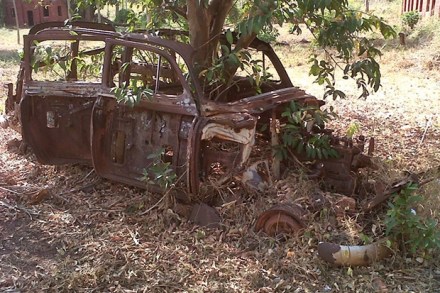
Juba I discovered a 1954 Morris Minor parked outside the Catholic mission station in Mopoi, South Sudan. The car had been there for so long that a guava tree was growing up through the gearbox. To me it was a tragic memorial to Daniel Comboni, the canonised 19th-century missionary who set out to ‘save Africa’ and whose followers built Mopoi. Just a year after that Morris Minor came off the production line, civil war erupted. Millions of deaths later, Mopoi was half-ruined, strangled by figs — though inside the church I found the votive candles still burning and the Blessed Virgin with a resigned expression, raising her hand as if she was about to say ‘nobody knows the trouble I’ve seen...’.

I want to do for field rations what Jamie Oliver did for school dinners

Hell’s Kitchen My ambition to open a fish and chip shop in Mogadishu has not happened yet, though I remain optimistic. Food, I’ve decided, is the thing to go for on my next entrepreneurial adventure. For a while I dreamed of going into the chicken trade, importing refrigerated containers full of wings and drumsticks from Brazil for sale up the furthest reaches of the Congo. Fortunes have been made in brokering African chicken deals. But so far my forays into the food business have not gone very well. I tried, for example, to sell pots of honey with my friend Tom at various local fêtes.

I cannot imagine living in a world without lions

Laikipia We are privileged to live with lions on the farm. We hear them most nights. We encounter them frequently. Out walking last month, I sensed four lions the instant before I saw them. Adrenaline raised a mane of goose bumps from my skull to my thighs. I should have shouted and advanced on them and certainly not run away. Instead I became rooted to the spot, hypnotised by their great yellow eyes. After seconds they timidly slunk off — in Kenya’s recorded history honey bees have killed more people than lions have — leaving me to feel neither scared, nor relieved, but thrilled. Sixty years ago Elspeth Huxley wrote that all the lions in Laikipia, the ranching plateau I call home north of Mount Kenya, had been shot out.

There are echoes of Turkey and Armenia in the revisionist view of the Rwandan genocide

Kenya It’s a long time since I thought of Thaddee, our Kigali stringer when I was covering Rwanda for Reuters. I remembered him because a recent fashion in western universities is the revision or even denial that a genocide against the Tutsis occurred in Central Africa in 1994. In recent months academics and some journalists have contacted me to attack my eyewitness testimony, saying what I saw was not Hutus like Thaddee murdering countless Tutsis but something else entirely. They claim either that people like me vastly exaggerated the number of Tutsi victims, or that we hid the truth, which was that most victims were in fact Hutus like Thaddee being butchered by Tutsis.

What happened when I tried to buy back my father’s farm

 Kenya I perused the brochure produced by Tanzania’s state corporation for livestock ranching, aimed at attracting foreign investors. Under ‘beef production’ was a photo of an American bison. Tanzania’s state bureaucrats might not know what cows look like — but they still know how to eat them. My father Brian Hartley had 3,500 cattle when socialist president Julius Nyerere nationalised our ranch on Kilimanjaro’s slopes. In the 1960s, Nyerere seized farms in ways Mugabe never dared emulate. I still have the note Nyerere scrawled in biro, taking my father’s business partner’s property within seconds of arriving there. Eating began immediately.

From Burma — or maybe Saigon — to Manchester via Calcutta

England   We dropped off our daughter Eve at her new school in the Midlands and started the long journey home to Africa. On the train we sat down and my wife Claire looked as if she’d seen a ghost when she saw the elderly lady in the opposite seat. After ten minutes Claire said, ‘I’m sorry I keep staring at you, but you look exactly like my grandmother. Where are you from?’ The woman said she was from Trinidad, but her family was originally from Kerala, in India. Claire said her grandmother was from Calcutta. Our son Rider looked puzzled. ‘Where are we from?’ For him the counties whizzing by our train window were foreign lands. After Kenya, Elspeth Huxley said, England was like a ‘castrated leopard’.

It’s time for Kenya to put aside dreams of singing wells and dancing bulls

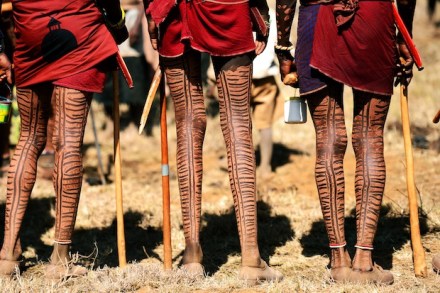
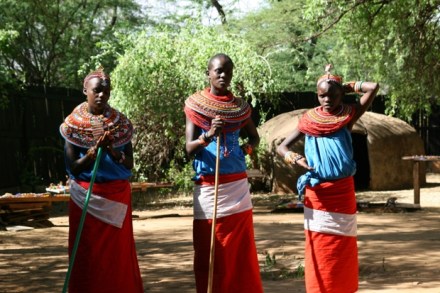
Laikipia   ‘Good morning, sir!’ The warrior strides up to me on the high plains and shakes my hand. ‘May I traverse your farm? I thought it impolite not to ask.’ I am astonished at his excellent English accent. This is a youth in full Samburu kit: red ochre paint, a snood from which pokes a long feather, bunting and Christmas tinsel, a toga, Man U stockings and thousand-miler tyre sandals. He carries a long-shafted spear tipped with an ostrich pompom, a stabbing sword, a knobkerrie ending in a wing nut nicked from a lorry and a finbo — a long thin wand. He tells me his name is Douglas. He’s been all the way through school and has ambitions to be a police officer or a pilot.

Climbing Mount Kenya with my 13-year-old daughter

 Kenya Highlands I’ve just descended Mount Kenya with Eve, my 13-year-old daughter, and her class of school leavers from Pembroke House. Afterwards our guide Steve, an ex-Grenadier guardsman, emailed me to say Pembroke kids were his favourites on these mountain expeditions. ‘How could one not enjoy the company of such a crowd of gregarious misfits,’ he wrote. On the scree in the freezing pre-dawn darkness a few hundred feet from Point Lenana, Eve’s altitude sickness kicked in so severely we had to return to the last camp, at Shipton’s, where she recovered and walked for another two days. But 30 out of 34 kids in her year reached the summit, puking and laughing all the way. It was a great rite of passage for all of them.

Please take your holiday in Kenya this year

 Rift Valley Many of my British tribe fled Kenya around independence in 1963 because they believed there was no future. Gerald Hanley, an Irish novelist who knew the country, forecast ‘a huge slum on the edge of the West, Africans in torn trousers leaning against tin shacks, the whites of their eyes gone yellow, hands miserably in their pockets...’ For sure, poverty here is an awful, destabilising reality. But Kenya’s past 51 years is a story of hard work and enterprise in which there has been real social mobility and countless stories of rags to riches. In everything from finance to farming, Kenyans are Africa’s most successful capitalists.

The books that have kept me alive

In bed Safety measures — I’ve never been good at them, so inevitably I inhaled and got soaked by the toxic agricultural chemical I was out spraying on a windy day in Kenya. At 49, I’m not worried about triggering distant future tumours — or infertility — and I’m still waiting to pay back on the mortgage of my misspent youth. I expected that being poisoned would be rather invigorating — similar to a whiff of tear gas in a riot, which I like as much as bee stings, or dragging my hand through nettles. I spent the next few days wondering if I might drown in my own lungs or that my coughing might turn me inside out, a frothing slug sprinkled with salt. Happily I didn’t die and then I remembered what a joy it is to convalesce.

Hunted in Mogadishu by the Sick Man and the Jilbab

From a way off, as he entered the café, he looked young and handsome but when he sat down there was something wrong in that face. He moved like a man with a terminal illness. For no particular reason I decided he was carrying a bomb in his briefcase. I felt the urge to run, to escape this crowded place. Instead we ordered tea. We met because I was looking for certain contacts in Mogadishu and I had been told he could help. I introduced the subject in a roundabout way, but I could see he knew exactly what I was after. He was obliging, breezily described his network of friends and connections, and told me he would set up the introductions. I kept my eyes on that briefcase placed next to him on his seat and when he reached for it I wanted to shout out.

A £50 million search for love

 Laikipia When I first knew Michael Cunningham-Reid he was such a strict teetotaller that he would not eat trifle for pudding in case there was sherry in it. For years, not drinking was his leitmotif, along with big cigars and a thirst for gambling, racehorses and catching marlin with just two lines out on the Indian Ocean. At Michael’s funeral at his Lake Naivasha farm, my wife Claire was the first to reveal she had secretly given him a glass of wine. Julian then confessed he had done the same and said over the microphone, ‘Own up, who else?’ Mourners under the fever trees wriggled on their hay-bale seats and the giggles rose to a roar of laughter.

Jubilant greetings to you, Celestino! How is the atmospheric pressure in your corner? 

 Laikipia ‘I am old and cannot work again,’ said Celestino. ‘But you are 46 and we have many years to go.’ ‘No. Working for you has made me blind.’ ‘We went over that and the optician said you need reading glasses because you are in your forties…’ He shakes his head: ‘I’m never going to have another job. I’m going home to grow my sugarcane.’ And so the man who appeared at my door without shoes 23 years ago is on his way. Named after one of only two popes to have resigned, Celestino held the fort for me while I went off to Rwanda, Somalia and the Balkans. He couldn’t boil an egg — he once declared eating too many eggs gave one influenza — but he could mix a wicked bloody Mary.

I don’t love money, but I love the risks it makes me take

On the flight into Kinshasa, I sat next to an elderly Englishman who was pallid with fear. He revealed that he was a bankrupt who was determined to survive by smuggling gold dust out of the Congo. He was on the verge of tears at the prospect of returning to the African city where only a week before he had been robbed at gunpoint of his cash and gold. He cut a sad and lonely figure but flying over that ocean of unbroken forest I couldn’t help but envy him a little bit for his risk-taking. I have never been interested in money but I did enjoy Moscow in the early 1990s, when I met young bankers who launched their business careers selling black-market Levi’s jeans on the pavement. One had become a commodity trader after hijacking a train laden with wheat.

Aidan Hartley: If Santa Claus tried to make a delivery, he’d be shot before he reached the chimney

Laikipia In the cattle rustlers’ camp, I know as I write this that the warriors are sharpening their blades, staring down the dirty barrels of their rifles, and loading their clips with bullets. Before full moon on the 17th of this month they will set out in their war paint, glistening with rancid butter and ochre. There will be four of them, young men not much more than teenagers. One will carry a bucket of sheep’s fat, and on this disgusting ration they will survive while lurking in the thorn scrub for days, never making a fire, leaving no tracks, sleeping cold on the rocks — and watching us. They will watch us as we go about our daily routines.

Aidan Hartley: Kenya is special like no other African nation

As I write this, my hands are seared and bruised from holding a hot iron after branding our cattle. We have castrated our steers and piled up the testicles on fence posts to fry later. We fought the cattle to the ground. We pulled their tails and they bellowed. I feel so happy. The cattle brand sizzles into the flesh with a hiss and a cloud of smoke as it burns in the brand KH9, which has been the Hartley mark here in Kenya since 1936. Finally we might have a stud herd that can make a difference. This has all been going on in my absence, but I have come home to the farm after covering dozens of wars and crises for 25 years and I will do it no more. Cattle rustlers and bandits will still shoot at me but I am going to be a farmer for the rest of my life.

Aidan Hartley: How Muslim militants and Western jihadis wrecked enchanting Somalia

Wizards inland from the little Somali port of Barawe bewitched a person to come to them by banging a nail into a tree and chanting his name. ‘He comes no matter how far away he may be,’ wrote Gerald Hanley in Warriors, his unrivalled classic about Somalia — for him a place of ‘swirling sandstorms, heat and billions and billions of flies’. But I need no nail in a tree to return to Barawe, which to me is a paradise I once aimed to make my home. I first saw Barawe from the high, red dunes of the hinterland. It glittered white against the azure Indian Ocean: beautiful houses and mosques, a colonial Italian lighthouse ringed by a necklace of surf.

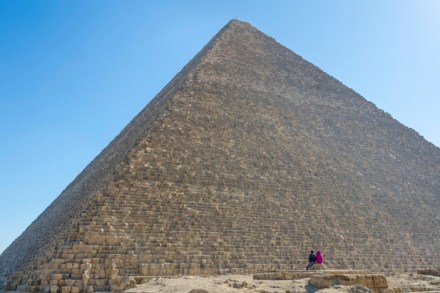
Aidan Hartley: I have been shot at and bombed so why do I fear a pyramid?

It was towards dusk by the time we had given the tourist police the slip and started climbing the pyramid of Mycerinus at Giza. It was Sebastian Barry-Taylor and I and we wore white linen suits. The 4ft blocks were easy enough to scale because erosion of the limestone had in the 4,500 years since construction weathered cavities or broken off corners so that there were plenty of hand- and footholds. We climbed quickly, looking down at the fat policemen in the desert shaking their fists up at us — but we did not rush it. To slip or stumble would be very dangerous because I could see that once one started falling down that slope there was nothing to stop one from bouncing all the way down. We did not care. We feared nothing.

Killing in Kenya: Aidan Hartley tracks the last steps of an elephant

  Laikipia The bull elephant had roamed our northern marches of the Laikipia plateau for decades. I always recognised him when he passed through the farm because his handsome 65-pound tusks had a distinctive curve and a thickness that showed his ivory might have grown much larger, had he lived. Instead, armed Pokot poachers ambushed him as he browsed with two other younger bulls one afternoon in the woodland at the top of our Pinguaan valley. They sprayed a burst of bullets at him and several rounds ripped into his lungs and guts. He was mortally wounded, but staggered away bleeding.