The turf

The joy of Royal Ascot

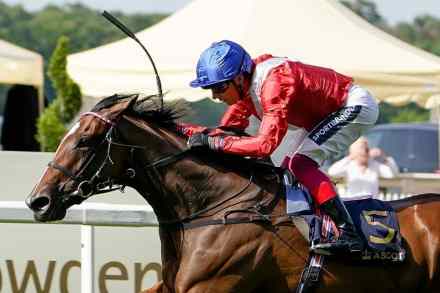
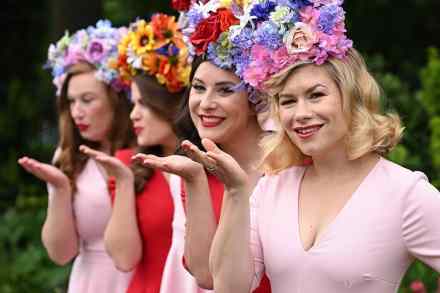
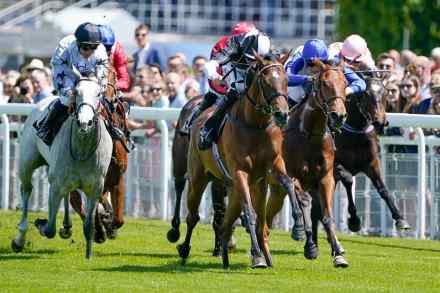
In a disintegrating country, stuck for the moment with a Prime Minister who can’t see the difference between a proliferation of photo-ops and the act of governing, we needed a Royal Ascot week. No racecourse in the world does photo-ops better than Ascot – the carriage processions, the toppers and tails (and yes, Madam, wear what appears to be a pair of mating macaws on your titfer if that is what rocks your boat), the bandstand singsongs. But at Ascot they know that the show counts for nothing without the substance and in its enthusiastic embrace of internationalism (another contrast with Downing Street) Ascot delivers, bringing top-class contestants from the United States, Australia, Japan, France and Germany to vie with Britain’s best.

How modesty triumphed in the Derby

In the absence on her Platinum Jubilee of Her Majesty, such an avid Derby attender in the past, and following the death just days before of the legendary Lester Piggott, it could have been a low-key, insignificant Derby. Instead, a truly impressive victory for the favourite, Desert Crown, turned it into a different kind of celebration. He had never really been away, but how the crowd welcomed the comeback when Desert Crown won Sir Michael Stoute his sixth Derby, becoming at 76 the oldest to perform the feat. The previous holder of the record was the 75-year-old Matt Dawson with Sir Visto in 1895, but in those days there were no Coolmores and Godolphins to face with their batteries of expensive, impeccably bred contestants.

Poor prize money is killing British horseracing

Seeing Fully Wet win the European Breeders Fund Maiden Stakes at Goodwood on Saturday was a genuine source of pleasure, and not just because I had thought her the pick of the paddock and taken the 8-1. My previous ‘best in paddock’ had finished last. The good news was that Fully Wet was the first winner in Britain for Barry Schwartz, the former CEO of Calvin Klein who is a leading owner-breeder in the US. The fact that he and fellow owner Andrew Rosen have chosen to have the £120,000 filly trained in Britain by John and Thady Gosden was a ray of hope amid the gloom and doom over British prize money.

The art of picking winners

‘Some of our players can hardly write their names,’ moaned one leading football manager. ‘But you should see them add up.’ With soaring energy prices and grocery bills going up, up and up, we are all getting better at maths. My monthly energy bill has just risen by more than I paid for my first car so I need to find a Twelve to Follow this summer that will have the bookmakers making a contribution to the difference. After his domination of the early Flat scene, the most logical option would be to slip on a blindfold, poise a pin over the list of Charlie Appleby’s Godolphin stable inmates and take the first dozen it pierces. But there are more fun ways.

The unacknowledged stars of the jump season

The Irish aren’t just good at winning horse races: they are in the Super League when it comes to celebrating victories. After Shark Hanlon’s Hewick had collected the £90,000 first prize in the bet365 Gold Cup at Sandown Park last Saturday, the red-haired trainer said with a twinkle: ‘The plan was to go home this evening. The plan just changed.’ I hope the craic was good: the year before, when Shark had his first Grade One victory with Skyace, he went home and fed 50 calves before opening a bottle of champagne only for his boxer bitch to start producing a series of eight pups – a process that engaged him until 5 a.m. There is nothing sinister about the name Shark.

The glorious return of the Grand National crowd

How wonderful after three years to have the crowds back to enjoy the glorious concoction of skill, bravery, razzmatazz and tear-jerking emotion Aintree’s Grand National meeting always provides. Having begun my working life on the Liverpool Daily Post in the days when developers’ greed nearly destroyed this national treasure, I relish my annual pilgrimage. Competition is almost as hot as at the Cheltenham Festival but somehow it comes without the angst. ‘You feel like it’s a party,’ said trainer Dan Skelton. ‘You are part of a carnival. I don’t drink but those who do tell me that they do that well here too.’ ‘Cheltenham is about pressure,’ said Grand National-winning trainer Gordon Elliott. ‘Aintree is more relaxed.

The British shone at Cheltenham

For Barbara and Alick Richmond, Living Legend’s game 12-1 victory in Kempton’s 1m 2f Magnolia Stakes last Saturday was their first in a Listed race and it showed. Living Legend had been driven to the front two furlongs out and held on bravely to prevail by a nose. ‘Come here you,’ said Barbara to the treasured Joe Fanning, the veteran jockey who had judged his finish perfectly, and enveloped him in a huge affectionate hug. You felt that if she could she would have picked him up, tucked him under an arm and carted him home to sit on the mantelpiece as a trophy. Of Living Legend, a lightly raced six-year-old who has had injury problems since running in the Dee Stakes at three, she declared proudly: ‘What more could you ask for in a racehorse?

He knew a swan from a duck: remembering Andy Turnell

You don’t always have to win to enjoy it. At the end of the £100,000 Paddy Power Imperial Cup at Sandown on Saturday the exhilarated 7lb claimer Archie Bellamy jumped off Lively Citizen with a grin on his face you could have driven a car through. ‘I got some spin off that,’ he declared. ‘You’re turning in and he just takes off. I had such a lot of fun out there.’ So he had, riding a well-judged race on the 28-1 shot to take the lead two out and keeping on well. Lively Citizen’s handler David Jeffreys, who trains at Hinton on the Green, Worcestershire, proved almost equally chuffed: ‘He’s a real trainer’s horse,’ he beamed. ‘He wears his heart on his sleeve and gives you everything.

My top tips for Cheltenham Festival

Even when the authorities were refusing Milton Harris the right to renew his training licence after he got his finances in a tangle and went bankrupt in 2011, they acknowledged that nobody questioned his ability to train racehorses. Nor can they. On Saturday, in Kempton’s Adonis Hurdle, Milton’s Knight Salute, purchased for just £14,000, took his unbeaten record over hurdles to five. His trainer has had 42 winners this season at a strike rate of 21 per cent and is one of the few British handlers ready to take on the Irish at Cheltenham this month. Knight Salute is a 10-1 shot for the Triumph Hurdle and no British victory would be more celebrated. Said MiIton: ‘The Irish horses are all talented but some of them have been beaten and we haven’t.

The young trainer Sam Drinkwater is one to watch

Certain sections of the media love to run a knocking story and when champion trainer Paul Nicholls’s horses failed to win as many races as usual over the past three weeks, the groaners were soon at it. Was the magic missing? Had the maestro mislaid his baton? The Nicholls response was characteristically bold. He sent out his star young chaser Bravemansgame, his best hope for the Cheltenham Festival, to contest a novice handicap at Newbury last Saturday in which he had to give lumps of weight to a couple of handy performers in the shape of Grumpy Charley and Pats Fancy.

Clash of the two-mile titans

The engine wasn’t what it was, they said. At ten years old the spark that had once made him a champion was flickering only intermittently at best. The fire in his belly had gone out. There had been five runs since his last victory and when Paisley Park, a horse who once nearly died of colic, whipped round at the start of Cheltenham’s Cleeve Hurdle last Saturday and gave his four top-class rivals a start of some 15 lengths it seemed all over. Ruby Walsh, the greatest Cheltenham jockey of them all, was watching for ITV. Asked if he would now persevere on Paisley Park he replied: ‘No, you don’t. You just give up and come back to the parade ring. He’s going round now in a race he can’t possibly win.

The new Tote is a ray of hope for British racing

There is nothing like visiting a stud early in the foaling season. As amiable mums-to-be saunter up to the paddock rails, it both rekindles the basic passion — admiration for the magnificent animals that give us such pleasure contesting their prowess — and recharges the optimism sometimes sapped by racing’s structural problems. In Friday’s winter sunshine, at Alex and Olivia Frost’s Ladyswood Stud near Malmesbury, the Dubawi mare Empress Consort, once trained by Andre Fabré and now in foal to the mighty Frankel, nibbled my notebook while Malaya, formerly a classy hurdler with Paul Nicholls, arched her neck and nuzzled up to help Alex reach her favourite scratching spot.

The rise of the long-odds winners

Seen any groundhogs your way? In racing the New Year began much as the old one had ended. At Cheltenham’s New Year’s Day fixture, the Dornan Engineering Relkeel Hurdle feature race ended with Danny Mullins driving to victory Stormy Ireland, a horse trained across the water by his uncle Willie Mullins, after their only serious rival Brewin’upastorm had fallen at the last. Six days earlier, at Kempton Park on Boxing Day, it had been the same story with Tornado Flyer, ridden by Danny and trained by Willie, capturing the £142,000 prize for the celebrated King George VI Chase after his closest rival had capsized at the final obstacle. But while Stormy Ireland had been fairly well supported at 4-1, Tornado Flyer was a 28-1 shot.

British horse racing’s debt to the Middle East

A joyful Saturday at Ascot recently reminded me that when the old Hurst Park Racecourse (near Hampton Court Palace) closed to become a Wates housing estate, the turf was taken to Ascot to form the basis of the jumping track then being established there. It was living beside Hurst Park — where the seven-furlong start abutted the Thameside Upper Deck swimming pool and jockeys focused on bikini-clad local lovelies sometimes missed the off — that turned me in my boyhood into a racing enthusiast, standing on the saddle of my bike perched against the boundary fence to watch the horses flash by or goggling at Prince Monolulu in his headdress flogging tips outside the front gate.

The culture of the weighing room needs to move with the times

In the first such case for 20 years, former rider Freddy Tylicki, paralysed and wheelchair-bound since his mount Nellie Dean clipped heels in a Kempton Flat race with Madame Butterfly, ridden by Graham Gibbons, has been suing Gibbons for £6 million in the High Court. Arguments have centred on whether Gibbons made a fractional misjudgment in an ambitious manoeuvre or whether he showed a punishable disregard for his colleagues’ safety. It hasn’t helped racing’s image that Gibbons is a jockey with a history of drink problems and that former champion jockey Jim Crowley testified that he smelled alcohol on Gibbons’s breath that day.

A feast of feelgood emotion

Ascot’s image is all champagne and fascinators, high society and high rollers. Said Art Buchwald: ‘Ascot is so exclusive that it is the only racecourse in the world where the horses own the people.’ But there is another Ascot — one entirely comfortable with tweeds, corduroys, cloth caps and woolly jumpers. It might not have been. Bernard Fitzalan-Howard, the 16th Duke of Norfolk and the Queen’s doughty representative at the course from 1945 to 1972, allegedly declared that jumping would be introduced at Ascot only over his dead body. Fortunately it didn’t require his early demise.

My tips for this season and a look back at our Flat Twelve

There are Flat people and there are jumping people. People like the late Captain Tim Forster, trainer of three Grand National winners, Ben Nevis, Well to Do and Last Suspect, who once declared: ‘One day I’m going to stand for Parliament. If I get in my first Bill will be about abolishing Flat racing and the second about doing away with hurdlers.’ People like Trevor Hemmings, the billionaire with the flat cap whose later life became a quest for Grand National winners in his green and yellow quartered colours, a quest in which he succeeded with Hedgehunter, Ballabriggs and Many Clouds. Sadly the kindest of owners died last month and won’t see his appropriately named Cloth Cap campaigned again for the National. Then there is J.P.

A brace of new books worth the space in any racing library

In 1986 a young Mark Johnston, having acquired a derelict yard on the Lincolnshire coast, phoned the Jockey Club to enquire about a licence to train. He was asked what experience he had. ‘I’m a vet in practice.’ Back came officialdom’s less than encouraging reply: ‘Just because you’re a vet doesn’t mean you can train a horse.’ So furious was the combative Scot that he almost decided on the spot to go to America to test out his theories. Fortunately for British racing, he persevered and had the cojones when the Jockey Club grudgingly offered him a jumping licence only to insist that it was a combined licence or nothing.

Charlie Appleby is the trainer to beat

I know what Keats was on about with his mists and mellow fruitfulness, but autumn is less of a joy when you daren’t rock up at the local petrol station with a jerry can to fill the mower for fear of being lynched by fuel-hungry vigilantes taking you for a hoarder. For me this time of year is defined more by my annual quest to bring off the autumn double, finding winners two weeks apart for the Cambridgeshire and the Cesarewitch. This year I managed two seconds with Anmaat (11–2) and Burning Victory (13–2): the dream goes on.

The making of a racehorse trainer

My best fun, through ten years reporting European politics for CNN, was bumping around the Continent with sparky young producers and the cream of international cameramen. Among the shooters was Woj, a pony-tailed Pole with a sardonic sense of humour and so unpronounceable a surname that when we were late joining a flight an airport announcer demanded: ‘Mr R. Oakley and Mr… Mr… Mr Oakley’s companion must go immediately to Gate 23.’ Todd was the only person I ever met who drank Coca-Cola with breakfast. Scotty had his hair parted by a sniper’s bullet in Iraq and lived to tell the tale. Darren was a film director manqué who framed each piece to camera with the meticulous attention of a Dutch miniaturist painter.