The turf

Il Est Francais really is something special

Some people seem to get all the bad luck. No Cheltenham Festival regular will ever forget the 2020 Triumph Hurdle when Goshen, trained by Gary Moore and ridden by son Jamie, came to the final hurdle coasting and 12 lengths in the lead, only to make a fractional misjudgment and hurl his rider into the turf. The communal ‘Oh my God, no’ gasp of horror that swept the stands lives for ever in my mind. But for the Moores things got worse. In December that year Jamie broke his back. In May 2022, brother Josh nearly died after a fall in which he broke his leg, many ribs and suffered a punctured lung – injuries which forced him to quit the saddle.

The best books about horse racing to buy now

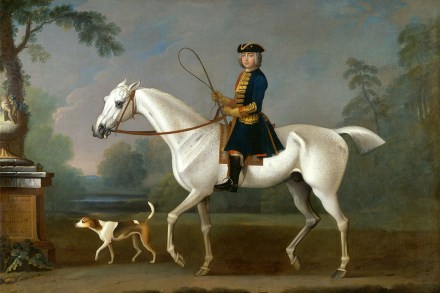
‘There are just not enough horses’ heads looking out of the boxes,’ said William Jarvis as he ended a 140-year-old family dynasty training in Newmarket. We are losing too many like him. But racing has surmounted previous downturns as a remarkable new book reminds us. George Stubbs is credited as the first great equestrian artist to present galloping horses correctly, with all four feet off the ground rather than splayed out like rocking horses, but James Seymour – to my eye an equally talented artist – had at least experimented with the idea.

In praise of Harry Cobden

For the past two years anybody who has asked Harry Cobden, Paul Nicholls’s stable jockey, which horse in the yard he was most looking forward to partnering, the answer has always been the same: Bravemansgame. But when declarations were made for the Grade 1 Betfair Chase at Haydock last weekend, the rider’s name attached to King George winner Bravemansgame was that of Daryl Jacob. Jacob was thus in line for the jockey’s share of the £112,000 prize. Cobden, said Nicholls, would be riding the yard’s entrants at Ascot instead.

My top tips for the racing season

The cockerels of jump racing had better look out: the Hen is back. At 76, Henrietta Knight, whose feat of training Best Mate to win three consecutive Cheltenham Gold Cups will probably never be equalled, is to renew the licence she relinquished 11 years ago to care for her late husband, Terry Biddlecombe. Racing fans will be delighted; perhaps a few of the 27 trainers interviewed in depth by a ‘retired’ Henrietta for her revealing book The Jumping Game: How National Hunt Trainers Work and What Makes Them Tick slightly less so.

The joy of jump-racing

When famous folk die you sometimes fish for memories of any encounter you may have had with them. The memorial service for Nigel Lawson spurred no memory-searching for me. I will never forget meeting him at around 4 a.m. on the pavement outside The Grand in Brighton on 12 October 1984, surrounded by blue police tape and with emergency service sirens blaring following the IRA’s attempt to blow up Margaret Thatcher’s cabinet at that year’s Conservative party conference. He was in pyjamas and a blue, braided dressing-gown; I was still in my suit having fortunately walked out of The Grand about half an hour before the bomb went off.

There’s no doubt this horse is something special

Aidan O’Brien is a superb trainer. You name it: he has won it. The Derby nine times, the Irish Derby 15. The 2000 Guineas ten times, the Irish 2000 on a dozen occasions. This year he passed the worldwide total of 400 Group One or Grade One victories. He is an innately modest man who always credits every member of his team and suggests the big decisions are made by ‘the Lads’ of the Coolmore operation, John Magnier, Michael Tabor, Derek Smith, et al. But that doesn’t mean Aidan cannot be extravagant in praising his winners, notably the progressive youngsters: the multi-billion dollar operation that is Coolmore is, after all, in the stallion-making business. Many have been praised along the way as the fastest he has trained, the most resolute, the most consistent.

The horses to watch in 2024

The definition of good luck in Russia is state security knocking at your front door and demanding ‘Ivan Denisovich?’ when you are able to reply ‘Ivan Denisovich lives two doors down.’ Sometimes you just have to be thankful it is someone else’s bad day. Steaming around the M25 on Saturday towards Newmarket’s Juddmonte-sponsored Cambridgeshire Handicap day, I suddenly noticed there was no traffic on the other side of the motorway. Soon I realised why: a huge overturned truck was blocking all three lanes. As I passed mile after mile of frustrated motorists, some leaning on their car bonnets for a smoke, I realised that if it had been on my side I would have been lucky to get to headquarters for the last race.

The murky world of bloodstock agents

Top owners are quitting horse racing because bookmakers nervous of a government and a Gambling Commission that know remarkably little about the horse-racing industry and ignore even the modicum they do know are making it harder and harder for them to have a significant bet, closing the accounts of those who refuse to acquiesce to ever more intrusive demands about their personal finances. The biggest bets, though, are made without interference from officialdom by those who buy unridden, untested and expensive racehorses before they ever set foot on a racecourse purely on their looks and their breeding.

The charm of Carmel races

Racing at Cartmel probably began in the 15th century when Brother John wagered a mug of ale with Brother Cain at Cartmel Priory that his mule could give his fellow monk two lengths start and beat him back to the Abbot’s orchard. Nowadays Cartmel is one of racing’s precious smaller jewels. The tiny track nestled in a Cumbrian valley and reached by a tangle of winding country lanes not only attracts jump racing crowds of up to 20,000 (only Cheltenham and Aintree do better) but it also gives them an experience not to be found anywhere else. Where else would the racecourse commentary declare: ‘And as they pass the Sticky Toffee Pudding Shop…’?

The fight over jockey saunas is heating up

When the nine equine athletes involved in the seven-furlong contest for Newbury’s Saturday highlight, the Group Two BetVictor Hungerford Stakes, strolled around the parade ring there was nowhere else in the world I would have preferred to be. As the sun gleamed off perfectly burnished coats and perfectly toned muscles rippled in sturdy hindquarters I wanted every one of them gift-wrapped and delivered to a paddock behind my garden. The classy Chindit, a Wootton Bassett colt trained by Richard Hannon, looked glorious. His stable companion Witch Hunter, sired like this year’s wonder-horse Paddington by Siyouni, gazed intelligently around him.

Tom Marquand was the star of Goodwood

On no course in Britain does jockeyship count for more than at undulating, tricksy Goodwood and although Frankie Dettori was able, on his final appearance there, to treat the expectant crowd to a couple of flying dismounts after victories on Epictetus and Kinross, the week’s top rider was clearly Tom Marquand. One racing sage told me during the week, ‘Racing will desperately need another Frankie to engage the public’s attention’ – and when I proffered Tom and his wife Hollie Doyle as a twosome who could do so together, the rejoinder was: ‘Of course Tom’s got the ability but he’s just too nice.’ He meant that you simply couldn’t imagine Tom Marquand winning headlines by stealing another jockey’s whip mid-race like Lester Piggott or scrumping a trainer’s cigars.

Relief Rally put the Ascot heartbreak behind her at Newbury

‘God it’s hot,’ said a Newbury waitress escaping into the lift from rain-soaked crowds jostling in the bars last Saturday. ‘Yes,’ I agreed. ‘It’s steaming.’ ‘Oh no,’ she replied. ‘That’s just the ladies waiting for Tom Jones,’ and the veteran Welsh warbler was indeed scheduled to be the after-racing entertainment. The race is framed to give some comparatively cheaper horsesthe chance of a good payday People go racing for different reasons and for punters one significant clue on Weatherby’s Super Sprint Day was the presence of trainer William Haggas.

Paddington emerged victorious but Eclipse was an enthralling duel

I should have listened to George Duffield. Sandown Park’s Eclipse Stakes, the first time the Classic generation of three-year-olds take on their elders, is one of my favourite races and the then 53-year-old rider’s triumph on Giant’s Causeway in 2000, beating Kalanisi by a head after Pat Eddery had driven him into the lead 200 yards from the finish, was the duel I will never forget. Duffield was Sir Mark Prescott’s stable jockey and soon after that race the Newmarket maestro took a call from Aidan O’Brien, Giant’s Causeway’s trainer. ‘Whatever you do Sir Mark,’ said the quiet Irish voice, ‘make sure you breed from him before you let him go!

Frankie gets his last Royal Ascot hurrah – in spades

We all wanted Frankie to have a last Royal Ascot hurrah. In the end he got four, including a ninth Gold Cup to list on the Dettori honours board, a ride in carriage four of the Royal Procession and a cheeky kiss for the Queen. Ascot has always done for him what the Hollies crowd at Edgbaston have done for Stuart Broad, revved up by his flailing arms as he pounds into the wicket. But let us not grieve: a truly thrilling Ascot provided plenty more evidence of quality in the saddle. John Gosden wryly noted of Mostahdaf: ‘He’s going to enjoy being a stallion’ ‘Riding is about reaction,’ said Ruby Walsh after Shaquille won the Commonwealth Cup for co-trainers Julie Camacho and Steve Brown in the hands of Oisin Murphy.

The high and lows of a Hong Kong jockey

You can take a jockey who has ridden there out of Hong Kong; it’s a lot harder, I reflected, after a chat at Newbury with Neil Callan, taking Hong Kong out of the jockey. Even though this is his second season back on home territory after spending ten years in that racing pressure cooker, Neil still watches every one of the 18 races a week at Sha Tin and Happy Valley and remains grateful for what Hong Kong did for him. He went out there as a good jockey – you don’t get invited to take up a Hong Kong contract unless you are in the top echelons elsewhere – and he came back a better one. Back in the UK, Neil Callan, the champion apprentice in 1999, had been in the top five for some years.

The science of horse racing

Everybody in racing is looking for an edge. With 7-4 the field, the punter is looking for a 2-1. The racecourse executive wonders which pop group will add 4,000 to the gate if booked for after-racing entertainment. The jockey on a confirmed front runner plans to slip the field out of the stalls. Trainers all seek an extra ingredient to help win them races consistently. At Sarsen Farm, a state-of-the-art new yard in Upper Lambourn built on the site of what was once a decrepit farmhouse then a Jockey Club tractor depot, Daniel and Claire Kubler are hoping that what a famous if ungrammatical advertisement for white goods used to call ‘the appliance of science’ is going to do the trick for them.

My summer Twelve to Follow

Usually in May I am still casting an enviously nostalgic eye backwards to Aintree and Cheltenham, reluctant yet to pack away my stouter shoes and rainproof Barbour. This year it is different: I have rarely looked forward more to the Flat. It all began with two glorious races for the Guineas. Rock-star wrinklies make farewell tours an annual event, but this really is to be Frankie Dettori’s last year in the saddle and in this year’s 2000 his victory on Chaldean was a perfect reminder of his skills. Andrew Balding, scoring his second training success in the race in four years with the first horse sent to him by Juddmonte, was characteristically happy to deflect the glory Frankie’s way, saying: ‘What a brilliant ride.

Kitty’s Light is the horse of the year

John Trotwood Moore, one-time State Librarian of Tennessee, was a racist and defender of the Ku Klux Klan. But in the saying for which he is best remembered he did get one thing right: ‘Wherever man has left his footprint in the long ascent from barbarism to civilisation we will find the hoofprint of the horse alongside it.’ I was reminded of his words because of those used by trainer Christian Williams after his Kitty’s Light had won a famous victory in last Saturday’s bet365 Gold Cup at Sandown Park. Christian is not only an outstanding trainer of staying chasers, he is also the father of a little girl called Betsy who was recently diagnosed with leukaemia.

The grand shame of the Grand National protestors

When jockey Derek Fox came over from Ireland to join the Scottish stable run by Lucinda Russell and her partner, Peter Scudamore, the long-time champion rider, he was teaching himself to read via texts on his phone. Now he discusses books with Scu. Cleverness comes in different shapes and it was a supremely intelligent ride Fox gave Corach Rambler to win this year’s Grand National, just as he did winning two Ultima Chases at Cheltenham on the same horse. The same close-knit team won the National six years before with One For Arthur but this time Fox’s participation was in doubt until just hours before the race when, after completing a series of press-ups, he finally declared himself recovered from a shoulder injury.

In praise of small racecourses

Mrs Oakley not being a turfista, she rarely joins me on a racecourse expedition. But before we had a dog there used to be one exception. When I was headed for Stratford-upon-Avon we would make a weekend of it. Mrs Oakley would take in a matinee at the Royal Shakespeare Company, I would go racing and we would regroup for dinner. If I had enjoyed a successful day we would upgrade the dinner and the bottle which accompanied it. Had she been with me last Saturday it would have been a very good bottle. Cheltenham it isn’t, but the Stratford track, not far from Anne Hathaway’s cottage, is what the bard might have called a comely little wench of a racecourse.