The turf

The importance of second chances

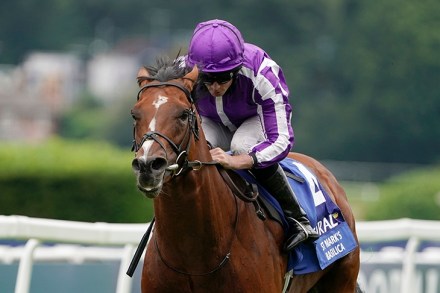
A Sandown Saturday proved the perfect send-off for 12 raceless days on the otherwise wonderful Isle of Mull. A Frankie Dettori win on a progressive colt who could bring the Queen a Derby victory in her Platinum Jubilee year of 2022, another victory that restored the rumbustious Jane Chapple-Hyam’s faith in her best filly, and a talk with a jockey whose career is taking off nicely thanks to hard grafting after an early mistake left me in perfect holiday mood. I was bouncing anyway thanks to a meticulously researched family history that Mrs Oakley had bought me to celebrate a birthday with a big zero attached. Links back through a few generations of Worcestershire farmers and teachers were no surprise. These were intermingled with labourers, grate fitters and a waterworks stopcocker.

A great contest without the skulduggery of the past

Taking a day off racing to enjoy Joe Root’s regal 180 not out against India on the third day of the England-India Test — tranquillity interrupted only by a call from home to say that Flat-coated Retriever Damson had eaten the TV controller — I was struck by the amount of ‘gardening’ indulged in by batters. After any ball that has beaten them they stroll down the pitch, glare malevolently at an innocent patch of turf and prod back into inoffensive conformity the infinitesimal protrusion on the surface which they have assured themselves was responsible for the ball whipping past their hung-out bat. Excuse accepted. Mental confidence restored.

Proper racing is back at last

At last proper racing is back. Through the long days of lockdown horses and jockeys have still given their all on the track. But racing is an emotive, instinctive sport which needs the oohs and aahs of sizeable involved and vocal crowds to impart its magic. With Ascot’s King George VI and Queen Elizabeth Stakes, followed by Glorious Goodwood, at last it felt again like the real thing. In 2020, when the great Enable won the King George VI for the third time, it was behind closed doors in heavy rain. When Derby winner Adayar this year walked into the parade ring with the arrogance of a finely tuned athlete, you could see people literally standing up and taking notice, nudging each other with their racecards.

Jockeys suffer online abuse just like footballers

At least England’s defeat in the European Cup final has spared us the sight of Boris Johnson, who can scent a photo opportunity at 4,000 yards over the horizon, indulging in any more embarrassing antics in a No. 10 football shirt. Not that he is the only prime minister to have sought to ingratiate himself with football-followers. As BBC political editor in Tony Blair’s time, I learned that the government was thinking of supporting a World Cup bid and fixed an interview with sports minister Tony Banks. Later, to gauge just how much government commitment there was, I spoke to Alastair Campbell in Downing Street. That night Banks called me: ‘What the hell have you done? We’ve both been summoned to No. 10 tomorrow morning.

The 4,000 spectators at Sandown Park weren’t short-changed

When only four horses were declared to contest this year’s Coral Eclipse Stakes at Sandown Park, there were the usual mutters. Since owners and trainers are always complaining (with justice) about the low levels of prize money in British racing, why weren’t more of them sending their charges to compete for the £640,000 on offer? Brought up within walking distance of the Esher track (and yes, there were occasions when, having blown my stake money and then some, I did have to walk home), I have always been fascinated by the Eclipse, the year’s first contest between the three-year-olds and their elders.

The rise of older jockeys

There are many facets to Royal Ascot’s appeal. For some it is glamour, style and opulence. For some it is the betting opportunities afforded by large fields, for others an opportunity to pay tribute to a revered monarch and to share her obvious pleasure in its equine stars. What I love is the sheer intensity of the competition. The immeasurable kudos afforded to owners, trainers and jockeys of being able to say you have had a Royal Ascot winner ensures the fiercest effort from all concerned: there is no such thing as an easy victory at Royal Ascot.

The Derby was a game of musical saddles

We all know it takes courage to win races over jumps, along with athleticism, stamina and speed. But you need courage to win on the Flat too and Adayar showed that in abundance winning this year’s Derby. The aerial shots show vividly the moment, two furlongs from the finish, when early leader Gear Up moved fractionally away from the rail. Jockey Adam Kirby, who had been tracking him all the way, saw his opportunity and asked Adayar to forge through the narrow gap. His brave mount responded and suddenly they were clear, going on to win by four lengths in a success that was truly popular with the racing community. His fellow jockeys all exited the weighing room to greet the winning rider with handshakes and hugs.

Racing badly needs the full relaxation of restrictions

Humans are herd animals too. Jockeys, trainers, owners and those enjoying the few prized media attendance slots for racing behind closed doors have agreed that without the crowds it simply hasn’t been the same experience. TV coverage of racing is first class going on brilliant and has provided vital information and entertainment through lockdown, but we in the racing tribe need to be regularly on the course, rubbing shoulders with the like-minded: ‘Did you see what that one did last time at Newbury? Why isn’t X riding his regular stable’s two-year-old here?

My Twelve to Follow on the Flat

Combing through race recordings to try to find some fun horses for Spectator readers this summer, I have been struck by how often even the best riders find themselves stuck in equine traffic with plenty of horsepower underneath them but nowhere to go. Gaps open in a flash and then close again, forcing riders to snatch up and probe, often too late, for another opening. It is never, though, as simple as it looks from the stands. One former top jockey was berated by a trainer on his return to the unsaddling enclosure: ‘Why didn’t you go for that gap between the leaders two furlongs out?’ ‘Because, Guv’nor, the gap was moving a lot faster than my horse was.

My top tip for the Grand National in 2023

Want to know the winner of the Grand National in 2023? You heard it here first: when the ante-post books open, get in early on Kitty’s Light, trained by Christian Williams and to be ridden, I hope, by Jack Tudor. Being married to a racing scribe is a bit like being an angler’s wife: you hear rather too often the tales of the one that got away. Mrs Oakley is so inured to my hard luck stories that she tells all her friends they can be sure that any horse I recommend will finish second. But after Sandown Park’s jump racing finale last Saturday, she conceded my point and consolingly opened a bottle of the expensive Condrieu we reserve for special occasions. Kitty’s Light caught my eye in the three-mile Badger Beers Chase at Wincanton on 7 November last year.

Hats off to Rachael Blackmore

Sporting heroes in our modern world have an extra burden to carry. Within seconds of their triumph, with the adrenaline still pumping, somebody is going to thrust a live microphone in their face and demand: ‘What does it feel like to have been the first person of Asian lineage to surmount six metres in the pole vault, to have been the first Lithuanian to have won the Sahara Rally, or the first transgender non-swimmer to have crossed the Channel in a self-propelled bathtub?

The secret of Ireland’s racing success

How Father Sean Breen would have loved this year’s Cheltenham Festival. The late parish priest at Ballymore Eustace, who owned a horse or two and had a pundit’s tipping spot on Kildare FM, used to complain that it was most inconsiderate of people to die in the Cheltenham run-up: over 40 years, it was only ever funerals that stopped him attending to conduct his usual service for his fellow Irish attendees, bless a few Irish horses and pray that the Almighty would leave enough in the bookmakers’ satchels for Irish punters to be paid out their winnings. There was nothing in the Bible, he used to argue, that said we should not gamble. Beware the invaders from across the Irish Sea at this year’s Cheltenham Festival, I wrote a month ago.

The true cost of Gordon Elliott’s crass stupidity

Thanks to Covid, there could be no spine-tingling roar at the Cheltenham Festival this year as the first race runners set off, no exultant crowds lining the rails from the finish to the winners’ enclosure to cheer their sweaty heroes. Twitchy racing officials will have watched with their gaze half averted for fear that equine fatalities or excessive whip use by jockeys desperate to extract the last ounce of effort from their mounts will have swelled the chorus of the sport’s opponents and would-be eradicators. Publishing schedules mean that I must write before a Festival race is run, but I have no doubt that the week will have been dominated in many minds by the Man Who Wasn’t There.

Ireland’s love affair with horse racing

With the Cheltenham Festival close, the quest for serious punting money intensifies. I had one potential contributor identified at Kempton on Saturday. With trainer Dan Skelton on red-hot form, and his jockey brother Harry currently winning on 22 per cent of his rides, I reckoned that their candidate for the Sky Bet Dovecote Novices’ Hurdle, the clearly useful Calico, a decent horse on the Flat in Germany, was the business at a tasty 10-3. Three hurdles out, Harry had Calico travelling strongly behind the two leaders and I was not only counting my money but also starting to frame a few ante-post doubles for the Festival.

The coup that nearly cost the bookies £10 million

Since coup conspirators nearly won £10 million from the bookies, the sport has divided into two camps. Some grinned and wished good luck to the schemers in their efforts to worst the Old Enemy; others insisted with sober faces that it was a scandal which besmirched racing and diddled honest punters who weren’t in the know. With most racing eyes firmly fixed on the Dublin Racing Festival on 7 February, bookmakers became aware overnight of potentially huge liabilities on three horses in obscure races, each saddled by a different trainer, who had been linked together at long prices in multiple trebles and doubles. Their panic grew as first Fire Away, trained by Laura Morgan, won the 1.25 Class 4 novice chase at Musselburgh by 19 lengths.

My tips for Cheltenham

Dry January it wasn’t and I am not referring to the trainers who normally undergo an annual abstinence but who abandoned the effort this year in sheer frustration at racing’s woes. The unrelenting downpours that have seen a whole string of race meetings called off through waterlogging struck again last weekend. Cheltenham, which had already lost its New Year’s Day fixture to the weather, had to call off its Trials day too, the last scheduled fixture before the Festival in March. With so many opportunities lost for testing individuals’ mettle round the Gloucestershire Valhalla’s undulations and gradients, there will be an extra question mark dangling above many Festival entries this year.

In defence of gambling

Doing good doesn’t always work out as expected. A regular entering his local pub takes pity on an old lady seemingly fishing with a bent stick and string in a kerbside pool of rain. He invites her in for a drink. As she raises her gin and Dubonnet, he asks amiably: ‘So how many did you catch today?’ ‘You’re the eighth,’ she replies. Imagine another pub scene. As lockdown is relaxed, a customer’s order of three pints of bitter and two G&Ts is refused by the landlord: ‘Sorry, Squire, but according to my government boozometer that takes you over your permitted weekly Alcoholic Spending Limit of £100. You signed for two rounds on Sunday.

The poetry of Bryony Frost

Hearing that the Queen has both a real and an official birthday, a small boy asked the obvious question: ‘Does she get two lots of presents then?’ Horses, too, have an official birthday: no matter the month in which they were foaled, they all become one year older on 1 January. The advantage for some is that they then become eligible for the increasingly popular veterans’ races confined to horses aged ten or more, like the classic Unibet Chase we saw at Sandown last Saturday. What racegoers love about these contests is the presence of familiar names on which they have won money, or narrowly lost it, over the years, with whose idiosyncrasies and running styles they are familiar.

The horse with a taste for human flesh

Greville Starkey’s great victories as a jockey included the Prix de l’Arc de Triomphe on Star Appeal at 119-1. In 1978 he won the Derby and Irish Derby on Shirley Heights and the Oaks and Irish Oaks on Fair Salinia. He was also known for his unerring mimicry of a Jack Russell terrier’s bark, a distinction that once had an airliner’s departure delayed while stewards sought in vain the animal aboard. When he deployed his trick during a celebratory dinner at Quaglino’s, trainer Henry Cecil wrapped a napkin round Starkey’s neck and led him yapping out of the restaurant on all fours.

Racing books to get you through lockdown

Who owns Altior? I ask because of the brouhaha over Nicky Henderson’s late withdrawal of his stable star, winner of a record-breaking 19 consecutive races over jumps, from last Saturday’s Betfair Tingle Creek Chase. Official description of the chase course going was ‘soft, good to soft in places’. Nicky’s description was ‘a bottomless glue pit’ and he withdrew Altior despite the gelding’s proven ability to cope with normally soft ground. The racing public, trade press and bookmakers had all been keenly anticipating Altior’s renewed clash with Politologue, the Paul Nicholls-trained grey who won the Champion Chase at the Cheltenham Festival in March following Altior’s late withdrawal from that race with a bone splint.