The turf

Why racing is not a ‘posh’ sport

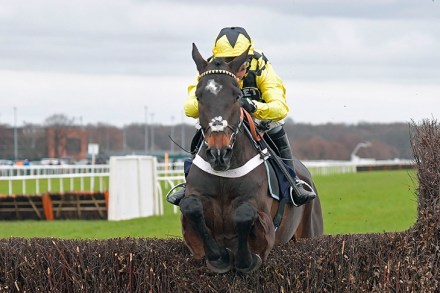
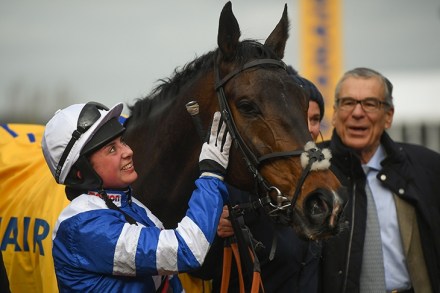
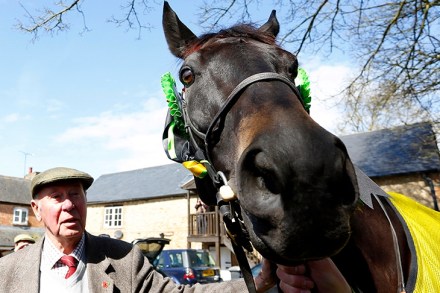
Why hasn’t Bristol De Mai become as beloved by the racing public as his fellow greys Desert Orchid and One Man were? Probably because the jumping world has become obsessed with the Cheltenham Festival and the best Bristol De Mai has achieved there is a third place in the 2019 Gold Cup. For quite some time Bristol’s trainer, Nigel Twiston-Davies, has declared that his stable star has not been given the credit due to him and he has had good reason: after Bristol De Mai’s victory in Haydock Park’s Betfair Chase last weekend, there can be no doubt about his rightful place in the pantheon of top chasers. People like me who did not back him last Saturday at odds of 9-4 need their heads examining.

Our Twelve to Follow have generated a record-breaking profit

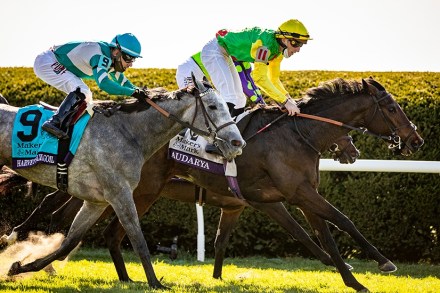
First the company report. Readers who invested a tenner on the nose each time our Twelve to Follow for the Flat turned out have made a wallet-warming profit of £638. Only the management consultants on whom a panicky government has showered gold-plated contracts with no questions asked have done better than that in these Covid times. The dozen contested 39 races and seven won, four of them more than once. The standout was James Fanshawe’s filly Audarya. After a 12-1 Newcastle success she was sent to France for the Group One Prix Jean Romanet. Ridden by Ionitz Mendizabal, she won by a neck with British bookmakers paying 33-1. On-course investors with the Pari-Mutuel collected at 47-1.

Nowhere does racing quite like Cheltenham, even behind closed doors

With or without the crowds, nowhere does racing like Cheltenham. The four winners, including her first Group One shared equally by Hollie Doyle with her housemate Tom Marquand (an item since Pony Club days) made it a Flat finale to remember on Ascot’s Champions Day a week before. They are not just two prodigiously talented riders but the sort of level-headed couple you would want living next door to you. But in the jumping game, every obstacle crossed adds to the drama, the less frantic pace enables every observer to appreciate unfolding tactics and the horses are often around long enough to be as well known as their riders.

It is time to fight for the future of racing

Fortunately for me and the politicians we entertained over my years covering the darkest profession, Mrs Oakley didn’t do a Sasha Swire and keep a gloriously indiscreet diary. Indeed her rule was that politicians who came to our house and talked only about themselves didn’t get invited a second time, a test that was frequently failed. The Swires’s guests, especially the Cameroons, seem to have talked about nothing else. But Mrs Oakley can on occasion do the Swire sardonical. As our young flatcoat retriever, who longs to grow wings, disappeared over the horizon last weekend in pursuit of an indignant partridge, a one in three gradient loomed and I puffed that I wouldn’t be talking much for the next few minutes.

The trainer who sings opera to her racehorses

Wetumpka Racing? When your yard is running at a handsome strike rate of 40 per cent wins to runs you can perhaps afford to name your racing partnership after a natural disaster. After all, it was 85 million years ago when a massive meteorite smashed into Alabama at Wetumpka. Trainer Heather Main, based in 90 acres of rural idyll at Kingston Lisle, near Lambourn, explains that Wetumpka is in fact an Indian word describing the bubbling waters of the river that resulted, and you have to agree that ‘Wetumpka Racing’ has a greater impact than something more traditional like H. Main Racing. Located around a grand wisteria-clad 1718 farmhouse with ancient yew sentinels, the yard, which Heather runs with her popular vet husband James, has lately been among the winners.

The heirs to Frankie Dettori

It is all, it seems, in the tweaks. So said Aidan O’Brien, Ireland’s master-trainer supreme, before his tough filly Magical defeated Ghaiyyath, the world’s highest-rated horse, in the Irish Champion Stakes on Saturday. He wouldn’t have run her against the relentless galloper who had beaten Magical the month before, he insisted, if he hadn’t felt there was something he could tweak to make the difference. If ever there was a man in racing who shouldn’t have any regrets it is Aidan O’Brien, but in a fascinating Racing Post interview last week with David Jennings Aidan revealed: ‘Every single race we’re beaten in hurts. The bigger the race the more it hurts. If it doesn’t hurt it doesn’t get into your heart.

Racing can’t survive without crowds

We all have weeks when every win bet finishes second and every each-way comes home in fourth. You begin to feel as though the Fates have something against you personally, as with the American punter who had lost his job, his wife and his home. Call him Fred Jones. On a seaside racecourse he invests his last ten dollars on a Tote jackpot. All six horses come in, but as he approaches the pay window, joyfully brandishing his win ticket, a gust of wind whips it from his hand and blows it out to sea. Despairingly, he sinks to his knees and implores aloud: ‘Just what have I done to deserve this?’ At which point the thunder clouds part for a moment and a voice from above declares: ‘I really don’t know, Jones.

Why it pays for a jockey to follow the rules

Lester Piggott was famous for pinching other jockeys’ rides. He used his friendship with owner Ivan Allan to have Luca Cumani’s regular rider Darrel McHargue ‘jocked off’ Commanche Run in the 1984 St Leger. The disgusted McHargue said that he would spend the day playing tennis rather than watch the race, which duly supplied Piggott with his 28th Classic victory. Asked on Leger morning if rain would spoil Commanche Run’s chances, Lester replied coolly: ‘No, but it will ruin McHargue’s tennis.’ Piggott is famously a man of few words but he can make them tell. Former jockey Dean McKeown told me once of riding 33-1 shot Miss Merlin at Windsor as an apprentice.

In a jam: what Goodwood did with 900 punnets of strawberries

It was to have been, if not a glorious return, at least an encouraging one. On the Stewards’ Cup day which concluded Goodwood’s flagship meeting last Saturday, spectators — 5,000 of them — were to have been admitted to a British racecourse for the first time since lockdown. Course director Adam Waterworth and the Goodwood team had spent £100,000 preparing to keep the pilot scheme crowd not just happy but secure. Carefully socially distanced and out in the open air, the 5,000 would have been far safer than those crowding south coast beaches that same day or drinking at inner- city pubs the night before. But a last-minute change of heart by a Covid-engulfed government consistent only in its inconsistency saw the pilot scheme summarily scrapped overnight.

Why racing will miss Barry Geraghty

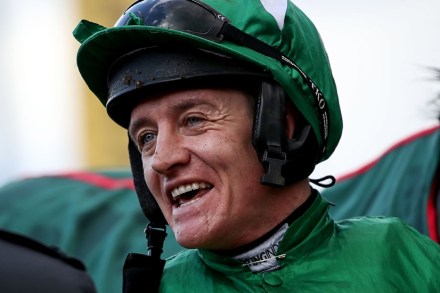
When I first began racing, few jump jockeys reckoned their careers would last beyond the ages of 32 or 33. But they last longer these days. Lying on the Aintree turf, though, after a fall in April last year, with his leg bent impossibly inwards, the 39-year-old Barry Geraghty wondered if that was where it was all going to end for him. (He has in the past few years broken both legs, both arms, fractured eight ribs and punctured a lung.) But that was only until the morphine kicked in. After six months of rehab for a broken fibula and tibia, he returned once more to the saddle and demonstrated with five glorious victories at the Cheltenham Festival in March that he was as good as ever.

Aidan O’Brien’s Derby victory was an act of grand larceny

It wasn’t so much a Derby victory this year as an act of grand larceny. Aidan O’Brien isn’t just a master racehorse trainer. He is a master of psychology too. On Serpentine, a son of his first Derby winner Galileo, he put up a capable but little-known jockey who hadn’t had a winner for 260 days assuring him that his mount would last two furlongs more than the Derby distance. Emmet McNamara duly pushed Serpentine into a massive lead and the other jockeys assumed they would blow up well before the finish, just as two front runners had done earlier in the Oaks. By the time the others realised that Serpentine wasn’t stopping, it was too late.

Royal Ascot was a triumph – even without the cheers and the hats

Royal Ascot it wasn’t: for the first time in her 68-year reign, thanks to Covid-19, the Queen was not there. Nor were the owners, the crowds, the hats or the morning suits. But just as the Cheltenham Festival gave us the last great sporting spectacle before lockdown, so Ascot celebrated the behind-closed-doors return of sport with five days of supreme skill and drama. As the no-nonsense Hayley Turner put it after a 33-1 victory: ‘It’s still an Ascot winner. Still the same race, the same grade of horses. It’s just as hard to ride winners whether anyone is here or not.’ The smooth Ascot operation provided a masked-up, biosecure environment in the open air with never a slip and it has done all sport a favour.

Horse-racing has made a triumphant return

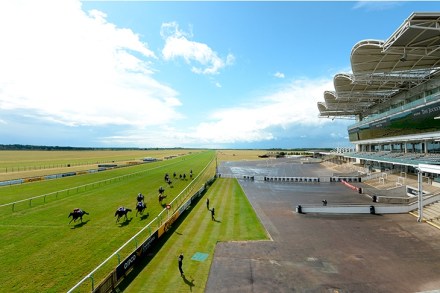
Horse racing, it turns out, wasn’t the first sport back in post-lockdown action: that distinction went to pigeon racing when some 4,400 birds took to the air and raced from Kettering to Barnsley. Nor did the first Classic, the 2,000 Guineas at Newmarket, provide the hoped-for tonic headlines about a new super-horse to succeed the great Frankel. Pinatubo, a scintillating winner of all his six races as a juvenile and the highest-rated two-year-old since 1994, ran a perfectly respectable race to finish third, but the high hopes that the hot favourite was going to prove to be something truly special were dashed. It seems that the bigger, rangier types caught up with Godolphin’s compact little star over the winter.

Racing needs us as much as we need it

Horseracing in Britain, which was suspended by coronavirus on 18 March, is due, as I write, to resume on Monday 1 June at Newcastle. Some French tracks reopened last week but Irish racegoers will have to wait until 8 June. In all cases, including the belated staging of the 2,000 and 1,000 Guineas at Newmarket on 6 and 7 June, Royal Ascot from 16 to 20 June and the Derby and Oaks at Epsom on 4 July, it will be racing behind closed doors. Thank you, France, for the hors d’oeuvre that served as a reminder of the hot form on the Flat of jockey Pierre-Charles Boudot and, over jumps, of François Nicolle, champion trainer for a second year last year.

How to get your racing fix under lockdown

There is racing elsewhere in the world. It restarted in France on Monday, la course de chevaux being classed in that fine country as an agricultural activity. My friend the form guru, who combs back six races in search of clues, has even cast his net to include somewhere called Morphettville in Australia where last week he succeeded in backing a 65-1 winner. When, over the phone, he sensed my raised eyebrow at a horse with truly believable form being allowed to start at such odds, he explained that the animal had won two previous races: ‘The horse wasn’t to know they were lower-class events. He still got the same boost to his confidence.’ Good point.

What the Queen will miss most in self-isolation

Seven hundred pages of memoir is stretching it a bit even for an ex-inhabitant of No. 10 with David Cameron’s need for self-justification. Halfway through For the Record I was tempted to skip a chapter or two, but then I encountered a passage that made the slog worthwhile. Talking about his relationship with the Queen, her 12th prime minister notes two essentials in preparing for the weekly audience. First check the BBC news headlines because she is always formidably well informed. Second get up to speed on what is happening in the horse-racing world. (He used to check with his bloodstock agent friend Tom Goff whether one of her horses had won that week or one of her mares had foaled.

A first-hand account of a racehorse trainer’s battle for survival

Sport may well be ‘the great triviality’ as Timeform founder Phil Bull once put it, and racing as trivial as any. But many thousands of jobs depend on it. To get an idea of the impact the pandemic is having on the 550 licensed training yards in Britain, I called up my friend Simon Dow at his Epsom yard. Back at Clear Height stables, where he has had his greatest successes with horses such as Young Ern and Chief’s Song, Simon has around 30 horses. Typically, the first thoughts of this articulate workaholic were with those living in the London tower blocks visible on clear days from the Epsom gallops. ‘We have to remember how lucky we are by comparison. We have so much freedom.

Does horse-racing have a future?

Asked, after his Imperial Aura’s impressive win in the Northern Trust Novices’ Handicap Chase at the Cheltenham Festival, if he had been worried about one particular challenger in the race, Kim Bailey wryly replied: ‘Of course I was worried. I’m a racehorse trainer.’ Trainers now have a lot more to worry about. When we finally resume racing — and few expect it to be after the six weeks originally announced — how many of the 14,000 racehorses in training as the suspension was announced will be coming back? How many owners whose businesses have suffered from Covid-19 will see paying bills for forage, farriers and vets’ attentions as a priority use for their remaining funds?

Cheltenham Festival was a triumph

The socialite MP Chips Channon once noted in his diaries his feelings about an after-lunch snooze in parliament’s Library: ‘It was,’ he said, ‘a true House of Commons sleep. There is no sleep to compare with it — rich, deep and guilty.’ With racing by then almost the only spectator sport available, the 60,000 a day who turned up for this year’s Cheltenham Festival had similar instincts. Thanks to coronavirus, millions were facing ill health, bankruptcy or worse while we gloried in the comparatively trivial distractions of who arrived first past the post in 28 races.

The magic of Cheltenham Festival

Every time the Cheltenham Festival looms, I recall a remarkable experience. It was already 25 years since Dawn Run’s recovery from a seemingly impossible position to win the Gold Cup of 1986, becoming the only horse ever to add victory in our greatest steeplechase to a triumph in the Champion Hurdle, when, for my Festival history, I interviewed her jockey. Jonjo O’Neill took me through every stride of the race as if it had been the day before: ‘We were flying down the hill and I could hear them coming behind us. I thought we’d gone a right gallop and couldn’t believe they were so close to us. We jumped the third last and they were jumping up my backside and I thought, “Jesus, if we don’t ping the second last we’re going to get beat.