The Spectator's Notes

Mugabe envy in Scotland

Who owns Scotland? The people who most commonly ask this question believe that the land has been wrested from ordinary Scots by evil lairds and rich foreigners (by which they chiefly mean the English). Now the Scottish government is bringing out a report on how to correct this alleged injustice. It may recommend extending community ‘right to buy’ powers and allowing tenants to buy their holdings even if the owners do not want to sell.  This would have the unintended effect of ending all new tenancies. But the SNP’s misunderstanding of the situation is even more radical than that. It believes that big Scottish landowners are rich because they own the land. For a long time now, it has been the other way round. They own the land because they are rich.

Charles Moore’s notes: Why Ireland fears Scottish independence

In Dublin, where I am writing this column, people are watching the Scottish referendum campaign more closely than in London. Despite the polls, they almost expect a Yes vote, but most do not want one. People fear that Yes would weaken the UK and therefore make it a less useful ally for Ireland in the EU. They also think that an independent Scotland might overtake Ireland as a cute little place for foreign investors who like the combination of kilts, bagpipes and general Celtic carry-on with tax breaks and commercial access to the Anglosphere. Finally, they worry that Scottish independence would reopen the Irish question. At present, the Republic enjoys the fact that the settlement in the North has driven the call for a United Ireland into the background.

Charles Moore: What would we call what’s left of the country if Scotland leaves? Obviously Former UK (FUK) won’t do…

Boris Johnson’s Margaret Thatcher Lecture to the Centre for Policy Studies attracted attention for its remarks about IQ, but the media ignored its central thesis. The speech is against equality, eloquently so. I date the mental collapse of the Conservatives from the moment in 1995 when Labour’s newish leader, Tony Blair, jumped up in Parliament and asked the Prime Minister, John Major, whether he accepted it ‘as a responsibility of government to reduce inequality’. Mr Major’s simple answer was ‘Yes’. It shut Mr Blair up that afternoon, but it gave him the advantage ever after. If both parties say government must create equality then the one which promotes more state spending and interference will always look the more convincing.

Charles Moore’s notes: Peston and co would have done more Co-op digging if the Tories had been involved

There has naturally been plenty of unfavourable comment on how the Revd Paul Flowers, the ‘crystal Methodist’, was allowed by the Financial Services Authority to become chairman of the Co-op Bank. But the story does not reflect very well on the media either. If you look at Robert Peston’s BBC blog on the subject, for instance, there is a lot of ‘I am told’ and ‘according to the Manchester Evening News’. Is there no one in the BBC’s enormous staff who could have done a bit of work years ago on the Revd Mr Flowers?

Charles Moore: State broadcasting allows fascism — and we’re paying the fees for it

There has not been much good news out of Greece since the eurozone powers decided to crush the country, but it is heartening that the state broadcasting company, ERT, has been closed down. All such broadcasting systems, including the BBC, are attempts to impose certain political and cultural norms upon the population, and force them to pay for them. ‘This is how fascism works,’ protested one ERT ex-employee, as the riot police evicted her colleagues — who were trying to keep the service running — ‘slyly and in darkness’. She has got it back to front. Fascism (or communism) can prevail only if a state broadcasting system exists.

Charles Moore: Teaching qualifications must include a stint in business — or the army

The most extraordinary thing about the scandal of Unite at Grangemouth and in Falkirk is how long it took the outside world to notice. Partly, this is an effect of devolution: almost nothing Scottish is now considered news in London, even if it is of kingdom-wide importance. Partly, it results from the loss of media and political attention to trade union affairs. So successful was Mrs Thatcher in taming union political power that newspapers laid off the labour correspondents who, in the 1970s and early 1980s, had been the aristocrats of the news room. As for the Tories, they have forgotten the Cold War arts of keeping dossiers on subversion.

Charles Moore’s notes: It’s great there’s a World Islamic Economic Forum — now can we have a Jewish one?

As I write, the World Islamic Economic Forum is opening in London, the first time it has been held in a non-Muslim country. David Cameron boasts that investors will now be able to buy sharia-compliant British gilts. If the forum helps Muslim countries share their commercial expertise with one another and the rest of us, well and good. But should modes of global commerce be defined by religious allegiance? What would the conspiracy theorists say about a World Jewish Economic Forum? How would Saudi Arabia — or even Dubai — react to the suggestion of a World Christian Economic Forum taking place within its borders?

Charles Moore: Nelson has lost the battle to a fat, stupid blue cockerel

I do not know whether the Greek gypsy couple accused of abducting a girl called Maria are guilty, but I am surprised by how the media, even the politically correct outlets, have seized on the story, grabbing the pretext of Madeleine McCann. Why does it matter that Maria has blonde hair and blue eyes? If she had been abducted and had dark hair and brown eyes, would that have been less objectionable? Now a similar case has come up in Dublin. Are news desks unaware that stories about gypsies stealing children are staples of mob-inciting propaganda, like accusations in Pakistan that Christians are flushing Korans down the lavatory? In eastern central Europe, hatred of gypsies is a major factor in political and social life.

Charles Moore: I’m on Twitter! But what do I say?

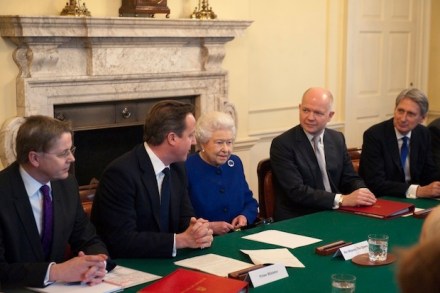
AS THE WHOLE Leveson wrangle approaches its climax (or anti-climax), one collateral, innocent victim of it all is the Queen. The government ruse to make its proposed system of statutory regulation seem less objectionable was to burble on about a Royal Charter and the Privy Council. By doing so, it hoped to put the matter beyond politics. But the implication that the enterprise is sanctioned by monarchical neutrality is a) untrue and b) embarrassing for the monarch. Untrue because in royal charters, as in legislation, the Sovereign acts solely on the advice of her ministers, making no personal contribution; embarrassing because, by seeking royal cover for its actions, the government drops the monarch into a very tricky issue, giving her no means to defend herself.

Charles Moore’s notes: People want revenge on energy companies

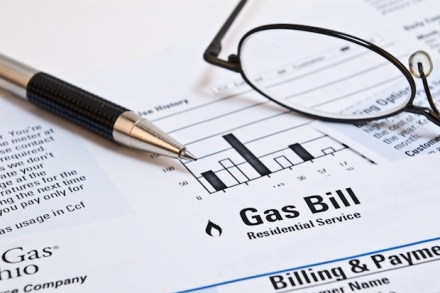
Friends of mine called Georgiana and Mouse Campbell recently bought a new house. In the period between completion and moving in, Mouse arranged for British Gas, who supplied the electricity, to switch the account to his name. British Gas said that this involved changing it from a business account to a residential one. While this was supposedly in progress, BG’s business division sent Mouse a bill for £299.80, although the Campbells’ actual use of electricity was virtually nonexistent. Despite many calls to BG, and its promises to sort things out, the company pursued Mouse for the fictional bill with threats of a debt recovery company and damaging his credit rating.

Charles Moore’s notes: At last! Reds under the beds again

 Manchester For those of us of a certain age, Ed Miliband’s speech last week was exhilaratingly nostalgic. His promise to freeze energy prices reminded us of happy times when Labour policies were patently, shamelessly idiotic. At last, after a generation of loss, we began to hope to find reds under the bed again. In its understandable excitement, the Daily Mail made the mistake of finding only a dead red — Mr Miliband’s late father, Ralph. It then compounded its error by saying that Miliband senior ‘hated Britain’, on the basis of some angry remarks he made when aged 17.

Sixteen-year-olds don’t pay tax. Why should they vote?

No doubt it will happen, because the Tories will not dare oppose it, but is there any conceivable good reason why 16-year-olds should have the vote, as first Alex Salmond, then the Liberals, and this week Ed Miliband have promised? The argument is that giving people the vote makes them feel empowered. But the sad fact about human nature is that once you have won a right, you quickly take it for granted. I am part of the first generation to have had the vote at 18 rather than 21. We were quite pleased by this, but less interested than our parents’ generation. Our children’s generation is astonishingly uninterested.

Charles Moore’s notes: Liberal-leaning Muslims are the people most opposed to the niqab

We are not allowed to know any details about the Muslim woman, charged with intimidating a witness, who has been ordered to take off her full-face veil to give evidence in court. But when it is all over, it will not be surprising if she turns out to be a convert. All mainstream religions have some sort of teaching about what to wear. Within living memory, for example, it was all but compulsory for women to have their heads covered in church. But general teachings in favour of modesty have different cultural applications, and it is usually false to claim that a religion absolutely insists upon a particular garment. What happens is that zealots, often manipulating ignorant converts, decide to make dress into a shibboleth.

Charles Moore’s notes: The corruption of the BBC – and what was in my GQ goodie bag

‘Corruption’ is a subtle word, because it describes a process rather than an event. It does not merely mean bad behaviour: it means behaviour that becomes rotten out of something which was once good. That is why it often afflicts high-minded organisations more than ordinary businesses. People who think they are collectively moral are more self-deceiving than the average market trader. Hence the current embarrassments of the BBC about huge pay-offs.

The Spectator’s Notes | 5 September 2013

David Cameron says that he will not come back to the House of Commons again about the question of Syria because Parliament has spoken. Obviously, having sought its opinion, he cannot now try to override it. But no one can know how the issue will now play out, and it may well be that new circumstances (major foreign interventions, for example) will change everything. Parliament cannot make foreign policy decisions in advance of facts, and therefore should not try. Foreign policy is not like legislation: it is protean. The House of Commons should support the government when it gets it right and arraign it when it gets it wrong. It should not pre-empt it. What actually happened last week was that no motion about Syria passed. There is therefore a policy vacuum.

Charles Moore’s notes: While Justin Welby was finding God, I was eating baked beans

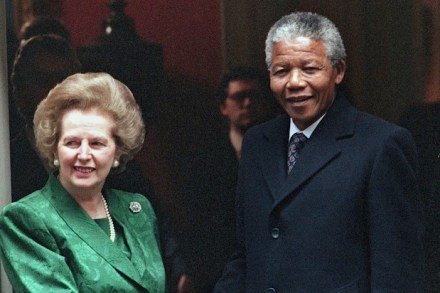
Attending the funeral of Margaret Thatcher in April, the Health Secretary, Jeremy Hunt, was much impressed by the bit in the sermon by the Bishop of London about how Mrs Thatcher had replied personally to so many letters. He went back to his department, and asked it to give him each day one letter from a member of the public which recounted particularly shocking problems in the Health Service. He now uses these letters to dive into the problems that patients experience. It is a good idea, but how alarming that it is a novel one. The Department of Health receives more letters than any other part of government except 10 Downing Street. Is it really the case that up till now, officials have never troubled the Secretary of State with the woes of the public?

The Spectator’s notes | 11 July 2013

Andrew Mitchell was forced to resign as the Tory Chief Whip last autumn because he called policemen at the Downing Street gates ‘plebs’. Then it turned out, as this column suggested at the time, that he had not done so. It emerged that there was a conspiracy — quite how deep has not yet been made public — by police and accomplices to attribute to Mr Mitchell words which he did not speak. People pretending to be by-standing members of the public said how shocked they were by Mr Mitchell’s remarks, and then it turned out that no bystanders had been within earshot of whatever it was that Mr Mitchell had said. Eventually, there was an investigation.

Charles Moore: Why not marry a dog?

MPs are incomparable. This may seem an odd thing to say in the current climate of opinion, but I mean it exactly: they cannot be compared with others. Now that a big rise is being suggested by Ipsa, the ‘independent’ body which sets their pay, people say they should be compared with local authority chief executives or head teachers, or that they are a profession. They cannot, and they aren’t. They are our elected representatives. We elect them to make our laws and to vote ‘supply’, i.e. to decide how much of our money government may spend. They therefore constitutionally must decide, in public, on their own pay (if any) and vote on it. Anything else is an evasion, and Ipsa or anything like it is a power above Parliament, and therefore unanswerable to voters.

The Spectator’s Notes | 27 June 2013

Jane Austen is a ‘contingency character’, we have just learnt. In his last appearance as Governor of the Bank of England before the Treasury Select Committee of the House of Commons, Sir Mervyn King explained that the great novelist rather slightingly so described stands in reserve to feature on any of our bank notes if too many people succeed in counterfeiting the current occupants. She is also in the running for the ten-pound note when Charles Darwin relinquishes it. This is a hot issue, because the notes do not feature enough women, we are told — despite the fact that since 1952, 100 per cent of them have featured a woman (the Queen).

The Spectator’s notes | 20 June 2013

When he arrived for the G8 in Co. Fermanagh, President Obama told the people of Northern Ireland that those living with conflict in far-flung places are ‘studying what you’re doing’ and that ‘You’re the blueprint to follow’. If they really were studying it, they would be less confident of the blueprint status. It is not true that the Belfast Agreement meant that, as the President put it, ‘clenched fists gave way to outstretched hands’. What happened was that the roughest major grouping on each side — the Paisleyites and Sinn Fein — saw that they could crowd out their more moderate rivals and divide the spoils of office between them. If hands are outstretched, it is more for public money than for peace.