The Spectator's Notes

Jean-Claude Juncker is stale, grey and likes his booze. That’s why Cameron should back him

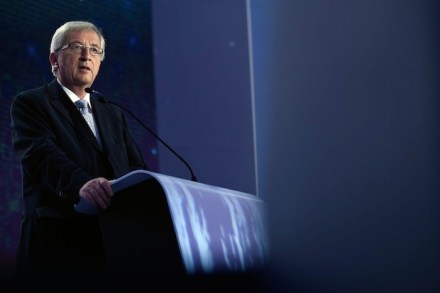
David Cameron is surely right to think that Jean-Claude Juncker is not the man to relieve the European Union’s woes, but I wonder if it is worth a fight. It reminds me of a similar battle by John Major, in 1994, to prevent a fat Belgian called Jean-Luc Dehaene from getting the job, on the grounds that he was too federalist. The post then duly went to Jacques Santer — like M. Juncker, a Luxembourgeois with an alleged fondness for alcohol (he was known as ‘Sancerre’). M. Santer was no better, from the British point of view, than M. Dehaene, and some European diplomatic chips were pointlessly used up.
What is Tony Blair after now? I fear I know…

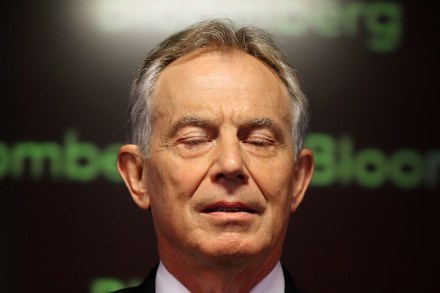
Tony Blair appeared on the Today programme on Tuesday morning to talk about Europe. The televised version showed him against the backdrop of the Brandenburg Gate. He said somewhat predictable things about Ukip being bad and a reformed Europe being good. The mystery was ‘Why?’ Why was he intervening at this point? It took me several hours to puzzle out a possible answer. It lies, I suggest, in his statement that the European project used to be ‘about peace’ and now it is ‘about power’. He was speaking at the beginning of the week when the contest for the presidency of the European Commission comes to a head. Mr Blair emphasised that the socialists in the parliament had done better in the elections than the conservatives.

David Cameron’s plot to keep us in the EU (it’s working)

I write this before the results of the European elections, making the not very original guess that Ukip will do well. Few have noticed that the rise of Ukip coincides with a fall in the number of people saying they will vote to get Britain out of the EU. The change is quite big. The latest Ipsos Mori poll has 54 per cent wanting to stay in (and 37 per cent wanting to get out), compared with 41 per cent (with 49 per cent outers) in September 2011. If getting out becomes the strident property of a single party dedicated to the purpose, it becomes highly unlikely that the majority will vote for it. The main parties will conspire to push the idea of EU exit to the fringe. Waverers will wobble towards the status quo.

My tax avoidance tip – win literary prizes!

David Cameron is said to want a woman to be chairman of the BBC Trust, now that Chris Patten has had to retire early because of ill health. Perhaps he has a bad conscience about what happened last time. By far the best candidate then was the runner-up, Patricia Hodgson, a distinguished BBC veteran who is committed to its virtues and has always understood its vices. She would have led a return to the BBC’s core strengths, and saved licence fee money in the process. But the government did not know what it wanted, so it chose the nearest chum, Lord Patten, who accepted in that casual and complacent spirit and found himself plunged into crisis.

It’s time for Muslim agitators to stop suing and start debating

Not long after the murder of Drummer Lee Rigby in Woolwich last summer, I wrote a piece in the Daily Telegraph criticising the concentration on the alleged backlash against Muslims. In particular, I attacked an organisation called Tell Mamma, run by Fiyaz Mughal, for appearing to suggest that the unpleasant EDL was as monstrous as al-Qa’eda. Later in the piece, I wrote that, when you publish on such matters, you are all too often ‘subject to “lawfare” — a blizzard of solicitors’ letters claiming damages for usually imagined libels’. So it proved. Along came a solicitor’s letter from the firm of Farooq Bajwa, saying that I had described Mr Mughal as an extremist. Last week, I attended a court hearing.

The Spectator’s Notes: Max Clifford’s conviction vindicates juries. But so did the acquittals

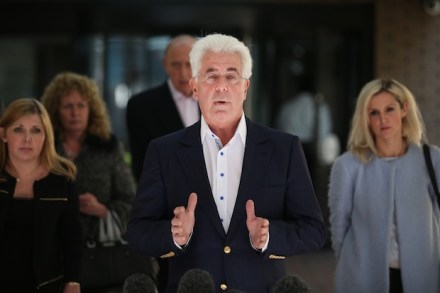
The conviction of Max Clifford for indecent assaults feels like a vindication of the jury system, as did the acquittal of the many other showbiz characters charged under Operation Yewtree. One reason I keep raising questions of justice about the current obsession with paedophilia is out of suspicion that those most zealous in their accusations are unhealthily interested in the subject. This was the case with Clifford himself and, of course, with the newspapers with which he did business. Celebrity culture is, in essence, a form of pornography which incites powerful people to exploit unpowerful people. It acquires an extra twist of perversion when it turns on those it has incited. It should not be allowed that escape route.

Was I abused by Jimmy Savile?

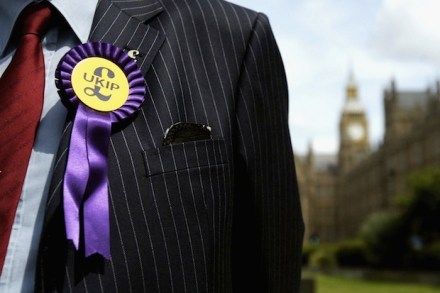
‘Twenty-six million people in Europe are looking for work. And whose jobs are they after?’ asks the Ukip poster for the euro-elections, beside a Lord Kitchener-style pointing finger. Obviously, Ukip thinks the answer is ‘Ours’. But this isn’t true. Twenty-six million people are not looking for British jobs, but for jobs in general. And even those who do want jobs in Britain are not trying to take jobs from people who have them (though this might sometimes be the effect): they just want jobs. If Ukip is opposed to unrestricted EU immigration, it should direct its anger at the politicians who support this policy, not at the blameless people who, like most of us, want work.

The Pope’s brilliant PR

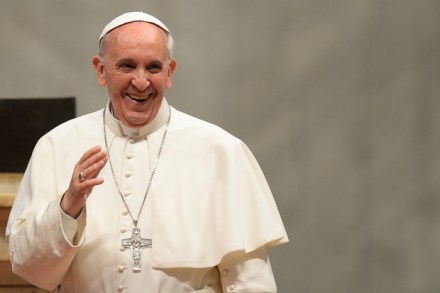
‘Show, don’t tell’ is the mantra of PR advisers when telling public figures how to communicate. Pope Francis’s technique does both at once. By confessing his sins to what the media call ‘an ordinary priest’ in St Peter’s basilica without entering the confessional box, he seemed almost to be boasting that he is, like everyone, a sinner. I hope he does not take it into his head to make public the content as well as the fact of his confession. That would be what the Twitter generation calls TMI. But the gesture of openness worked.

The Spectator’s Notes: In defence of Maria Miller

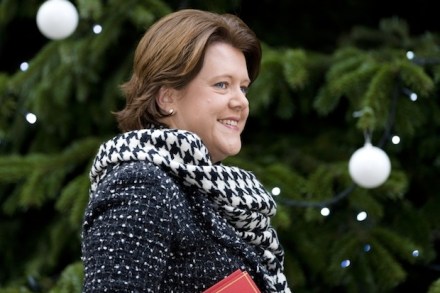
[audioplayer src="http://traffic.libsyn.com/spectator/TheViewFrom22_10_April_2014_v4.mp3" title="James Forsyth and Isabel Hardman discuss Maria Miller's resignation" startat=1057] Listen [/audioplayer]Maria Miller’s forced resignation is a disgrace. No iniquity was proved against her. Over her expenses, I suspect her motive was innocent: she was trying to work out childcare with her parents in a way compatible with the weird rules, rather than plotting larceny. The parliamentary committee probably understood the circumstances fairly. The press anger was confected because of our (justified) dislike of the post-Leveson Royal Charter.

The Spectator’s Notes: Politicians and bankers both treat their most loyal backers like dirt

The Daily Telegraph’s revelation last Friday that the Financial Conduct Authority was going to arraign companies for 30 years of mis-selling pensions and other products ‘wiped’, as papers like to say, £4 billion off insurance stocks. George Osborne is putting pressure on the chief executive Martin Wheatley to go. The leak was highly embarrassing for the FCA, but the issue itself matters more. It is about how such companies treat longstanding customers. The way they work is through sellers, who hook someone for life in one go, and so the companies do not know or care about their customers. This is a parable of a much wider problem in society, which is that being loyal is considered stupid. It applies strongly to political parties.

The Spectator’s Notes: If Putin can have a referendum, so can Boris

Everyone can see that the West has no idea what to do about Russian power in the Ukraine. Britain, in particular, is at the margins. It is time for the Mayor of London to fulfil his historic role of stealing a march on more conventional politicians. Boris should take a leaf out of President Putin’s book and call a referendum of Londoners. He should ask them whether they would like all Russian housing in London to be seized, and be inhabited, instead, by British families. I predict a Yes vote whose percentage would exceed even that of the recent Crimean plebiscite. Obviously the Mayor, unlike Putin, has no military forces to implement such a measure (which is just as well), but the vote would make us feel a bit better.

How I became editor of The Spectator – aged 27

Thirty years ago this Saturday, I became editor of this magazine. In the same month, the miners’ strike began, Anthony Wedgwood Benn (as the right-wing press still insisted on calling him) won the Chesterfield by-election, the FT index rose above 900 for the first time and the mortgage rate fell to 10.5 per cent. Mark Thatcher was reported to be leaving the country to sell Lotus cars in America for £45,000 a year. Although she now tells me she has no memory of it, Wendy Cope wrote a poem entitled ‘The Editor of The Spectator is 27 Years Old’. Because I was young, the events are vivid in my mind, but in fact a greater gap separates then and now than separated then from the Suez crisis.

The Spectator’s Notes: In the radical 1970s, logic was on the side of the Paedophile Information Exchange

People seem bewildered that the National Council for Civil Liberties in the late 1970s gave house-room to the Paedophile Information Exchange (PIE). It is certainly embarrassing for Harriet Harman and Patricia Hewitt that they held leading posts in the NCCL then, but the fact that this was going on should not be so surprising. I remember the row about PIE at the time. PIE’s argument was part of the wider doctrine about sexual liberation, which was that the only problem about sex was the repression imposed by society’s taboos. Virtually all sexual behaviour was seen as good and the exercise of sexual desire as an absolute right. The only qualification that liberationists grudgingly acknowledged was the need for consent.

The Spectator’s Notes: What’s the difference between the Sachs case and sexual harassment?

It is 15 years since the publication of the Macpherson Report into the investigation of the death of Stephen Lawrence. The report may have done some good by making the police take crime against black people more seriously, but its main legacy is bad. Macpherson promulgated the doctrine that ‘A racist incident is any incident which is perceived to be racist by the victim or any other person.’ If the incident is thus defined then there is literally no end to racist incidents; and if the (self-defining) victims — or anyone else — can define a racist incident thus then the person alleged by them to be guilty is automatically convicted. This principle that victimhood is self-chosen and cannot be questioned is now being applied more widely.

The Spectator’s Notes: When all three parties agree, something must be wrong

Those of us who want a referendum on the European Union need to be cautious in our approach to the Scottish one. What is sauce for Alex Salmond’s goose may prove sauce for the European gander. We should not assume, for example, that José Manuel Barroso, the European Commission president, is telling the truth. Or take the argument that business is opposed to Scottish independence. The CBI and suchlike always favour the current arrangements and fear uncertainty. They will oppose British independence even more surely than Scottish. They are not always wrong, but their view should not be credulously accepted. Mr Salmond is right that the threats made by the powers that be in a campaign are very different from what they say after a clear result.

The Spectator’s notes: What shall we call the Country Formerly Known as Britain?

Last week, David Cameron said that we have ‘seven months to save the most extraordinary country in history’. He meant the United Kingdom. It was a powerful speech, part of a welcome and overdue campaign to make us all think about what is at stake in the referendum on Scottish independence. It seems strange to argue that the loss of less than 10 per cent of the population would bring this country to an end, and yet I do really suspect it might be so. Mr Cameron did not touch on the question of what the nation, minus Scotland, might be called, perhaps because he does not know and is fearful of making plans for such an eventuality. But the difficulty of getting the right name is a fascinating emblem of the depth of the problem.

The Spectator’s Notes: Quangos – a world of perfect hypocrisy

The accusation that the Tories have been installing their people in public appointments should evoke only a hollow laugh. They have been comatose on the subject. One of the greatest skills of New Labour was putting its allies in positions of control across the public sector. A great many are still there, and yet the Tories wonder why their efforts at reform are frustrated. Maggie Atkinson, for example, was imposed by Ed Balls, when in office, as Children’s Commissioner, against the recommendation of the relevant selection committee. She lingers on in her useless post. Lord Smith, the former Labour cabinet minister who has been flooding the Somerset levels, is still at the Environment Agency.

What medieval farmers knew – and the Environment Agency doesn’t

Our neighbour Philip Merricks is a farmer on Romney Marsh, 90 per cent of whose land is below sea level. The marsh would not exist without the medieval ingenuity which ‘inned’ it from the sea. Phil is therefore well placed to understand the interests of farmers on the Somerset Levels who have now been inundated for a month. But he is also a conservationist, owning and running two bird reserves, so is pro-farming and pro-wildlife, which too few are. Last week, he went to the Somerset Levels as chairman of the Hawk and Owl Trust, which has a reserve down there. He tells me that while the usual winter waterlogging is good for wildlife, what is happening in Somerset now is as terrible for wildlife as it is for farmers — too deep, too widespread, too prolonged.

The Spectator’s Notes: George Osborne’s personal recovery

Now that the economic statistics are looking better, people are beginning to rediscover the once-fashionable thought that George Osborne is a great strategist. Things are coming together before the 2015 election in a way which makes life uncomfortable for Labour. I am not sure that ‘strategist’ is the right word, but I do think Mr Osborne deserves praise for something else. If you compare this government with the last, you will see that it is not dysfunctional in its internal relations. The coalition has constant frictions, but these are, as it were, built into the system. After nearly four years, there is no serious split or even known personal hatred at the top of the government.

The Spectator’s Notes: French presidents used to have a touch of the monarch. Not any more

When I interviewed Valéry Giscard d’Estaing, the former president of France, for my biography of Margaret Thatcher, I asked him why, when she lunched with him at the Elysée Palace for the first time, he had been served before her: she had been offended. M. Giscard explained that no slight had been intended. It was a matter of protocol — the president is the head of state, the British prime minister only the head of government. ‘You must remember,’ he added, ‘that the president is in the line of sovereigns.’ I recalled these words when reading about President Hollande and his amorous adventures in his helmet. To the British, it is a puzzle that French presidents are protected from the media scrutiny we inflict on our own leaders.