The Spectator's Notes

The Spectator’s Notes | 13 June 2013

Few things in history can be more worth thinking about than the first world war, so in a way one welcomes the government’s plan for extensive centenary commemorations. And I do not agree with the critics that part of the purpose should be to blame the Germans: such blame is not a task for government. The bigger worry is surely twofold. One is that, over the planned four years, the commemorations will dissipate their energies in cultural trench warfare and get muddled up with the normal (and excellent) patterns of Remembrance. The other is that they will resemble those semi-apologies about any violent death in our history which have become a cheap way for political leaders to show themselves more enlightened than their predecessors.
The Spectator’s Notes | 6 June 2013

What a strange country this is. On the same day that we celebrated the 60th anniversary of the coronation, a mystical rite founded for the ancient kings of Israel and continuous here for a thousand years, our almost equally venerable House of Lords voted to undermine the basis of the oldest of all human relationships recognised in law. The new Archbishop of Canterbury spoke very well on both subjects. In Westminster Abbey, he praised the Queen’s ‘servant leadership’, and reminded the congregation that Jesus ‘did not count equality with God a thing to be grasped, but humbled Himself and took the form of a slave’. But in Parliament, equality was greedily grasped.

The Spectator’s Notes | 30 May 2013

The website of the Security Service (MI5) says that since the end of the Cold War, the threat of subversion is ‘now considered to be negligible’. Isn’t this a mistake? It seems likely that many Muslim organisations — university Islamic societies, for example — are subverted by jihadists. The infiltrators whip up hatred against the West and create networks, rudimentary but often powerful, of the like-minded. When they have done their work well, they do not need to give direct orders to people like the Woolwich murderers to kill: they have primed their human device, and left it to explode. Such subversion may not be backed by foreign state power, but it still resembles communism in its ability to infiltrate minds and organisations at the same time.

The Spectator’s Notes | 16 May 2013

The BBC loves nothing better than a narrative in which Tory anti-European eccentrics split their party, and a bewildered public votes Labour. It is certainly the case that some of the Tory sceptics are half-crazed by dislike of David Cameron. But the reason the subject keeps coming up is because it matters, and it remains unresolved. The Tory rebels understand this in straightforward electoral terms: the rise of Ukip threatens their seats, so they must do something about it. What is maddening is not so much Mr Cameron’s actual policy on Europe, but his patent longing to avoid the subject. His refusal to ‘bang on’ about Europe has brought about more banging on than ever.

The Spectator’s Notes | 9 May 2013

On Tuesday night, at a Spectator readers’ evening, Andrew Neil interviewed me about my biography of Margaret Thatcher. He asked me if, after leaving office, Lady Thatcher had come to the view that Britain should leave the European Union. I said yes (I think it happened after the Maastricht Treaty in 1992), although advisers had persuaded her that she should not say this in public since it would have allowed her opponents to drive her to the fringes of public life. I had believed this was widely known, but according to Andrew, it is a story. My revelation, if such it was, came on the same day as Nigel Lawson’s piece in the Times saying that he would now vote for Britain to leave the EU. How things have changed. Even the BBC treats Lawson’s view as respectable.

The Spectator’s Notes | 2 May 2013

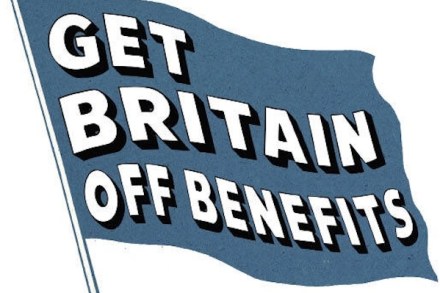
It is fascinating watching the great welfare debate as the universal credit starts its life. The ruling elites have very, very slowly caught up with public understanding. The simplest way to think about the question is this. At every level of society people tend to be acutely aware of what their approximate equals are paid, and usually unaware of what those richer or poorer receive. Therefore the people who best understand how welfare works are either its recipients or those who work on low wages and are scarcely better off for doing so. These people recognise that being on welfare is — in effect, though not morally — like having a job. There is a wage for it, plus various equivalents of overtime and fringe benefits, and the task is to get as much of these as you can.

The Spectator’s Notes | 25 April 2013

The first volume of my biography of Margaret Thatcher was published on Tuesday. Since Lady Thatcher had stipulated that the book could appear only after her death, we were, in principle, ready. But it is still a huge undertaking to finish correcting a 900-page book on a Tuesday (the day before the funeral), and get back the printed book the following Monday. Reviewing my endnotes, I came across an interviewee called Rosie Cruikshank. She appeared in relation to Margaret Roberts’s most serious boyfriend. Who on earth was she? Just in time, I remembered. While writing all the ‘love interest’ passages, I had worried that they might fall into the wrong hands, and so I gave the characters pseudonyms. I chose names to fit the period.

The Spectator’s Notes | 18 April 2013

When Winston Churchill died, Lady Violet Bonham Carter made her maiden speech in the House of Lords. ‘It is hard for us to realise,’ she said, ‘that that indomitable heart to which we all owe our freedom … has fought its last long battle and is still.’ Her words have application to Margaret Thatcher. But something else about them strikes me. Lady Violet was the daughter of a prime minister (Asquith). Before Churchill married, nearly 60 years earlier, she had been, more or less, his girlfriend. It is a reminder that Churchill was, from the first, in the circles of power and privilege. This does not lessen his achievement, but it points up what Mrs Thatcher had to fight for that he did not.

The Spectator’s Notes | 11 April 2013

It is strange how we are never ready for events which are, in principle, certain. The media have prepared for Margaret Thatcher’s death for years, and yet there was a rushed, improvised quality to much of the coverage when she actually did die. We have a curious habit of all saying the same thing, and feeling comforted by that, when really it is our job to say as many different things as possible. The BBC, which Mrs Thatcher, and even more Denis, detested, has been straining itself to be fair, but fairly bursting with frustration in the attempt. The way for it to express its subliminal opposition to her is by using the word ‘divisive’ all the time. By day two, this had become its dominant theme.

The Spectator’s Notes | 4 April 2013

The press is now to be regulated under the supervision of a body created by Royal Charter. On the website of the Privy Council Office, it explains that a Royal Charter is ‘a way of incorporating a body … turning it from a collection of individuals into a single legal entity’. New grants of charters are reserved for ‘eminent professional bodies or charities which have a solid record of achievement’. A body with a Royal Charter ‘submits significant aspects of the control of its internal affairs to the Privy Council’ (which is currently presided over by Nick Clegg): ‘This effectively means a significant degree of government regulation.’ Such a body should normally have more than 5,000 members.

The Spectator’s Notes | 28 March 2013

‘And just to round off the week,’ said the chirpy Radio 3 announcer, ‘the St Mark Passion on Friday.’ Just to round off the week, eh? Did Jesus say, ‘It is finished’, just to round off the week? His death, alone, did not round off anything. Wait till Sunday to find out why! With Eddie Mair’s interview and Michael Cockerell’s documentary, we have been invited once again to look at Boris Johnson’s life. We have been reminded — how could we forget? — that it has its rackety aspects. And once again, it is suggested that Boris could not be prime minister because he is not ‘serious’. But who in public life is serious, as opposed to not funny?

The Spectator’s Notes | 21 March 2013

There is supposed to be a Leveson Part II, although everyone has forgotten about it. As well as telling him to look into everything bad about newspapers (‘Please could you clean the Augean stables by Friday, Hercules’), David Cameron also asked Lord Justice Leveson to investigate who did what when over phone-hacking. This was postponed because of the forthcoming criminal trials, but I mention it because it is a reminder that things are back to front. Normally when you have an inquiry, you first work out what happened and then you work out what to do about it. Leveson is the opposite, hence the resulting chaos. The problem is particularly acute if you put a judge in charge. Judges like laws, so they propose new ones.

The Spectator’s Notes: Mark Carney’s salary and Justin Welby’s Catholic taste

In Washington last week, I encountered amazement that the Bank of England is about to be run by a foreigner. This was not because of any contempt for Mark Carney, the Governor of the Bank of Canada, who will soon succeed Sir Mervyn King, but because Americans could not imagine how a job so pivotal in the national psyche could be bestowed on someone with a different allegiance. The Fed, though far from popular in a country constitutionally suspicious of central power, does have a mythic, incorruptible status. As a result, the chairman, Ben Bernanke, has a tiny (by banking standards) salary. Last year, he was paid $199,700.

The Spectator’s Notes | 28 February 2013

On the BBC television news on Monday night, the first three items concerned alleged misbehaviour by the famous — Cardinal Keith O’Brien, Lord Rennard and Vicky Pryce, the ex-wife of the ex-Cabinet minister, Chris Huhne. I begin to wonder if an accidental revolution is in progress. There is no revolutionary political doctrine, just a wish to believe that anyone in any position of power or fame is corrupt and should be exposed. Sexual misbehaviour is probably the most fun way of doing this, but stuff about money or lying works too. In theory, we should welcome this. The accusations often turn out to be true. Power corrupts. But actually there is something vile about it. It is to do with the righteousness of those doing the exposing.

The Spectator’s Notes | 21 February 2013

People are quite often pilloried for saying the opposite of what they actually said. I have read Hilary Mantel’s London Review of Books lecture, and she is quite clearly not attacking the Duchess of Cambridge, but criticising what it is that people try to turn royal women into. When she speaks of the Duchess as ‘a jointed doll on which certain rags were hung’, or ‘the spindles of her limbs’ being ‘hand-turned and gloss-varnished’, she is talking about what the media and public opinion want of her. She discusses appearance, and offers no opinion about the young woman’s reality. She is sympathising with a female predicament, and she does the same about Diana, Princess of Wales, the present Queen, Anne Boleyn and Marie Antoinette.

The Spectator’s Notes | 14 February 2013

Pope Benedict is stepping down for conscientious reasons about which he will have thought deeply. But I still fear that his decision is a mistake. First, its manner was unfortunate. An institution like the Catholic Church should avoid unnecessary shocks. It seems that the main people involved were told only on Sunday, and presented with a fait accompli. The news was announced the following day. Obviously, secrecy was important, but in a monarchical system, such a change is momentous and its consequences need to be thought through by the closest counsellors. The orthodoxy has grown up that the long physical decline of Pope John Paul II was a disaster which should not be repeated. This is not so (though it certainly created difficulties).

The Spectator’s Notes | 7 February 2013

It was rude and impolitic of David Cameron not to sit in on the parliamentary debate on the Marriage (Same Sex Couples) Bill. The whole thing was his idea and would not have come to Parliament without his insistence. Of all his measures so far, it is the one that has caused greatest grief to his backbenchers. Yet he did not come to hear their views. His absence has a symbolic significance. It embodies the fact that social conservatism is felt by somewhere between 30 and 70 per cent of the population on most subjects, and yet has no representatives among the leaderships of any of the three main parties. I don’t think this has ever happened before in our history (unless it be in the Heath/Wilson era). It is a momentous disfranchisement.

The Spectator’s Notes | 24 January 2013

In which forthcoming by-election does one candidate’s election address boast that he was the ‘last Captain of Boats [at Eton] to win the Ladies Plate at Henley in 1960’, while one of his rivals says that, at Harrow, ‘unfortunately I did not cover myself with academic glory’? The answer is a by-election among the Conservative hereditary peers. Under the Blair reforms of the Lords, the hereditaries elected their own 92 representatives, and the then Lord Cranborne (now Lord Salisbury) persuaded Labour (who saw the whole thing as an interim measure before abolition) to permit by-elections — which was foolish from their point of view, because, without replacements, the hereditaries would quickly have dwindled away. Voting takes place within parties.

The Spectator’s Notes | 17 January 2013

David Cameron’s long-awaited speech on Europe this week falls 50 years to the day after the death of Hugh Gaitskell. Gaitskell, who died in harness, was the last leader of either main party to oppose entry to what people then called the Common Market. In his last party conference speech as Labour leader, in October 1962, he set five conditions for British entry to the EEC (for which the Tory government was then negotiating). These included retaining national economic freedom and an independent foreign policy. Joining would mean ‘the end of Britain as an independent nation state, the end of 1,000 years of history’, he declared.

The Spectator’s Notes | 10 January 2013

Poor Nick Clegg keeps trying to change the constitution and keeps being balked (the Alternative Vote, Lords reform). At last, he believes, he will be able to fulfil his ambition to force the first-born child, of either sex, to ascend to the throne, and to be able to marry a Roman Catholic (though not, oddly, to be a Roman Catholic if she/he does actually become queen/king). Perhaps he is carried away by being married to the lovely, fascinating, Catholic Miriam, and is horrified that members of the royal family are deprived of such joys. This speaks well for his ardour. But surely the best constitutional changes of the past 350 years have been those which increased the power of Parliament at the expense of the executive.