The Spectator's Notes

The Spectator’s Notes | 3 January 2013

‘The rain is ever falling, drip, drip, drip, by day and night… The weather is so very bad, down in Lincolnshire, that the liveliest imagination can scarcely apprehend its ever being fine again.’ That is Dickens in the 1850s (Bleak House). It is a similar story here in Sussex as the year 2013 comes in. I usually have no objection to ‘bad’ weather, but the worst of this is that the land is so saturated that man, motorised vehicle and mounted beast is effectively banned from the fields, as if there were an outbreak of foot-and-mouth. So perhaps I am sitting and brooding too much; but it does seem to me that David Cameron is losing rural support at quite a rate and not realising. In this, the failure to repeal the hunting ban is significant.
The Spectator’s Notes | 12 December 2012

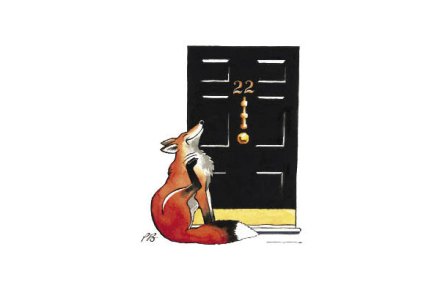
Here is a point about the coalition which is so obvious that I have not seen it expressed. When a single party is in power, the approach of a general election is the key discipline: almost however much colleagues disagree, they unite. When there is a coalition, the opposite applies. Each partner needs to disown the other. Because the coalition foolishly legislated to fix the life of this Parliament, the parties are bound together until May 2015. It is like the pre-war situation of marriage as satirised by A.P. Herbert in his novel, Holy Deadlock. The only means of divorce is to behave appallingly. The effect is that what began well is almost bound to end badly. So much did PFI contracts capture the government machine that there was even one for the annual Christmas tree at No.

The Spectator’s Notes | 6 December 2012

You will have read in every news outlet that the baby whom the Duchess of Cambridge is bearing will be third in line to the throne if she is a girl, because of a new law which equalises the succession of the firstborn between males and females. This is untrue — first because, as the child of the heir to the heir, she will be third in line to the throne under existing law (unless a brother comes along), and secondly because this new law does not exist. All that has happened is that the Commonwealth prime ministers of the 16 countries of which our Queen is Queen agreed in Perth in 2011 that they wanted this change. Under the Statute of Westminster, no change can happen without the legislative agreement of all. They therefore set in train a means of co-ordinating this.

The Spectator’s Notes | 29 November 2012

There is excitement that a foreigner could have been made Governor of the Bank of England. But the truth is that Canadians (and Australians and New Zealanders) are not really foreigners. The common history and kinship are so strong that there is pre-existing trust. (Mark Carney, indeed, is married to an Englishwoman.) This is an unusual thing in the history of the world. You cannot imagine any non-Frenchman governing the Banque de France, or any non-German (except an Austrian?) running the Bundesbank, or a British citizen running the Fed. You cannot even imagine a US citizen being the Governor of the Bank of England. When times are hard — money troubles, war, terrorism — the ‘Old Empire’ links always prove their strength.

The Spectator’s Notes | 22 November 2012

Lynton Crosby will soon be appointed to run the Conservative strategy for the next election, say reports. Unnamed sources accuse him of saying rude things about Muslims; people mutter about the ‘dog whistle’ campaign of 2005. Such stories involve two great subterranean passions — the desire of rival polling groups to make money and the competition among backroom boys to get credit for electoral success. The public should not be unduly concerned about rows in the servants’ hall, so long as the master is in charge. Possibly it is doubt about this which gives the story legs. But what the anti-Crosby stories also reveal is a weird prejudice about Australians.

The Spectator’s Notes | 15 November 2012

David Dimbleby is right that the BBC is bedevilled by managerialism. He makes an apt comparison with the National Health Service, where his wife, who works in mental health, reports similar horrors. But no one goes on to ask why this is so. It is assumed that the answer is to appoint robust journalists (or, in the case of the NHS, doctors) instead of ‘suits’. Unfortunately, this is not so, dismal though the suits are. The BBC is hopelessly managed because, as George Entwistle himself put it while being waterboarded by John Humphrys on Saturday, ‘The organisation is too big. There is too much journalism going on.’ This is absolutely inevitable if the BBC continues to be an organisation trying to offer all types of broadcasting.

The Spectator’s Notes | 8 November 2012

President Obama’s victory is the first major victory for incumbency in the West since the credit crunch began. It was to help achieve such a victory that the eurozone leaders listened to Mr Obama and Tim Geithner and postponed their own day of reckoning. All excellent news for the status quo, but possibly not for the rest of us. This is Living Wage Week, according to someone or other. The Living Wage is a brilliant propaganda idea. It probably owes its intellectual origins to Pope Leo XIII, who argued that ‘wages ought not to be insufficient to support a frugal and well-behaved wage-earner’. Now it is not just a principle but a specified amount, reported utterly uncritically by the BBC. The ‘right’ wage has just been increased to £8.

The Spectator’s Notes | 1 November 2012

‘England shall bide till Judgment Tide, By Oak, and Ash, and Thorn! says Kipling. Possibly we shall have to bide with just oak and thorn now (and oak, too, is threatened). People have already attacked the government for being slow to intervene against ash dieback. But it is also interesting to note the tardy feebleness of the various bodies who are supposed to love and know about trees. I cannot identify anything from the Woodland Trust before its press release of 29 September, because if I type ‘ash dieback’ or ‘chalara’ into its website it says ‘no results matching your search were found’.

The Spectator’s Notes | 25 October 2012

Instead of looking at the BBC’s behaviour over the Jimmy Savile programme through the red mist of self-righteous hindsight, consider the editorial problem it presented at the time. You have already planned Christmas tribute programmes to one of your most popular contributors of the past 40 years (God knows why he was so popular, but that is the symptom of a wider cultural sickness). Then you hear that part of your empire is investigating child abuse allegations against him. You inquire, and find that, though highly alarming, the allegations do not constitute proof and are not clearly supported by other inquiries e.g. by the police. Obviously you cannot run both the tribute programmes and the child abuse programme. Which do you spike?

The Spectator’s Notes | 18 October 2012

Probably it will all be all right. Probably the Scots, rightly offered an either/or rather than a third way, will vote to stay in the Union in 2014. But there is something unhappy about the choreography of this week’s announcement of a referendum agreement. It is not clear why David Cameron had to negotiate this with Alex Salmond. Votes on the future of the United Kingdom are not a devolved matter. They should be settled by all MPs with, in this case, a decisive role for Scottish MPs. Obviously it was prudent to seek Mr Salmond’s views, but the process has contrived to make him look like the leader of his nation’s liberation struggle.

The Spectator’s Notes | 11 October 2012

It is such a mistake for senior Tory politicians and journalists — Ken Clarke and Max Hastings are the latest — to complain that Boris Johnson ‘isn’t serious’. It is because he isn’t serious that people like him. And since we live in postmodern politics, his lack of seriousness is seen by his fans to qualify him for the highest office. After all, those politicians who consider themselves serious — the great majority — are not saying anything seriously interesting, and Mr Unserious Johnson remains the only Conservative to win an important electoral contest (twice) since 1992. It is unwise of them to draw attention to Boris’s greatest asset. It would be more cunning to say that he isn’t funny.

The Spectator’s Notes | 3 October 2012

Ed Miliband, in Manchester, invoked a speech by Disraeli 140 years ago, in the same city. Prudently, he did not quote it: you won’t find much ‘One Nation’ stuff there. In it, Disraeli devoted his energies to attacking the radical forces which ‘were determined to destroy the Church and the House of Lords’ and were threatening even the Crown. No matter, what Mr Miliband is doing is, to employ another Disraeli phrase, ‘stealing the Whigs’ clothes while they were bathing’. (For this purpose, and possibly for others, we can call the coalition Whigs.) He has noticed that David Cameron’s great selling-point — ‘We are all in this together’ — has weakened in office, and so he has mounted an audacious raid and grabbed it.

The Spectator’s Notes | 27 September 2012

Andrew Mitchell, accused of being a bully, was bullied in turn. There was tremendous journalistic laziness in the reporting of his alleged remarks to police officers at the Downing Street gates. A few months ago it was considered a national scandal that the police were always slipping information to the Murdoch press. Now they planted a story in the Sun and no one minded. Yet what they did was a breach of trust for which they should be sacked. How can people who work in Downing Street now be confident that the men and women at the gate really are protecting them? It is a well-known tradition for police to concoct evidence against the accused.

The Spectator’s Notes | 11 August 2012

Departing as Conservative MP for Corby, Louise Mensch writes a ‘letter of resignation’ to the Prime Minister. Why? Being an MP is not a government post: she is not a minister. An MP should write to his or her constituents and/or the chairman of the constituency association. It is constitutionally wrong for Mrs Mensch to write to Mr Cameron, except perhaps a private note of apology for inflicting a by-election on his party.  But the fact that she did write such a letter accurately reflects why she is an MP. David Cameron made her one, through his A-list system of imposing preferred candidates. Her departure exposes the dangers of this type of intervention by the party leader. The A-list is a form of patronage, and patronage arouses expectations of more favours.

The Spectator’s Notes | 4 August 2012

Have you been following Mitt Romney’s ‘gaffes’? In Britain, he said that there were some concerns about security before the Olympics. In Israel, he said that the ‘economic vitality’ of Israel compared favourably with its neighbours and attributed this in part to ‘the power of culture’. He said that Iran should be confronted, not appeased. In Poland, he met Lech Walesa and praised those who stood out against the ‘all-powerful state’. One of his aides said something moderately rude to reporters who were trying to goad his boss. To the unprejudiced mind, all of this sounds wholly unremarkable, even vaguely positive, but we are talking not about the unprejudiced mind but about the main media, notably the BBC.

The Spectator’s Notes | 28 July 2012

‘Make hay while the sun shines’ is advice to be taken literally as well as metaphorically, and so, as I walked up from the station after a particularly Olympics-cursed visit to London, I was soothed by the sound and smell of mowing coming from our little fields. Haymaking should have taken place almost two months ago, but the wet made it truly impossible until this week. Should the sudden kindness of the weather and the excitement of the approaching opening ceremony make one get all nice about the Olympics? Well, yes, as far as the hopes of the athletes and the pleasure of the spectators go, it should. It is only when I read that it is ‘easy to carp’ that I get cross. Actually, it is not all that easy. There is considerable moral pressure to talk up the Olympics.

The Spectator’s Notes | 21 July 2012

Having asked around, I can fairly confidently report that the government’s efforts to push ahead with some even slightly elected House of Lords will not work. The rebels are quite rightly holding their ground. Only if the Labour party comes to the government’s rescue can the plans get through, and why should it? People are coalescing, however, round a collection of reforms not involving elections which they see as modest and sensible. Perhaps that is good politics, but I would argue that a wholly unenlightened position is preferable.

The Spectator’s Notes | 14 July 2012

A big reason for opposing these Lords reforms is that they would threaten the power of the Commons. If the Commons passed them, however, it would deserve to be threatened. It would display — like No. 10 Downing Street — an ignorance of the constitution and an arrogance about process which undermines the point of Parliament. So the forced withdrawal of the ‘programme motion’ — the guillotine — which probably looked to the outside world like a weird device made more incomprehensible by the fact that the second reading then won a large majority, was actually a classic assertion of the rights of Parliament against the executive. ••• One consequence of the reform fiasco is the pivotal power it gives to Labour.

Spectator’s Notes

The Governor of the Bank of England raised his legendary eyebrow and Barclays tried to singe it. If there was any doubt about the badness of Barclays’ behaviour in the Libor-rigging scandal, it is surely removed by the way Barclays has dealt with its denouement. Bob Diamond and co claimed they had no part in rigging, and yet they released the October 2008 letter written by Mr Diamond purporting to show that Paul Tucker, the deputy governor of the Bank, was giving them permission to rig. If it does show that, they are liars. If it does not — as three official investigations have already concluded — then they are just throwing mud.

The Spectator’s notes | 30 June 2012

For too long, out of a high-minded desire not to spoil anyone’s pleasure, this column has avoided the subject of the Olympics. But when I came to London this week, after an absence of ten days, I found I could remain silent no longer. My walks through St James’s Park, so good for body and soul, and so much more efficient for getting where I wish to go than other means of transport, have been banned. The park is closed. This is partly to allow Olympic beach volleyball to spoil Horse Guards, but also, apparently, for ‘security reasons’, the great tyrant’s excuse of our times. According to the Royal Parks, the park will not ‘return to its pre-Games condition’ until the spring of 2013.