The Spectator's Notes

The Spectator’s Notes | 6 August 2015

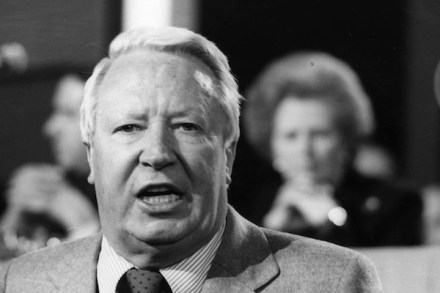
As someone who has rarely written a sentence in praise of the late Sir Edward Heath, I hope I can escape charges of ‘cover-up’: I don’t believe the accusations against him. Even the word ‘accusations’ is an exaggeration, actually, since the story so far seems to be Chinese whispers with nothing amounting to evidence, put out by the frightened police. When this fashion for airing unsupported claims of child abuse has finally run its course, we shall be collectively ashamed of it, and people like Tom Watson MP will be seen for the McCarthys they are. (This is true, by the way, even if some of the things Mr Watson alleges turn out to be the case: the same applied to McCarthy.) One should explain the culture of the period now under scrutiny.
The Spectator’s Notes | 30 July 2015

Obviously when one attends what the papers call ‘cocaine-fuelled orgies’, one expects to find several members of the peerage present, but I must confess that until all this trouble, I had not heard of Lord Sewel, beyond a vague apprehension that he was a misprint rather than a person. I now discover that he is a Blair peer — a specially ignominious category, rather like Lloyd George’s creations. But I still worry that he has ‘resigned’ from the House of Lords. If we continue to think that our second chamber should be unelected, it should be all but impossible to get rid of a peer once appointed.

The Spectator’s notes | 9 July 2015

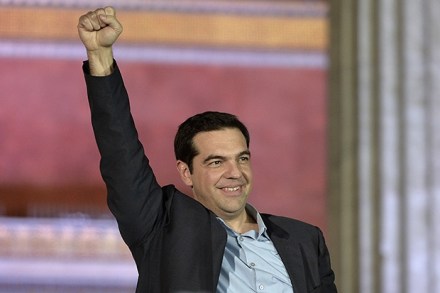
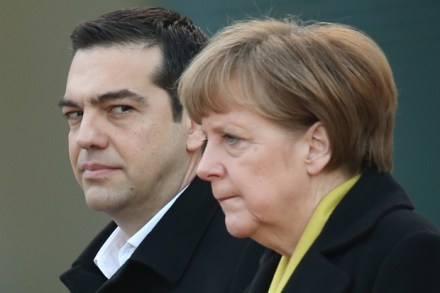
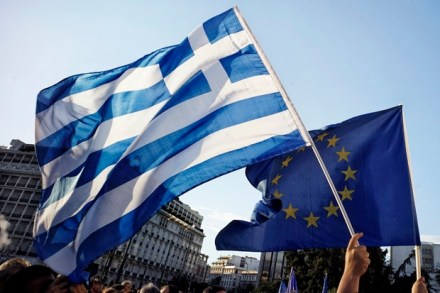
Even if everything goes wronger still, the Greek No vote is a great victory for the left. Until now, the left has not mounted a serious challenge to the claims of the EU. It is extraordinary how it has been cowed. The single currency, especially a single currency without a ‘social dimension’ and political union, is the classic ‘bankers’ ramp’ against which the left always used to inveigh. It is a huge collective device to put banks before workers, if necessary reducing the latter to poverty. Greece is an almost perfect example of this, with the rescue designed to save European banks, not Greek people.

The Spectator’s notes | 2 July 2015

‘The Greek people,’ the Financial Times leading article said on Monday, ‘would be well advised to listen closely to the words of Ms Merkel. The plebiscite will be a vote for the euro or the drachma, no less.’ It is interesting how menacing powerful ‘moderate’ institutions can become when popular feeling challenges them. In the eurozone theology to which the FT subscribes, its statement above cannot be true. It is not possible (see last week’s Notes) for a member state to leave the euro, any more than it is for Wales to renounce sterling. Eurozone membership, once achieved, is a condition of EU membership. So the Greeks cannot vote to leave the euro, unless they vote to leave the EU — which even the FT is not claiming is happening.

The Spectator’s notes | 25 June 2015

People write about ‘Grexit’ and ‘Brexit’ as if they were the same, but they need not be. Grexit is about leaving the euro. Brexit is about leaving the EU. It seems, however, that the Greeks fear that leaving the euro would mean leaving the EU, and so feel paralysed. It simply is not clear what the true situation is. Although Britain has a specific opt-out (as does Denmark), for the other member states, euro-membership is, after a preparatory period is completed, an obligation. Does this mean that, once in the euro, an EU member state cannot leave it? If so, then William Hague’s famous phrase likening it to ‘being in a burning building with no exits’ is exact.

The Spectator’s Notes | 18 June 2015

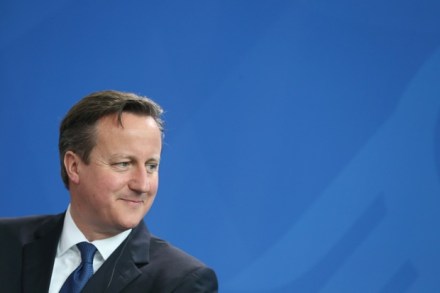
It is natural to assume that, if a majority votes No in the referendum on Britain’s EU membership, we shall then leave. It is not automatically so. After the vote, we would still be members. The government would then — morally at least — be mandated to negotiate Britain’s withdrawal. In theory, unlikely though it may currently seem, the EU could try to block this. Even assuming that it did not do so, the eventual terms of the withdrawal would not automatically be agreed by Parliament and would not necessarily correspond with the wishes of those who voted No. The context for our vote will be David Cameron’s presentation of a package secured with partners to persuade us to vote Yes. There is no negotiated package offered for those voting No.

The Spectator’s notes | 11 June 2015

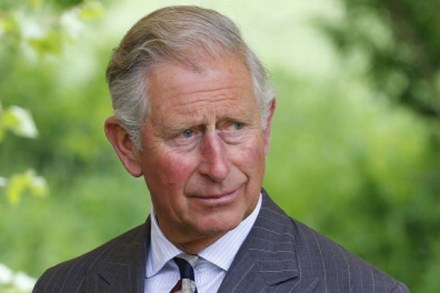
Two beautiful volumes in a cloth-bound case reach me. They are Speeches and Articles by HRH The Prince of Wales 1968-2012, published by University of Wales Press. The explanatory list of abbreviations and acronyms alone gives a charming sense of the range of subjects covered — ‘Foot and Mouth Disease, Foreign Press Association, Forest Stewardship Council … Myalgic Encephalopathy, Member of Parliament … Non-Commissioned Officer … Not In My Back Yard! … Roundtable for Sustainable Palm Oil’. Among the many speeches on the environment, however, I cannot find his speech in Rio de Janeiro in March 2009, entitled ‘Less Than 100 Months To Act’.

The Spectator’s Notes | 4 June 2015

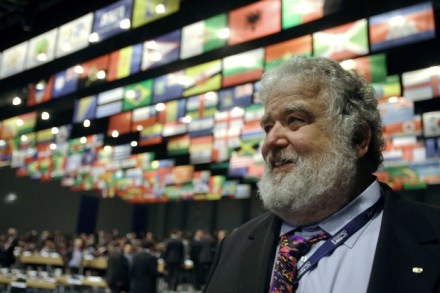
We in the West all hate Sepp Blatter, so we pay too little attention to the manner in which the Fifa executives were arrested. For what reason, other than maximum drama, were they all ensnared in a dawn raid on their hotel in Zurich? Are we really satisfied that the US authorities should behave in this way outside their jurisdiction? What is left of Swiss independence if they act thus under US pressure? Can we be confident that this very fat man called Chuck Blazer really exists, or has he been invented by Hollywood? In America, lawyers are more like political players or business entrepreneurs than the sub-fusc professionals of the English tradition. Should we welcome their global reach?

The Spectator’s Notes | 28 May 2015

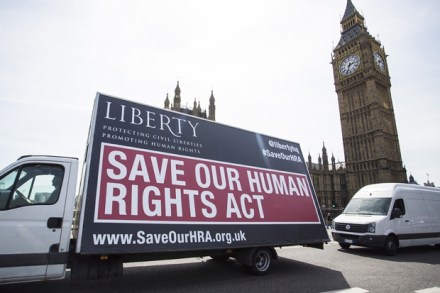
Amnesty International and others have placed a large newspaper advertisement telling Michael Gove ‘Don’t Scrap Our Human Rights’. The ad asserts that ‘A government cannot give human rights or take them away’, which, if true, makes one wonder how it can scrap them. Human rights are philosophically a confused idea; but their political power consists in the fact that anyone questioning them can be made to look nasty. People who love making new laws — particularly new laws that cost money — therefore like to present these laws as human rights. Article 29 of the EU’s Charter of Fundamental Rights, for example, says ‘Everyone has the right of access to a free placement service’.

The Spectator’s Notes | 21 May 2015

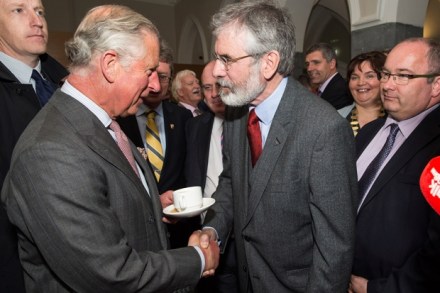
Who benefits from Prince Charles’s handshake with Gerry Adams? Not the victims of IRA violence, including the 18 soldiers who died at Warrenpoint on the same day as Lord Mountbatten was murdered. Not the moderate parties in Ireland, north or south, who never blew up anybody and so can get no kudos for pretending to be sorry about it afterwards. Only Adams (who was a senior IRA commander at the time of the killings) and Sinn Fein. His party has thus been relieved of current unpopularity in the Republic caused by long-running rape accusations, and is suddenly made to look good in the run-up to the centenary of the Easter Rising. I gather the bright idea to involve the royal family in this tasteless choreography came from our own Foreign Office.

The Spectator’s notes | 14 May 2015

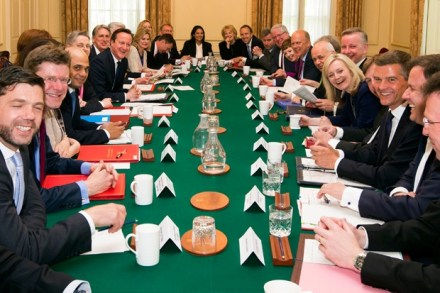
David Cameron is taking a bit of trouble to unite his parliamentary party. Having built a coalition outside it last time, he knows he must now build one within. The best way to do this lies to hand. It is to return to the pre-Blair custom of having Prime Minister’s Questions twice a week. Advisers always tell prime ministers not to do this, on the grounds that it is a waste of time and can only expose them to added risk. But in fact it has two good effects. It makes MPs feel much happier, and so discourages plotting. It also makes the Prime Minister the master of every area of policy and every nuance of parliamentary opinion. It literally doubles his power to govern successfully through the House of Commons.

Charles Moore’s notes: A matched pair of popes, and a patronising judge

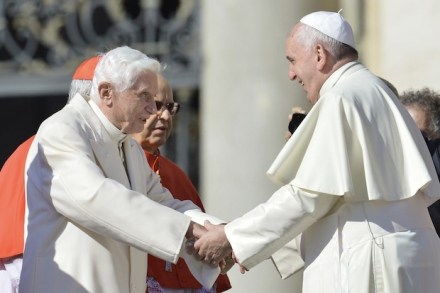
Pope Francis is favourably compared to Pope Benedict in the media. I hope it is not being slavishly papist to admire both of them. For Francis, the chalice is half-full. For Benedict, it was half-empty. But one attitude is not superior to the other. The Church needs both, like Christmas after Advent, Easter after Lent. Things are, in the Christian view, very bad, yet all shall be well. Put the two men together, and you have most of what you need. In paragraph 135 of his judgment in the Andrew Mitchell ‘Plebgate’ case, Mr Justice Mitting says that P.C.

A fitting exit for the self-publicising Lady Warsi

[audioplayer src="http://traffic.libsyn.com/spectator/TheViewFrom22_07_August_2014_v4.mp3" title="Douglas Murray and Tim Stanley discuss Baroness Warsi's resignation" startat=462] Listen [/audioplayer]At the impressive Westminster Abbey vigil to mark the centenary of the first world war on Monday night, there was one big candle for each quarter of the Abbey, and one dignitary assigned to each candle. At different points in the service, each dignitary would extinguish his or her candle. Then the rest of us in the relevant area, all equipped with candles, would follow suit. The lamps went out, as it were, all over Europe. One thing niggled. I was in the South Transept, and our big-candle snuffer was Lady Warsi, Minister of State at the Foreign Office.

The Spectator’s Notes: My grandfather’s dire omen on the eve of war

This week’s issue is dated 2 August. On that date 100 years ago, my great-grandfather, Norman Moore (always known as ‘NM’), went to Sunday Mass. ‘Father Ryan,’ he noted in his diary, ‘seemed hardly to have thought of the war... I told [him] I felt uncertain whether August would be a good time for a mission to Protestants but I gave him the £5 I had promised.’ Later, he and his wife Milicent went to tea with their Sussex neighbours, Lord and Lady Ashton, who ‘seemed very little informed of the gravity of the situation’. Back at home, a telegram arrived from NM’s friend, Ethel Portal: ‘Germany occupied Luxembourg Reported repulse of Germans by French near Nancy unofficial.

Our spies have stopped chasing subversives. That’s why we’re in so much trouble

Peter Clarke’s powerful report on the Trojan Horse affair in Birmingham schools is confirmation of the weakness of David Cameron in demoting Michael Gove. When Mr Gove appointed Mr Clarke to conduct the inquiry, there was execration — even from the local police chief — about how wickedly provocative it was to put a policeman with counter-terrorism experience into the role. But Mr Clarke was just the man and his inquiry has swiftly and efficiently uncovered serious problems of Islamist bullying and infiltration. Too late to reap a political reward, Mr Gove is vindicated. The next time this problem arises — and there undoubtedly will be a next time in another British city — what minister will have the courage to do what he did?

The Spectator’s Notes: this is the worst reshuffle since 1989

[audioplayer src="http://traffic.libsyn.com/spectator/TheViewFrom22_17_July_2014_v4.mp3" title="Charles Moore and Fraser Nelson discuss the reshuffle" startat=851] Listen [/audioplayer]This must be the worst reshuffle since Mrs Thatcher demoted Geoffrey Howe in 1989. Unlike that one, its errors are unforced. This year, David Cameron had established a surprisingly strong position as the leader whose unpopular but necessary policies were starting to work. He and his team seemed steadier and more able than their opponents. Now he has thrown that away with changes so large that he looks as if he disrespects what he has achieved.

The real scandal is that government files are ‘lost’ all the time

Like almost everyone else, I have no idea whether the accusations about paedophilia in Parliament in the 1980s are true. One thing I do feel quite confident about, though, is the business of the lost ‘dossiers’. The suggestion is that the disappearance of the file containing Geoffrey Dickens’s accusations of about 30 years ago and of 114 other files proves a cover-up. It does not. Literally tens of thousands of government files are destroyed every year, without much inspection. I believe, for example, that the overwhelming majority of the files from the offices of Chief Whip, the Leader of the House and Lord President of the Council from the 1980s were thrown out. And it is commonplace for departments to destroy files from the private offices of ministers.

The Spectator’s Notes: Hunting down dirty old men is not a challenge to the current culture

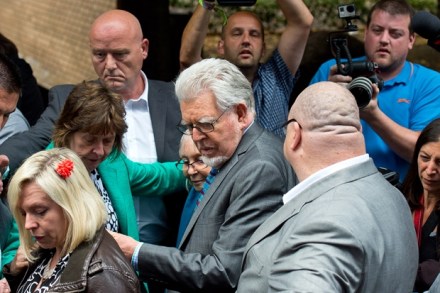
‘A culture changes by example and a licentious old man being found guilty will help do that,’ says a leader in the Times. Perhaps, but I would be much more impressed if it were a licentious younger man. We can all moralise away in retrospect about what the BBC and others allowed Rolf Harris CBE or Sir James Savile to get away with. It is easy to attack them when they are old or dead. You still very rarely hear of sex charges against current performers. I would not dream of suggesting that Russell Brand is a sex criminal, but we know, from his own account, that he has slept with a great many women. He even, with Jonathan Ross, telephoned the elderly actor Andrew Sachs, and they left a message on his answering machine boasting of how Brand had slept with his granddaughter.

Radek Sikorski: a Spectator foreign correspondent made good

Radek Sikorski, the Polish foreign minister, is undoubtedly one of the most dashing figures on the world stage. I first met him in the mid-1980s, possibly when I was a guest of the Oxford Union and Radek who, I seem to remember, was wearing white tie and tails, was on the standing committee. At that time, he was a refugee from communist Poland, having helped organise resistance to martial law, and — though I did not know it then — a member of that nursery of world rulers, the Bullingdon Club. I made him The Spectator’s Afghanistan correspondent and he filed brave and fascinating reports from within the ranks of the mujahedin. In his mind, the Soviets’ retreat from Afghanistan was a dummy run for getting them out of eastern Europe.

The Spectator’s notes: Diana’s bed, Boris’s dirty trick and Prince Philip’s mystery tie

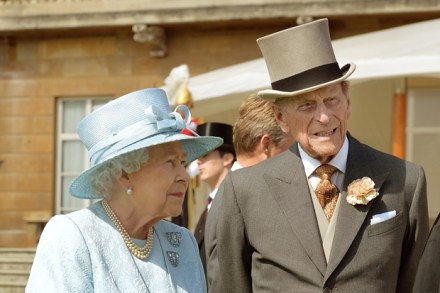
On Friday night, I went to Althorp, childhood home of Diana, Princess of Wales, to speak at its literary festival. My first duty was to appear on the panel of the BBC’s Any Questions? in a tent there. It was 30 years to the month that I had first been on the programme. Then it was at Uppingham School, presented by David Jacobs, and the panel included Roy Hattersley and Esther Rantzen. This time, it was presented by Jonathan Dimbleby, and the panel was George Galloway, Nigel Evans (the Tory MP who did not rape any men), and a beautiful woman called Rushanara Ali, the Labour MP for Bethnal Green and Bow. She was nine years old when I put in my first appearance. In all that time, the show has changed very little.