The Spectator's Notes

The Spectator’s notes | 11 February 2016

Here is a thought for all those Tory MPs calculating their personal advantage in the forthcoming EU referendum: unless the vote is an absolutely overwhelming Remain, the next leader of the Conservative party — whose day is no longer so far off — will come from the Leave camp. This will happen, obviously, if Leave wins, but also if Leave loses but does well, because most party supporters will only back someone who feels their pain and can reconcile them afterwards. Another thought: why would Nigel Farage want Britain to vote Leave? Then he would be redundant. Study him in the light of this thought and you will see that it explains his behaviour in the campaign.

The Spectator’s notes | 4 February 2016

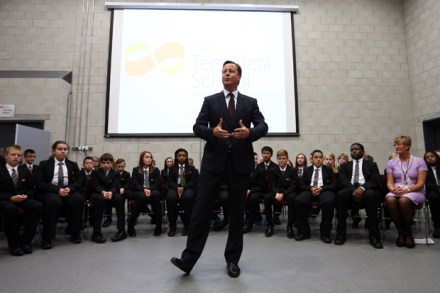
In 2000, the then Chancellor of the Exchequer, Gordon Brown, accused Magdalen College, Oxford, of class bias in failing to admit a student called Laura Spence, a pupil at a Tyneside comprehensive. This was grossly unfair — how could the Chancellor know the details of a particular case? It was also outrageous in principle: why should a politician tell a university whom to admit? This Sunday, David Cameron did much the same thing. In the middle of his EU negotiations, the migrant crisis and the other genuinely important things the Prime Minister must deal with, he found time to offer an article to the Sunday Times, headlined ‘Watch out, universities; I’m bringing the fight for equality to you’.

The Spectator’s Notes | 21 January 2016

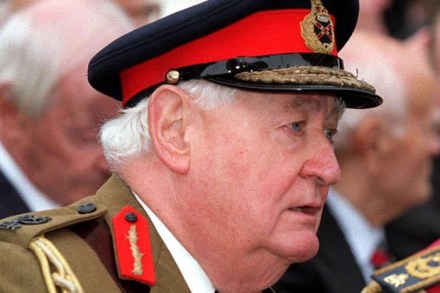
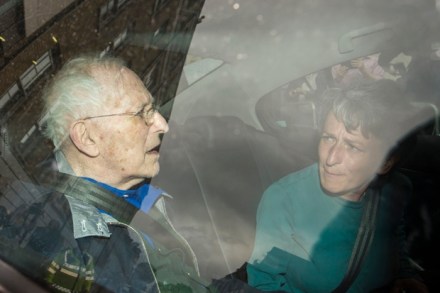
Many have rightly attacked the police for their handling of the demented accusations against Field Marshal Lord Bramall, now at last dropped. They ostentatiously descended on his village in huge numbers, chatted about the case in the pub and pointlessly searched his house for ten hours. But one needs to understand that their pursuit of Lord Bramall — though not their exact methods — is the result of the system. Because the doctrine has now been established that all ‘victims’ must be ‘believed’, the police must take seriously every sex abuse accusation made and record the accusation as a reported crime (hence the huge increase in sex abuse figures).

The Spectator’s Notes | 14 January 2016

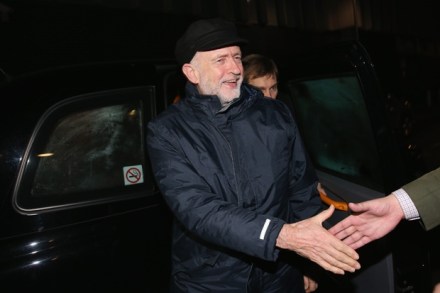
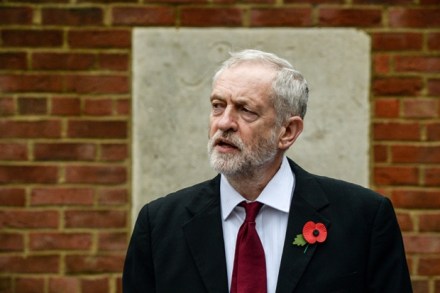
No amount of reports in the press that Jeremy Corbyn’s shadow cabinet-making is farcical and his party is divided should distract us from the fact that he is winning. I don’t mean that he will become prime minister, or even (though this seems quite possible) that he will survive as leader until the general election. It is just that he is gradually bringing more and more of Labour under his control, and grinding down his opponents. Besides, his public positions are coherent — in the sense of being internally consistent — and he is quite accomplished at adhering to an undeviatingly hardline, left-wing ideology while sounding mild and decent.

The Spectator’s Notes | 7 January 2016

At the end of next week, a judge will decide whether the ‘trial of the facts’ can proceed now that its subject, Lord Janner, is dead. Janner was accused, on various occasions, of child abuse, though the Crown Prosecution Service, on three occasions, over more than 20 years, decided that there was no case to prosecute. The amazing Simon Danczuk, now himself accused of rape, used parliamentary privilege to accuse Janner of the same crime (plus torture). Last year, Janner was forced to appear in court, though senile. When his senility was upheld, his accusers resorted to a trial of the facts to get their day in court. They were pursuing this aim when Janner died last month. This procedure exists under the Insanity Act.

The Spectator’s Notes | 3 December 2015

Speaking on the Today programme on Monday, Sir David Attenborough, who wants a global agreement to control carbon emissions, pointed out that ‘Never in the history of humanity have all the people of the world got together to deal with a particular problem and agreed what the solution could be. Never, ever, ever.’ He is right. But he seemed to defy the logic of his own observation. They never have. Probably, since the truth is best arrived at through disagreement, they never should. The key point is that they never will. So it is a waste of time to try. When someone commits suicide, those close to that person naturally reproach themselves. In politics, and similarly contested areas of life, people reproach others too.

The Spectator’s notes | 26 November 2015

Because, it says, of its ‘liberal values and respect for human dignity’, the Economist has put out a film about Emily, a 24-year-old Belgian woman, who wants assisted dying. She is physically healthy, and comes, the film assures us, from a happy family. She has suffered from severe depression since childhood, however. By her own account, her self-made video (two years ago), in which she says ‘I don’t want to live a lie’ and ‘It keeps feeling empty whatever I do’, made her feel empowered. It inspired her to seek death at the hands of doctors. Belgium is one of two countries in the world which permits assisted dying for psychiatric reasons.

The Spectator’s Notes | 19 November 2015

When Jeremy Corbyn says it is better to bring people to trial than to shoot them, he is right. So one might feel a little sorry for him as the critics attack his reaction to the Paris events. But in fact the critics are correct, for the wrong reason. It is not Mr Corbyn’s concern for restraint and due process which are the problem. It is the question of where his sympathies really lie, of what story he thinks all these things tell. Every single time that a terrorist act is committed (unless, of course, it be a right-wing one, like that of Anders Breivik), Mr Corbyn locates the ill as deriving from the behaviour of the West, especially the United States and Britain (and, where relevant, Israel).

Charles Moore’s Notes: Who’d be a diplomat now?

The other day, a friend told me, he had been chatting to an old friend of his who has spent his life in diplomacy and international relations. The man, who will quite soon retire, has had a successful career, but he was full of gloom. Essentially, he said, the entire system of international relations has now been working very badly for 20 years, having worked much better in the previous 50 or so. No one — particularly no one in the West — can see a way through this, but the chancelleries and ministers are reluctant to confront this sad truth, and so a pointless merry-go-round of international conferences, bodies and negotiations consumes the energies of those foolish enough to stay in the game.

The Spectator’s notes | 5 November 2015

It is good to learn that the current management of the V&A want to reverse their predecessors’ lack of interest in Margaret Thatcher’s clothes. The museum’s original refusal showed a lack of imagination about how women have tried to gain greater power in a man’s world, and how clothes tell this story. Museums love to have suits of medieval armour. They reveal the amazing combination of defensive utility and elegant display which the age required. Even better if the armour was worn by a great warrior on a great occasion, like the Black Prince at Crecy. Mrs Thatcher’s clothes were her armour on her fields of battle — in Parliament, on television, in Moscow, at her party conference after the Brighton bomb. They helped her win.

The Spectator’s notes | 29 October 2015

An enjoyable aspect of parliamentary rules and conventions is that almost no one understands them. This has become acutely true in an age when the media no longer regularly reports proceedings in Parliament. So when the House of Lords threatened to derail the government tax credit cuts this week, no one, that I spotted, foresaw what actually happened. Knowing that the measure came forward as a statutory instrument, not a Bill, and was therefore (in both Houses) unamendable, its opponents in the Lords voted not to reject it but to delay considering it. They set conditions which had to be met before they would do so. Thus they defied the government without flatly breaking the conventions, which was clever, and unpredicted.

Charles Moore’s Notes: If we want to save the elephant, we must legalise the ivory trade

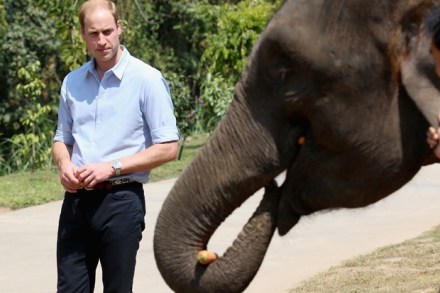
How good a deal for Britain is it that the president of China got a state visit and a nuclear power station and Prince William got the chance to go on Chinese television and complain about the ivory trade? The Prince was listened to politely, of course, but the Chinese will not give up their enthusiasm for the stuff. The elephant in the room, to misapply that expression, is that only a legal trade in ivory will save the species. Just as cows exist in any numbers only because we eat their flesh and drink their milk, so elephants have a future only if it is profitable to breed them. Throughout the commodity boom that has now ended, Africa has done very well out of China’s demand for raw materials.

Charles Moore’s Notes: Diane the Posh Goddess and Osborne’s mania

When I arrived at Cambridge in 1975, a nervous freshman, I remember walking with a friend past Newnham and being introduced to a third-year undergraduate. She was attractive, witty, confident, well-connected, at home in the world of the ‘glittering prizes’ (the irritating phrase which gave its name to Frederick Raphael’s novel of that time). I envied her poise. Her name was Diane Abbott. Later, making many sacrifices for her career, she changed her accent, became ‘working-class’, and had a relationship with Jeremy Corbyn, but for me she will always be Diane, the posh goddess.

Charles Moore’s notes: Boris’s brilliance; Labour’s Joe McCarthy

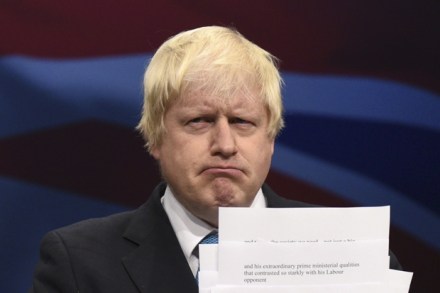
Maybe it was because of the contrast with Theresa May’s chilly, disingenuous monotone minutes before, but I really think Boris Johnson’s speech to the Conservative party here in Manchester was brilliant. It is a constant puzzle that senior politicians, who spend such ages worrying about how to communicate, do not learn how to make platform speeches. They make basic errors — failing to read autocues, misjudging the timing of applause. They also do not trouble to think about what makes a speech — its combination of light and shade, the sense of an audience of actual human beings both in and outside the hall.

The Spectator’s notes | 1 October 2015

Contrary to the sneers of what he calls the commentariat, Jeremy Corbyn has already acquired brilliant spin doctors. In advance, the media was full of how his party conference speech would be all about his patriotism. Actually, this was barely mentioned. This technique of spinning the speech beforehand is pure Mandelson/Campbell. The emphasis on ‘free debate’ is also spin. In fact, the subtext of the speech was what communists call ‘the leading role of the party’ — control by activists. It was cunningly done, apparently sweet, actually tough. Mr Corbyn also followed the proud tradition of the Bush family. He accidentally read out the instruction, ‘Strong message here.

The Spectator’s notes | 17 September 2015

When the Labour party began, its purpose was the representation of labour (i.e. workers) in the House of Commons. Indeed, its name was the Labour Representation Committee. Its goal was gradually achieved, and then, from the 1980s, gradually annihilated. With the victory of Jeremy Corbyn, the Labour leader is supported by only 10 per cent of the party’s MPs, and yet it is imagined, at least by his backers, that he will eventually be able to get into government with them. It is an impossible situation. What is needed today is the opposite of how it all started — a Parliamentary Representation Committee in the Labour party. When the history of Corbynism comes to be written, many will assume that his form of leftism arose as a protest against the Thatcher era. This is not so.

The Spectator’s notes | 10 September 2015

Presumably Britain has some sort of policy on immigration, asylum and refugees, but instead of struggling to understand it, you can save time by following its media presentation, since that is what seems to concern the government most. Essentially, the line is that Labour lets them all in and the Tories don’t and won’t (‘No ifs, no buts’). When, as at the last election, it turns out that net immigration has been rising under David Cameron, he apologises shyly and sounds tough again. He was sounding very tough until last week, when the photograph of the dead boy on the Turkish beach suddenly turned him all soft.

Spectator’s Notes | 3 September 2015

Was there ever a more unilluminating political idea — for voters rather than practitioners — than triangulation? For those readers so pure and high-minded that they have not followed politics for 20 years, I should explain that triangulation came from Bill Clinton, was imported by Tony Blair, and is now practised by David Cameron. Clinton’s adviser, Dick Morris, put it thus: ‘The President needed to take a position that not only blended the best of each party’s views but also transcended them to constitute a third force in the debate.’ The Tories’ adoption of the Living Wage is the latest example.

The Spectator’s notes | 20 August 2015

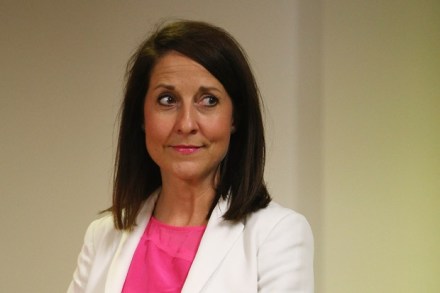
Watching the very pleasant Liz Kendall on television this week, I was struck by how extraordinary it is that more than 40 years have now passed since the Conservatives selected a woman leader and still the Labour party cannot bring itself to do so. (Although, come to think of it, it took Labour 142 years to catch up with the Conservatives in selecting a Jew, so perhaps we have another century to wait.) I am not necessarily saying that Ms Kendall is the answer — she seems able, but inexperienced — but there does appear to be a serious barrier to women at the very top of the Labour party. I suspect this is due less to old-fashioned misogyny than to the sexual politics which feature so largely in the ideology of the left.

The Spectator’s notes | 13 August 2015

Our son, William, celebrated his marriage on Saturday. You would expect me to say that it was wonderful, sunny occasion. I do, and it was. I have been trying to work out why. The most important factor is something which parents can, fortunately, affect very little. Will was marrying a beautiful, kind and thoughtful woman, whom he loves; and she loves him. This mutuality, rather than any doctrine, is the main thing. Marriage occurs naturally in organised society and is not invented by religion. Religions only annex and defend it. Although my wife and I are believers — and so are Will and Hannah — I do not think religion is essential to the concept of marriage. It makes a heaven of a difference, however.