The Spectator's Notes

The Spectator’s notes | 7 July 2016

Before she was murdered, Jo Cox MP had written most of a report. She worked on it jointly it with the Conservative MP Tom Tugendhat for the Britain in the World project at the think-tank Policy Exchange. Its publication had been intended to coincide with that of the Chilcot report this week. Because of her shocking death, it is now delayed. But the project wants to continue her work, and the report’s bipartisanship. The essential point on which Mrs Cox (who opposed the Iraq war) and Mr Tugendhat (who served in it) agreed is that total non-intervention is not a foreign policy strategy. If Iraq shows the horrors of ill-planned intervention, Syria shows how non-intervention can cause worse suffering and instability.
The Spectator’s Notes | 30 June 2016

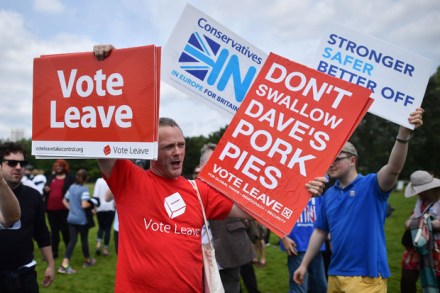
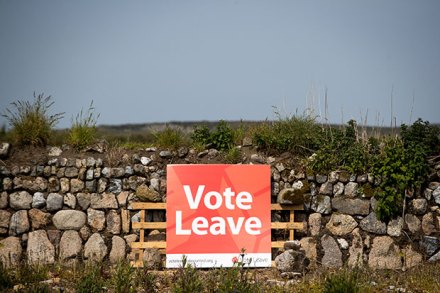
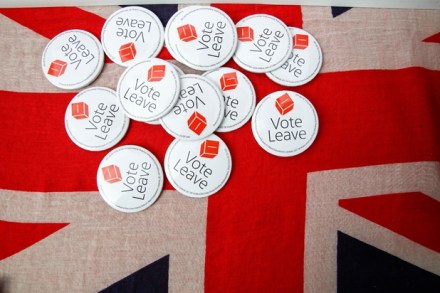
It sounds logical that Vote Leave should now disband, since the people have obligingly voted Leave, but is it wise? Who else can try to ensure that the Leave cause is not forgotten in internal Tory struggles, or in a war between Ukip and the rest? If it is right — which I think it is — that the Leave vote is the biggest shock ever administered to the main parties and the ruling elites since the collapse of the Munich agreement, then it follows that those parties and those elites will try to reverse or at least neuter the decision. There needs to be an organised resistance to them, run by people who know what they are talking about. I know that Dominic Cummings is longing to return to the wife and new-born baby whom he has hardly seen for eight weeks, but I fear that duty calls.

The Spectator’s Notes | 22 June 2016

Commentators have complained about this referendum — its ‘lies’, bad manners, bitterness. Without exactly disagreeing, I would nevertheless argue that it has performed at least one of the roles intended, which is to encourage people to consider the issue. If you are actively engaged in political debate, as candidate, activist, journalist etc, you believe (often erroneously) that you have thought through the big questions. If you are an unpolitical voter, you often haven’t. This is particularly true of the European question because, for 40 years, enormous efforts have been made by all the political parties to discourage you. David Cameron only finally conceded to us the right to have our say because, for internal party reasons, he was desperate.

The Spectator’s Notes | 16 June 2016

The Remain campaign takes as its model the ‘No’ one in the 2014 Scottish referendum. First and last — hence the Osborne/Darling fantasy horror Budget on Wednesday — inspire fear. Second, late in the day, leave it all to Labour and get Gordon Brown to make a passionate speech (Mr Brown took this too literally and made almost exactly the same passionate speech). Finally, shortly before polling, get leaders of all stripes to make a solemn ‘vow’ to win over the doubters. I am trying to work out what that vow could be. All 27 other member states promising some guarantee of Britain’s independence within the EU?

The Spectator’s Notes | 9 June 2016

One of the most influential and learned figures in the British European debate is Rodney Leach. In the 1990s, he helped lead those of his fellow businessmen who became convinced that the abolition of the pound would be a disaster. He was a moving spirit in Business for Sterling and then in the ‘No’ campaign against the euro. This did much to persuade Gordon Brown, as Chancellor, to ditch euro entry plans in 2004. The following year, Lord Leach set up Open Europe, and continues as its chairman to this day. It is the most trusted think tank for research and debate on all EU questions, and is incredibly useful for the media because of its daily press digests, which enable us to follow the debate across the entire Continent.

The Spectator’s Notes | 2 June 2016

‘No one can seriously deny that European integration brought an end to Franco-German conflict and has settled the German question for good,’ wrote Niall Ferguson in the latest Sunday Times. I hesitate when confronted by such an assertion by such a learned professor. But I think I would seriously deny it, or at least seriously question it. Surely what brought an end to Franco-German conflict was the utter defeat of Nazi Germany. European integration was a symptom of that end, not its cause. As for settling the German question, isn’t it too early to say? The eurozone is the first large non-German area to have been dominated by Germany since 1945. It is a mess.

The Spectator’s notes | 26 May 2016

Obviously there is no such thing as ‘Cameronism’, as there is ‘Thatcherism’; but once upon a time, David Cameron did have a project. It was called Tory modernisation, and his most imaginative adviser on the subject was Steve Hilton. At Policy Exchange, on Wednesday, Mr Hilton spoke, Mark Antony-like, over the dead body of Tory modernisation. On virtually every modernising count — localism, openness to the world, looking to the future, ignoring the interests of the rich — the EU is failing, he said. Yet Mr Cameron is staking his career on it. It is rather as if Mrs Thatcher, in her last years in office, were fighting flat out for nationalisation.

The Spectator’s notes | 12 May 2016

One of the many problems with David Cameron’s threat that leaving the European Union could plunge us into war is that it sits so strangely with how he spoke about the EU before he called a referendum. In those days, he was studiedly cool about the union: he had no sentimental attachment to it, he told us, just a pragmatic weighing of the advantages for Britain, depending on what he could obtain. His ‘deal’ for a ‘reformed Europe’, supposedly essential to recommending a Remain vote, contained no Tolstoyan themes at all, just stuff about when migrant EU workers could claim benefits and suchlike. When he now says, ‘By the way, if we leave we’re all going to die,’ one feels he should have thought of that earlier.

The Spectator’s notes | 5 May 2016

The comparison between the referendum questions — that asked in 1975 and the one which we shall be asked on 23 June — is interesting. In 1975, the question was ‘Do you think that the United Kingdom should remain part of the European Community (Common Market)?’ (Answer: Yes/No). Today, the question will be ‘Should the United Kingdom remain a member of European Union or leave the European Union?’ (Answer: Remain/Leave). The modern question is the fairer, and it also brings out how things have changed. In 1975, it seemed almost obvious that the answer was ‘yes’: even many who did not like EEC entry could see it was strange to leave only a couple of years after joining.

The Spectator’s Notes | 28 April 2016

‘England in effect is insular, she is maritime, she is linked through her interactions, her markets and her supply lines to the most diverse and often the most distant countries; she pursues essentially industrial and commercial activities, and only slight agricultural ones. She has, in all her doings, very marked and very original habits and traditions.’ This classic Eurosceptic statement was made, as Daniel Hannan reminds us in his excellent book Why Vote Leave, by a great European, Charles de Gaulle. He was explaining why France was rejecting our attempt to join the EEC in 1963. The General understood what the European project was, and why Britain was not a natural part of it. More than 50 years on, is there much to add?

The Spectator’s notes | 21 April 2016

The ‘remain’ campaign is having some success with the line that the ‘leave’ camp cannot say what Britain outside the EU would look like. (Nor can the ‘remain’ campaign, of course, though it doesn’t stop it trying.) But it is crucial to the ‘leave’ cause that it resist the temptation to set out a plan. ‘Remain’ wants it to fall into the SNP trap in the Scottish referendum of proposing something which can then be picked apart. There is a cast-iron reason why ‘leave’ cannot do this. Even if we vote to leave, the ‘leave’ campaign, unlike the SNP in the Scottish vote, will not form a government. It is a campaign in a referendum, not a party in or bidding for office.

The Spectator’s notes | 14 April 2016

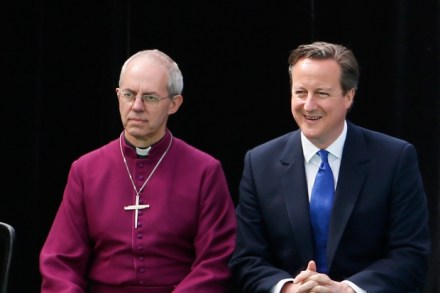
I don’t think there is a Royal College of Public Relations, but if there were, it should teach a course based on a comparison between two stories last week. One concerned the Prime Minister and the other the Archbishop of Canterbury. Both arose from the paternity of the principals and, in both cases, the principals had not done anything wrong. Yet there the similarities end. David Cameron, and those working for him, spent the best part of a week fending off and then changing a story they found embarrassing. Justin Welby, and his much smaller staff, confirmed the truth of a potentially much more painful story in one go, bravely and clearly.

The Spectator’s notes | 7 April 2016

However wicked tax evasion is and however distasteful some tax avoidance may be, people should imagine a world without tax havens and see if they really want it. The prime reason that tax havens exist is that taxes in most countries are too high. If they did not exist, the competitive element would be reduced, and taxes would go up even more. The EU constantly complains about ‘unfair tax competition’, by which it really means just tax competition itself. Tax avoidance is what most of us try to do (see next item). Resentment about it is largely because the rich find it easier to achieve than the rest of us. In my latest Notes, I mentioned that the theme of the South of England Agricultural Society this year is sheep. Last week, sheep entered our lives dramatically.

The Spectator’s Notes | 31 March 2016

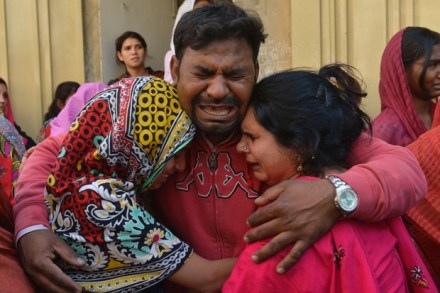
You might expect that the murder of Christians would excite particular horror in countries of Christian heritage. Yet almost the opposite seems to be true. Even amid the current slew of Islamist barbarities, the killing of 72 people, 29 of them children, on Easter Day in Lahore, stands out. So does the assault in Yemen in which nuns were murdered and a priest was kidnapped and then, apparently, crucified on Good Friday. But the coverage tends to downplay such stories — there has been much less about Lahore than Brussels, though more than twice as many died — or at least their religious element.

Spectator’s Notes | 23 March 2016

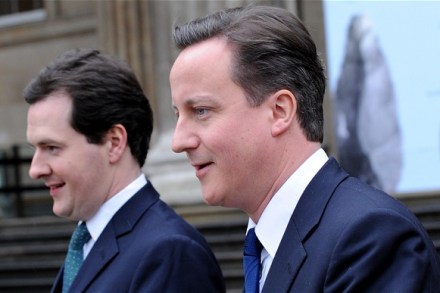
Why have David Cameron and George Osborne overreached? Why are so many in their own party no longer disposed to obey them? Obviously the great issue of Europe has something to do with it. But there is another factor. Victory at the last election, followed by the choice of Jeremy Corbyn as Labour leader, has convinced too many Tories, including Mr Osborne himself, that they will be in power for ten more years at least. So they get careless and cocky. Then they make mistakes. Then they come up against the most admirable fact about parliamentary democracy, which is that you can never guarantee being in power for ten years. (You can’t even guarantee it for the prescribed five, though the iniquitous Fixed-term Parliament Act of the coalition has made this easier than before.

The Spectator’s notes | 17 March 2016

Do Recep Tayyip Erdoğan and Bashar Assad support ‘leave’ or ‘remain’ in Britain’s EU referendum? I ask because they are the most powerful foreign leaders in deciding the vote, their views being much more effective than any sonorous words that may soon be offered by Barack Obama or any last-minute inducements from Angela Merkel. If President Assad — his position secured by Vladimir Putin — decides to make a dramatic gesture between now and 23 June, and call for some peace conference, preferably in a European capital, then the sense of crisis which makes the EU look so weak will dissipate.

The Spectator’s notes | 10 March 2016

Surely there is a difference between Mark Carney’s intervention in the Scottish referendum last year and in the EU one now. In the first, everyone wanted to know whether an independent Scotland could, as Alex Salmond asserted, keep the pound and even gain partial control over it. The best person to answer this question was the Governor of the Bank of England. So he answered it, and the answer — though somewhat more obliquely expressed — was no. For the vote on 23 June, there is nothing that Mr Carney can tell us which we definitely need to know and which only he can say. So when he spoke to the Treasury Committee of the House of Commons on Tuesday, his opinion was no better than that of any intelligent and well-connected person who deals with money.

The Spectator’s notes | 3 March 2016

The government, or at least David Cameron’s bit of it, seems to think that trade is something that takes place because of a trade agreement. The order is the other way round. People trade, and have done for several thousand years, because it is to their mutual advantage. After a bit, governments come along and try to direct and often impede it, but in the modern world of instant communications, ready transfers of money and container shipping, this has become blessedly difficult. A friend, Edward Atkin, who has made a large fortune out of Avent baby bottles and like products, tells me: ‘I have never known or asked whether any of our customers in over 80 markets was trading in a country with or without a trade agreement with the EU. We exported 80 per cent of our output.

The Spectator’s notes | 25 February 2016

One of the oddest features of the cabinet majority for staying in the EU is that almost no one in it admits to being a Europhile. How is it, then, that the very last-century ideas of Edward Heath, Ken Clarke, Michael Heseltine and Chris Patten can still exercise so much power over those who have so strongly and, in some cases, consistently criticised the EU in the past — Philip Hammond, Theresa May, Michael Fallon, Sajid Javid, Oliver Letwin, Liz Truss, Stephen Crabb, and, of course, David Cameron himself? Obviously one factor is that Tory MPs have found it convenient in recent years to adopt Eurosceptic protective colouring in their constituencies. But I think there is something deeper.

The Spectator’s Notes | 18 February 2016

In his authoritative biography of Pope John Paul II, George Weigel writes lucidly about the unlucid subject of phenomenology. It is a way of thinking which rejects the dry categories of empiricists and the abstractions of idealists, and concentrates instead on ‘the basic experiences of life as they come to us’. Weigel takes the example of ‘girl meets boy’: ‘An empiricist will analyse the brain chemistry of a young woman seeing, hearing and touching a handsome young man … an idealist may worry that the young woman’s commitment to the second categorical imperative [of Kant] (never use another person as a means) may be wavering in the face of other desires.