The Spectator's Notes

The Spectator’s Notes | 26 January 2017

The English tradition of dissenting judgments in important civil cases is a good one. They are often better than the majority view, because they tend to be advanced by judges who resist the self-aggrandisement of their profession. In the Miller case on triggering Article 50, before the Supreme Court, Lords Reed, Carnwath and Hughes dissented from the other eight. This is what Lord Reed says: ‘…the argument that withdrawal from the EU would alter domestic law and destroy statutory rights, and therefore cannot be undertaken without a further Act of Parliament, has to be rejected even if one accepts that the 1972 Act creates statutory rights and that withdrawal will alter the law of the land.
The Spectator’s Notes | 19 January 2017

It is hard to be shocked by anything in these tumultuous times, but I was brought up short by the ‘attic’ headline of Tuesday’s Times, advertising the paper’s T2 section: ‘Up close and personal with Donald Trump — Michael Gove’ , it said, and continued, ‘Sex after 50: it’s fabulous’.. The earliest members of Alcoholics Anonymous offered their famous Twelve Steps, which the drunkard must take in order to recover, born of their own experience. The Twelve Steps are still the foundation of AA. They work because they are taken by people who have hit rock bottom and realise it. The first step says, ‘We admitted we were powerless over alcohol — that our lives had become unmanageable.

The Spectator’s Notes | 12 January 2017

At the Golden Globes ceremony, Meryl Streep attacked Donald Trump because he ‘imitated a disabled reporter’. ‘When the powerful use their position to bully others, we all lose,’ she added. It has not been explained over here that hers is a disputed version of what happened. The controversy began in November 2015, when Trump, campaigning, alleged that ‘thousands and thousands’ of Muslims in Jersey City had publicly celebrated the attack on the Twin Towers in September 2001. The allegation caused outrage, and it seems that Trump’s idea of numbers was wildly exaggerated. However Trump’s people did produce evidence that such a celebration had taken place. One piece was a contemporary report in the Washington Post by Serge Kovaleski.

The Spectator’s Notes | 5 January 2017

‘My deep concern is that because of changed ways that news is now gathered, collated, packaged, delivered and displayed, the country can often find itself in… the tyrannical grip of the massed media… which could seriously threaten the political health of the United Kingdom as a Parliamentary democracy.’ This is from a letter I have received from Field Marshal Lord Bramall. Lord Bramall has reason to complain, since he was recently, in his nineties, the victim of preposterous child abuse allegations, invented by the fantasist ‘Nick’, fanned by the media, and wild-goose-chased by the Metropolitan Police. His complaint, however, goes much wider, including how the British media misread the Arab Spring and thus Syria. He wonders what should be done.

The Spectator’s Notes | 8 December 2016

‘Are you Charles Moore of The Spectator?’ I answered to that description. ‘Well,’ said my questioner, ‘I am worried that you’re becoming very right-wing.’ We were sitting by the fire in a charming, smoky hut with no electric light and lots to eat and drink. It was a shooting lunch, the sort of occasion where one is seldom held to account for anything. I could have tried to laugh the question off, but my interrogator exhibited high intelligence and class confidence, so I sensed she wouldn’t let me get away with that. Unfortunately, I didn’t know how to answer her. I am not offended by being called right-wing, because I don’t agree with the left-wing view that right-wingery is a mark of personal turpitude.

The Spectator’s Notes | 1 December 2016

It seems perplexing that François Fillon, now the Republican candidate for the French presidency, should be a declared admirer of Margaret Thatcher. Although she certainly has her fans in France, it is an absolutely standard political line — even on the right — that her ‘Anglo-Saxon’ economic liberalism is un-French. Yet M. Fillon, dismissed by Nicholas Sarkozy, whose prime minister he was, as no more than ‘my collaborator’, has invoked her and won through, while Sarko is gone. In this time of populism, M. Fillon has moved the opposite way to other politicians. He says his failures under Sarkozy taught him that France needs the Iron Lady economic reforms which it has never really tried.

The Spectator’s Notes | 24 November 2016

It is not self-evidently ridiculous that Nigel Farage should be the next British ambassador to the United States. The wishes of the president-elect should not automatically be discounted. John F. Kennedy’s wish that his friend David Ormsby-Gore (Lord Harlech) should be ambassador was granted. It is also not true that the post must be filled by a professional, or that the Prime Minister should not appoint a political rival to the post. Churchill gave the job to his main rival, Lord Halifax, from 1940. Certainly Mr Farage is not the conventional idea of a diplomat, but then Mr Trump is not the conventional idea of a president. Although its own leadership emerged from the same global convulsions, our government is slow to grab the advantages offered by this new world.

The Spectator’s Notes | 17 November 2016

On a day when much fuss was being made about ‘false news’ on the net, it was amusing to study the Times splash of Tuesday, greedily repeated by the BBC. It concerned a ‘leaked’ memo, ‘prepared for the Cabinet Office’ and ‘seen and aided by senior civil servants’. The memo, from a Deloitte employee, was in fact unsolicited. It was not a bad summary of why the government’s Brexit plans are confused, but its status was merely that of journalism without an outlet. By the use of the single word ‘leaked’, a piece of analysis was turned into ‘news’ — false news. At least two former Spectator figures understood things about the recent American contest which eluded most commentators.

The Spectator’s Notes | 3 November 2016

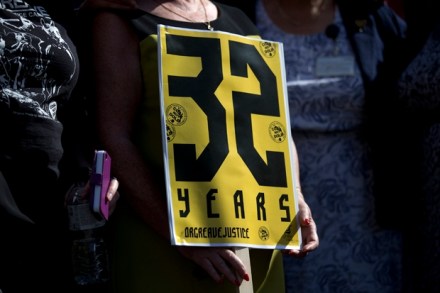
It is a great relief that there will be no inquiry into the ‘Battle of Orgreave’ in 1984. The weirdness is that Mrs May’s people ever entertained the thought in the first place. The push for an inquiry is a classic example of the attempt by the aggrieved, usually on the left, to turn history into a trial. If we were to inquire into the miners’ strike, more than 30 years on, it would be far more pertinent — though still a very bad, divisive idea — to establish the full facts about how Arthur Scargill got money from Gaddafi’s Libya and was promised it by the Soviet Union. The Independent Inquiry into Child Sexual Abuse is current proof of how retributive urges make a just process impossible.

The Spectator’s Notes | 27 October 2016

World leaders are preoccupied nowadays with what is known as their ‘legacy’. In practice, this means being linked with moral-sounding projects, rather than embedding clear achievements. Barack Obama is even more obsessed with legacy than his predecessors. What might be his final way of showing this? Some suggest he will order the United States to abstain if France brings forward its planned UN Security Council resolution calling for a Palestinian state, thus permitting the resolution to pass. If so, he will bring no peace, but who cares? He will have signalled his virtue.

The Spectator’s notes | 20 October 2016

Vote Leave was the most successful electoral campaign in British history. Against the opposition of all three political parties, it won, achieving the largest vote for anything in this country, ever. But voting to leave is only the essential start, not the fulfilment, and now there is no Vote Leave. After victory, the campaign’s leaders went their various ways. Some were lulled into a false sense of security by Mrs May’s clear declaration of Brexit intent, and by the fact that one of their top colleagues, Stephen Parkinson, is now installed in 10 Downing Street. Nick Timothy, now all-powerful in Mrs May’s counsels, was running the New Schools Network during the campaign.

The Spectator’s Notes | 13 October 2016

Given all the outrageous things that Donald Trump has done and said already, why has he got into so much worse trouble for dirty remarks about women taped more than ten years ago? He gets away with dog whistle politics but not, seemingly, with wolf whistle ones. Some might say this is because of political correctness; or because his evangelical supporters, while not necessarily offended by his violent views, disapprove of his lewdness; or both. But my theory about sex scandals in politics is that they are not, strictly speaking, about morality. They are tests of how the accused man (or, much more rarely, woman) behaves when attacked. Does he seem odious or contrite, arrogant or charming? If he lies, does he do it beguilingly?

The Spectator’s Notes | 6 October 2016

 Birmingham Checking in to my hotel room on the 18th floor, for the Conservative party conference here, I opened the door and bumped into a workman on a stepladder. ‘Sorry,’ he said, ‘They shouldn’t have let you in. All the water came through from the room upstairs.’ He was painting over the damage. Then he looked at me, recognised me and asked, ‘Hard or soft Brexit, then?’ I burbled slightly, not being happy with the distinction, but eventually said I thought ‘hard’ better described what was needed. The painter told me he read the Guardian and the Telegraph every day to ‘get both sides’. He reckoned ‘hard’, too: ‘It’s got to be divorce.

The Spectator’s Notes | 29 September 2016

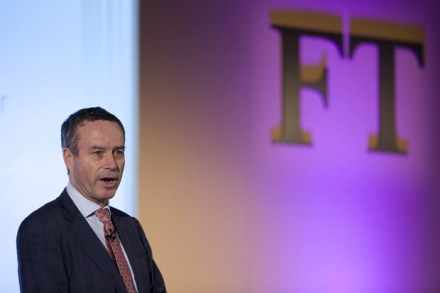
Mathias Döpfner, the extremely tall, extremely intelligent head of Axel Springer, is unusual in the generally conformist German business elite because he is not an unqualified believer in the German economic model. I have known him slightly for about 20 years and have always been interested by his questing, speculative mind. We have had conversations about the freer, Anglosphere model of economic life which he admires. Although he is not anti-EU — that is still almost against the law in Germany — he is sceptical of its direction. Now he has blasphemed in the EU’s main church in Britain — the Financial Times — by telling the paper that within three to five years he would expect Britain, as a result of Brexit, to be better off than its former EU partners.

The Spectator’s Notes | 22 September 2016

When I read that Martin Roth, the director of the V&A, was resigning from his job because of Brexit, I sensed it was not quite true. I did not doubt the sincerity of Dr Roth’s views: he has his German generation’s horror of anything which could be presented as ‘nationalism’. It was rather that it did not make sense as a motive for leaving his post. Brexit won’t actually happen until roughly the time when Dr Roth would have left anyway, so it could not have impeded his work. Besides, the collections of the V&A are not at the slightest risk of attack for being ‘decadent’ art under the May regime. My hunch seems to be right.

The Spectator

When you vote in Britain, there is a relaxed feeling in the polling stations. This is a long-established part of our culture, the atmosphere seems to say, and you are trusted to follow its rules. But, as Sir Eric Pickles’s review of electoral fraud suggests, the ballot is not nearly as secure as it should be. If that trend continues, the results will be called in doubt, and then democracy really is in trouble. For a long time, I have suspected the process and so, in the recent EU referendum, I tried a couple of experiments, helped by the fact that I am legally registered to vote in London as well as Sussex (though of course one may cast only one vote in a national election or referendum). In Sussex, I went to the polling station early.

The Spectator’s Notes | 11 August 2016

Those who want to revive grammar schools are accused of ‘bring backery’ — the unthinking idea that the past was better. But many of their accusers suffer from the rigid mindset of which they complain. They say that grammar schools ‘condemned most children to failure at the age of 11’, and that, even at their peak, grammars catered for less than 20 per cent of the school population. Why assume that the return of grammars must re-create either of these things? Grammar schools grew up, historically, in different ways and at different times. Then, in the mid‑20th-century mania for uniformity, they were standardised and, in the later 20th-century mania for comprehensives, almost completely abolished.

The Spectator’s notes | 4 August 2016

The Daily Telegraph revealed on Tuesday that Michael Spencer, the chief executive of Icap, has been blocked for a peerage by the House of Lords Appointments Commission (Holac). All the indignation just now is against David Cameron’s resignation honours list, packed with his ‘cronies’, who allegedly include Mr Spencer. It is misdirected. The real anger should go against the pharisaical bureaucracy which has been imposed upon patronage. No one is allowed to know why Mr Spencer has been blocked, yet the world knows that he has been because, supposedly, he has ‘the wrong sniff’ about him.

The Spectator’s Notes | 28 July 2016

At the beginning of his war memoirs, Charles de Gaulle famously wrote, ‘All my life I have had a certain idea of France’ and its ‘eminent and exceptional destiny’. It was not only an abstract concept: the picture in his mind was of ‘the Madonna in mural frescoes’. What is President Hollande’s certain idea of France? Presumably it cannot be the Madonna, since Hollande is the child of French laïcité, which creates an unbridgeable gulf between religion and the republic. But what happens when, in the name of one religion, men in France enter the temple of another and slit the throat of a priest, as happened this week near Rouen?

The Spectator’s Notes | 14 July 2016

On Tuesday night in London, I spoke to Women2Win, a Conservative organisation dedicated to recruiting more women candidates. My title, suggested long ago, was ‘The Woman Who Won’. It referred to Margaret Thatcher. The day before my speech was delivered, another woman (and former chairman of Women2Win) won, so now there are two. Everyone seized the moment to compare and contrast them. There is a clear difference between Theresa May’s situation today and Mrs Thatcher’s in 1975. Mrs May, like Ted Heath in 1975, represents the side that just lost, Mrs Thatcher the side with a new idea about how to win. Mrs May is the establishment candidate: Mrs Thatcher was the insurgent.