The Spectator's Notes

The Spectator’s Notes | 15 June 2017

Before knowing the result of the election, I composed my Chairman’s message in the newsletter of the Rectory Society. In it, I noted that Theresa May was the third prime minister in a row to have been brought up in a parsonage house. The first was Gordon Brown, son of the Scottish manse. The second was David Cameron, inhabitant of an old rectory owned by his stockbroker father. And now there was Mrs May, only child of a High Anglican vicar in Oxfordshire. ‘Whatever our political views,’ I went on, ‘I feel we [in the Society] should be proud of the fact that the buildings we love continue to produce unusual people capable of leading our country’.
The Spectator’s Notes | 8 June 2017

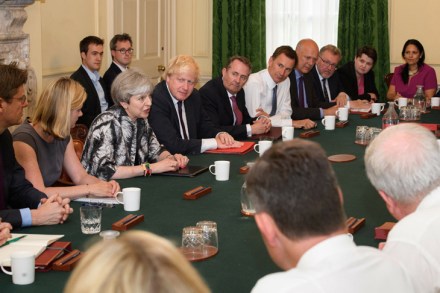
By the time you read this, the campaign will have drawn fractiously to its close, so here is a strong overall impression drawn from it, which stands whatever the result. Watching a large number of debates and question and answer sessions with party leaders and the public, I noticed, even more insistent than in the past, the righteous tone of the recipient (or would-be recipient) of state money. Whether it was a teacher or health worker, a person on benefits, a young woman wanting her tuition fees paid, or an old man sitting on a house worth (say) £750,000 and demanding that the state bear his putative long-term care needs so that he will not have to sell it, the speaker almost always seemed to possess an impermeable sense of being a virtuous, wronged person.

The Spectator’s Notes | 1 June 2017

At Mass on Sunday, we were issued with a letter from the Catholic Bishops’ Conference, entitled ‘The General Election 2017’. It set out questions which Catholics should ask candidates. These included the ‘uncertain future’ of EU citizens in Britain and British citizens in the EU, rehabilitation in prisons, immigration, overseas aid, welfare services. All important issues, of course. But it was striking what we were not invited to raise. Nothing about how high spending and taxation might burden poorer taxpayers. No subject in which the interests of UK citizens (who, after all, are the people for whom any British election takes place) come first.

The Spectator’s notes | 25 May 2017

In most parts of the world, we have now supped so full of terrorist horrors that the death of 22 people in such a terrible way does not feel decisively worse than what has gone before. You can tell this by the rather pro forma things that politicians say to condemn the attacks. Yet again, the attack is described as ‘cowardly’. This is simply untrue: it must require immense, though repellent, courage to blow yourself up. The other word to avoid is ‘innocent’. It is a word naturally, and rightly, applied to children, but it carries the dangerous implication that some terror attacks might be aimed at the ‘guilty’, and therefore be more forgivable.

The Spectator’s Notes | 18 May 2017

‘Exclusive invitation: I want to hear from you, Charles’, it said in my inbox. Theresa May wanted me to take part in her ‘telephone town hall’, she told me, offering ‘an opportunity to voice your opinions and ask questions directly to me in a simple and open way’. Unfortunately, the line was open only between 7 and 8 on Tuesday night, and I was engaged elsewhere. One thing I might have asked was ‘Who do you listen to before you say something in public?’ Although Mrs May has a reputation for caution, she is capable of throwing out ideas which sound as if they have not been tested on the people they might affect.

The Spectator’s Notes | 11 May 2017

Jeremy Corbyn wants to put up income tax only for people who earn more than £80,000 a year, he says. Anyone below that figure is safe. This reminds me of John Smith’s ‘shadow Budget’ in the 1992 general election. Smith said that the top rate of income tax would rise to 50 per cent for everyone earning more than £36,375 a year (which would be just under £72,000 today). Most people earned much less than the sum chosen, but voters decided they did not like such a clear intention to damage the higher earnings they hoped they might one day achieve. The shadow Budget was said to have lost Labour the election.

The Spectator’s Notes | 4 May 2017

Guy Verhofstadt, the European Parliament’s main Brexit negotiator, tweeted on Monday: ‘Any #Brexit deal requires a strong & stable understanding of the complex issues involved. The clock is ticking — it’s time to get real.’ This was on the same day as media reports — allegedly leaked by associates of Jean-Claude Juncker, the European Commission president — criticised Theresa May for her naivety about Brexit talks at the dinner she gave Mr Juncker last week. These tactics are intended to affect our general election. By throwing Mrs May’s campaign slogan adjectives ‘strong and stable’ back in her face, Mr Verhofstadt was goading her at the decisive moment of her political career. So were the friends of Mr Juncker.

The Spectator’s Notes | 27 April 2017

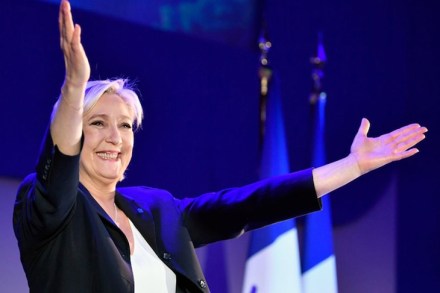
With Emmanuel Macron and Marine Le Pen through to the final in France, people of a conservative disposition might feel themselves spoilt for choice. You can have either the believer in free markets and open societies or the upholder of sovereignty and national identity. In both cases, the left doesn’t get a look-in. But what if it isn’t like that at all? What if Macron, far from opposing the big state, is just a more technocratic version of the usual dirigiste from ENA? What if Le Pen, far from wanting a nation’s genius expressed in its vigorous parliamentary democracy, is just a spokesman for joyless resentment, looking for handouts for angry white people?

The Spectator’s notes | 20 April 2017

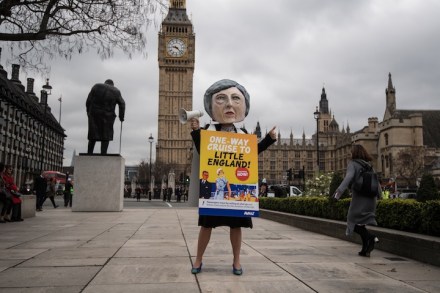
The fact that nothing leaked about Mrs May’s snap election tells you much of what you need to know about her. It shows how iron is her discipline and how close her inner circle (so close, in fact, that it is a triangle rather than a circle). It suggests that she takes neither her cabinet nor her party into her confidence. It shows that if she wins the general election, her control of her administration will be much tighter than that of Margaret Thatcher (which was surprisingly loose) and even than that of David Cameron (which was surprisingly tight). Finally, it shows that if she loses, or gets a result no better than the present parliamentary arithmetic, she will find herself friendless.

The Spectator’s notes | 12 April 2017

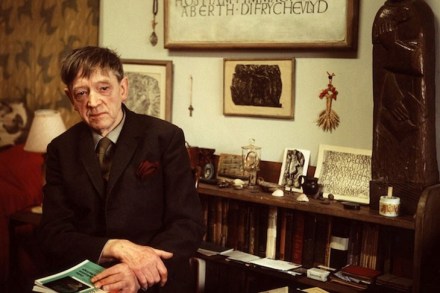
Each Easter, I think of David Jones (1895-1974). He was a distinguished painter and, I would (though unqualified) say, a great poet. There is a new, thorough biography of him by Thomas Dilworth (Cape). A sympathetic review in the Guardian wrestles with why he is not better known: ‘The centrality of religion to Jones’s work offers a clue to his obscurity.’ Jones recognised this possibility himself, writing about ‘The Break’ in culture, which began in the 19th century. He thought it had to do with the decline of religion, but more with a changed attitude to art, caused by mass production and affecting what he called ‘the entire world of sacrament and sign’.

The Spectator’s Notes | 6 April 2017

Cadbury and the National Trust stand accused of taking the Easter out of Easter eggs. The Trust’s ‘Easter Egg Trail’ is now renamed the ‘Cadbury Egg Hunt’. My little theory about the National Trust is that all its current woes result from the tyranny of success: it has become so attached to ever-growing membership (now more than four million) that everything is skewed to this and the original purposes are neglected. No doubt the substitution of the word ‘Easter’ by the word ‘Cadbury’ seemed a small price to pay for big sponsorship. This decision is a symptom of the Trust’s problem. But for the fate of Easter itself, one need not worry.

The Spectator’s Notes | 30 March 2017

An email from the high-minded Carnegie Endowment, marking the triggering of Article 50 and the 60th anniversary of the Treaty of Rome, speaks of ‘The Closing of the European Mind’. ‘The cult of the protective sovereign nation-state,’ it goes on, ‘will not provide convincing solutions to 21st-century challenges, which are inherently transnational.’ This is true, in a way. Lots of modern challenges cannot be solved by the nation-state alone. But is there anyone — even including the ‘Anywheres’ defined recently by David Goodhart — who would be happy to inhabit a space completely unprotected by a sovereign state?

The Spectator’s notes | 23 March 2017

We keep being incited to find it heartwarming that Martin McGuinness and Ian Paisley were known as the Chuckle Brothers. But what were they chuckling about? Their shared success at outwitting the British state. Both, though for opposite reasons, had made their careers out of harassing Britain, and both, in their later years, had acquired money, power and status by doing so. In the case of McGuinness and his gang, Britain greatly underplayed its hand. Having militarily beaten the IRA, successive British governments could have marginalised them, but instead they accepted them as authentic representatives of the Irish people who had to be included in any settlement. The process for doing this systematically disadvantaged the moderates and bigged up the thugs.

The Spectator’s Notes | 16 March 2017

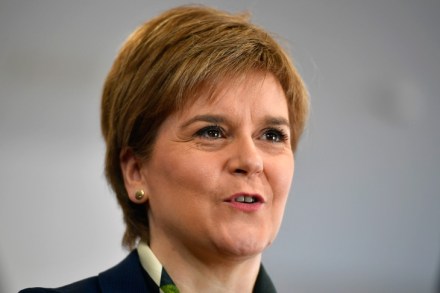
The great achievement of the Scottish Nationalists is to persuade people outside the borders of their own nation — including the London-based media — to equate them with the Scottish people. Obviously, they are their chief elected representatives just now, but the result of the referendum on Scottish independence quite clearly showed that the equation is false. So when Nicola Sturgeon says there has to be another referendum because of Brexit, the equation should be much more firmly challenged. There is no moral reason why the result of a declaredly UK-wide referendum should require another vote in part of the kingdom (next, UDI for London?). Nor is there a constitutional right.

The Spectator’s Notes | 9 March 2017

After he left the Blues and Royals in 1981, the young Tristan Voorspuy drove a motorbike from London to Cape Town. Thus began his love of Africa. He also learnt to fly, and arranged to travel alone to Kenya from England in a single-engine aeroplane, using only a schoolboy atlas. Luckily, his brother Morvern, a professional pilot, heard of this plan and prevented it. But Tristan reached Kenya by other means, and became a Kenyan citizen. For 30 years, he was a leading conservationist there and set up and ran the accurately named firm Offbeat Safaris, which allows guests to ride among the great beasts of Africa.

The Spectator’s Notes | 2 March 2017

Chief Constable Simon Bailey, who heads Operation Hydrant, the police investigation of ‘non-recent’ child abuse cases, now says that paedophiles who view images of child abuse should not be prosecuted, because police cannot cope with the numbers involved. Mr Bailey is wedded to the doctrine that someone who says he is an abuse victim must automatically be believed. The result, said Sir Richard Henriques in his scathing report on Operation Midland, is that the criminal justice system totters: ‘Chief Constable Bailey’s argument ignores the consequences of false terminology.’ Another consequence is that the child abuse statistics, unchecked, explode.

The Spectator’s Notes | 23 February 2017

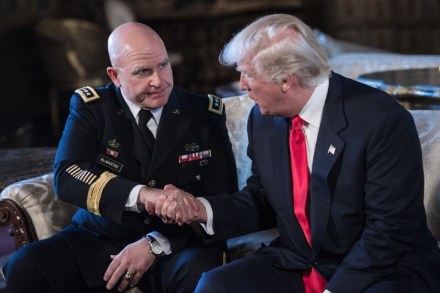
Last month, at Policy Exchange, I met a charming, quiet American general called H.R. McMaster. In conversation, I was struck by his zeal for Nato and his concern wherever the alliance is now weakest, as in Turkey. In his speech to the thinktank, he said clearly that Russia and China are attempting to ‘collapse’ the post-1945 and post-Cold War ‘political, economic and security order’, with unconventional forces hiding behind conventional ones, subversion, disinformation, propaganda, economic actions and ‘proxies’ such as organised crime networks. The situation had echoes of 1914, and the risk of a great-power war was the highest for 70 years.

The Spectator’s Notes | 16 February 2017

How does Vladimir Putin think about the world? It becomes dangerously important to know. I still have not seen a revealing speech by or discussion with him. I have found out a bit more, however, about the two-hour private interview conducted with him by several young Etonians last summer. One reason they got into the room, it seems, is that Mr Putin wanted to know about Eton and why it produced 19 prime ministers. The boys explained that one of the school’s great advantages was its societies — Political, Literary, Cheese etc. — largely organised by them, not by masters. They said these brought them into contact with a wide range of visiting speakers, broadening their minds.

The Spectator’s Notes | 9 February 2017

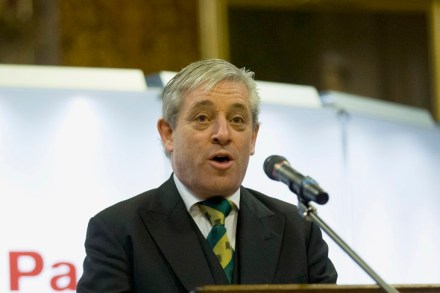
As we have been reminded this week, the most famous words (apart from ‘Order, order’) ever uttered by a Speaker of the House of Commons were those of William Lenthall. When King Charles I entered Parliament in search of the ‘five birds’ in 1642, Lenthall knelt to the King but told him, ‘I have neither eyes to see, nor tongue to speak in this place but as the House is pleased to direct me.’ It is only on that basis that the Speaker speaks. As soon as John Bercow said — of the speculative possibility that Donald Trump should address both Houses of Parliament — ‘I feel very strongly that our opposition to racism and sexism’ meant that the speech should not take place, he was out of order.

The Spectator’s Notes | 2 February 2017

As he left the editorship of The Spectator in March 1984, Alexander Chancellor wrote in this space: ‘When I joined the paper as editor in 1975, people were in the habit of asking me what my “policy” was going to be… How desperately uneasy this question made me. If there was a lavatory in the vicinity, I would lock myself inside it. I was sure I ought to have a “policy”… but I most certainly hadn’t got one.’ As his assistant editor, I witnessed the dismay on the faces of proprietors, advertisers and various big shots at Alexander’s answers to this sort of question.