The Spectator's Notes

The Spectator’s notes | 13 December 2017

The doctrine of progress implies that things get better. This is clearly true in terms of scientific knowledge, though not necessarily of how that scientific knowledge is applied. It has proved broadly true, in our lifetimes, about economic and political freedom, though not so decisively that we can all sit back and relax. Is it also true of virtue? We often praise ourselves for having cast aside prejudice, taboo, imperialism, sexism and so on, but can we truthfully say that we are, on average, morally better people than our ancestors? We might simply be blind to different things. It is not difficult to make a list of virtues that are in decline (honour, patience, respect for the old) or not seen as virtues at all (virginity, obedience).

The Spectator’s Notes | 7 December 2017

I’m afraid I have a deep faith in the Democratic Unionist Party’s capacity to cede an issue of principle in return for more gold, baubles, Renewable Heat Incentives etc. It may well give in, after receiving some bung, in a few days. But its resistance, at the time of writing, to the idea of ‘regulatory alignment’ with the Republic, seems wholly justified. This is not a pernickety matter solely for the province — it should apply just as much to the entire United Kingdom. If we agree to align trade rules with EU ones (as opposed to each recognising the other’s rules), we are sacrificing the economic point of Brexit, which is competitive advantage.

The Spectator’s notes | 30 November 2017

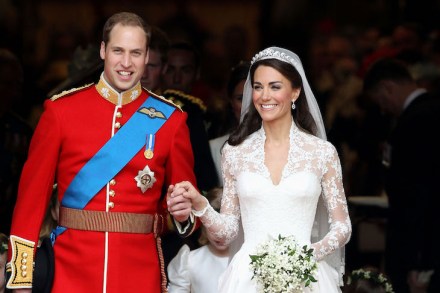
We are congratulating ourselves and the royal family on overcoming prejudice by welcoming Meghan Markle’s engagement to Prince Harry. But in fact this welcome is cost-free: Ms Markle’s combination of Hollywood, mixed ethnicity, divorced parents, being divorced herself and being older than her fiancé ticks almost every modern box. It was harder, surely, for Kate Middleton. She was simply middle-class, Home Counties, white, and with no marital past — all media negatives. Her mother was a former flight assistant. People made snobby jokes about ‘cabin doors to manual’. There was nothing ‘edgy’ about Kate that could be romanticised.

The Spectator’s Notes | 23 November 2017

Windsor Castle on Monday night sounds like a children’s party magnified. The rooms were filled with golden-leaved trees. A giant block of ice carved with the initials of the Queen on one side and the Duke of Edinburgh on the other dominated the reception room. Her sons wore their Windsor coats. A magician made a table levitate and move unsupported round the room. As with a children’s party, there were no speeches, and everyone was pleased and excited. After 70 years married, the two nonagenarians involved presumably felt, among family and friends, that they had earned the right to be unserious. The occasion must have been sweet for Prince Philip. All those years ago, he was patronised.

The Spectator’s Notes | 16 November 2017

Although we all see rather too much of the present Mr Speaker, it was a good innovation that he and Lord Fowler, the Speaker of the House of Lords, laid wreaths at the Cenotaph on Sunday. It seems odd this never happened before: a parliamentary tribute is fitting. Since we shall soon, God willing, recover our parliamentary sovereignty, it is right to start paying more attention to the sovereign institution. I was amazed, listening to the PM programme on Tuesday, that the BBC led with an unadorned report of the latest Commons debate on Brexit. It was such a broadcasting novelty. For years, the media have given the most perfunctory attention to what the people we elect actually say in the chamber to which we elect them.

The Spectator’s Notes | 9 November 2017

Let us assume — which we shouldn’t — that it is automatically wrong for the Queen to benefit financially from funds invested offshore. Let us agree — though we shouldn’t — to declare ourselves shocked that the Duchy of Lancaster put money on her behalf into funds in Bermuda and the Cayman Islands, and later, Guernsey. Let us forget — though it is difficult — that she is the Queen of all those places, and therefore that it is almost as strange to complain about her money being in them as it would be to complain about it being invested in Britain. Let us accept — though no evidence has been produced — that tax-dodging is involved.

The Spectator’s Notes | 2 November 2017

Poor Gordon Brown. He embodies the problem traditionally associated with being male, which is that our sex finds it difficult to understand human feelings. Mr Brown recognises, he says in his forthcoming autobiography, that he was not suited to a touchy-feely age. Perhaps it was just as well, because once men, particularly Members of Parliament, start touching and feeling they get into even more trouble, and discover — often too late — that not everyone they touch and feel welcomes it. They are, you might say, groping in the dark. Once upon a time, a high percentage of women understood this defect and usually forgave the opposite sex. But now the quality of mercy is strained by the age of equality. This trend is understandable, but also sad.

The Spectator’s notes | 26 October 2017

Theresa May’s style of negotiating with the European Union is coming spookily to resemble David Cameron’s. She is in the mindset where the important thing is to get a deal, rather than working out what sort of a deal is worth getting. The EU understands this, and therefore delays, making Cameron/May more desperate to settle, even on bad terms. Eventually, there is an inadequate deal which the British government then has to sell to a doubting electorate. Mr Cameron was punished for this at the referendum he had called. Mrs May is inviting punishment at a general election. It is interesting how moderate politics cannot get a hearing just now.

The Spectator’s Notes | 19 October 2017

‘Persecuted and Forgotten?’ is the name of the latest report by Aid to the Church in Need. Unfortunately, there is no need for that question mark in the title. Both the persecution and the oblivion are facts. Christians have been victims of the genocide in Isis-controlled parts of Iraq and Syria. In 2011, there were 150,000 Christians in Aleppo and now there are 35,000. Persecution rises in other Muslim countries such as Pakistan, Sudan and Iran. In Nigeria, 1.8 million people have been displaced by Boko Haram. In India, there is much more harassment of Christians since Narendra Modi came to power in 2015. In China, there are now thought to be 127 million Christians.

The Spectator’s notes | 12 October 2017

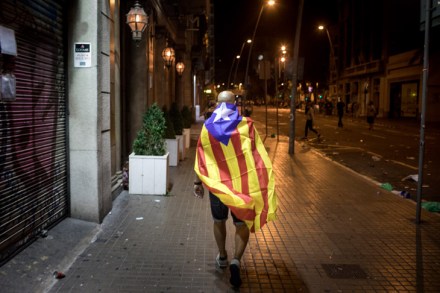
The Catalan nationalists surely chose this October deliberately for their attempt, now faltering, at UDI. It is the centenary of the Bolshevik Revolution in Russia, and the separatist vanguard is the hard-left party, the CUP. Even more vivid in their minds will be Barcelona’s own ‘October Revolution’ of 1934. The then Catalan Nationalist leader, Luis Companys, announced that ‘The monarchical and Fascist powers which have been for some time attempting to betray the Republic have attained their object’ (by the entry of the Catholic party CEDA into the Spanish government). He accordingly proclaimed ‘the Catalan State of the federal Republic of Spain’ and called for a provisional government of all Spain in Barcelona. This revolt failed.

The Spectator’s Notes | 5 October 2017

However much we try — and lots of us don’t — we fall for the power of the photo-image. So the news, as reported in Britain, was simple: Spanish police brutal; Catalan democracy assailed. I am not in a position to know the real facts about the violence, so I simply note that the estimates for those injured in Catalonia on Sunday vary from 844 to two in hospital. But so much was left out by the dominant account. First, the referendum was illegal under the constitutional law of Spain (reinforced by the Catalan Supreme Court). Serious votes normally need legal form, for good reason. Otherwise, they are more open to manipulation by those calling them, and therefore their results are untrustworthy.

The Spectator’s Notes | 28 September 2017

You can see why Theresa May said in Florence that the British wished the European Union well in its plans for greater integration, while choosing a different path ourselves. There is no point in causing antagonism over what we cannot prevent. But in fact greater European integration will do great harm to all Europeans, including us. The rise of AfD in the German elections was caused almost entirely by Mrs Merkel’s extraordinary decision to admit a million Middle Eastern migrants in a year. The spread of the Schengen area — proposed by Jean-Claude Juncker — combined with recrudescent migrant pressure can only confirm freedom of movement as the impossible issue of our time.

The Spectator’s notes | 21 September 2017

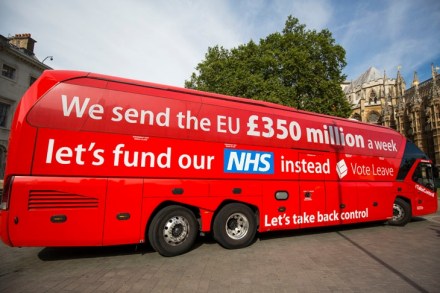
Sir David Norgrove, the chairman of the UK Statistics Authority (UKSA), is an honourable man. When he publicly rebuked Boris Johnson for his use of the famous £350 million figure about our weekly EU contribution, I am sure he was statistically, not party-politically motivated. But two points occur. The first is that Sir David was, arguably, mistaken. He thinks Boris said that, after Brexit, Britain would have £350 million a week more to spend. He didn’t. He said ‘we will take back control of roughly £350 million a week’. This is correct. So long as we are in the EU, that £350 million a week is out of our control, because even our rebate, which forms part of that figure, is EU-dependent. When we leave, it will all be under our control.

The Spectator’s notes | 14 September 2017

Apologies for my absence from this column. My editors kindly let me get on with the final volume of my Thatcher biography. In my one week of actual holiday — in northern England and in Scotland — I had cause to reflect on what makes a good conversation. The problem with so many social conversations (lunch, dinner, parties) is that talk is compulsory. This can be a helpful thing, but it penalises those who are interesting but shy against those who are more assertive than interesting. Conversations among people engaged in an outdoor pursuit are quite different. They can start, stop and resume without any embarrassment, and they rest on the reassuring basis of a common interest. I imagine this must be true of sailing or fishing. It certainly is of hunting with hounds.

The Spectator’s Notes | 27 July 2017

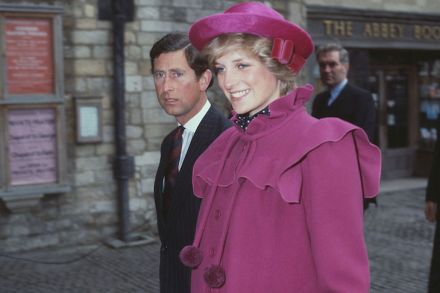
The pre-commemoration of the 20th anniversary of the death of Diana, Princess of Wales is already in full swing. She is a subject on which it is hard to get the balance right. Her impact was remarkable and her death tragic. On the other hand, the picture of the loving, giving saint which has been getting a new lick of paint these last weeks is hard to recognise. I remember being in the Daily Telegraph newsroom on the frantic night before the funeral. We had a special supplement to get out and a demented press conference by Mohamed Al Fayed to report. Suddenly someone on the picture desk looked up from tapping his computer and shouted out: ‘Oh Jesus. Now f***ing Mother Teresa’s dead!’ I’m sorry to say that we all burst out laughing under the strain.

The Spectator’s notes | 20 July 2017

We went to the first night of the Proms last week. Thinking it was all over, we left the auditorium just before Igor Levit came back on for a delayed encore in which he played Beethoven’s Ode to Joy (transcribed by Liszt) as an anti-Brexit gesture. We loved Levit’s earlier rendering of a Beethoven piano concerto, but were spared his political views, so it was a perfect evening. Two nights later, Daniel Barenboim took advantage of the Proms conductor’s podium to make an unscheduled speech in which he deplored ‘isolation tendencies’. All good Brexiteers deplore isolation tendencies, which is one of the reasons we don’t like a European Union with a tariff wall, but of course Brexit was the great conductor’s target.

The Spectator’s Notes | 13 July 2017

For some time now, banks have wielded hamfistedly the concept of the ‘politically exposed person’. They have withdrawn bank accounts from — or refused them to — not only kleptocrats from crazy dictatorships but also blameless citizens of parliamentary democracies like our own. Now, I gather, they have started to persecute the fringes of the British royal family. One such royal person tells me that he had to resign from the board of a charity before the bank thought it safe to let it open an account. He adds that he has two royal relations who have been refused accounts. In the case of an American bank, it declined the customer because it wanted nothing to do with ‘present or past non-US officials, their families or close associates’.

The Spectator’s notes | 6 July 2017

Having worked flat-out to defend judges over the Article 50 case in the Supreme Court, the BBC has gone the other way, in relation to the judiciary, over Grenfell Tower. Its news coverage is working hard to displace the retired judge Sir Martin Moore-Bick from his appointment to chair the inquiry into the fire. Groups purporting to speak for the Grenfell victims are given airtime to denounce him. The idea is that they and their activist lawyers are entitled to a veto on who runs any inquiry, thus attaining effective control of what it decides. Something similar led to the hopeless, expensive collapse of chairman after chairman in Theresa May’s misguided independent inquiry into child sexual abuse. This is not in the public interest.

The Spectator’s Notes | 29 June 2017

At Guildhall on Tuesday, the Centre for Policy Studies held its Margaret Thatcher Conference on Security. Its title is an implied reproach to the way security is seen by current governments. You couldn’t have a Barack Obama Conference on Security, or a Donald Trump one, because neither cares about the subject. You could, I suppose, have a Theresa May Conference about Security, but that would have nothing to say about international institutions and alliances, the values of democracy, totalitarian ideology, and the needs of global defence. It would concern itself with second-order subjects like the surveillance of terrorist suspects and the state of deportation law. Many have complained that the Tory election campaign failed to preach any Conservative economics.

The Spectator’s Notes | 22 June 2017

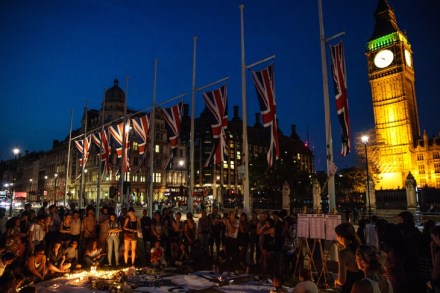
How much longer can it go on? Deaths caused by terrorism are always followed now by candlelit vigils, a minute’s silence, victims’ families/ government ministers/emergency services/clergy/imams all clustered together, walls of messages and flowers, flags at half-mast. Instinctively, I feel uneasy because the meaning of it all gradually suffers attrition, and also, perhaps, because it asserts a solidarity which isn’t quite there. Yet the fundamental cause of mourning is true and deep enough — it is first for the dead, then for a civilisation which may be dying. In these pages, on 4 February, Matthew Parris wrote that Brexiteers seemed very anxious, despite having won.