The Spectator's Notes

The Spectator’s Notes | 24 May 2018

Michael Gove wants to punish those who use wood-burning stoves and possibly even open fires. It would be hard to think of a more direct attack on country life. All houses in the country are cold, and impossibly expensive to keep warm by central heating alone. The cheapest and most cheerful way of heating individual rooms is by burning wood in them. In the north, there are many houses that need such heat every day of the year. Even in the sunny south, where we live, we light fires in every month except June and July. Such fires are the heart of the house and life would become truly sadder without them. Instead of gathering round them, family members would retire shivering to their beds to keep warm.

The Spectator’s Notes | 17 May 2018

The last time we had a royal wedding of comparable dynastic importance (i.e. only a bit important), Prince Andrew married Sarah Ferguson, in 1986. The Spectator of those times, which I was editing, carried almost nothing about it. The only piece was a television review by Alexander Chancellor, complaining that ‘The royal family are at the moment completely out of control.’ He found this very upsetting. He was ‘absolutely in favour of the royal family. I have always liked the way they keep their heads down, avoid controversy, shun jokes, and conceal whatever personalities they may have.

The Spectator’s Notes | 10 May 2018

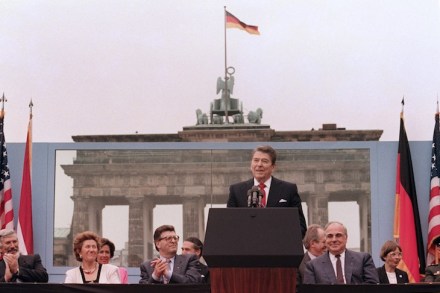
The point behind the argument about the Iran nuclear deal goes beyond precise nuclear facts. It is like the row over SALT II when Ronald Reagan succeeded Jimmy Carter as US President in 1981. SALT (the Strategic Arms Limitation Treaty) was not formally junked, but it did not operate because, after the Soviet invasion of Afghanistan at the end of 1979, the Americans felt the necessary trust was absent. Better times, including the coming of Mikhail Gorbachev, allowed Reagan to pursue negotiations which culminated (under his successor, the first George Bush) in START I (the Strategic Arms Reduction Treaty) being signed in 1991. By then, the United States and its Nato allies had backed huge changes in the Soviet bloc and won the Cold War.

The Spectator’s Notes | 3 May 2018

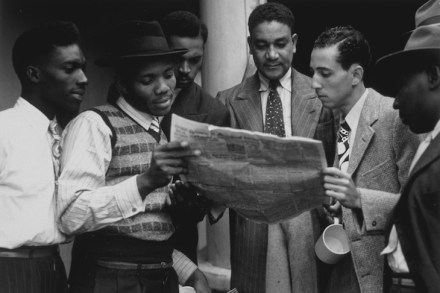
This ‘Windrush’ story comes from a friend called Michael McKay, a British broadcaster based in Geneva. His father, Jeff, a Jamaican, joined the Royal Electrical and Mechanical Engineers in 1941. He sailed to England, and served in Montgomery’s army in Egypt. Michael’s mother, Pearl, already in love with Jeff, joined the WAAFs in Jamaica and came over to find him. She was eventually stationed at RAF Melksham. They married shortly after VE Day. When they returned to Jamaica, Jeff could not get his pre-war job back. In 1948, Michael was born. In 1949, they took the boat to England. Kind white wartime friends of Pearl invited them to share their small house in Glastonbury. Jeff got a job in Clarks, the shoemakers, and the couple had two more children.

The Spectator’s Notes | 26 April 2018

Hilary McGrady, the new director-general of the National Trust, sent me (and no doubt other journalists) a nice email hoping we can meet. I wish her well, and whenever I find myself criticising the Trust, I am conscious of the fact that, compared with its equivalents abroad, it is a miracle. But I was a bit irritated by her first interview, with the BBC: ‘I want to reach out to more people… The days of walking into one of our beautiful houses and saying a family lived here, that’s not going to do it.’ Obviously, any organisation offering public benefit wishes it to reach as many people as is sensibly possible, but there is something about her framing of the point that is wrong. It implies that the thing for which the Trust is best known is its problem.

The Spectator’s Notes | 19 April 2018

Everyone speaks about the Windrush. The boat was actually called the Empire Windrush. The full name reveals what the story was about. The boat was one of a series called Empire X, X being the name of a British river, as if each were a tributary to a common stream. Mass coloured immigration to Britain was the act of an imperial power — almost, one might say, an imperialist act. In 1948, a Labour government (Attlee’s) created a common ‘Citizenship of the United Kingdom and Colonies’. Just as we wanted the raw materials of our colonies, so — later in the day — we wanted their labour. This also explains the context of Enoch Powell’s ‘Rivers of Blood’ speech 50 years ago this week.

The Spectator’s Notes | 12 April 2018

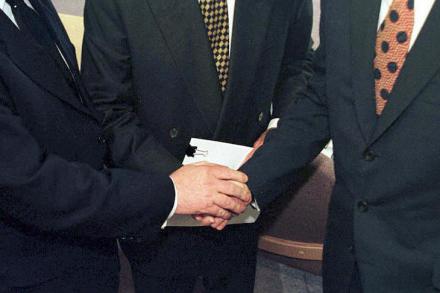
The Good Friday Agreement (GFA), which celebrates its 20th anniversary this week, is not a peace, but a truce. This does not mean that it has no value. Most people in Northern Ireland wish to abide by its terms; it has helped them get on with normal life. But it does mean that difference, rather than being gradually dissolved, is institutionalised. You almost have to sign up to one side or the other. A friend sends me the diversity form of the Northern Ireland civil service which, as a candidate for the service, you must fill in. Unlike some such forms, it offers no ‘prefer not to say’ option. Each candidate must declare whether he or she has ‘a Protestant community background’ or a ‘Roman Catholic’ one or neither.

The Spectator’s Notes | 5 April 2018

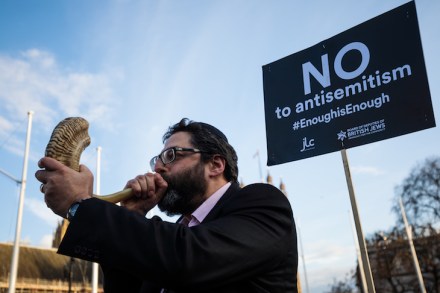
What is it, psychologically, that makes it so hard for Jeremy Corbyn to recognise that some of his supporters are horrible people with horrible views (in this case, raving anti-Semites)? I remember asking myself the same question, in the early 1980s, about Tony Benn. I used to attend Labour party conferences and their numerous left-wing fringe meetings (often addressed by Benn’s no. 1 fan, J. Corbyn). Benn was always there, always courteous, genially smoking his pipe. Often, however, his supporters would say extremist things, and sometimes they would yell foul abuse — either at party and trade union moderates or at the media. Never once was Benn vile himself, but never once did he rebuke those who were.

The Spectator’s Notes | 28 March 2018

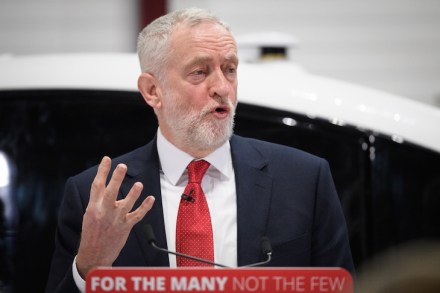
At last Jeremy Corbyn is being made to pay a price for Labour’s anti-Semitism under his leadership. It has now, for the first time, become definitely hard for him to get through mainstream interviews. He is challenged, and although his answers bend to the wind of criticism a little, this affords him no respite. His repeated response of saying how much he ‘detests all racism’ is like Sinn Fein’s traditional denunciation of violence ‘wherever it comes from’ — an evasion. His demeanour raises wider questions about whether he will ever answer anything which is difficult: there is a reason, after all, why he has not agreed to be interviewed on the Today programme since the election. One can see how uneasy he now is.

The Spectator’s Notes | 22 March 2018

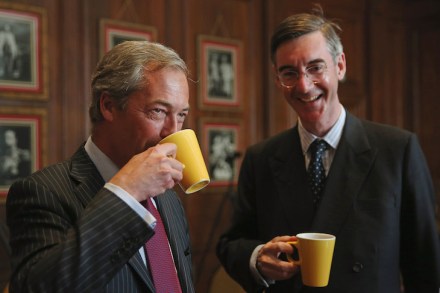
For almost as long as I can remember, Eurosceptic Tory MPs have been defined by the media as ‘head-bangers’. As a result, few notice that they scarcely bang their heads at all these days. The European Research Group (ERG), now led by Jacob Rees-Mogg, is surprisingly united, and makes most of its arguments blande suaviterque. The noise of craniums bashing themselves against Pugin panelling is much louder on the other side — Anna Soubry in the Commons, Andrew Adonis in the Lords. The Eurosceptic head-bangers are being particularly cautious about this week’s transition deal. Although they dislike most of it, they broadly accept the whips’ arguments that if the party can agree the transitional arrangements, Brexit is assured, and if not, not.

The Spectator’s Notes | 15 March 2018

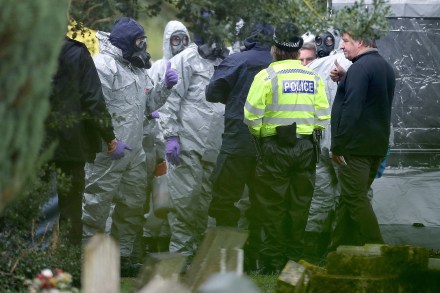
Gimson’s Prime Ministers, out this week, is a crisp and stylish account of every one of them. I happened to be reading Andrew Gimson’s admiring essay on George Canning (PM for 119 days in 1827) just after Jeremy Corbyn’s parliamentary remarks about the Salisbury poisoning. The way Mr Corbyn talked, one got the impression that it was Britain which had caused Mr and Miss Skripal to be poisoned. Canning had a gift for light verse. He satirised the sort of Englishman who adored the French Revolution: ‘A steady patriot of the world alone,/ The friend of every country but his own.’ That Phrygian cap fits Mr Corbyn perfectly.

The Spectator’s Notes | 8 March 2018

Almost eight million people have now watched Cathy Newman’s Channel 4 News interview with Jordan Peterson. This figure must be unique in the history of Channel 4 News online. Only a few minutes were broadcast on the original news programme, but Channel 4 then put out the full half-hour on YouTube, perhaps miscalculating the effects of watching the allegedly ‘transphobic’ Canadian clinical psychologist whose book 12 Rules for Life is selling out. I think what the majority of the eight million appreciate is that Peterson’s performance is noble. He attempts a clear exposition of his views about the differences between women and men. Despite every effort by Cathy Newman, he succeeds.

The Spectator’s Notes | 1 March 2018

Jeremy Corbyn wants Britain to ‘stay in a customs union’, according to the BBC. The phrase does not make sense. We could possibly stay in the customs union, if the EU decided to let us, but that is not the policy of his party or of the government. We cannot ‘stay’ in ‘a’ customs union, because that would require us to join something which does not at present exist. But the use of the reassuring word ‘stay’, in reference to an as yet unformed, unnegotiated customs union, is exactly the rhetorical sleight of hand which Mr Corbyn seeks. It is designed to persuade Remainer Conservative rebels that they must side with Labour in the forthcoming parliamentary vote.

The Spectator’s Notes | 22 February 2018

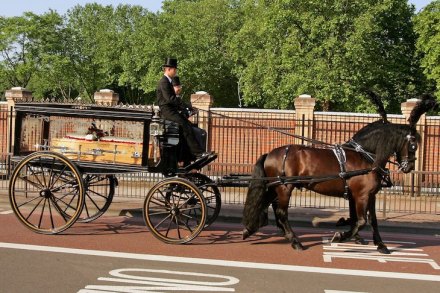
Bev died, aged 61. She was the wife of ‘Foxy’ John, kennel huntsman of our local hunt. Bev was the matriarch of the clan, with six children, 14 grandchildren, and other young people in need of help whom she cared for. Both John and Bev have Traveller ‘heritage’. That requires a Traveller funeral. Only the best would do. Bev was laid out for three days in an open coffin, lined in pink, in their rural council house — the only council house I know which plays host to a hunt meet. In the course of the wake, 500 guests somehow crammed in. As custom demands, the people of the house did not sleep. As is also the custom, a pyre consumed her possessions. On Monday, I drove there.

The Spectator’s notes | 15 February 2018

The Queen is Head of the Commonwealth. The Commonwealth is headquartered in London, in the splendour of Marlborough House. The Secretary-General of the Commonwealth, Lady Scotland, is British (and also Dominican). Britain is about to take the chair of the Commonwealth for the customary two years, and so the next Heads of Government Conference — probably the last to be attended by the Queen — will take place in London in April. At the same time, Britain is leaving the European Union. So it would seem that circumstances combine to favour a push by the British government to make the Commonwealth work much more actively in our favour. Being a Brexiteer, I am tempted by this idea; but in fact I fear it could all go horribly wrong.

The Spectator’s Notes | 8 February 2018

A reader writes: ‘In my last letter, I called you a numbskull. However I should have qualified this with “sometimes you are a numbskull”.’ I must apologise for an example of my sometimes-numbskullery in this column last week when I asserted that Joe Chamberlain had opposed votes for women in Parliament in 1917. This would have been impossible, as he had been dead three years. I saw the ‘Rt Hon. J.A. Chamberlain’ in Hansard’s division lists and lazily failed to check. J.A. was, in fact, Joe’s son, Austen.

The Spectator’s Notes | 1 February 2018

A hundred years ago on Tuesday, King George V assented to the Representation of the People Act. Women got the vote for the first time. In all the commentary on this centenary, little has been said about who gave it to them, presumably because the answer — Lloyd George’s Conservative-dominated wartime coalition — does not fit the heroic narrative of liberation struggle. The Bill was passed by 385 votes to 55, with Lloyd George himself, Winston Churchill, Ramsay MacDonald and Asquith among those in favour, and Mrs May’s hero Joe Chamberlain the best known of those against. There were several reasons for the change of mind in favour of women’s suffrage, but the political motive was, as always, important.

The Spectator’s Notes | 25 January 2018

‘Dignity lost half its value yesterday’ began a news story in Saturday’s Daily Telegraph. As I read on, it turned out that Dignity is a large firm of undertakers, but I had momentarily taken these opening words as a general statement about our times. As such, they seem well supported by the facts. As I walked across Horse Guards one day last week, everything seemed eerily quiet. No one was about, and the only object I could see was a sleek limousine parked where one is not allowed to park, facing Downing Street. As I approached, I could read its number-plate, which said ‘1 VEN’. Was this the beginning of the long-awaited Corbyn coup, backed by fraternal aid from Nicolás Maduro?

The Spectator’s Notes | 18 January 2018

The BBC programme The Coronation, on Sunday evening, was extremely interesting, principally, of course, because of the Queen’s appearance on it. But what was left out was notable. The programme gave a careful narrative, and some explanation, of the stages of the service and of the jewels and regalia (the Queen’s main supporting actors in the show). It never explained or even mentioned that the ceremony in which the anointing and the putting on of the crown were framed was the communion. It told us that, in 1953, the anointing had been considered too sacred a moment for the cameras to film. It did not tell us that the same rule applied to the Queen taking communion. This omission from the documentary meant that the shape of the service could not be understood.

The Spectator’s Notes | 11 January 2018

Gavin Stamp, who died just before the year’s end, will be mourned by many Spectator readers. For years, particularly in the 1980s, he was the paper’s main voice on architectural questions, notably as they affected the public space. His voice, both angry and compassionate, would be raised whenever he thought someone in authority — in church, state, local government, big business — was damaging what belonged to the people. He was very important at changing official attitudes imbued with fag-end modernism. No one expounded better the conception of a building’s public purpose, so to hear him talk about, say, Lutyens’s Memorial to the Missing of the Somme at Thiepval, was revelatory.