The Spectator's Notes

The Spectator’s Notes | 29 November 2018

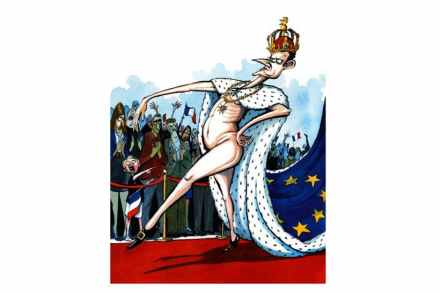
Theresa May, William Hague and others say that the EU will not want to trap Britain in the backstop because it is not in its interest. It will want to move to a free-trade agreement for its own benefit. If that is so, why is the backstop the thing above all others upon which the EU insists? Brexiteers must absolutely oppose the backstop because agreeing it would repeat Britain’s delusion in every European negotiation over nearly 50 years, which is that we should grab ‘practical’ advantages and concede ‘windy’ principles. This sounds good, but it invariably means that we are trapped later. The principles acquire legal force.
The Spectator’s Notes | 22 November 2018

It will be interesting to see whether the about-face of the Daily Mail on Brexit makes the slightest difference to anything. Paul Dacre was admirably consistent when he was editor and the paper did well. But on the whole, the history of the Mail is that it is happy dramatically changing sides on major issues. Under David English, for instance, it suddenly switched to Europe and Heseltine away from his earlier Thatcher-worship, and few seemed to notice. Thus, after attacking the High Court judges as enemies of the people in 2016, under Dacre, it can move effortlessly to attacking the Brexiteers as ‘preening peacocks’ etc, under Geordie Greig.

The Spectator’s Notes | 15 November 2018

‘It’s time for Bond — Basildon Bond,’ is the joke among pro-Leave MPs as Theresa May serves up her mess of pottage as Brexit. Market research, however, shows the joke does not work on MPs under 40 because they do not know what Basildon Bond is. So perhaps I should explain to the hip Spectator crowd that Basildon Bond remains the commonest brand of quality paper on which to write letters. There need to be 48 such letters sent to Graham Brady, the chairman of the 1922 Committee, to provoke a vote of confidence in Mrs May among Conservative MPs. There are certainly far more than 48 who do not, in fact, have confidence in her. It does not automatically follow, needless to say, that they will say so when asked.

The Spectator’s Notes | 8 November 2018

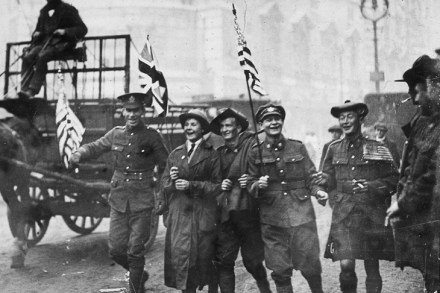
The sixth of November 1918 was remembrance day for my great-grandfather, Norman Moore. It was the fourth anniversary of the death of his younger son, Gillachrist (known as Gilla), a second lieutenant in the Royal Sussex Regiment, who had been killed at the first battle of Ypres. Sitting quietly in his London house in Gloucester Place, Moore heard shouting in the street: rumours of peace were spreading. ‘If it be so,’ he wrote in his diary, ‘how appropriate on Gillachrist’s day for he gave his life to resist German power.’ It became so five days later. On 9 November, NM (as he was always called) attended the Lord Mayor’s Banquet in Guildhall: ‘A fanfare of trumpets announced Mr Lloyd George.

The Spectator’s Notes | 1 November 2018

At the Brexit-related cabinet last week — as revealed by James Forsyth in these pages — David Lidington made an intervention in support of the Prime Minister’s approach to the negotiations. He was, he said, the only person present who had been an MP at the time of ‘Black Wednesday’, when the pound fell out of the ERM on 16 September 1992. It had been so disastrous and divisive, he went on, that the government must at all costs avoid a repeat over Brexit. Many heads nodded sagely. Mr Lidington, a moderate and public-spirited man, was quite right about the pain caused to his party 26 years ago; but the interests of the Tories and of the nation are not necessarily the same thing.

The Spectator’s Notes | 25 October 2018

Mrs May says she is taking her stand on the issue of Northern Ireland and the integrity of the United Kingdom. If so, good; but it cannot be the whole truth. After all, she surrendered on the Irish border issue in negotiations last December until, at the very last minute, the DUP forced her to row back. I think the irreducible core of her position is something which she does not fully disclose: that she is determined to keep Britain in the customs union, though perhaps only approximately and certainly by another name. This cannot work, surely, because to the EU it is ‘cherry-picking’ and to the Brexiteers it is BRINO, but there must be a reason why she revives it each time it is stamped on.

The Spectator’s Notes | 18 October 2018

Can you think of a serious crime which does not involve hate or, at the very least, contempt? You must hate people to murder them, rape them, rob them, beat them up, post excrement through their letterbox or even defraud them. This intense hostility is a good reason for punishing such actions. The concept of ‘hate crime’ ignores this. It fastens on particular hatreds, making it worse for, say, a black person to call a white person a ‘white bastard’ than for him to call a black person a ‘f***ing bastard’ (or vice versa). Why? Racism, religious enmity, anti-gay feeling etc are sources and triggers of hate, so they are often important factors in a crime, but once they are specially categorised they skew the system to downplay all other forms of hate.

The Spectator’s Notes | 11 October 2018

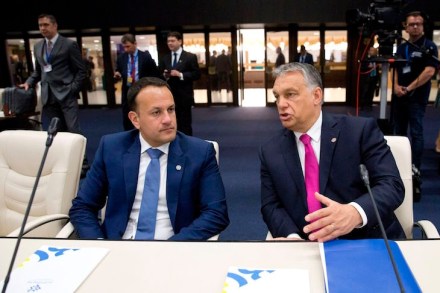
Although, in David Goodhart’s famous distinction, I see myself as one of the ‘Somewheres’ rather than the ‘Anywheres’, I do not believe in nationalism (as opposed to patriotism). Nationalism always involves falsified history and sees identity as a zero-sum game. Nation states should be respected, not deified, and are usually the better for not being ethnically ‘pure’. But the Anywheres’ attacks on nationalism are interestingly selective. They hate Viktor Orban’s Hungarian version, for instance, but love Leo Varadkar’s Irish one. The avowedly internationalist EU uses Irish nationalism as its biggest moral justification for blocking Brexit.

The Spectator’s Notes | 4 October 2018

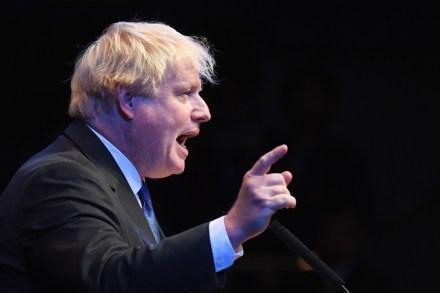
There are, one must admit, things to be said against Boris Johnson, but his leading critics do not understand that their attacks assist him. On Tuesday in Birmingham, Mrs May tried to upstage his arrival by claiming she had a new policy about post-Brexit immigration. She didn’t. The only person she upstaged was her Home Secretary, Sajid Javid, who should have been left alone to speak about a subject which, both by his job and his background, is his. Boris was boosted by her hostility, and people listened to his wide-ranging speech. His opponents must understand his subversive power instead of being pompous about it. He is clever. A classic device of our times, much employed by New Labour, is to set up a media hue and cry — ‘Where’s X?

The Spectator’s Notes | 9 August 2018

President Trump has ended US participation in the Iran deal and imposed sanctions. No doubt this is annoying to the British and other Europeans who mistakenly helped devise it, but why are they — especially we — clinging to it still? Without the United States, it cannot work. Trump’s move is supported by our allies in the Middle East — Saudi Arabia, the UAE, Bahrain, Israel — who are constantly threatened by Iranian-backed terrorism. Inside Iran, once again (but little reported), people seeking freedom and work are protesting, yet we actively support a regime which has, for 40 years, been bitterly hostile to our interests and way of life.

The Spectator’s Notes | 2 August 2018

Early in his career — and mine — I got to know Frank Field. Then, as now, he was being persecuted by extremists in his local Labour party. Then, as now, he was serenely uncompromising. Then, he won. But then — the early 1980s — the Bennite faction had not taken over the national party. Even Michael Foot, though fairly feeble in his fights with the hard left, came to Frank’s constituency and declared ‘If we lose Birkenhead, we lose the party.’ Now Benn’s most fervent disciple is Labour’s leader, and Frank has had not one word of support from the party’s central machine.

The Spectator’s Notes | 26 July 2018

At a speaker luncheon last week, someone I didn’t know passed me a note asking ‘Have you stopped supporting capital punishment?’ As far as I could remember, I have never supported capital punishment, so I was slightly at a loss for a reply. My problem with the subject is that I have always felt ambiguous. On the one hand, capital punishment is horrible, bad for the executioner as well as the victim, and fatal to the innocent. On the other, I cannot confidently argue that, when conducted under law, it would be wrong in every single circumstance. Some times, and perhaps some actions, are so bad that the death penalty may be needed to maintain order, crush evil and show who’s boss.

The Spectator’s Notes | 19 July 2018

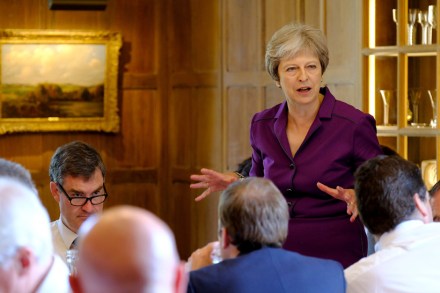
The collapse of Mrs May’s Chequers plan, followed by Tuesday’s failure of the Tory Remainers to defeat the government, creates a new situation. Mrs May greatly underestimated the threat to her from the ‘betrayal’ narrative which her plan invites. Two years of getting nowhere have made people long for decision and furious at Brussels dogmatism. There is a new appetite for no delay and for no deal. ‘No deal’ however, is not the right phrase. There is a deal — and we and the member states of the EU are already signed up to it. It is called World Trade Organisation terms. The clue to its nature is in the name: it allows the world to trade.

The Spectator’s Notes | 12 July 2018

Why do the British turn to the Germans in their moments of European trouble? It never works. When Jacques Delors conceived his single currency plans, Mrs Thatcher over-relied on Karl Otto Pöhl at the Bundesbank to squash them. Dr Pöhl preferred to side with Helmut Kohl. When Britain was struggling to stay in the ERM in the late summer of 1992, the Major government put faith in what they thought were German promises to help them out. These failed to materialise. When David Cameron sought a new EU deal which would win him the 2016 referendum, he placed his greatest hopes in Angela Merkel, who offered him concessions so feeble that even he quickly gave up trying to sell them. Last week, Mrs May flew to Berlin.

The Spectator’s notes | 5 July 2018

Newsmax, the magazine of the eponymous US conservative multiplatform network, carries a full page advertisement for ‘The Presidential 1911 Pistol’, produced by an organisation called Heroes and Patriots. This ‘beautifully engraved’ and ‘fully functional’ Limited Edition Colt Government 1911 A1 Semi-Automatic Pistol is gold-plated and holds 12 rounds. Its purpose is to ‘unite with our President and show support for his policies’. On the grips is a portrait of Donald Trump surrounded by Celtic scrollwork and thistles, ‘honoring the President’s Scottish heritage’. One side of the barrel proclaims ‘Make America Great Again’, the other ‘Drain The Swamp’.

The Spectator’s Notes | 28 June 2018

Gordon Brown, echoing Aneurin Bevan, says that the greatest gift that the NHS brings to people is ‘serenity’. He is surely right that this is what it brought 70 years ago — for the simple, important reason that people would no longer need to say of treatment, ‘I just can’t afford it’. But comparable ‘serenity’ is provided, in different ways, in, for example, Germany, the Netherlands and Australia. Defenders of today’s NHS have to explain not why it is more serene than pre-1948, but whether it matches the current arrangements of comparable countries. ‘Serenity’ is not the word one would apply to many British hospitals today. In these Notes last week, I mentioned the fear felt by the old.

The Spectator’s notes | 21 June 2018

Seen from almost any point of view, the government’s decision to increase spending on the NHS is disgusting. It is cynical in its timing to coincide with the Health Service’s 70th birthday in England; weak in its refusal to tie the increase to any improvements; mendacious in its claimed link between the increase and a Brexit dividend; evasive in its refusal to present this as a straightforward tax rise; constitutionally improper in its efforts to ‘take the issue out of politics’ by trying to agree it for many years ahead; and, as always, for those who still think the NHS is ‘the envy of the world’ (have they actually asked the world?), ‘too little, too late’.

The Spectator’s Notes | 14 June 2018

‘Trudeau or Trump?’ was a choice which Theresa May, with unusually ready wit, evaded in Parliament on Monday. No doubt I am in a minority, but I feel that, of the two, Mr Trudeau — the G7 host at La Malbaie — is the more absurd figure on the world stage, being just as vain as the President and far more pointless (if you doubt me, compare the two men’s tweets). In the same parliamentary statement, Sir Vince Cable asked ‘What is the point of the G7?’ It is part of President Trump’s subversive skill that his actions prompt people to ask such questions.

The Spectator’s Notes | 7 June 2018

A distinguished retired EU diplomat from a small EU member state sends me a thoughtful letter. He complains that Brexit ‘has been handled in the most amateurish way by British politicians’. ‘When one removes something,’ he goes on, ‘one has to be ready with its replacement’: Mrs May ‘is far from clear in her plans, but those who criticise her are not any clearer’. All this is true, and it points to the weirdness of our current situation, which is that Brexit is not being executed by a government that wants it. In conversation, people often say ‘The Brexit supporters promised X’, and then accuse them of breaking that promise.

The Spectator’s Notes | 31 May 2018

To understand how the European Union works, and how it doesn’t, it helps to think of it as an empire. Empires are not fashionable just now, but they have their uses. At their best — Rome, Britain — they are capable of upholding common standards, preserving peace and prosperity, and helping civilisation flourish. The EU has often achieved some of these things. But when empires are challenged by significant numbers of their inhabitants, their fundamental lack of legitimacy is exposed. The EU has now reached this stage because of imperial overstretch and imperialist doctrines — the euro and mass immigration being the most important. Anti-imperial independence movements take many forms. Brexit is one.