The Spectator's Notes

The Spectator’s Notes | 6 June 2019

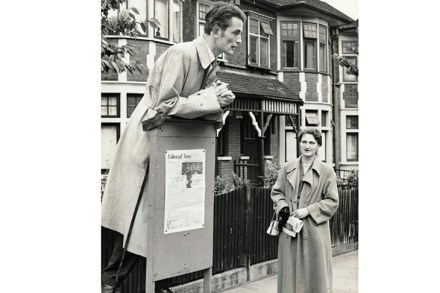
My father Richard, who died last month aged 88, was a profoundly impractical man. He could not drive a car, swim, whistle, use a mobile phone or computer, or play any ball game apart from croquet. One of his most common remarks was (he could not pronounce his ths), ‘Vis wretched fing [a door handle, a light switch, a well-wrapped parcel] doesn’t seem to work.’ When younger, he would sometimes go out with an unsafe 1840s shotgun in search of rabbits or pigeons, but the only thing he ever actually shot was his little toe, falling down a bank. Although he was extremely clean, he did not, until he married, know how to wash his hair, and would go to a barber for the purpose. Twenty years ago, he lived briefly in our house in Islington.
The Spectator’s Notes | 30 May 2019

Jeremy Hunt’s approach is very odd. It is the first time I remember an aspirant for the top job saying: ‘Choose me: I’m frightened of a general election.’ He is obviously right that an election without Brexit accomplished would be very difficult for the Conservatives to win, but the way through that is not to narrow your possibilities in advance. If the newly chosen leader, with the mandate that being newly chosen brings, decided that no deal were his necessary negotiating backstop (which surely it is) or, more controversially, that he wanted it without negotiating at all, he would then be in a strong position to dare his parliamentary party to vote against him, bring down him and his government and thus nullify the choice the party members would just have made.

The Spectator’s Notes | 23 May 2019

Almost everyone agrees it is a pity that so few pupils from ‘disadvantaged socioeconomic backgrounds’ get into Oxford. But no one has successfully proved that it is Oxford’s fault that they do not. (I went to Cambridge, by the way, so I do not have a dog in this fight, except that I imagine the same arguments apply.) One reason that some universities, including Oxford, are classified as ‘world-class’ is that they admit the best. The definition of ‘best’ cannot refer only to native ability, but must also take some account of how well prepared a pupil is.

The Spectator’s Notes | 17 April 2019

This week, the Wolfson History Prize announced its shortlist. It is always worth drawing attention to, precisely because it is not attention-seeking. Neither ‘woke’ nor stuffy, the prize is simply interested in serious history. This year’s list of six ranges in terms of subject from birds in the ancient world and building Anglo-Saxon England, through maritime London in the age of Cook and Nelson, to Queen Victoria and India (a love affair in which the two never met), Oscar Wilde, and the quest for justice after Nazi persecutions. It being Holy Week, I am wondering what would happen if all the four Gospels were on the Wolfson shortlist.

The Spectator’s Notes | 11 April 2019

In his famous speech to both Houses of Parliament in March 1960, General De Gaulle praised Britain: ‘Although, since 1940, you have gone through the hardest vicissitudes in your history, only four statesmen [Churchill, Attlee, Eden and Macmillan] have guided your affairs in these extraordinary years. Thus, lacking meticulously worked-out constitutional texts, but by virtue of an unchallengeable general consent, you find the means on each occasion to ensure the efficient functioning of democracy.’ De Gaulle admired us and disliked us, and concluded that we threatened France if we joined the EEC. So he blocked our entry. He was right about us, wrong about the effect of our joining.

The Spectator’s Notes | 4 April 2019

There is a logic in Mrs May’s late move to Labour. It is the same logic by which both parties, at the last general election, put forward very similar policies about Brexit. They need to stay together (while feigning disagreement for party reasons) to frustrate what people voted for. Just as they both said in 2017 that they wanted to leave the customs union, now both are working to stay in it. It is the same logic by which Mr Speaker Bercow has arranged for Sir Oliver Letwin to become prime minister on roughly alternate days. None of the main players really wants Brexit, but none can really say so.

The Spectator’s Notes | 28 March 2019

There is an obvious solution to the Brexit problem. It is based on a recognition that we want out and that the EU leaders want the moral high ground. Give it to them. Get them to expel us from the European Union. It cannot be too hard for them to persuade the ECJ, or some new body invented for the purpose, to declare the United Kingdom in breach of ‘European values’, and kick us out. Then we would leave with nothing at all, except our liberty. We might even bribe them for the privilege. As it is, we are committed by Mrs May to paying £39 billion, but that is over several years, and involves much ‘doubt, hesitation and pain’. Why not offer them, say, £10 billion on the nail, in return for them punishing us?

The Spectator’s Notes | 21 March 2019

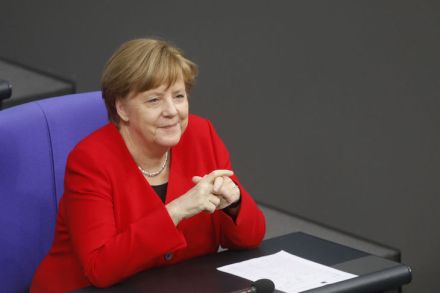
Angela Merkel says disdainfully, ‘I admit I was not on top of the British parliament’s 17th-century procedural rules.’ Her implication is that they are absurdly out of date. Yet the old rule invoked by Mr Speaker Bercow is surely one that can hold up its head in the 21st century. It is that the executive should not keep putting the same question to parliament until it gets its way. Therefore Mrs May cannot just keep reheating her terrible withdrawal deal. If there were no such rule, there would be no end to the bullying. Isn’t there something quite impressive about the fact that we have an elected assembly which had already thought of this more than 400 years ago? Habeas corpus is a pretty old idea too, and jury trial is even older. Does Mrs Merkel mock them?

The Spectator’s Notes | 14 March 2019

I had forgotten, until I checked this week, that Mrs May timed the general election of June 2017 in order to have a mandate for the Brexit negotiations. They began ten days after the nation voted. She conveyed no sense, at the time, of how the election result had changed her situation. In her beginning is her end. Political leadership requires imagination. She has never displayed any. Why, for example, did she fly to Strasbourg on Monday night? She made the same mistake in December 2017 when she took a dawn flight to Brussels after making a hash of the Irish problem. The point of dramatically winging your way out of the country is to be seen to win something. Instead, Mrs May is the spurned suppliant.

The Spectator’s Notes | 7 March 2019

A kind billionaire called Jeremy Hosking, whom I do not know personally, has invited us to join the Britannia Express, a steam train, on 30 March, the day after Brexit. The train will traverse Wales and England, starting at Swansea and ending in Sunderland. In an unspoken rebuke to the metropolis, it will not travel via London. The train will, says the invitation, commemorate ‘the UK’s exit (or non-exit) from the European Union’. This is the opposite, I suppose, of the European train which people like the late Sir Geoffrey Howe constantly exhorted us to climb aboard. What to do? The most likely situation on the day is that we still will not know our country’s fate.

The Spectator’s Notes | 28 February 2019

Jeremy Corbyn never ceases to attack Mrs May for trying to run down the clock. She has certainly done that, but she is also quite capable of running up the clock. This she is now doing with her threat of an extension of Article 50. She is like the mouse in the nursery rhyme, with its order reversed. As has been true at least since her disastrous general election of 2017, she will do absolutely anything to avoid a clean break with the EU and keep us in some approximation to the Customs Union. Hickory, dickory, dock: that’s the policy. One could smell a rat — or rather, that mouse — in the fact that so many ministers have recently been allowed publicly to break with government policy and condemn ‘no deal’ flat-out, and even threaten resignation.

The Spectator’s Notes | 21 February 2019

The BBC reported on Tuesday that the proposed closure of Honda’s plant at Swindon was largely caused by the prospect of a no-deal Brexit. The collapse of ‘just-in-time’ procedures would do for the factory, it said. That’s odd, I thought as I listened: why would you close a whole factory because of something that might very well not happen? Why not wait five more weeks and find out whether or not it will? Sure enough, a few hours later, Honda’s vice-president for Europe said that ‘It’s not a Brexit-related issue for us, it [the decision to close] is being made on … global-related changes.

The Spectator’s Notes | 14 February 2019

On Tuesday, Le Monde published a piece it had commissioned from me to explain why, from a British point of view, Brexit is not mad. (I was told that all the paper’s readers think it is.) I enjoyed doing this for two reasons. The first was seeing how my English came out in French. Le Monde sent me its translation. I was delighted to sound so much brainier and statelier, though French feels less flexible than English. The second was that writing for an intelligent audience which knows little of the background is an interesting exercise. It forces one to distil. I no longer had to analyse, say, the intricacies of the Northern Ireland backstop or the merits of the Malthouse compromise. I had to work out what this is all about.

The Spectator’s Notes | 7 February 2019

I am in a small minority in turning off the news when it is not about Brexit. The slow, agonising process fascinatingly brings out what people in public life really think. Do they care about representative government, or not? My estimate is that 60 per cent of the House of Commons do — while differing about exactly how to apply the principles — and about 40 per cent are perfectly indifferent, seeking their own personal or ideological advantage. By the standards of most legislatures in history, this is a more impressive proportion than people recognise. Matthew Parris (2 February) attacks those who warn that failing to leave the EU would cause civil unrest: ‘…there is something deeply unConservative about this tack.

The Spectator’s Notes | 31 January 2019

The House of Commons does work better than it seems to, I promise you. When a big subject comes up, it spends weeks, months, even years, posturing and sparring, but it has a way of working out when a choice is truly important. Brexit has taken years, and is truly important. We saw the first signs of this realisation dawning on Parliament when it rejected Mrs May’s original deal so decisively. We saw the second signs on Tuesday night. As that series of covert Remain amendments — most notably Cooper-Boles — fell, a pattern became apparent. Enough MPs now understand that if the institution of parliament is ever to command respect again, Brexit must happen, and the minimally acceptable way in which it must happen is that the permanent Irish backstop goes.

The Spectator’s Notes | 24 January 2019

This column has laughed before at the BBC’s satirical wit in having a slot called ‘Reality Check’ on Brexit. If ‘Reality Check’ were serious, it would ask every MP each time one appeared: ‘How do you intend to carry out parliament’s promise, both before and after the referendum, to implement its result?’ Orders from Davos on the Today programme on Tuesday: Roland Rudd, a PR man, tells MPs to ‘put country before party’. He does not say which country he has in mind. He particularly gives this instruction to Conservative MPs, despite being an active member of the Labour party and having Lord Mandelson as godfather to one of his children.

The Spectator’s Notes | 17 January 2019

The scale of the government’s defeat on Mrs May’s deal is, as everyone keeps saying, amazing — yet also not. Mrs May had been told again and again by Tory MPs who were not natural rebels that they could not accept her plan, partly because of the money, but chiefly because of the backstop trap. She just did not seem to take it in. When 117 of her party voted no confidence in her a month ago, she still did not pick up the message, but instead turned to trade union leaders, Labour MPs and potential Remainer rebels to make conciliatory noises on the other side of the argument. So 118 Tories quite logically voted against her solution in parliament on Tuesday night.

The Spectator’s Notes | 10 January 2019

Behind the incident of Anna Soubry being called a Nazi by a small group of Leave yobs beside College Green lies a classic Brexit sequence of events. For many months now, Remain protestors have infested that area. Their numbers are small, but they are well trained to insert themselves and their banners into relevant live television interviews, and have been praised by the Guardian for doing so. Never have I seen the BBC trying to exclude them from its shots, even when the protestors’ interventions have made it quite difficult for those being interviewed. Sometimes BBC interviewers have gestured on air towards the protestors as evidence of strong pro-Remain public feeling. Often BBC cameras have used cutaways of them to punctuate news items, to make the same point.

The Spectator’s notes | 13 December 2018

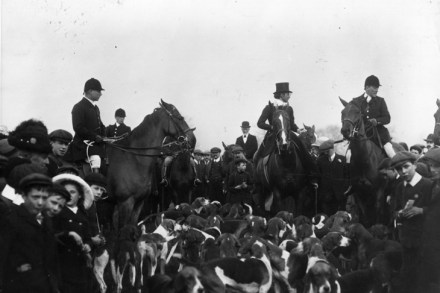
Earlier this month, the Quorn and Cottesmore hunts took separate votes on merging. The Quorn voted for, the Cottesmore against. So the merger will not take place. The fact that the Quorn wants a merger is, given its history, astonishing. For a century and a half, it was the epitome of fast, grand hunting — with too much ‘leaping’ for hunting purists, but any amount of swagger. Melton Mowbray was to hunting what St Moritz is to skiing. The place was full of louche, rich, grand persons, chancers, hucksters, poules de luxe, all so well satirised by Surtees. There the future Edward VIII met Mrs Simpson. People would take a ‘box’ nearby for the season or come up from London by train. More than 80 per cent of the subscribers were non-residential.

The Spectator’s notes | 6 December 2018

Inside the Dominic Grieve amendment carried on Tuesday is the embryo of a new political party. Any parliamentary majority for what Sir Oliver Letwin, who voted for the amendment, calls ‘something real’ (‘Norway plus’) if Mrs May’s deal falls would depend on the support of a good many Labour MPs. After three months’ work, the organisers believe they have got 75 such on board, led by Chuka Umunna. These are anti-Brexit, chiefly Blairite Labour MPs who cannot bear Jeremy Corbyn. If their number held up (a big ‘if’), the organisers calculate, the House could carry ‘Norway plus’, with the government and most Conservative backbenchers supporting, even if the ‘hard’ Brexiteers opposed. Labour would be split.