The Spectator's Notes

The silence of the Scottish unionists

We citizens of the small Sussex village of Etchingham are proud of our clan chief, Julie, who chaired Tuesday night’s encounter between Boris Johnson and Jeremy Corbyn. So ancient is her surname that it is a chicken-and-egg question about which came first, the family or the village. The headless 14th-century effigy of her forebear, Sir William, lies in the parish church. But local patriotism must not blind us to the fact that even our Julie could not rescue the debate from its dreary game-show format, sometimes witless questions and the lack of actual discussion. It cannot be repeated too often that these shows are symptoms of TV triumphalism and not of a healthy democracy.
Labour thinks that its trump card is Trump

On Wednesday morning, I was hoisted into the air of Whitehall on a cherry-picker. A century ago the proto-Cenotaph appeared in time for the London Peace Parade in July 1919, which followed the signing of the Treaty of Versailles. In that first year, the Cenotaph was only a timber and canvas structure, built to last a week; but Edwin Lutyens’s design seemed so right that the present structure, more precisely designed, was built in Portland stone for Remembrance Day 1920. English Heritage, now a charity rather than a government body, cares for the monument — as it does for 400 monuments in England, including 46 in London. The chairman, Vice-Admiral Sir Tim Laurence, husband of the Princess Royal, wanted me to see its annual clean before this Sunday’s Remembrance Day parade.

The Tories are Boris Johnson’s Conservatives now

How much does Boris Johnson’s move to an early election resemble Mrs May’s disastrous one in 2017? In two important respects, not at all. He had to call an election because of the numbers in parliament: she did not. Voters understand this. He is also a born campaigner, while she — well, no more need be said. But there is a possible similarity between the two situations. In 2017, the manifesto described the Tories as ‘Theresa May’s Conservatives’. All the eggs were in her basket. It feels as if the Tories will be ‘Boris Johnson’s Conservatives’ this time, though no doubt that phrase won’t be in the manifesto. Whenever Boris is seen to falter or err, voters will then ask ‘Who are the Conservatives? Do I like them?

Nigel Farage had better hurry up and settle for a peerage

Last week, an angry Telegraph reader asked me why I had got through a whole column on Brexit without mentioning Nigel Farage. My exact answer is that the column was about MPs in relation to Brexit and Mr Farage and his Brexit party have no MPs. But there is a more general answer too. It is that the Brexit party’s irreducible core is now clearly shown to be small. The rest of its vote is entirely dependent on the behaviour of whoever is the Conservative leader. Mrs May’s behaviour swelled its ranks; Boris Johnson’s has reduced them. It really is as simple as that.

Donald Trump is key to Boris Johnson’s survival

There are so many problems confronting our polity this week that it is almost impossible to write about any of them. Between the time of writing and the time you read this, we could have agreed Brexit, destroyed Brexit, called an election, called a referendum, or achieved nothing at all. Here, perhaps, is one thing which can safely be pointed out. In almost any scenario, Boris Johnson has to worry about the Brexit party. In practice, this means worrying about Nigel Farage. Who, if so minded, could persuade Mr Farage to be amenable? Surely the answer is his friend Donald Trump. If President Trump is serious in his desire for Brexit, his most useful contribution at this moment would be to induce Mr Farage to help Boris, not hinder him.

We selfish gits must wear the name with pride

I walked down Villiers Street to Embankment Tube station. In front of me were two Extinction Rebels, a mother and daughter. Strapped to the little girl’s back was a white teddy bear. Strapped to the bear’s back was the handwritten slogan: ‘You selfish gits. Stop burning down my house.’ I wonder how they knew I was a selfish git, since I wore no emblem to announce the fact. Luckily they did not know I was off to a large party of fellow selfish gits to launch volume III of my biography of Mrs Thatcher. It was taking place in the Banqueting House, Whitehall, yards from XR’s encampment, and was eloquently addressed by our git-friendly Prime Minister, who referred to them as ‘uncooperative crusties’.

If Boris snogged Nick Robinson, would he be forgiven?

 Manchester It could be caused by desperation, but this Tory conference is very jolly. At last there is something to support, and someone. Some might witheringly point out that it was fun on the Titanic until the iceberg got in the way, but I notice two phenomena. The first is confirmation of this column’s long-standing theory that the only job Boris Johnson knows how to do is the top one. He seems simultaneously energised and at ease. The second is that his opponents’ scorn, hatred and disapproval help him. Take allegations of sexual misconduct.

The rule of law has become the rule of lawyers

Is that enormous silver spider that Lady Hale wore her badge of office? If so, it is appropriate. The Supreme Court has decided to tie up the government in a web of legal reasoning so tight that it can no longer govern. In his dissenting judgment in the earlier Miller case about Article 50, Lord Reed warned that ‘the legalisation of political issues is not always appropriate and may be fraught with risk, not least for the judiciary’. Unusually — as if to compensate for these words — his name was joined with that of Lady Hale in giving the judgment on Tuesday. He would have done better to heed his own earlier warning. They are in deep now. *** The very first paragraph of the judgment gives the Supreme Court’s game away.

Why didn’t Cameron realise the ‘strength of feeling’ about Brexit?

In his memoirs, David Cameron admits that he ‘did not fully appreciate the strength of feeling’ in favour of Brexit, before and during the referendum. The fascinating question is, ‘Why?’ The issue of Europe had been dividing his party from at least 1988 (and had earlier roots). It was part of his modernisation not to ‘bang on’ about Europe, but this was an evasion, not a policy. If a leader does not address a vital question, others will, if he gives them the chance. You cross a windswept plaza, go down a steepish stair and then descend three floors below the ground.

There’s nothing wrong with Jacob Rees-Mogg lying down in the Commons

If you are a journalist covering politics this year, every moment is a bad moment to take a holiday. I took a short one last week in search of grouse and arrived at Hunthill, the proud Scottish fastness of our host Henry Keswick, to find that Boris Johnson had promised to prorogue parliament. Since the party included a cabinet minister, another Member of Parliament etc, it all felt a bit like a John Buchan novel. As I watched the beaters approach us across the moor, I imagined it as the sort of scene Buchan describes so well in which the appearance of seemingly innocent sport on the hill is in fact the approach of something dangerous to the safety of the realm. The MP who, though of impeccable lineage, has unsound views on Brexit, had quietly slipped away. Was foul play afoot?

The Amazon fires are as much a political story as an environmental one

We do not yet know which 100 citizens will make it to the ‘Citizens’ Assembly’ to be chaired by the Archbishop of Canterbury, which will look at ways of preventing a no-deal Brexit. So we cannot yet judge whether the organisers have come up with a system of selection which improves on the representative powers of parliament. But really we do not need to, because we know already that they will not be able to bring the ‘reconciliation at a time of national emergency’ which the Archbishop seeks. This is because the idea that a no-deal Brexit must be prevented is not an irenic proposition around which people can unite, but an intensely political one over which they inevitably divide.

The royals should embody virtue – not signal it

ONE should not be censorious if the Duke and Duchess of Sussex fly in private jets to their holidays, though one cannot help laughing when they combine this with exhortations to save the planet. There is, sadly, no royal yacht nowadays (a new one would be a good make-work scheme post-Brexit), and we are not a civilised enough country to leave them and their baby alone if they were to travel on public transport. But they are making two mistakes. The first is to go somewhere hot, sunny and celebrity-filled for their break. One of the secrets of the Queen’s popularity is that she has almost never been seen sunbathing with the rich and famous. The worm of public envy never stirs when she spends her summers in Scotland. Her Balmorality is impregnable.

The Spectator’s Notes | 15 August 2019

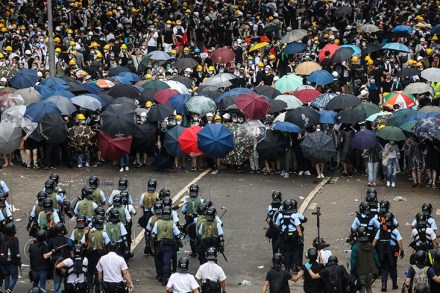
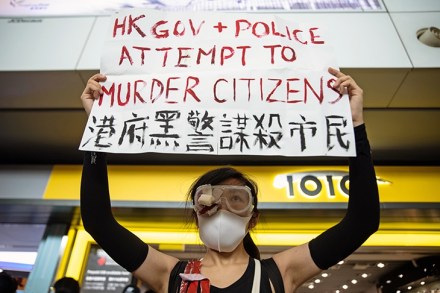
We seem to be building up to a second Tiananmen Square, 30 years after the first. This time the venue is Hong Kong. As then, the Chinese government longs to kill protestors, but it hesitates because it fears global reaction. It therefore matters greatly that the ‘rules-based international order’ strongly assert that breaking the 1984 Sino-British Agreement would put China beyond the pale. No international discussion of Brexit is complete without a reverent invocation of the Good Friday Agreement (which in fact has almost nothing to do with EU membership). The Hong Kong Agreement should command such reverence, and its pledge of ‘One country: two systems’ should be the test of whether China is a law-abiding international partner.

The Spectator’s Notes | 8 August 2019

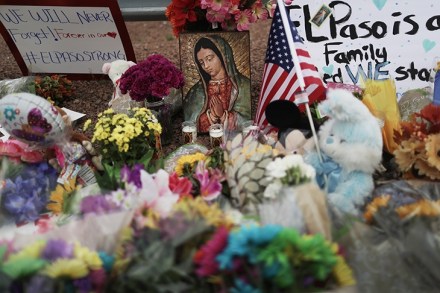
Who wrote ‘Our lifestyle is destroying the environment of our country … creating a massive burden for future generations. Corporations are heading the destruction of our environment by shamelessly over-harvesting resources … the next logical step is to decrease the number of people in America using resources. If we can get rid of enough people, then our way of life can become more sustainable’? The answer, if media reports are accurate, is Patrick Crusius, the man accused of the El Paso massacre. The words appeared in his testament, entitled (in homage to Al Gore?) The Inconvenient Truth, which he seems to have put online before decreasing the number of people in America by 22.

The Spectator’s Notes | 1 August 2019

In his very long letter to Jeremy Corbyn about why, after all, he will stay out of the Labour party instead of fighting his expulsion, Alastair Campbell complains that Britain has been the victim of a ‘right-wing coup’. Boris Johnson’s government has no ‘real democratic mandate’, he says, and Mr Corbyn should be fighting it much harder. You hear this argument a lot — we have a new prime minister and so we must have a general election. In my lifetime (born 1956), seven prime ministers — Macmillan, Douglas-Home, Callaghan, Major, Brown, May and Johnson — have come into office without a general election before or immediately ensuing; in that sense, without a democratic mandate.

The Spectator’s notes | 25 July 2019

‘No great surprise’ headlined the BBC television news on Tuesday lunchtime. The BBC does not admit it now, but it has been extremely surprised by Boris’s success, as have most senior Conservatives. They wrote him off at least twice — first when Michael Gove stabbed him after the referendum; second, when he resigned from Mrs May’s cabinet. His triumph confounds mainstream conventions about how to get on in Tory politics. It is partly to do with his personal qualities — his charisma, and even more, the attribute, visible in all the top-rankers, of mental and physical resilience. Over the years, I have often known Boris waver and hem and haw his way out of trouble, but I have come to understand that this is essentially tactical.

The Spectator’s Notes | 18 July 2019

Seventy-five years ago on Saturday, the July plot failed. Claus Schenk Graf von Stauffenberg placed a bomb in a briefcase next to Hitler in the conference room of the Wolf’s Lair, but someone moved the briefcase a little. When the bomb detonated, the heavy conference table shielded Hitler from the blast. Stauffenberg and many other conspirators were caught. He was executed early the next morning. This Friday, in Christ Church, Oxford, a special service will commemorate the plot and all those who resisted Nazism in Germany. It will centre on the altar dedicated to George Bell, Bishop of Chichester, and the main external supporter of German Christian resistance to Hitler.

The Spectator’s Notes | 11 July 2019

When I last talked to Sir Kim Darroch, he was a slim young private secretary, so it was a long time ago; but I can categorically state that President Trump is wrong to call him ‘wacky and a very stupid guy’. His particular sort of mandarin ‘Rolls-Royce mind’ intelligence does, however, amount to a form of stupidity when confronted with Mr Trump. Intellects like Sir Kim’s are slower than those of ordinary mortals to spot Trump’s communicative genius. They cannot see that it keeps him ahead of the game. It is really remarkable that a 73-year-old man can be such a master of forms of social media which did not exist until his sixth and in some cases his seventh decade.

The Spectator’s Notes | 4 July 2019

The Cabinet Secretary, Sir Mark Sedwill, is offering to meet Jeremy Corbyn about the Times story last week which reported that senior civil servants were worried Mr Corbyn was ‘too frail and is losing his memory’. As usual with such stories, one cannot know their exact truth, but there is a general trend in the civil service to be looser-tongued. A recent column by Rachel Sylvester, also in the Times, contained a long string of insults of Boris Johnson from unnamed officials. Sir Mark did not offer to meet Mr Johnson about that. Before and after the Brexit referendum, government officials, especially at the Treasury, repeatedly briefed views hostile to Brexit. A Remainer, Olly Robbins, took charge of the Brexit negotiations.

The Spectator’s Notes | 20 June 2019

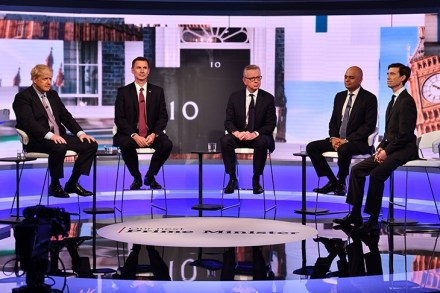
Boris and his team made a mistake by agreeing to take part in Tuesday’s BBC leadership debate. In such decisions, candidates must be absolutely ruthless. It does not matter whether one is accused of ‘running away’ if one does not take part. The only question is, ‘Will going on X improve the candidate’s chances with the relevant electorate?’ The relevant electorate in the Tory leadership campaign is 1. MPs and 2. party members. Nobody else matters, except inasmuch as wider opinions affect those who vote. Boris could easily have reached MPs without going on the BBC debate. He can less easily reach party members, but even then, he can find more suitable platforms later.