Television

In which James Delingpole gets down with the kids, finds they’re sex-obsessed…

If there’s one thing everyone knows about BBC comedy it’s that it’s going downhill. According to Danny Cohen, now Director of BBC Television, it’s too white and middle class; according to producer John ‘Blackadder’ Lloyd, it’s run by idiots like the bureaucrats in the BBC satire W1A who don’t understand what comedy is; according to the gag-inducingly PC Dara O’Briain, it’s too gag-inducingly PC (he means the quota system they’re trying to introduce whereby every comedy panel show must have a token female); according to John Cleese, it’s never been the same since John Cleese left; etc. Probably they’re all right.

The quest for the perfect guitar riff is a noble one – if not quite the key to unlocking the mysteries of the universe

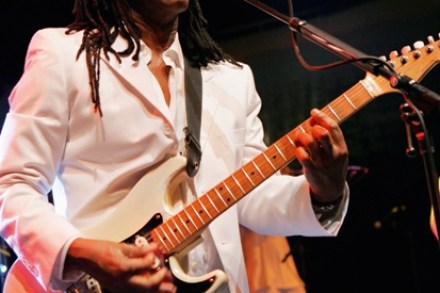
A few weeks ago, my eight-year-old son, who’s taken up the guitar, announced that he’d learned something new. He then played a sequence of chords — approximately, Duh-duh-duuh, Duh-duh-da-duuh — that I’ve been hearing from all guitarists since I was about eight myself. ‘It’s called “Smoke on the Water”,’ he informed me, unnecessarily. Of course, any sign that the world hasn’t changed as much as we thought is always welcome to the middle-aged man. Yet when I showed him Deep Purple performing the whole track on YouTube, he was both slightly bored and rather mystified. Not only had he no idea that ‘Smoke on the Water’ came with a song attached, but he couldn’t understand why it needed one.

Your starter for ten: why do we Brits so love University Challenge?

‘Fingers on buzzers!’ says Jeremy Paxman on University Challenge. But technically this is inaccurate. Only one of the teams actually has buzzers. The other side has push-button bells, instead. I’ve been watching the programme religiously for God knows how many years without ever consciously noticing this. But, once you’ve been told, it’s obvious — in much the same way it’s obvious that the way you tell Thompson and Thomson apart is that one has an upturned moustache and the other doesn’t. Which, come to think of it, would be quite a good University Challenge question. Apparently, one of its main criteria is that every question must have ‘inherent interest’. That is, it must make you genuinely keen to know the answer.

The Honourable Woman could have done with some help from an overpaid executive in a suit

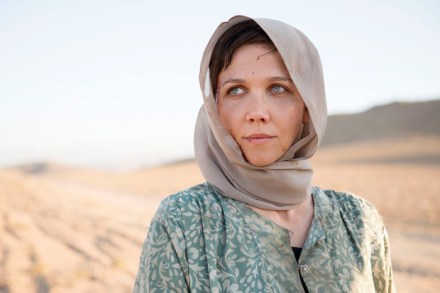
BBC2’s The Honourable Woman (Thursday) began with a rather portentous voice-over bringing us the unsurprising news that ‘We all have secrets. We all tell lies just to keep them from each other and ...pause to indicate psychological profundity ...from ourselves.’ Luckily for the viewer, this was accompanied by the sight of man in a restaurant being stabbed to death by a waiter in front of his young son and daughter. As it turned out, this would set the tone for much of what followed — an hour of drama that combined memorable set-pieces with slightly too transparent an insistence on its own significance.

Looking for a Game of Thrones substitute? Vikings is the closest you’ll get – but it ain’t close

Did you know that the 8th-century Kingdom of Northumbria was the epicentre of an international exotic reptile trade? I only discovered this myself from watching episode six of Vikings (History Channel, Tuesday) and being introduced to the snake-pit maintained by King Aelle. What particularly impressed me were not just the variety of pythons and boas at the bottom of the pit but also their excellent state of health.

The girl who had sex with dolphins

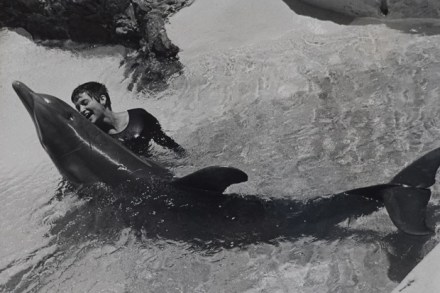
BBC4’s The Girl Who Talked to Dolphins (Tuesday) began with the overstated-sounding claim that it would be tackling ‘perhaps the most remarkable period in the history of animal science’. In fact, though, the longer the programme went on, the more convincing this claim felt — even if the word ‘period’ should possibly have been replaced with ‘episode’, and ‘remarkable’ with ‘bonkers’. At times, the story seemed almost too neat a microcosm of the 1960s, as well meant if not necessarily practical ideas about transforming life on earth — and beyond — gave way to something much darker. At others, it brought to mind that hippie Californian scientist in The Fast Show.

We need something less evil than Britain’s Got Talent. How about public executions?

You know what the world needs most right now? What it needs is five good-looking-ish, talented-ish blokes dressed in a mélange of artfully deconstructed dove-grey suits singing one of the songs out of Les Misérables, like a boy band but one that does numbers from musicals rather than original compositions, oh, and preferably with the kind of crap name that you can imagine being brainstormed by one of the teams on The Apprentice... Well, if that’s what you’ve been thinking these past few weeks, lucky you!

Is BBC1’s Quirke bravely unhurried – or too slow?

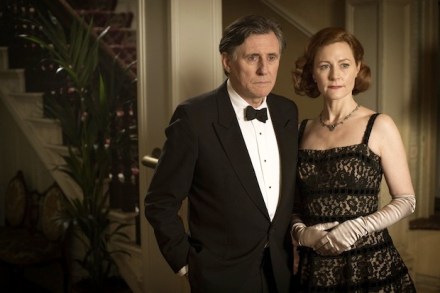
The work of John Banville — Booker-winning novelist and impeccably high-minded literary critic — might seem an unlikely source for a primetime crime series. But since 2006, under the telling pseudonym of Benjamin Black, he’s also published a series of Celtic-noir novels set in 1950s Dublin about a pathologist-sleuth known, even to his intimates, only as Quirke. To the understandable annoyance of full-time crime writers, Banville describes these books as ‘a kind of relaxation’, banging them out at a brisk 2,000 words a day compared with the Flaubertian 200 he manages for his more serious fiction. Yet, if this led any viewers to hope for an action-packed thrill-fest from Quirke (BBC1, Sundays), they’ll have been disappointed.

The rights and wrongs of box-set viewing

Admit it. Say it! ‘My name is Blah and I am a boxaholic.’ Life on hold, marriage in bits, job swinging from a rusty nail, the box-set fanatic grabs every available minute to feed an addiction. I mean, you can’t leave, can’t breathe until you find out whether Jesse and Walter make it up before someone else gets killed in Breaking Bad, or how on earth Jack can keep his daughter safe in 24. Box sets are not movies. They have a different time scale. What can you say in two hours that can’t be said better in 400? Relationships change, grow, collapse, move on. Fear is faster, immediate, for ever present. Plots range from incredible to intimate with the same intensity.

Harry and Paul’s Story of the Twos is just too funny for its own good

On Harry and Paul’s Story of the Twos (BBC 2, Sunday), there was a particularly cruel sketch in which Paul Whitehouse gave Harry Enfield a Paxman-style grilling as to whether he felt bitter that his comedy series had never won a Bafta award whereas its big rival The Fast Show (featuring, inter alia, one Paul Whitehouse) had won lots and lots and lots. The more Enfield tried to deny that it had bothered him, the more Whitehouse pressed him to admit that it had. But the real victim of the joke, as it would turn out this week, was not Enfield but The Fast Show. Its first episode in years — revived as part of BBC2’s 50th anniversary celebrations — was so embarrassingly bad that it made you wonder why any awards committee might ever have considered it worthy of notice.

So Dylan Thomas was a drunk: does this TV drama have anything else to say?

According to its executive producer Griff Rhys Jones, A Poet in New York (BBC2, Sunday) sought to rescue Dylan Thomas from the ‘forces of sanctity and hagiography that now hover over his shade’. Instead, we’d be reminded that he was ‘a hollering bohemian roustabout’ — which is presumably Griff’s longhand for ‘a drunk’. By that measure, the programme was a triumphant success, even if fewer people may have been startled by the revelation of Thomas’s booziness than Griff seems to think. As a piece of television, though, it suffered badly from the decision to concentrate on Thomas’s alcohol-laden final days in New York, which inevitably led to a lack of dramatic variety.

Thank God for the Game of Thrones imp – and the heaving breasts

Which character are you in Game of Thrones? For me it’s got to be the imp, Tyrion Lannister. As Ed West suggested in his erudite Speccie article a few weeks ago, Tyrion is about the only character with a vaguely sympathetic 21st-century mindset as opposed to a ruthlessly pragmatic medieval one. Persecuted since childhood because he’s a dwarf, he understands — as his fellow members of the ruling class generally do not — what it is to be marginalised, downtrodden and thus empathetic. And the other reason to identify with him is that he’s not going to die. I say this without any knowledge of what happens in George R.R. Martin’s books. It just strikes me that Thrones without the Imp would be like Hamlet without the Dane.

Jack Bauer hits, er, West Ealing

Whatever worries Kiefer Sutherland may have had about reprising the role of Jack Bauer in 24: Live Another Day (Sky1, Wednesday), learning his lines for episode one won’t have been one of them. After a four-year break, the show returned with its trusty digital clock standing at 11.00 a.m. — and, as ever, the events took place in real time. Yet it wasn’t until around 11.43 that Jack spoke his first words. Not that, after four years of being hunted by the authorities for saving the world in too maverick a way for those pen-pushers in Washington, he was having an uneventful day.

Generation War does something very un-German – bottles it

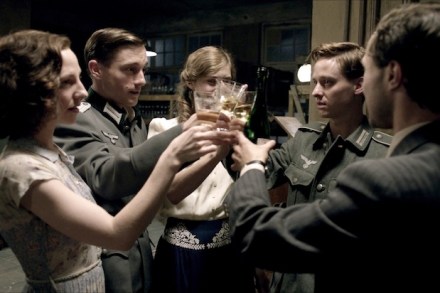
I was so looking forward to Generation War (BBC2, Saturday) — a three-part drama series covering the second world war from the perspective of five young men and women on the German side. Any nation capable of producing the ME-109, the 88mm gun and the Tiger tank, not to mention Das Boot, really ought to have no problem making one of the most authentic, searingly honest war dramas ever to hit our screens... How wrong I was. Consider a scene from this week’s opening episode involving Friedhelm — bookish, bolshie, anti-war younger brother of the more pugnacious and efficient Leutnant Wilhelm Winter.

Estate agents: we were right about the bastards all along

Television executives must be longing to make a programme about estate agents that casts the agents in a good light. There would be a national outrage, and in these Twittering, Facebooking times nothing is more appealing to a producer than a bulging digital postbag. Under Offer: Estate Agents on the Job (BBC2, Wednesday) is, sad to say, not that series. The factual six-parter goes behind the scenes with agents around the country, only to show us that we were right about the bastards all along. Everyone we met was a pastiche of an archetype. There was Lewis Rossiter, in Exeter, a young man whose drinking banter and easy way with aphorism suggested that the BBC had cultivated him from David Brent’s rib.

Without a strong woman in charge, bees are doomed — just like us

God bless the BBC. And I’m not being entirely sarcastic here. There are some things the BBC does very well and one of them, sadly, was The Review Show, its monthly critical round-up of theatre, film, books and new art exhibitions, that it has now, in its wisdom, decided to scrap. Presumably, the decision was made because the ratings had plummeted — a fact perhaps not unconnected with the programme’s move from BBC2 to the ghetto of BBC4. Yes, being highbrow and involving critics who talked in long sentences, it definitely counted as minority viewing.

Gas gangrene, shell shock and flinty women: BBC One’s new Sunday night offering is no soother

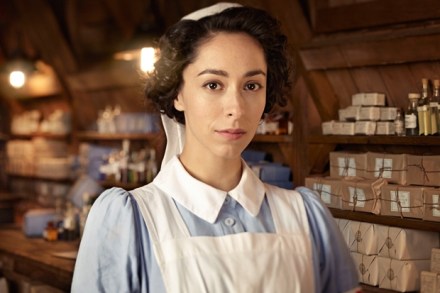
Sunday nights. What are they for? Eggs. Tea. Toast. Nerves about the week ahead. Something comforting on TV.  But comfort comes in many forms. For some, it’s twee life at Downton Abbey. For others, it’s the thrill of Homeland. With the BBC’s latest Sunday-night offering, comfort takes on a new guise: one that includes gas gangrene, shell shock, flinty women and war-damaged men. It won’t rock you to sleep. The Crimson Field, BBC1’s latest six-part drama, took us to the support system that existed behind the front line during the first world war. It’s 1915, and young women from Britain’s upper and middle classes have been drafted in as VADs — Voluntary Aid Detachments — to nurse casualties from the trenches.

The EU is worse than you thought

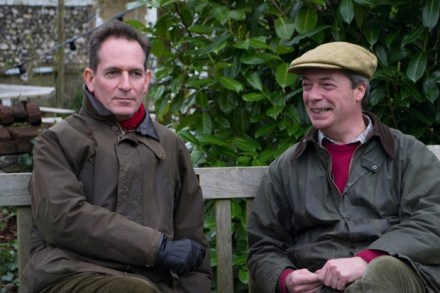
For me, by far the most surprising revelation in Martin Durkin’s documentary Nigel Farage: Who Are You? (Channel 4, Monday) was just how astonishingly vast, unwieldy, authoritarian, interfering, undemocratic, sclerotic, and sinister the European Union actually is. As a Eurosceptic, I suppose I ought to have known this already. But the secret of the European Union, as one of Durkin’s talking heads noted, is the way it uses boredom as a weapon. Even those of us predisposed towards thinking ill of the EU are unwilling to apprise ourselves of the full, tedious details because our brains would explode at the sheer, grinding dullness of it all.

Game of Thrones tells the story of Britain better than most histories

A young pretender raises an army to take the throne. Having recently learnt of his father’s beheading, the adolescent — dashing and charismatic and descended from the old kings of the north — vows to avenge him. Despite his youth, he has already won in the field and commands the loyalty of many of the leading families of the realm; he is supported in this war by his mother, who has spirited away her two younger boys to safety. Pitted against them is the Queen, proud and strong-willed, and more of a man than anyone around her, battling for the inheritance of her sadistic young son. This is the premise behind the HBO television show Game of Thrones, the fourth series of which begins on 7 April. Based on the George R.R.

Eton vs snobbery

One of the stranger things about Eton is its near-total lack of class snobbery. Yes, all right, you still get the occasional away match where their supporters will chant at the opposition ‘You’ll be working for our Dads’ but that’s just badinage, not animus. I doubt it was always thus. Probably there was a time when every Etonian was acutely aware of which of his housemates was in line for a dukedom and which a mere baronetcy. But, as far as I can tell from my own experiences as an Eton parent, those days are gone. Today Eton is quite ruthlessly meritocratic and if you’re good enough you’re good enough, regardless of whether your Dad owns a Chinese takeaway in Leigh-on-Sea or he’s a jumped-up blogger from Brum.