Television

The World Cup is evil

I tried to think, Pointless-style, of two of the countries least likely to be participating in the world kicky-ball nonsense. Then I burst into the sitting room to annoy Boy. ‘Quick! Quick! We’re missing Haiti vs Burkina Faso.’ He looked up contemptuously from the sofa. ‘Actually, Haiti are playing right now. Against Morocco. So that’s another of your comedy fails.’ Sixty years in I don’t think I’m ever going to get a handle on this football malarkey. I first realised I was different in my first week at boarding school. All the other eight-year-olds owned a football and knew how to play with it and had even been taken by their dads to matches. I was the one who knew the Latin name for the common wall lizard.

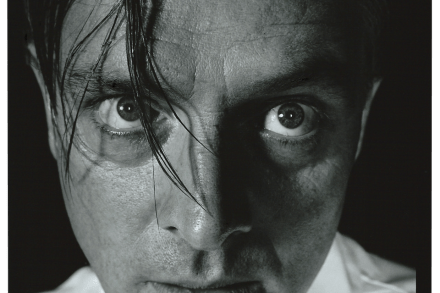
An enjoyably honest portrait of Rik Mayall

If you’ve tended to think Rik Mayall was both very funny and quite annoying, it turns out you’re not alone – because, with varying degrees of tact, that’s what most of the people who knew him suggested in Rik Mayall: Magnificent B’stard. At a time when far too many documentaries about celebrities are celebratory to the point of cloying, this one was, of course, all the better for it. By his own account, Mayall first discovered the joys of showing off in primary school. Instructed to mime in the choir, since his voice was ‘so horrible’, he did so with the wild exaggeration that would remain his speciality. The laughs he got duly turned his boyhood head.

Clarkson’s Farm remains the best drama on TV

Aliens are very fashionable right now. Steven Spielberg recently announced that they are real and have been visiting us since for ever – but then he does have a poorly reviewed new movie to push. Trump’s White House, meanwhile, has been busily trolling us with hints that it knows more about the subject than it has hitherto let on. I personally think it’s all bollocks – or, if you believe Project Blue Beam, worse than bollocks. But whichever camp you fit into, I think you’ll thoroughly enjoy the three-part documentary series The Alien Autopsy Scandal.

Another thriller, another teenage incel

At just over two hours, Martin Scorsese’s 1991 remake of Cape Fear was 20 minutes longer than the 1962 original. It also added some moral complexity. Instead of a total psycho (Robert Mitchum) menacing a lawyer’s very nice family, we got a total psycho (Robert De Niro) menacing a lawyer’s slightly messed-up one. But how do you stretch the story to ten hours? That’s the challenge faced by Apple TV – and, after two episodes, the answer’s already clear: by throwing in any number of subplots, strenuously referencing as many contemporary anxieties as possible and not worrying too much whether some of the characters seem quite stupid in their willingness to ignore the obvious threat.

Why I’m increasingly drawn to optimistic sci-fi

You know you’re getting old when you see Geena Davis from Thelma & Louise cast as a granny sex symbol and Alfred Molina as a character so elderly you’re supposed to believe that he could drop at any time. This is one of the running gags of The Boroughs, a sci-fi/monster series set in an upmarket, Stepford Wives-esque desert retirement village, and clearly aimed at ageing farts like I very nearly am who imagine themselves to be much younger and groovier than they now are. ‘Don’t worry, wrinkly kids,’ the series reassures us. ‘By the time you hit your seventies you’ll be taking more drugs and having more sex – even crazy, orgy sex [note to squeamish viewers: this scene takes place off camera] – than ever before.

Undeniably stirring: Dear England reviewed

James Graham has said in interviews that he regards Gareth Southgate as ‘a hero for the ages’. Even if he hadn’t, though, this view wouldn’t be difficult to detect from Dear England, an adaption of his own stage play. In this week’s two episodes, Southgate’s unfailing loveliness succeeded in reviving not just the England football team, but also a sense of what England itself essentially is. At one point, he watched the Queen’s Covid address about ‘the attributes of self-discipline, of quiet, good-humoured resolve and of fellow feeling’ that ‘still characterise this country’ – and, as ‘Jerusalem’ swelled on the soundtrack, he clearly believed every word; not surprisingly given that these sentiments underlay everything he did.

I’m done with Rivals

Everybody has been raving about Legends, the Netflix series about undercover customs officers in the 1990s busting a heroin ring. But even though it’s ‘based on a true story’, there are times when it feels more like a histrionically implausible, over-reverential recruitment drive for HM Customs and Excise. ‘Thought they were just those men in white shirts embarrassing you at the airport by exposing the stash of cheap baccy hidden in your holiday underwear? Think again!’, you can imagine the tagline running. The model here, of course, would be Top Gun – the 1986 movie, heavily supported by the US military, which supposedly caused the number of men applying to become US Navy fighter pilots to increase by 500 per cent (a figure that’s since been debunked).

The BBC at its nation-unifying best

Children of the Blitz began with the surprising news – to me anyway – that while 800,000 British children in places likely to be bombed were evacuated during the war, two million weren’t. The evacuees’ stories have long been a TV staple, but this riveting documentary was the first programme of any kind I can remember about those who stayed at home. The experience was recalled with extraordinary vividness by people mainly in their nineties or beyond, all of whom gave the type of revelatory interview that programme-makers don’t get merely by pointing the camera and asking questions, but through the careful building of wholly justified trust.

How to win MasterChef

‘Warmer, sharper and funnier than ever,’ claims one reviewer of ‘the BBC’s disgraced cookery show’ MasterChef. But this is nonsense. First, MasterChef was never ‘disgraced’. It was just the victim of some desperate sub-#MeToo media insinuations about the mildly laddish shenanigans of its two ex-presenters John Torode and Gregg Wallace. These insinuations were likely not unconnected with a) the show’s need for some publicity; and b) an excuse for a revamp after 20 years with those presenters now starting to look about as fresh and inviting as the trays of congealing fried eggs and uncrispy bacon you get in a hotel breakfast buffet. MasterChef was never ‘disgraced’.

In a fairer world, The Cage would receive a lot more attention than Half Man

Half Man, Richard Gadd’s follow-up to the all-conquering Baby Reindeer, began with approximately ten seconds of some people at a wedding in rural Scotland having a good time. Two episodes later, they’re still about the only characters we’ve seen who aren’t having a gruesomely bad one. After that brief blast of jollity, the show moved to a nearby barn where the groom Niall (Jamie Bell) and his old chum Ruben (Gadd) were renewing their acquaintance in what would prove a characteristic way: with Niall looking terrified as Ruben menacingly recalled their former intimacy, menacingly caressed him, menacingly taunted him and menacingly smashed him repeatedly in the face.

AI could never replace me

There are two main schools of thought on AI in the Delingpole household. I, as the resident batshit-crazy reactionary tinfoil-hat loon, think that it is evil, indeed quite possibly satanic, and that everything would be much better if only we went back to horse transport, herbal salves and abacuses. And Boy Delingpole, representing technologically literate youth, thinks I’m an idiot, that AI is the future and quite mind-blowing in its potential to change everything. Probably we’re both right. Personally, I don’t feel quite as threatened by AI as perhaps I should. More by accident than design, I seem to have ended up in one of the very few jobs that AI isn’t going to steal.

Big Mistakes is hysterical – but not in a good way

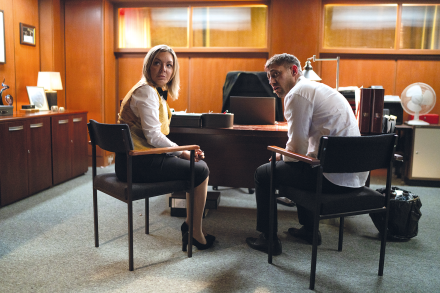
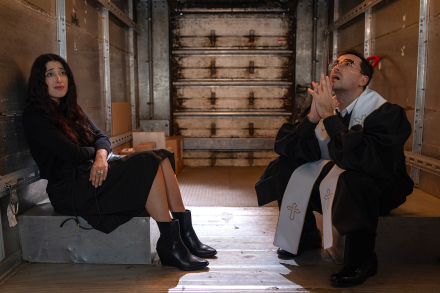
When following up a successful sitcom, should a writer head off into new territory or not? That was the question facing Dan Levy after Schitt’s Creek and John Morton after WIA – and now we have their answers: ‘yes’ and ‘not really, even with a change of country’ respectively. Curiously, both seem to have made the wrong choice. ‘Schitt’s,’ Levy has explained, ‘was so warm and sweet and cuddly. My natural curiosity was to go somewhere else more dangerous’; specifically, to provide ‘a story that’s thrilling but never not funny. That became the big challenge of the writers’ room.

HBO Max isn’t worth subscribing to

HBO Max is the latest streaming channel trying to lure you into yet another of those £10 a month subscription contracts you only remember having signed up for about three years later when you’re trying to work out why you are so skint. Its showpiece series is The Pitt which attracts ten million viewers per episode and has been called ‘the best medical drama on television in years’. This is a category of excellence I find about as enticing as ‘most amusing form of cancer’ or ‘most ineradicable variety of testicular lice’. But, just for you, I watched to see what the fuss is about.

Over-cautious and clumsy: The Downfall of Huw Edwards reviewed

It’s not easy for a drama to be over-cautious and clumsy at the same time. Or to turn a real-life story that shocked (and, let’s face it, titillated) the nation into an oddly flat piece of television. So how did the much-hyped Power: The Downfall of Huw Edwards manage to do both? The answer, I’d suggest, is by failing to interrogate – or even engage much – with its own material. Instead, it opted to simply pass on the facts drawn from its own research, making only the most half-hearted and sometimes contradictory attempts to explain them. The programme began with Edwards (Martin Clunes) in his voice-of the-nation pomp, as he announced the Queen’s death.

Goodwill will not save Claudia Winkleman’s new chat show

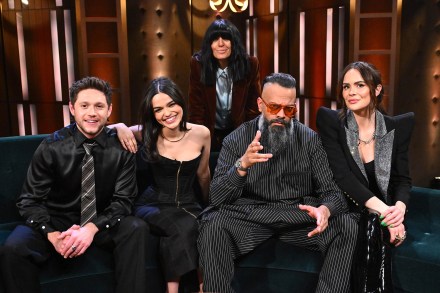
Claudia Winkleman has a chat show on the BBC. I’m struggling to understand why this is a story but I listened to an entertainment-industry podcast recently which tried to explain. Apparently, chat shows are ratings death; hardly anyone watches them, so TV execs are very reluctant to launch new ones. But because of Traitors, Winkleman is now huge, bigger even than Ant and Dec, so against their better judgment they decided to give her a shot. If Winkleman’s chat show flops and doesn’t get recommissioned she shouldn’t blame herself, just the genre They’re probably regretting it, though. Everyone wants Claudia to do well because she seems nice.

Charming: The Other Bennet Sister reviewed

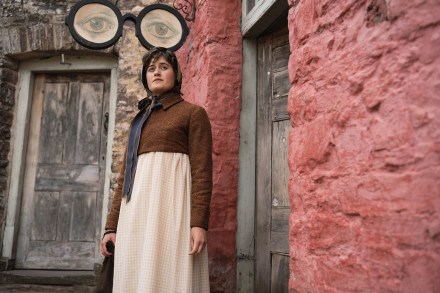
The Other Bennet Sister is to Pride and Prejudice what Tom Stoppard’s Rosencrantz and Guildenstern Are Dead is to Hamlet. The events of the original novel are all there, but the focus is on a character Jane Austen mostly neglected and occasionally scorned. One effect is that the other sisters, including the sainted Lizzy, come across as smug and snooty According to Mary Bennet’s opening voiceover: ‘It is a sad fact of life that if a young woman is unlucky enough to come into the world without expectations, she had better do all she can to ensure she is born beautiful. To be poor and handsome is misfortune enough; but to be penniless and plain is a hard fate indeed.

Life could be worse – you could be Jonathan Ross

‘Oh dear, you look like an old person,’ said Girl, greeting me in the interval of the Bach choir’s St Matthew Passion at the Royal Festival Hall. I took her point. Moments earlier I had been lamenting to the Fawn: ‘It seems like only yesterday when I had lovely long hair and you rode pillion to rock gigs on my Guzzi.’ And now here we were surrounded by music lovers of a noticeably certain age and not feeling at all out of place. Still, it could be worse. At least I’m not Jonathan Ross. In my youth Wossie was a sort of role model. I coveted his fame, his cheeky chappy banter, his Jean Paul Gaultier suits. What could possibly be more delightful a career than being on TV, talking to movie stars and being paid lots of money for it?

Bonkers: Young Sherlock reviewed

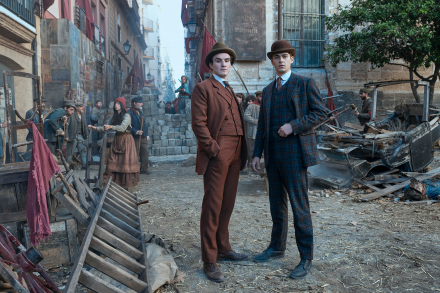
Judging from the two biggest new streaming dramas around, the taste these days runs towards the kitchen sink – not as in gritty northern blokes smoking Woodbines and moaning a lot; rather, as in the writers throwing in everything but. A fortnight ago, I reviewed Lisa McGee’s How to Get to Heaven from Belfast: a Netflix show that doesn’t so much combine slapstick, violence, cheery banter, mean banter, mystery, media satire and dark broodings on life, as simply shuttle between them. Now comes Young Sherlock, directed by Guy Ritchie, where again anybody searching for dramatic unity will search in vain.

Enjoyably old-fashioned: ITV’s The Lady reviewed

I lasted all of five minutes with Netflix’s tasting menu-length Being Gordon Ramsay. This surprised me, because I’ve long had a bit of a soft spot for the irascible, crevice-faced, sweary old ham. I know that all reality TV is fake but I’ve always quite enjoyed watching carrot-top pretending to lose his rag yet again in some rat-infested culinary cesspit before transforming it, in the space of a month, into a Michelin three-star. Ramsay no longer even pretends that his programmes are anything more than extended plugs for his brand But the dishonesty and contrivance and brazen commercialism of this autohagiography are just too much to stomach.

Foot-to-the-floor entertainment: How to Get to Heaven from Belfast, Lisa McGee’s sequel to Derry Girls, reviewed

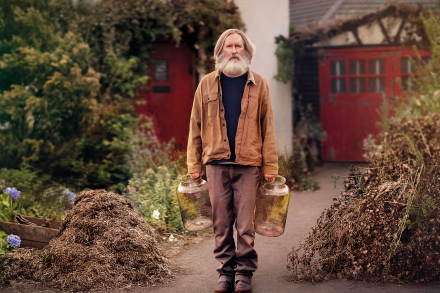
How do you follow a great sitcom? Judging from How to Get to Heaven from Belfast and Small Prophets, the answer is by keeping the same sort of characters, having a plot about a missing woman and adding a touch of the supernatural. Both shows – Lisa McGee’s successor to Derry Girls and Mackenzie Crook’s to Detectorists, respectively – also reflect a slightly mad (in theory) but wholly justified (in practice) confidence that the goodwill established by a much-loved series means viewers will go wherever you lead them, no matter how strange things become. And in McGee’s case, they become very strange indeed. How to Get to Heaven began as if we were in for a dark, rather solemn thriller.