Television

It’s hard to take Lucy Worsley seriously

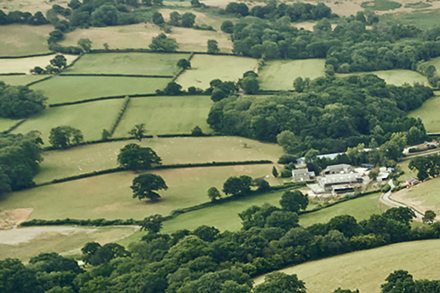
BBC1’s new ghost-story drama The Witch Farm certainly can’t be accused of lacking what’s known in the trade as ‘respect for the genre’. It began with a vicar walking through a field of crows to an isolated Welsh cottage, where he just had time to find a room covered in runic scribbles and cry out in fear before a caption appeared reading: ‘20 years later. June 1989’. To prove it, the radio brought news from Tiananmen Square and played Transvision Vamp as a family of three from London drove to their new home in that very cottage. On arrival, teenage son Jonathan noted with alarm the absence of a TV aerial (for younger readers, the nightmarish equivalent of no wifi).To the parents Liz and Bill, though, it seemed like an idyll. But not for long.

BBC1’s Honey is a dog’s breakfast

I’m currently working on a screenplay set in 1066 about a precocious young woman who is absolutely sick of the patriarchy. She wants to become a housecarl in the elite royal guard but thanks to sexism, homophobia and racism all the white Anglo-Saxon males sniff that she’s unsuitable. But then one day, while she is practising her two-handed long-axe skills in a forest clearing, who should ride by but the King’s clever and beautiful wife (‘It’s Ealdgyth. But everyone calls me Edie’) and, a few exchanged hair-styling and make-up tips later, an enduring friendship is born. If the BBC won’t commission it I’ve no doubt Netflix will. And that’s the problem, isn’t it?

How plausible is Hunting Alice Bell?

Hunting Alice Bell began with an angry mob (is there any other kind?) outside a court building in 2012 brandishing misspelled placards and screaming at the eponymous Alice, who’d been convicted of providing a false alibi for her serial-killing former boyfriend. They were also, of course, having the time of their lives. We then cut to the present, when the fun of angry mobdom was flourishing online. After serving 18 months, Alice had been granted lifelong anonymity, but a masked man called True Crime Buster was now racking up the likes by ‘revealing’ that she was living in his hometown as Fran Da Silva – and urging his followers to ‘make her pay’.

The fibs of Blue Planet III

Whenever I hear the phrase ‘national treasure’ I reach for my shotgun. Take David Attenborough. Yes, he may be impressively old – and modest and charming and sweet, so people claim – but he is also a menace who has probably done more to promote environmental hysteria, devious misinformation and spectacular misallocation of your scarce resources than Greta Thunberg, Al Gore and Prince William combined. The most effective propaganda takes you unawares, when your guard is down. So where better than in the cosy 8 p.m. Sunday slot when you are slumped on a sofa, hypnotised with that familiar soothing voice, manipulated by a score (Hans Zimmer) so soupy it could put Heinz out of business, and mesmerised by some of the most visually arresting images you’re ever likely to see.

Adultery is TV drama by numbers – and I’m hooked

The unequivocally titled Adultery began with a somewhat portentous voiceover. ‘There is a psychological equation,’ it intoned. ‘Attraction plus an obstacle equals excitement. But what happens if the attraction is too strong and the obstacles are too great? Do you threaten everything?’ The answer to the latter question would turn out to be a firm ‘yes’ – but first, the show had to get the adulterers together: something it did with commendable efficiency. Following one of those familiar scenes of everyday family chaos, harassed mum Beth set off on yet another errand for her teenage son Ollie and knocked a hunky bloke off his bike with her car.

A new BBC series that captures some of the channel’s old values

I watched Smiley’s People on BBC iPlayer recently because I fancied a nostalgia trip back to the days (1982) when viewers were literate and had attention spans, when even bit players could act because they’d all done rep or been voice-coached by Cicely Berry at the RSC, and where directors still had leeway to attempt to create art rather than product. What I loved – though not quite as much as the scene where Alec Guinness as George Smiley sits imperturbably through a throbbingly percussive live show at a seedy German sex dive – was the refreshing slowness.

BBC1’s Time isn’t subtle – but it’s still riveting

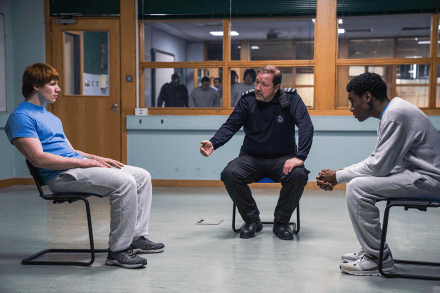
Jimmy McGovern is a writer whose sleeve is rarely heart-free. Since cutting his teeth on Brookside in the early 1980s, he’s served up one crunching drama after another (Priest, Hillsborough, Broken etc. etc.), all of them characterised by a mix of dark personal stories and even darker social issues conveyed in a way that leaves us in little doubt about how we should respond. Granted, there are some concessions to light and shade – but if there’s such a thing as unsubtle nuance, then McGovern has mastered it. Even so, Time may be the most crunching of the lot. The first series of this anthology show took place in a men’s prison and spared us none of the violence, mental illness and institutional failures involved. The second, set in a women’s prison, didn’t either.

Celebrity Traitors is evil

At the time of writing I’m still in the dark as to whether Richard E. Grant’s Celebrity Traitors gambit – viz, admitting to his fellow players that he has been chosen as a traitor within minutes of being secretly selected – pays off. Will it prove the counterintuitive master stroke that wins him the game? Or will it turn out to be the fantastically naive indiscretion which sees him sent packing shortly after his first and only murder victim Amol ‘glottal stops? Nein danke!’ Rajan? If you know what I’m talking about without my having to explain, shame on you.

War is as good as Succession

In his ruefully funny 2012 novel The Man Who Forgot His Wife, John O’Farrell compares the increasingly uncivilised process of divorce to war: ‘In 1939 the RAF thought it was immoral to bomb the Black Forest to deprive the Germans of timber. But by 1945 they were deliberately creating firestorms to kill as many civilians as possible.’ As the title suggests, the starry new divorce-based drama War makes a similar comparison – except that here the unhappy couple are cutting straight to Dresden. The show began as it meant to go on: which is to say, glitteringly. At a London awards ceremony of ineffable poshness, Morgan Henderson (Dominic West) was named Pioneer of the Year for creating one of the world’s biggest yet nicest social media platforms.

The disappointment of 70 Up (so far)

In advance, I confidently imagined that 70 Up would be the big programme of the week. In the event, it rather disappointingly felt more like the set-up for the big programme of next week. Or at least let’s hope so – because up to now we’ve had little of what many of us were anticipating with unusual keenness: the much-loved participants in one of British TV’s greatest achievements reflecting at 70 on lives that we’ve been following since whenever we first started watching grown-up telly. The Up series famously began as a one-off documentary in 1964 about a carefully mixed bunch of 14 English seven-year-olds. Back then, its political agenda wasn’t hard to spot.

The Grand Tour is the perfect TV to pass out to

The Grand Tour – aka Amazon does Top Gear – is back with a new trio of presenters. Whether you care will largely depend on your general attitude to television. If you think its purpose is to push boundaries, entertain, inform and edify, you may as well stop reading now. If, on the other hand, you treat TV like soma, then the lightly revamped show is probably worth your consideration. I’m in the soma category. The only job of TV, as far as I’m concerned, is to relieve me of having to make conversation with the Fawn while I’m having my supper, and then to distract me long enough for me to be able to half-digest my food so that I’m ready to have my bath and go to bed.

Dalliance almost made me wish I were Australian

Kids, if you’re appalled by the idea of your parents’ generation having sex, look away now. I’m about to describe a scene from an acclaimed Australian drama series, Dalliance, about the antics of a group of wrinklies reunited by an unexpected death in their midst. OK, now the children are all distracted with their TikToks and what have you, I’ll describe the scene: a pair of singles in their sixties are about to have some impromptu rumpy-pumpy in the woman’s camper van after doing a few lines of coke at their mate’s funeral. Man makes awkward pass; woman seems to shy away; man apologises – but all is good: they’re just out of practice at reading the signals. Wait: does he have protection? Yes. Ever optimistic, he does. What, though, about the vexed question of lubricant?

The terror of Russian prisons

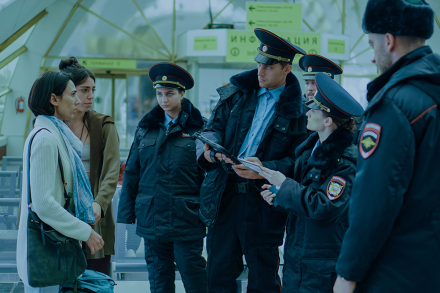
The competition must be pretty stiff for ‘World’s worst airport to be caught with drugs in your baggage’: Bogota? Miami? Singapore? Ciudad de la Paz? Gatwick? But Moscow would surely have to be a strong contender. I’ve been detained there myself, only for an hour. But you’re never told why you’re being kept waiting, how much longer it will be, or whether this is routine or serious. The young men and women in those oversized peaked hats are perfectly civil but apart from the impenetrable language barrier you’re dealing with several centuries’ worth of culturally-inbred opacity and bureaucracy. And the prisons don’t bear thinking about.

Is Alley Cats really that bad?

We first saw Sybylla, the heroine (in every sense) of My Brilliant Career, at a society gathering in 1900 Australia reciting a poem she’d written. After much racy talk of ‘forbidden fruit’ and ‘secret places’, it went on to describe a man as ‘a whisky breath seeking to possess something that will never be his’. We next saw her a month earlier when she was living with her family on their small, failing farm. ‘Women should swear,’ she told her sister. ‘They should eat like a man, ride like a man, decide their fate like a man.’ Sybylla, then, it seemed safe to deduce, is a feminist. Which, as it transpires, is pretty much the entire plot.

The Shards is easily the best drama on TV

My father once drove down the King’s Road with Marianne Faithfull and Terence Stamp in a paisley-painted Mini to buy a velvet suit from Granny Takes A Trip while high on acid. No, not really. I was always very disappointed with my parents’ ‘what it was really like in the 1960s’ anecdotes because basically they didn’t have any. Now my own children are having similar problems with my anecdotes about the legendary 1980s. Yes, it’s true that I did go to see Duran Duran at the height of their fame, but only to keep my little sister company in a football stadium smelling of chips and fizzy pop and filled with screaming 12-year-old girls. Yes, I did wear eyeliner and white lipstick once, but I looked a prat.

What happened to Gomorrah?

You’re not going to like this and it pains me to say so but Gomorrah: The Origins is not in the same league as Gomorrah. The wardrobe is more stylish, the characters are more approachable, the dialogue is more expensive, the locations are more attractive, the plotting is more comprehensible, and the mise-en-scène is lusher, more cinematic and less spare. But in the context of the original, these qualities aren’t so much a virtue as a capitulation. Gomorrah (or Gomorra – La Serie, as it was in Italian, so one can never remember whether or not to include the ‘h’) ran on Sky Atlantic for five seasons from 2014 to 2021. This was a period where Anglo-American TV had long since begun its inexorable decline into glib, shallow and predictable diversity-cast wokedom.

I suspect a lot of TV is AI-generated

AI slop is not a new phenomenon. But it is becoming more prevalent as the lazy, the modish and the sub-literate take advantage of an apparently beneficial and cost-free leap in technology that will save them the time and effort formerly required to construct a speech, CV, article or image. I only started picking up on it myself quite recently. But now, when I get the feeling I’m being fed AI-generated pictures, I react like those dogs in the movies that are trained to spot Terminators. Thanks to the proliferation of sites such as Netflix, Amazon Prime, Apple TV etc. there’s an awful lot of cable-TV slop about these days, as there has to be with all that space to fill, all those subscription costs to justify.

The invincibility of menopausal women in TV drama

Ride or Die began with a typical day for a fiftysomething woman in a TV drama. Having assassinated a Russian oligarch in an Alpine mountain resort, Judith (Hannah Waddingham) skied away with Olympian speed, effortlessly evading capture by the many goons who pursued her, right until they crashed into trees. Back on solid ground, she went into a bar where she beat all the blokes in drinking games, before pulling a hunky young barman who was heartbroken the following morning when she made it clear that this was merely a one-night stand. Then, zooming home in a sporty Merc, she still found time to call her friend Debbie in London with the assurance that ‘I’ll be back for book club’.

In defence of Little House on the Prairie

You can tell things have started to get really bad by the fact that they’re bringing back Little House on the Prairie. When a society is in serious crisis – or so I’ve read – it no longer needs edgy, transgressive, exciting art to push boundaries and challenge assumptions. Rather, it needs to be soothed and cosseted with bland, undemanding and familiar comfort food. Nothing, not even The Waltons, does that quite like Prairie. It first appeared on British screens in January 1975 – so after an annus horribilis, including the Three-Day Week, power cuts, the miners’ strike, the Birmingham and Guildford pub bombings, etc. – and was scheduled to capture children just before bedtime.

The blackly comic life of Katie Price

These days, the 1990s seem to be regarded – especially by people too young to remember them – as a prelapsarian idyll. In Britain, London swung again to the sound of Britpop. In America, good-looking twentysomethings lived cheaply in large apartments, wisecracking and hugging their way through solvable problems. And all without the tyranny of social media. A rather less rosy picture, though, emerged in the opening episode of the four-part Katie Price: Nothing to Hide, in which Price added to her nine autobiographies and numerous documentaries and/or reality shows by deciding to ‘reflect on my life’ for the first time. The result was both a revealing social history and not unlike a novel by Martin Amis at his most blackly comic.