Television

The BBC’s Lord of the Flies is mesmerically brilliant

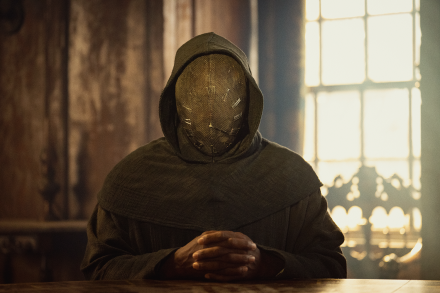
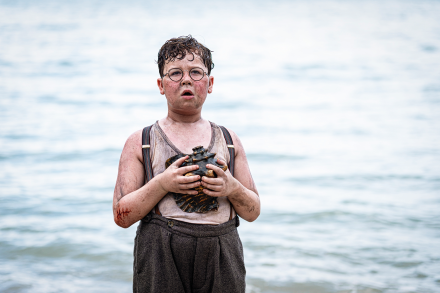
I don’t much like Lord of the Flies. It’s nasty, weird in an oblique, psychotic way and wrong. William Golding – a war-damaged, depressive alcoholic – wrote it as an antidote to the uplifting escapism of The Coral Island, a Victorian yarn by R.M. Ballantyne about plucky young British castaways surviving and thriving in the tropics. Golding turned it on its head and revealed, supposedly, the heart of darkness that lurks within us all. Au contraire, Golding’s misanthropic message was bollocks Says who? The lesson of the Christmas truce in the trenches is that ordinary men have to be coerced into killing one another. The lesson of Jena is that free-thinking individuals are averse to being slaughtered which is why, as a corrective, Bismarck invented the modern education system.
Fascinating: The Fabulous Funeral Parlour reviewed

The Fabulous Funeral Parlour ended with possibly the least necessary caption in TV history: ‘Filmed in Liverpool’. Whenever I go back there (quite often these days for family reasons), I’m struck all over again by how the whole city seems engaged in the production, distribution and promotion of Scouseness. Yet, even by normal Liverpudlian standards, the people in this old-school, narrator-less documentary put in an impressive shift. Leading the way was Hayley, the owner of both the parlour in question and, despite fierce competition, the most extravagant trout pout we saw. Hayley’s mother died five years ago aged 59, and it was then that she decided to set up Butterflies Rising Funeral Care.

Gripping: Amazon Prime’s The Tank reviewed

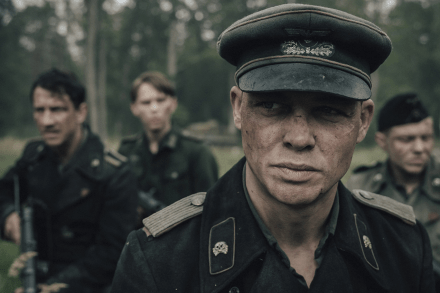
I don’t know how it got past the increasingly powerful ‘All Germans were evil Nazis’ censors but Amazon has released a sympathetic portrait of a Tiger crew on the Eastern Front, translated, clunkily, as The Tank. It has been criticised in some quarters for its weird twist at the end, which the genre-literate will see coming a mile off. But don’t be put off by its structural and narrative shortcomings. This is still a very watchable, gripping and sometimes moving portrait of men at war, and likely the most realistic ever depiction of a second world war tank crew. It’s far superior to the ludicrous Fury, where Brad Pitt plays an implausibly elderly tank commander, and where a single Sherman successfully takes on virtually an entire SS Panzer Grenadier regiment.

The worst Agatha Christie adaptation I can remember

When it comes to Agatha Christie adaptations, there are normally two possible responses to the denouement. One is a deep satisfaction that the unlikeliest suspects were the inevitable culprits after all. The other’s the same as that – except approximately a quarter of an hour later you suddenly find yourself thinking: ‘Hold on a minute…’ But with Agatha Christie’s Seven Dials, neither was the case. The unlikeliest suspects remained laughably unlikely even as their guilt was revealed – and the ‘Hold on a minute’s came not after the show finished, but with pretty much every twist of a plot that, almost impressively, kept finding new levels of preposterousness to scale.

Why has it all gone wrong for The Night Manager?

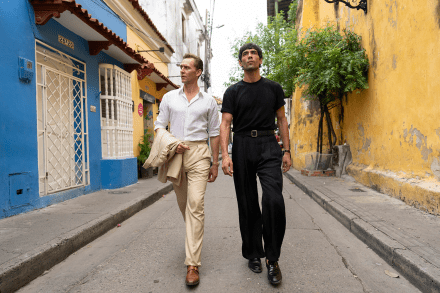
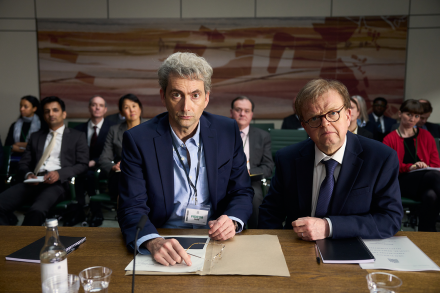
The Night Manager is finally back after ten years with three major drawbacks: no Elizabeth Debicki for the sex scenes; no Tom Hollander for the comedy scenes; and no Hugh Laurie for the evil-kingpin-in-his-toothsome-mountaintop-lair scenes, I nearly claimed. But only because at the very beginning of the new season the Laurie character’s grizzled body is identified by Olivia Colman (in her most irritating performance ever, as a dowdy but capable MI6 officer with a gratingly suburban accent). And I didn’t want to spoil the coming plot twist in case any of you were foolish enough to have fallen for this blatant case of Chekhov’s misidentified corpse.

Lucy Worsley’s sleuthing is rather impressive

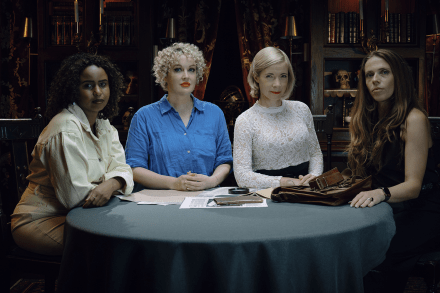
Lucy Worsley’s Victorian Murder Club opened with its presenter unexpectedly channelling that gravelly voiced bloke who used to do all those film trailers beginning ‘In a world…’. ‘The London Thames,’ she intoned as gruffly and menacingly as she could, ‘winding silently through the capital. But in Victorian times...’ dramatic pause ‘...it had a sinister side.’ She then introduced ‘a story that has haunted me since I first heard it’ – possibly, you couldn’t help thinking, from a TV producer keen to find her another true-crime project. In the late 1880s, a serial killer dismembered several women while also taunting the police and never being found.

Enough with torture-porn TV

Has anyone got to the end of Malice yet? I’m halfway through – at the time of writing, anyway – and am dearly hoping that I might bump into someone at a party who will blurt out all the plot details and spare me the misery of having to sit it out to the bitter end. The Fawn thinks I’m being a wuss, grumbling that I never used to be this squeamish about gory, psychologically harrowing torture-porn TV. Maybe so, but the older I get, the more I wonder: what am I actually gaining by spending six hours on a sofa writhing my way through a horrid story about a made-up psychopath doing terrible things to a made-up family and their made-up pets? Wouldn’t I be better just re-reading Anna Karenina?

The cardinals spill the beans on the conclave 

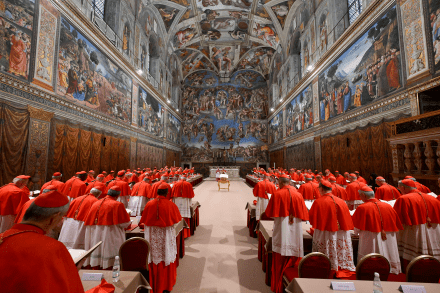
Secrets of the Conclave seemed rather optimistically titled, given that everybody at this year’s papal election had made a solemn vow before God not to divulge any. But, while we duly heard nothing about backstage politicking – apart from regular assurances that none took place – this respectful and quietly charming documentary did succeed in humanising the strange process of picking a new pope, and even in supplying a few gentle revelations. It transpires, for example, that Catholic cardinals suffer from the same anxiety about phonelessness as the rest of us, with the requirement to hand in their mobiles before entering the Sistine Chapel initially causing feelings of slight panic.

The Beast in Me is surprisingly addictive

The Beast in Me is one of those ‘taut psychological thrillers’ that everyone talks about in the office. This might sound disparaging – as it is, obviously – but I have to admit that, having succumbed in desperation (because, as usual, there is so little else on), I did find the show pretty addictive and unusually satisfying. What makes it stand out is that it doesn’t go for the obvious. Yes, its heroine – played by Claire Danes – is feisty, talented and capable. But she’s also whiny, uptight and really quite unsympathetic, as perhaps screenwriter Gabe Rotter intended when he gave her the weirdly repellant name Aggie Wiggs.

Gothic lives matter: BBC2’s Civilisations reviewed

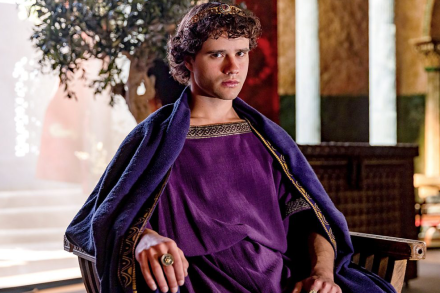
Anybody growing weary of the debate surrounding the BBC’s unexamined assumptions and biases about modern politics might have expected to find some relief in a scholarly documentary about the sack of Rome in AD 410. Sad to say, though, the first episode of Civilisations: Rise and Fall offered very little of it. Of course, it’s not unusual for history programmes to want to prove that the people in the past were Just Like Us. But in this case the parallels drawn/rather desperately imposed were a particularly uncanny fit with those same pesky assumptions and biases.

Pluribus is a mess

Pluribus is another drama set in the dystopian future. But on this occasion the integrity of the entire human race depends not on someone ordinary and likeable who could almost be you, but on a bolshie, misanthropic middle-aged lesbian called Carol. Carol (Rhea Seehorn from Better Call Saul) is so grumpy that when in flashback we see her wife Helen treating her to an expensive jaunt to a romantic ice hotel in Scandinavia, she refuses to snuggle beneath the fur bedspread, sip designer vodka and gaze at the Northern Lights above. Instead, all she wants to notice is that sitting on a bed made of blocks of ice makes her want to pee. But now Helen is gone and Carol is one of only 12 people in the entire world who remain normal.

Bleak but gripping: Channel 4’s Trespasses reviewed

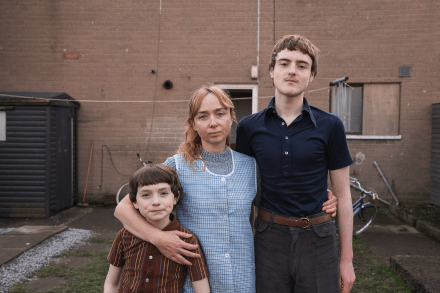
Yeats famously summarised Ireland in the four words, ‘Great hatred, little room’. But, as Louise Kennedy’s 2022 debut novel Trespasses showed, in 1970s Northern Ireland the hatred had grown even greater and the room even littler. Channel 4’s faithful adaptation began – as it would continue over its four parts this week – with the suffocating omnipresence of sectarianism. As 24-year-old Cushla (Lola Petticrew) drove through her small town, everything she saw screamed Catholicism or Protestantism: the graffiti, the flags, the ash on children’s foreheads at the start of Lent. By night, Cushla worked in a bar where the punters were either nervously or aggressively aware of each other’s religion.

Film and TV are run by satanists

I once came up with a brilliant idea for a children’s Sunday-evening TV series. It would follow the adventures of young Jesus in Britain, circa AD 16, and his rich, tin-trading great uncle Joseph of Arimathea. There’d be dragons and giants and lots demonic figures, all trying to kill the boy Messiah before He achieved his true purpose. And young Jesus would continually be constrained from using any of His real powers because it was all a secret and His time had not yet come. If you’re clever, you can probably guess the title. But it’s never going to get made because a) I haven’t written it and b) the film and TV worlds are run by satanists. Not literal satanists, perhaps. Well, not all of them.

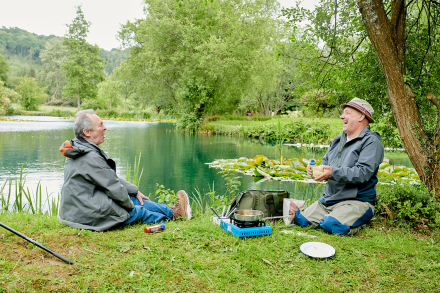
The joy of Mortimer and Whitehouse: Gone Fishing

If you didn’t already know that Down Cemetery Road was based on a novel Mick Herron wrote before the Slough House series – later adapted into TV’s Slow Horses – it mightn’t be too difficult to guess. After all, main character Zoë Boehm (Emma Thompson, no less) is a cynical sixty-something with a dodgy hygiene regime, who works in a ferociously shabby office and communicates mainly through the medium of the heartless yet undeniably funny wisecrack – but who nonetheless shouldn’t be underestimated by the arse-covering intelligence services she’s up against. She is, in other words, a female version of Slow Horses’ Jackson Lamb (also played by an Oscar-winning Brit).

A great comedy about a terrible sport

I’m trying to think of things I’m less interested in than American football. The plant-based food section? Taking up my GP’s offer of a free Covid booster? Ed Miliband’s nostril depilation regime? No, apart from maybe baseball, I can’t think of anything so soul-crushingly tedious as a rigged game where men in shoulder pads and portcullised helmets shout numbers, bash into one another, then wait half an hour while the referee decides whether or not they’re allowed to throw a spinny ball and maybe one day end up being Taylor Swift’s latest boyfriend.

Is there anything menopausal women can’t do?

Is there anything menopausal women can’t do (on television)? Last Sunday, as a couple of them were still working on the daring theft of a Salvador Dali painting in ITV1’s Frauds, BBC1 launched Riot Women in which five others form a punk band. Meanwhile, two regular features of British TV remain actresses lamenting the lack of older women starring in drama series – and older women starring in drama series. Virtually all these shows also recall the headline from the American satirical magazine The Onion: ‘Women empowered by whatever a woman does.’ And that’s certainly true of Riot Women, written by Sally Wainwright (Happy Valley, Gentleman Jack etc.) and therefore set in the Calder Valley, with the author’s message never hard to detect.

Excruciating: Netflix’s House of Guinness reviewed

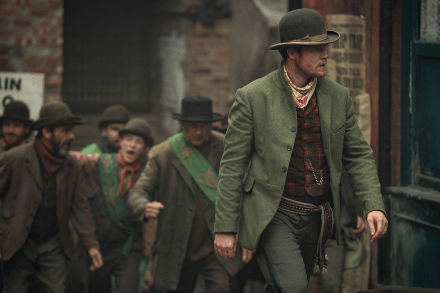
First the surprising news: not a single one of the four Guinness siblings in 1868 Dublin is black; and only 25 per cent of them – surely a record for Netflix – is gay. Now the bad: despite these oversights, House of Guinness remains very recognisably the work of Steven Knight, the Peaky Blinders screenwriter who once set a drama in 1919 Birmingham and said to himself: ‘I know just what this period needs to make it more echt: a cameo appearance by dub poet Benjamin Zephaniah.’ As a Brummie (more or less), I loathed Peaky Blinders.

The death of cinéma vérité

Oh, how we lived. Or, how we thought we lived. Despite the numerous criticisms levelled at the BBC on a daily basis, the BBC Archive YouTube channel is one aspect of its work that cannot be faulted. It is a fascinating collection of broadcast material going back many decades, a portal into Britain’s past presented in film grain-soaked HD. A sobering reminder of what the BBC once was – and what it no longer dares to be. Much of it is made up of documentaries, many aspects of which will be peculiar to millennials and Gen Z. The form is strange: long, single-camera shots of people talking in living environments. Bathrooms, kitchens, workplaces, streets. Living spaces are as they would be on any day of the week. Workplace neon, living-room lamps. Light and shade.

Every line in the new Alan Partridge is perfect

By now, viewers of TV thrillers are no strangers to a baffling prologue – but this week brought a particularly extreme example. Nine Bodies in a Mexican Morgue opened with shots of a desert, a cactus, an animal skull nailed to a cross and a moustachioed man driving a battered pick-up truck with a Virgin Mary on the dashboard. So we were definitely in Mexico. For a while, however, that was about all that was clear, as the words ‘Day Nine’ flashed up and the truck’s unidentified female passenger spied on a dilapidated military base through binoculars.

Mr Bates this isn’t: The Hack reviewed

As we know, when terrestrial television has a big new hit these days, its response – once it’s got over the surprise – is to serve up a variation on the same formula. In the case of The Hack, the hit that inspired it is clearly Mr Bates vs the Post Office, as another real-life plucky underdog takes on a shadowy, powerful cabal – this time over phone-hacking – and struggles to get the story heard. In the first episode, the formula remained strong, but the variation bit fell somewhere between the unnecessary and the badly misguided. The episode opened with a voice-over urging us to imagine a country where ‘people believe they are living in a democracy’, when in fact they’re ‘being abused by a treacherous combination of press, police and politicians’.