Radio and podcasts

What a voice Plath had – stern yet somehow musical, long-vowelled, bear-like: Radio 4’s My Sylvia Plath reviewed

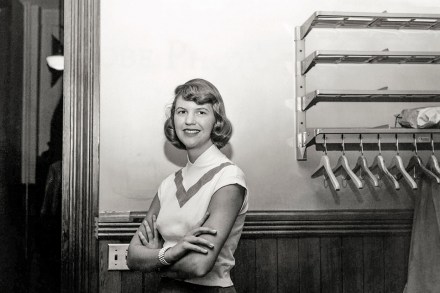
Can you ever truly know a poet? The question arises every time one publishes a collection that looks vaguely confessional. Is it real, we ask, or is it all persona? My Sylvia Plath, an Archive on 4 programme to mark the 60th anniversary of Plath’s death this month, presupposes that poets are to some degree unreachable. The ‘My’ belongs to Emily Berry, a contemporary poet, who knows that her Plath is different from another’s, is different from Plath’s own Plath, and so on.  Unexpectedly, given the emphasis on many Plaths and the gap between a writer and their verse, the framework of the programme is intensely personal. It comes as a shock when Berry reveals, some way in, that her own mother committed suicide when she was seven.
Listen to the world’s first radio play

Radio works its strongest magic, I always think, when you listen to it in the dark. The most reliable example is the Shipping Forecast, that bracing incantation of place names and gale warnings, which – with the lights out – can transform even the most inland bedroom into a wind-battered coastal cottage. But darkness can heighten disturbance, too, as I was reminded when listening to Danger by Richard Hughes, billed as the BBC’s first-ever radio drama. It was first broadcast in 1924, with the audience at home under instructions to maximise its effect by turning off all their lights.

Is Matthew Parris the modern Plutarch? Radio 4’s Great Lives reviewed

Whenever I listen to Great Lives on Radio 4, which is often, I am reminded of the gulf between fame and achievement. How is it that some people do so much, yet remain obscure, while others seem to be carried forward with perpetual momentum after doing just one thing? A good many of the lives dissected on the programme over the years have been completely unfamiliar to me. I’ll spend the half hour puzzling over why they are not better known. Where would we be without Great Lives? There is minimal appetite in trade publishing for books about esoteric figures. And just imagine pitching a biopic of Hertha Ayrton, Eleonora Duse or Jayaben Desai to Hollywood today. Radio is probably the only place left for forgotten souls.

An all too brisk and too narrow history of eugenics: Radio 4’s Bad Blood reviewed

Like so many of history’s great catastrophes, the story begins with an eccentric Victorian Englishman. Francis Galton was a maker of maps and compiler of tables; ‘Whenever you can, count,’ was his mantra. Galton was the first man to plot a weather map and the grandfather of forensic fingerprinting. His quixotic mania for quantification would lead him to try and draw up a ‘beauty atlas’ of the United Kingdom based on his own observations. In a footnote to one of his books, he expressed the need for a new term for the ‘science’ that obsessed him most: ‘We greatly want a brief word to express the science of improving stock.’ That is, improving, by breeding (and by other means), the genetic quality of the human race. He coined a new term: ‘eugenics’.

An author speaks out against social censorship: The Reith Lectures reviewed

‘The Age of Anxiety’, W. H. Auden’s book-length poem, has always been described as strange, and difficult. It is an eclogue, but set far from the countryside, in a bar in New York, in the middle of the second world war. It looks like a modern script on the page but metrically it sounds more like Old English. The text flits between conversation and inner thought and is steeped in Jungian philosophy, mysticism and mirrors. Puritanism has bred the assumption that ‘good people’ do not need free speech When I first read it in my twenties, I gave up on trying to understand it and simply allowed the words to wash over me. It’s an approach I recommend taking while listening to Robin Brooks’s haunting new dramatisation of the poem on Radio 3.

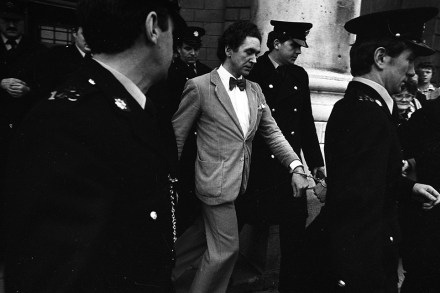
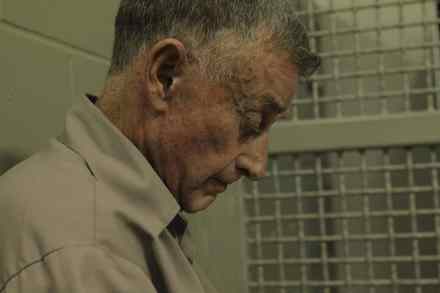
The extraordinary case of Malcolm MacArthur

Non-fiction tells you what happened, fiction affirms the kinds of things that happen. According to Aristotle, anyway. So while journalism seeks out unlikely events, fiction creates pleasing inevitabilities. The problem as it pertains to our brave narrative podcasters is that they have to straddle the two worlds: their material must be interesting and unusual, but their final story should have the poetic coherence of good old unreality. They have to turn ‘some things that happened’ into ‘a kind of thing that happens’. Otherwise it’s all evidence and no charge, each event indistinguishable in its randomness from a bolt of lightning.

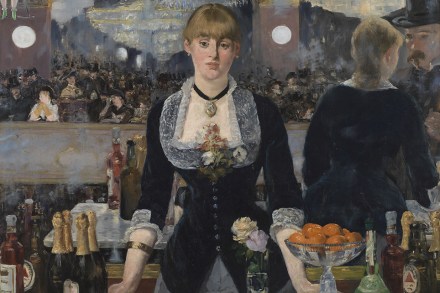
Manet’s Mona Lisa: Radio 4’s Moving Pictures reviewed

Elizabeth the First is a ten-part American podcast series that isn’t about Elizabeth I at all. The assumption of its producers seems to be that the Tudor monarch was all right – a bit of a trailblazer, one might say – but not really worthy of her title. The real ‘Elizabeth the First’ was actually Elizabeth Taylor. The series aims to present the actress as the first ‘influencer’ the world has ever known, even though poor old Taylor didn’t even know what Instagram was. Taylor did, however, court the media before the word ‘social’ was attached to it. And she didn’t need to take selfies because people were always shoving cameras inher face. The podcast is narrated by Katy Perry, the Californian singer who kissed a girl and liked it and then married Russell Brand.

Shocked and moved me far more than I anticipated: Hoaxed reviewed

I shied away from conspiracy stuff during the Trump era. Not the theories themselves, but the huge volume of content proclaiming that we lived in a post-truth age of misinformation and conspiracy. It wasn’t that I disagreed with the idea that something like this was happening, or the idea that it was bad. It was more a certain tone these podcasts, essays and articles shared – almost a shared idiom and turn of phrase. People talked about ‘truth’ and ‘facts’ and ‘evidence’ with unwavering self-certainty.

The genius of More or Less

In a week of slim audio pickings, I spent time reacquainting myself with some of the BBC classics and can confirm that, yes, More or Less still warrants a place in that category. Like Thinking Allowed, which also drew me back, the programme works wonders with data and statistics, and benefits from having a calm and unobtrusive presenter. While most of the questions put to the stoical Tim Harford are delightfully pedantic, some have that special quality of convincing you that, while you’ve never given the topic a second thought, you are in fact deeply invested in it, and absolutely must know whether or not the thing that’s been alleged is correct.

Welcome to the weird world of the New Right: Subversive podcast reviewed

Subversive is a podcast that documents the world of the ‘New Right’, a strange development in conservatism. Host Alex Kaschuta, one of the movement’s intellectual leaders, gives a good sense of the New Right’s weirdness. Trembling minor-key synths play in the theme and Alex purrs that we’re about to hear a two-hour long conversation with ‘Covfefe Anon’. Other guests include ‘Zero H.P. Lovecraft’ and ‘Yeerk.P’. Some are anonymous commentators who have their voices distorted like a drug dealer in a Ross Kemp documentary. Others are known entities: journalists like Sohrab Ahmari, Ed West and Louise Perry. They like the classical world, the Unabomber, steak. They hate CNN, porn, sunflower oil I can’t explain the New Right.

BBC radio has excelled itself over the past week

Listening to BBC Radios 3 and 4 over the past week has been like meeting an old friend who, after decades of squeezing into age-inappropriate designer clothes, has suddenly reverted to a sensible wardrobe. It’s a pity that it took the death of our beloved Queen for this to happen, but I’ve been enjoying it while it lasts – because, like the miracle drug that Robin Williams gives his dementia patients in the film Awakenings, this dose of sanity will quickly wear off. Radio 4’s long-prepared tributes to Elizabeth II were, by the BBC’s standards, remarkably impartial. Even Saturday’s Today programme rose to the occasion.

Emily Maitlis tries too hard not to be teachery on her new podcast

The competition between news-led podcasts is nearing boiling point. If you tuned in to The Media Show on Radio 4 last Wednesday, you’d have felt the tension between the podcasters leading the guard: Alastair Campbell of The Rest Is Politics, Jon Sopel of The News Agents, plus his executive producer, Dino Sofos, Nosheen Iqbal of the Guardian’s Today in Focus, and Adam Boulton, who has just launched a politics show with Kate McCann on Times Radio. Kiran Moodley and Minnie Stephenson might reasonably have joined this line-up as they launch a new series of their news pod with Channel 4 this week.

Why we must defend Radio 3 from threatened cuts

Who doesn’t love Eurovision? All that razzmatazz. The ghastly frocks and gloopy pop songs, the false bonhomie and bare-faced bias when the voting comes around. It’s an irresistible annual event, guaranteed to put a smile on your face and provide the pretence that we are all one happy European family. But all that showbiz comes at a cost (€6.2 million, and rising), with the host country’s broadcaster expected to cough up about one-third of that. What might have to be lost by the cash-strapped Corporation in the next year, or curtailed, to ensure that we put on the biggest and best show ever next year? The BBC budget has become a hot topic in recent weeks.

Rivals Wagatha Christie for its lowbrow twists: FT’s Hot Money – Who Rules Porn? reviewed

It was recently reported that almost 8 per cent of global internet traffic is to pornographic websites. The rise of working from home may make this statistic less startling than it might have been three years ago, but still, that’s an awful lot of procrastination and, well, not much WFH. Given the dominance of the porn industry, it’s a wonder there hasn’t been an exposé of the kind produced by the Financial Times before now. The newspaper’s investigation into who lurks behind the webcams and controls this business took more than six months to complete and has now been turned into a riveting eight-part podcast series. Hot Money: Who Rules Porn? rivals Wagatha Christie for lowbrow twists.

Why is post-colonial guilt only applied to Western classical traditions? Radio 3’s World of Classical reviewed

The blurb accompanying the Radio 3 series World of Classical, inviting us to ‘join the dots between classical music traditions of the world’, suggests an introduction to the field of comparative musicology. Such a noble venture – searching for commonalities in melodies, ornamentation, rhythms, use of instruments, vocal styles and techniques and so on – would once have been a vital part of Radio 3’s continued adherence to the Reithian ideals of informing and educating as well as entertaining. Jon Silpayamanant’s series however resembles more a series of episodes of Late Junction, married to a moralising and historically unbalanced commentary.

A belter of a podcast, featuring a mad South African: Smoke Screen reviewed

I go back and forth on tobacco companies. On the one hand, they are merchants of death. On the other, cigarettes are fun and delicious. On the one hand, they push cigarettes on children, which is unconscionable. And on the other, I remember how I would gather in the park with other children to collectively venerate a ten-pack of Marlboro Lights, our soft, pink fingers shivering and struggling with the lighter mechanism, our untutored lips puffing ineffectually at the speckled filter, all of us beginning to grow woozy from the acrid smoke filling our virgin lungs as we stood there and thought: this is the life. Luckily, Smoke Screen sidesteps this question to focus more squarely on corporate espionage within the tobacco industry.

Hearing Percy Bysshe Shelley read aloud was a revelation

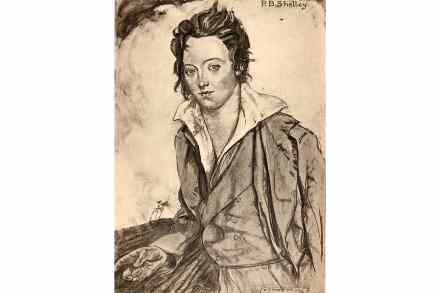
Last week I heard the actor Julian Sands give a virtuoso performance of work by Percy Bysshe Shelley to mark the bicentenary of the radical poet’s death this month. A couple of days later, I listened to a bit more Shelley, this time on the radio, and this time in the voice of Benjamin Zephaniah. Hearing his verses read aloud is so much more intimate than reading them silently. You may be sitting in a crowd, but as Shelley’s words fall into your ears, it’s possible to feel that you’re having a private audience with him. Reading the same poems in an empty room can be comparatively distancing. Zephaniah said something similar when he described his first encounter with the poetry at school.

No genre of storytelling is more formulaic or more exhausted than true crime

Nothing new under the sun. Or at least it feels that way these days, doesn’t it? The movies are TV shows are comic books are children’s toys. The TV series are podcasts are non-fiction books are magazine articles. The radio shows are real-life stories are Twitter threads are TV series. Even the interesting movies are remakes now. Intellectual property is king, franchises rule the entertainment world and audiences are left to chew the cud from a hundred-stomached cow. Sunrise, sunset and nothing new to offer. So it is with radio, and especially with true crime, the staple crop of narrative radio. No genre of storytelling is more formulaic or more exhausted. No narrative form more consistently fails to deliver what it promises. Yet on it goes.

How interesting an art is fashion?

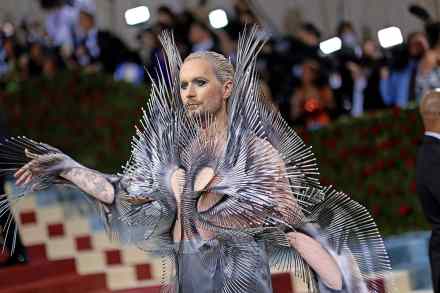
One of the New York Met Gala stylists is sharing tips for wearing a corset to an evening do. ‘Breathe a lot in the morning,’ he tells the Gucci Podcast, with a discernible smile, ‘and by the time you put on the dress, you’ll be full of oxygen.’ The image of a puffed-up toad comes to mind. It’s a bit nuts, isn’t it, the fashion world? The Met Gala is the ball where anything goes – the costumes are witty and extreme – but even so the commentary on it can be pretty earnest, especially in the American press. The stylists on this podcast speak of dressing celebrities like disco balls to reflect their evening personalities, and of relinquishing control to the fashion house.

The cruelty of reality TV was part of the appeal

Jade Goody appeared on Big Brother in 2002. She was a short, loud, blonde-haired woman who broadcast her every thought and feeling, either in her thick Cockney accent or with her unforgettable face. She became a star. In 2007 she appeared on Celebrity Big Brother, where she made racist comments about her fellow contestant, the Bollywood actress Shilpa Shetty. Effigies of Goody were burned in India; the Sun called her ‘the face of hate’. Hoping to redeem herself, she agreed to appear on Indian Big Brother, where she was told she had cervical cancer with the cameras still rolling. She died less than nine months later. It was a three-act drama that only reality TV could have delivered. Call it 45 minutes of fame.