Radio and podcasts

A fabulously entertaining new podcast about ancient Greece

How did a myth about the consequences of poor judgment become a parable for aspiration? The question is posed by the Greek writer-actor Alex Andreou in his fabulously entertaining new podcast. His topic is the ancient myth of Midas, king of Phrygia, who was granted his wish to have everything he touched turn to gold. Midas’s new world was brilliant for all of five minutes. What is a man to do with piles of metal when every person he comes into contact with is reduced to the same? The Midas myth has been mangled many times; Andreou recalls that Donald Trump co-authored a book in 2011 entitled Midas Touch in which he promised to reveal the secrets to entrepreneurial success.

My Marco Pierre White obsession

Pierre White, Marco. Chef. Michelin stars: five (all handed back). Wives: three (all handed back). Restaurants owned: number unclear. Hours in a cell: 14. Party: Reform. Brands promoted: Knorr stockpots, Lidl, P&O Cruises. Protégé: Gordon Ramsay. YouTube views: hundreds of millions. Current residence: the countryside, somewhere near Bath, far far away from anyone who tries to talk to him. The obituaries will all call Marco Pierre White a ‘rock star’, and they will be correct. In the 1980s, he was all shaggy verve and sweat and ash. He ‘changed the game’ – as they all say – not so much through his cooking, but through his good looks.

Impeccable history of the free market – and from the BBC too

The launch of Radio 4’s Invisible Hands series has been both blessed and cursed by timing. It tells the story of Britain’s ‘free market revolution’, just as President Donald Trump overhauls the free trade consensus of the past 40 years and world leaders grapple with how to respond. The problem is the hypotheticals posed at the start of the first episode – that free market capitalism ‘might be in crisis’; that ‘the global free market might be under threat’ – are already out of date. It’s settled. Free trade is out, tariffs are in. Welcome to the trade wars. The world could do worse than look to the ‘Invisible Hands’ for a solution to the crisis.

Perfection: The Rest is Classified reviewed

Interviewing for MI6 sounds to have been even scarier a century ago than it must be today. Candidates would enter an office to find a man with a ‘large intelligent head’ seated behind a desk and absorbed in paperwork. Everything would appear normal until he picked up a penknife and stabbed his own leg. A prospective agent who flinched at the sight might do himself out of the job. It is brilliant: carefully crafted, closely scripted, immaculately edited and best of all perfectly cast Rather like one of those rumoured Oxbridge interviews (candidates for a fellowship at All Souls were reportedly served a cherry pie at dinner to test what they would do with the stones), the ordeal was intended to weed out the weak.

I just don’t get P.G. Wodehouse

I have a confession to make, which may upset many readers. Having only a passing acquaintance with his books, I’ve long experienced a faint allergic reaction to the works of P.G. Wodehouse. It is, I think, to do with the mannered, heavily whimsical nature of his world; the circumlocutory sentences; the ‘right-ho’s and ‘dash it’s and choreographed mix-ups; and the inexplicably passionate adoration of his many fans, among whom I count a number of my family and friends. But before dismissing something that so many intelligent people hold in high esteem, it’s worth considering whether I’ve missed a trick.

Soothing and glorious: Fashion Neurosis reviewed

Sometimes the mind needs to take a break. And I can’t think of a better stopping-off place than the soothing, gloriously bonkers discussions on the Fashion Neurosis podcast, hosted by the British fashion designer Bella Freud. Its premise is that Freud, daughter of Lucian and great-grand-daughter of Sigmund, encourages guests to recline on her couch and talk over any and every aspect of their relationship to fashion. Her mellifluous, affirming manner is much more soft soap than wire wool, but this is not territory that requires a Robin Day, and the concept proves a surprisingly fruitful route into family history, personal stories and high-grade gossip.

Booze now has its own Rest is History-style podcast

Intoxicating History is the perfect title for drinks expert Henry Jeffreys and food critic Tom Parker Bowles’s new podcast. Its theme is alcohol, but its contents are predominantly historical, which is good news if, like me, you are quick to apply the word ‘bore’ to any man who talks about wine for more than eight minutes. The first episodes came out before Christmas but they have been gathering momentum since Dry January. Today’s drinking culture, which has spawned this bizarre annual group sacrifice, has an interesting pedigree. Europeans have apparently been on their guard against boozing Englishmen for nearly a millennium. The Portuguese were certainly left in no doubt as to our reputation when we aided them in their Reconquista.

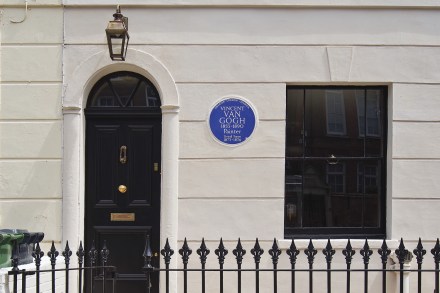
It’s moving to think how happy Van Gogh was in Brixton

When a phrase really takes off in the political sphere, you will recognise it by the frequency with which it crops up on the Today programme. Many years ago, I noticed that politicians had begun using the line ‘it’s not rocket science!’ when attacking the alleged inability of their opponents to get even the basics right. It had a muscular, common-sense ring to it, which they clearly relished, and it spread like norovirus through a cruise ship. How times have changed. Where once we had politicians who never stopped talking about rocket science, the ascent of Elon Musk in the US has brought us a rocket scientist who never stops talking about politics. Painful as it was, I think I liked it better the first way round.

A feel-good classic: The Armie HammerTime Podcast reviewed

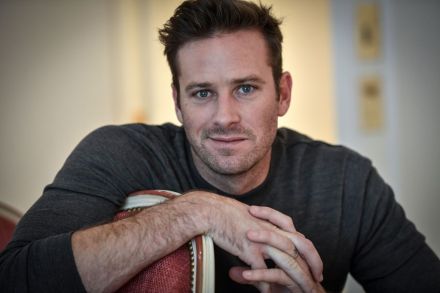
Relive with me and enjoy again the downfall of Armand Douglas Hammer. If you remember, Hammer’s Hollywood career had been going as smoothly as anything: there was his 2010 breakthrough playing the Winklevoss twins in The Social Network, his turn as Leonardo DiCaprio’s no. 2 in Clint Eastwood’s J. Edgar, the 2018 Golden Globe for Call Me By Your Name. By 2020 he was a GQ cover star: ‘Soul seeker. Scene stealer. Leading man.’ And cannibal, allegedly. In January 2021 an anonymous Instagram account called @houseofeffie posted screenshots supposedly showing Hammer’s texts to a woman. ‘Thinking of holding your heart in my hand and controlling when it beats,’ the message read. ‘I am 100 per cent a cannibal.

Why I’m obsessed with Farming Today

Farming Today airs at an undignified hour each morning on Radio 4. On the few occasions I’ve caught it live I have felt, first of all, relief that I am not a farmer; second, inadequacy; and finally, a surge of evangelism for the farmer’s way of life. I am now reaching the conclusion that getting up early enough to listen to Farming Today is the very least we can all do. Listening to Farming Today helps dispel the romance of living off-grid By no means will everything discussed on the programme hold relevance for your life. One feature last week was dedicated to a project to preserve ten acres of salt marsh downstream from Totnes. Another recent episode explored the Lakeland barns being saved for cultural heritage.

Why space is the perfect subject for podcasts

The podcasts I’m recommending to everyone at the moment are Nasa’s Curious Universe and the Royal Astronomical Society’s The Supermassive Podcast. Both have me convinced there’s no topic better suited to the oral medium than space. Not even history. Unless you happen to be an astronaut, you’ll find much of what is described so alien, that your imagination will go into overdrive. What does a Brown dwarf look like? What is the ‘tadpole’ orbit of a quasi-moon? The icy surface of Europa has red furrows which make it look like ‘a giant dragged its fingernails’ across it. How did those furrows get there? You will probably find the images summoned in your head offset the urge to reach for Google.

Radio 3 Unwind is music for the morgue

Soon after the launch of Classic FM in 1992, the then controller of Radio 3, Nicholas Kenyon, asserted that his high-minded station was not in any competition with its commercial rival and certainly not lurching into ‘some ghastly descent into populism’, even as he hired Classic FM’s presenters and fiddled with the programming to create ‘access points’ for novice listeners. Classical music once had a higher calling than to be this subdued That argument is now over, the pretence dropped. The current controller of Radio 3, Sam Jackson – appointed last year – was previously the actual boss of Classic FM, as well as Smooth and Gold.

Avoids the breathless hype of so many podcasts: Finding Mr Fox reviewed

We are all surely familiar with those stories of naive young Brits who travel abroad and are persuaded by a charming new holiday friend to bring back what they’re told is an innocuous package, only to end up on the sharp end of drugs smuggling charges. The latest series of the BBC’s World of Secrets somewhat inverts those expectations: it tracks the fortunes of three innocent young Brazilian sailors and a French captain who were allegedly duped by a Norwich businessman into sailing a rackety yacht across the Atlantic with £100 million worth of cocaine hidden in the body of the ship.

I listened to a solid week of Woman’s Hour…

I was a weird kid, and though I harboured the usual innocent girlish ambitions of being a drug fiend and having sex with pop stars, I also nursed a desire to appear on Woman’s Hour. As a shy, provincial virgin, the programme opened up a world of women’s troubles from anorexia to zuigerphobia – and I was keen to have A Complicated Life. Here was the wet hand of today’s lily-livered sensibilities I had anticipated From my twenties to my fifties I appeared on it several times; my last outing was in 2016, as – like most other institutions – it was captured by the trans cult, leading to the show’s best presenter, Jenni Murray, leaving in 2020. Since then, the programme might more accurately be named What Is A Woman’s Hour.

Radio 4’s Lord Lucan series is rescued by a brilliant narrator

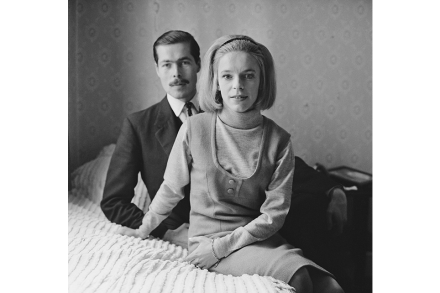
It was 50 years ago this week, on 7 November 1974, that Lord Lucan fled what was destined to become the most talked about crime scene of the 20th century. A coroner’s inquest jury named him as the killer of Sandra Rivett, his children’s nanny, but his disappearance ensured that he was never convicted of the crime – or of the attempted murder of his wife, Veronica. Stripping away the sensationalism of the story needn’t render it boring Understandably, given the mystery that still envelops his precise actions and whereabouts, Radio 4 has chosen to mark the anniversary with a soft question rather than to provide answers. Soft, but also ironic: what is it about this case that continues to obsess us?

Mandy Rice-Davies saw the Profumo affair as an adventure, not a scandal

In the decades since the Profumo scandal gripped a nation, Mandy Rice-Davies has been fixed in the public imagination largely in the form of one verbal comeback and a photo. The comeback – ‘Well he would, wouldn’t he?’ – came after being told by a barrister in court that Lord Astor had denied sleeping with her. The photo was of an 18-year-old Rice-Davies, sleekly cat-eyed and beehive-haired, in the back seat of a car with her friend Christine Keeler, who had triggered a public frenzy by sleeping with the war minister John Profumo at the same time as a Soviet naval attaché, Yevgeny Ivanov.

This UFO testimony had me hooked

In October 1964, a young man was driving to a dance in Hamburg, Pennsylvania, when his radio began to pick up a strange frequency. At first he thought it was just tuning in to a local channel, but then voices came through discussing some kind of nuclear war – and issuing bomb reports. Recalling the incident decades later, the driver described the simultaneous appearance of a star overhead followed by the sudden realisation that he could see through the floor of his car. ‘I hadn’t done any dope, I wasn’t doing any beer,’ he adds so casually that you feel inclined to believe him. And yet his body felt like jelly.

The fascinating mechanics of striking a deal

If you wish to know how to become a master negotiator, a formidable body of books will now offer to train you in that art, but I’m not entirely sure it can be taught. The greatest natural asset, I suppose, is the ability to enjoy the game: the performative mulling, tough-talking, buttering-up, pitching of curve balls and – when absolutely necessary – flamboyant execution of a real or bluff exit. Yet even for those of us who are clumsy and reluctant hagglers, the mechanics of striking a deal can be fascinating. This is the stuff of the Dealcraft podcast, hosted by Jim Sebenius, a professor of the Harvard Business School, and himself a high-flying negotiator.

How Berlin nearly broke Bowie

This week’s Archive on 4 is a treat for David Bowie fans. Francis Whately, the producer behind several of the BBC’s Bowie films, including The Last Five Years, has patched together old recordings and new interviews with Bowie’s lovers and friends to examine his life in West Berlin between 1976 and 1978. It was a fraught, make-or-break time. Out of pocket, addicted and depressed, Bowie had grown ‘very, very worried’ for his life. It isn’t entirely clear why he chose Berlin as a place for recovery, other than that it was unstarry, cheap and a good distance from LA, where his troubles had spiralled. Unfortunately, it was also ‘the smack capital of Europe’, and Bowie was about to move in with Iggy Pop.

Glamour or guilt? The perils of marketing the British country house

The most angst-ridden sub-category of the very rich – admittedly a lucky bunch to start with – must surely contain those who have inherited a British country house, along with the exhortation to keep it up. Imagine the anxiety of knowing that one is custodian of a large, crumbling pile of distinguished architecture, stuffed with meaningful antiquities and perpetually besieged by damp, dry rot and taxes. For those of us who are already reliably paralysed by small-scale admin, it would be enough to drive you to drink or worse. In contrast, the landed gentry who survive best in this modern terrain must be energetic, ruthless and ingenious; in all probability possessing similar characteristics to those which propelled their ancestors to social prominence in the first place.