Portrait of the week

Portrait of the week | 5 June 2014

Home The government scrabbled together material for the Queen’s Speech, which promised measures to allow money to be put into ‘collective defined contribution schemes’ for pensions, as is done in Holland; to prevent pub landlords who are tied to large companies being worse off than independent publicans; to increase penalties for human traffickers; and to allow for by-elections when MPs do serious wrong. The European Commission called on Britain to raise taxes on higher value properties and build more houses. Theresa May, the Home Secretary, and Michael Gove, the Education Secretary, fought fiercely to blame each other over Islamic extremism in Birmingham schools.

Portrait of the week | 29 May 2014

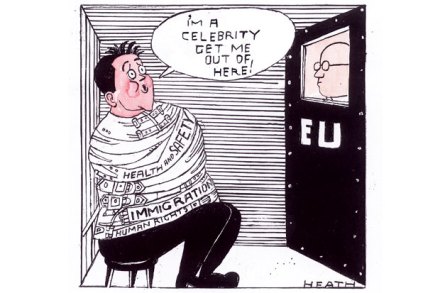
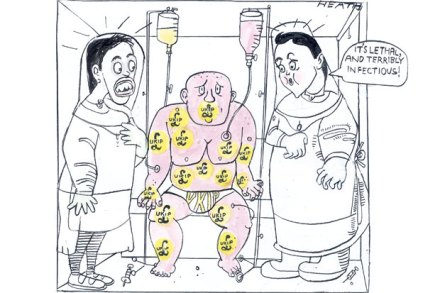
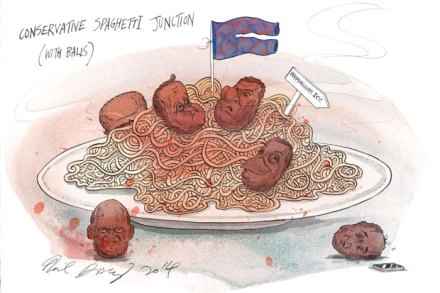
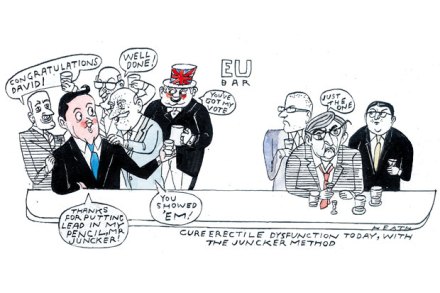
Home David Cameron, the Prime Minister, responded to the triumph of the UK Independence Party in the European elections (which left the Conservatives in third place for the first time ever in a national poll) by having dinner with other European leaders in Brussels, which he said had ‘got too big, too bossy, too interfering’. Ukip secured 4,352,051 votes, increasing the number of its seats by 11 to 24; Labour took 20, an increase of seven; the Conservatives 19, a reduction of seven. The Liberal Democrats plummeted, narrowly capturing one seat (down from 11). Even the Greens did better, increasing their seats from two to three.

Portrait of the week | 22 May 2014

Home Demand for housing posed ‘the biggest risk to financial stability’ according to Mark Carney, the governor of the Bank of England. House prices rose by 8 per cent in the year to the end of March, according to the Office for National Statistics, and in London the increase was 17 per cent. The annual rate of inflation rose to 1.8 per cent in April from 1.6 per cent in March, as measured by the Consumer Prices Index; it remained at 2.5 per cent as measured by the Retail Prices Index. The underlying annual profits of Marks & Spencer fell by 3.9 per cent to £623 million, putting them behind the £695 million reported by Next. The mummified body of an eight-stone baby mammoth, 42,000 years old, went on show at the Natural History Museum.

Portrait of the week | 15 May 2014

Home David Cameron, the Prime Minister, said on television that he was ‘bullish’ about negotiating change for Britain in the European Union, but that there would be a referendum on membership by the end of 2017 ‘whether or not I have successfully negotiated’. In a telephone poll by Lord Ashcroft the Conservatives were found to be ahead for the first time since 2012, on 34 per cent, with Labour at 32, Ukip 15 and the Liberal Democrats 9. An ICM poll said much the same. In the first quarter since visa restrictions were lifted, 140,000 Romanians and Bulgarians were employed in Britain, not counting dependants. Unemployment fell by 133,000 to a five-year low of 2.2 million. The FTSE rose to its highest since 1999, at 6,873.08.

Portrait of the week | 8 May 2014

Home AstraZeneca’s board rejected an increased takeover bid of £63 billion by Pfizer. Commenting on the bid in Parliament, Vince Cable, the Lib Dem Business Secretary, said: ‘We see the future of the UK as a knowledge economy, not as a tax haven.’ A second strike by RMT union members on the London Underground was suspended after talks. Jeremy Paxman is to leave Newsnight next month after 25 years. Jeremy Clarkson was given a warning by the BBC for mumbling the counting-out rhyme, ‘Eeny, meeny, miney, mo. Catch a nigger by his toe’, in footage never broadcast. Harriet Harman, the deputy Labour leader, tweeted: ‘Anybody who uses the N-word in public or private in whatever context has no place in the British Broadcasting Corporation.

Portrait of the week | 1 May 2014

Home The British economy grew by 0.8 per cent in the first quarter of 2014, disappointing hotheads who’d expected 1 per cent. It was 3.1 per cent bigger than a year earlier, but 0.6 per cent smaller than in 2008. Pfizer, the American pharmaceutical company, said it wanted to take over AstraZeneca, with a £60 billion bid that would make it the biggest ever foreign takeover of a British-based company. The Labour party said it was leaving the Co-op Bank and taking its £1.2 million overdraft elsewhere. UK Financial Investments, which manages the Treasury’s 81 per cent stake in the Royal Bank of Scotland, blocked a plan for 200 per cent bonuses.

Portrait of the week | 24 April 2014

Home David Cameron, the Prime Minister, appeared in public with George Osborne, the Chancellor of the Exchequer — the first time they had been photographed as a couple for four years — to draw attention to infrastructure projects. Mr Cameron mentioned in an article for the Church Times that Britain is a Christian country, which made 55 celebrity atheists write to the Daily Telegraph to deny it. A new Family Court came into being, committed to resolving within 26 weeks cases about the care of children, rather than the average of 56 weeks recorded in 2011. Steve Webb, the Liberal Democrat pensions minister, said that the government could help people by telling them when they would die.

Portrait of the week | 16 April 2014

Home Nigel Evans, who had resigned as deputy speaker before being cleared of a bundle of rape and sexual assault charges against men, questioned the right of the Crown Prosecution Service to pursue cases that were ‘decades’ old and said that people should not have to spend their life savings defending themselves. Sajid Javid was appointed Culture Secretary, with additional responsibility for equalities, while Nicky Morgan was made women’s minister, with the right to sit in the cabinet when she is sent for.

Portrait of the week | 10 April 2014

Home Maria Miller resigned as Culture Secretary after a week of being the centre of a game of hunt-the-issue. She had paid back expenses, but only the £5,800 requested by the Commons standards committee, not the £45,000 suggested by the parliamentary commissioner for standards; she had apologised in the Commons, but her apology lasted only 32 seconds; her special advisers were accused of putting pressure on the Daily Telegraph not to report on her expenses embarrassment because she had power over newspaper regulation; the chairman of the 1922 Committee called the scandal ‘toxic’. Mrs Miller told her constituents: ‘I am devastated.

Portrait of the week | 3 April 2014

Home George Osborne, the Chancellor of the Exchequer, made ‘a commitment to fight for full employment in Britain’ and for the country ‘to have the highest employment rate of any of the world’s leading economies’. Wolfgang Schäuble, his counterpart in Germany, agreed that any EU treaty changes should ‘guarantee fairness’ to countries outside the eurozone. The government’s approach to selling off Royal Mail was ‘marked by deep caution, the price of which was borne by the taxpayer’ according to a report by the National Audit Office. The Office for National Statistics said that the next census would be conducted online. Dust from the Sahara fell on to England and Wales.

Portrait of the week | 27 March 2014

Home David Cameron, the Prime Minister, said that inheritance tax ‘shouldn’t be paid by people who’ve worked hard and saved and who bought a family house’ and that this would be addressed in the Conservative manifesto. Two opinion polls after the Budget, by Survation for the Mail on Sunday and by YouGov for the Sunday Times, had put Labour one percentage point ahead of the Conservatives. Nineteen Labour movement figures wrote to the Guardian warning the party not to hope to win the election on the basis of Tory unpopularity. The rate of inflation fell from 1.9 to 1.7 per cent, as measured by the Consumer Prices Index, or from 2.8 to 2.7 per cent as measured by the Retail Prices Index. The government said it would sell another 7.

Portrait of the week | 20 March 2014

Home In the Budget, George Osborne, the Chancellor of the Exchequer, said that the economy was working but the job was far from done. He expected further falls in unemployment and wages rising faster than prices this year. The economy, he suggested, would return this year to its size in 2008. Before the Budget, Nick Clegg, the Deputy Prime Minister, said that as many as 1.9 million working families could receive a tax-free childcare allowance worth up to £2,000 per child. Mr Osborne had announced that the help-to-buy scheme for new homes would be extended until 2020. He also let it be known that a garden city of 15,000 dwellings would be built near Gravesend on the high-speed line from the Channel.

Portrait of the week | 13 March 2014

Home Ed Miliband, the leader of the Labour party, promised that, if elected, his administration would hold a referendum on membership of the European Union only if there was a new transfer of power to Brussels, which he called ‘unlikely’. If Scotland votes for independence, the Royal Bank of Scotland and Lloyds might have to move their legal homes to London under European Union law, the BBC reported. BBC Three is to be closed as an on-air channel, to go online only. The future of BBC Four is also in question. Mark Carney, the governor of the Bank of England, told the Treasury Select Committee that interest rates could reach 3 per cent within three years.

Portrait of the week | 6 March 2014

Home David Cameron, the Prime Minister, said Russia was to blame for ‘violating the sovereignty and territorial integrity of another country’ by invading Ukraine, so ‘we shall have to bring to bear diplomatic, political, economic and other pressures’. Britain, with Russia and the United States, is a signatory to the Budapest Memorandum of 1994, guaranteeing the ‘independence and sovereignty and the existing borders of Ukraine’. Before flying to Kiev, William Hague, the Foreign Secretary, said: ‘The United Kingdom will join other G8 countries this week in suspending our co-operation under the G8, which Russia chairs this year.

Portrait of the week | 27 February 2014

Home Moazzam Begg, a former Guantanamo detainee who won substantial compensation after suing the British government, was arrested in Birmingham on suspicion of terrorism offences relating to Syria. John Downey, accused of killing four soldiers in the IRA Hyde Park bombing in 1982, will not be prosecuted, because he was given, in error, a guarantee he would not face trial; an Old Bailey judge ruled it was in the public interest to make state officials keep their promises.

Portrait of the week | 20 February 2014

Home It would be ‘extremely difficult, if not impossible’ for an independent Scotland to join the European Union, José Manuel Barroso, the president of the European Commission, said on British television. Alex Salmond, the leader of the Scottish National Party, said that if an independent Scotland was not allowed to use the pound, it would cost the rest of the United Kingdom £500 million in transaction costs per year, and Scotland would refuse its share of the national debt. Mark Carney, the governor of the Bank of England, warned that uncertainty produced by a referendum on EU membership would mean that businesses held off from making investment. The Unite union called off a strike at the Faslane and Coulport naval bases in the Clyde.

Portrait of the week: as the waters continue to rise

Home Floods grew worse in the West Country. The village of Moorland, Somerset, was abandoned. Then the Thames flooded, from above Oxford to Teddington. Eventually, David Cameron, the Prime Minister, declared from Downing Street: ‘Money is no object in this relief effort.’ Some 1,600 troops were deployed. By midweek 1,000 houses had been evacuated. A storm had broken the rail line from Cornwall at Dawlish, which would take months to mend, as would the broken line from Barmouth to Criccieth. Landslides closed lines between Tonbridge and Hastings, between Machynlleth and Welshpool, and from Portsmouth via Eastleigh. Villagers at Wraysbury, Berkshire, complained of looting of abandoned houses.

Portrait of the week: water, water, everywhere

Home The Somerset Levels continued to wallow in floods. The Environment Agency was widely blamed for not having dredged channels, and for putting the welfare of water voles before flood prevention. Its chairman, Lord Smith of Finsbury, said there were ‘tricky issues of policy and priority: town or country, front rooms or farmland?’ The Prince of Wales visited the area. At the Radcliffe Observatory in Oxford, 5.78 inches of rain fell in January, the most since its records began in 1767. Cuadrilla said it would drill and frack for shale gas at Roseacre Wood and Little Plumpton in Lancashire. Two men found 300 medieval silver coins in a field near Kirkcudbright. Lloyds Banking Group set aside another £1.

Portrait of the week | 30 January 2014

Home Britain’s gross domestic product grew by 1.9 per cent last year, the most since 2007, according to the Office for National Statistics. The last quarter’s growth was 0.7 per cent, a little less than the 0.8 per cent of the previous quarter. In the fourth quarter of 2013, construction actually declined by 0.3 per cent, and economic output was still 1.3 per cent less than in the first quarter of 2008. Ed Balls, the shadow chancellor, promised in a speech that Labour would restore the 50 per cent rate of tax on higher earnings.

Portrait of the week | 23 January 2014

Home George Osborne, the Chancellor of the Exchequer, said that he was in favour of increasing the minimum wage by an amount greater than that of inflation. The International Monetary Fund raised its expectation of growth for Britain in 2014 to 2.4 per cent, from a forecast of 1.9 per cent last October. Unemployment fell to 7.1 per cent. More than 3.3 million people between the ages of 20 and 34 were living with parents in 2013, 26 per cent of that age group, the Office for National Statistics said, and a number 25 per cent bigger than in 1996. London’s share of national output reached 22.4 per cent in 2012, according to official data.