Portrait of the week

Portrait of the week | 23 January 2014

Home George Osborne, the Chancellor of the Exchequer, said that he was in favour of increasing the minimum wage by an amount greater than that of inflation. The International Monetary Fund raised its expectation of growth for Britain in 2014 to 2.4 per cent, from a forecast of 1.9 per cent last October. Unemployment fell to 7.1 per cent. More than 3.3 million people between the ages of 20 and 34 were living with parents in 2013, 26 per cent of that age group, the Office for National Statistics said, and a number 25 per cent bigger than in 1996. London’s share of national output reached 22.4 per cent in 2012, according to official data.
Portrait of the week | 16 January 2014

Home David Cameron, the Prime Minister, said that English local authorities would be allowed to receive all the business rates collected from shale gas schemes, not just the 50 per cent they’d expect. Total, a French company, said it would invest about £30 million in drilling two exploratory wells in Lincolnshire. To head off higher borrowing rates, the government announced that ‘in the event of Scottish independence from the United Kingdom, the continuing UK government would in all circumstances honour the contractual terms of the debt issued by the UK government’. The annual rate of inflation, as measured by the Consumer Prices Index, met the target set by the government for the first time since November 2009, when it fell to 2 per cent (from 2.

Portrait of the week | 9 January 2014

Home George Osborne, the Chancellor of the Exchequer, made it clear in a speech that he intended to cut £25 billion after the next election, with about half of the savings coming from cuts in welfare payments. Nick Clegg, the Liberal Democrat Deputy Prime Minister, said that the means proposed were ‘unrealistic and unfair’ and showed that the Conservatives wanted to ‘remorselessly pare back the state for ideological reasons’. Nick Clegg told the Commons that official estimates suggest that more than 1,500 Syrians had entered Britain last year through the asylum system. Boris Johnson, the Mayor of London, said that Mr Clegg had ‘a very important ceremonial function as David Cameron’s lapdog-cum-prophylactic protection device’.

Portrait of the week | 3 January 2014

Home Six months of talks in Northern Ireland, chaired by Dr Richard Haass, a retired American diplomat, ended without resolving the contentious issues of flag-flying, sectarian parades or a policy on trying crimes committed during the troubles. Bus loads of Romanians and Bulgarians set off for London as restrictions on their right to work in Britain were lifted. Nigel Farage, the leader of Ukip, called for refugees from the conflict in Syria to be given asylum in Britain; Lord Howe, the health minister, said that some should be accommodated in the European Union. Tories were said to have persuaded Boris Johnson to undertake ‘short bursts’ of campaigning before the election. The Duke of Cambridge is to spend ten weeks studying agriculture at Cambridge University.

What happened in 2013, from Depardieu’s hug to Sachin’s last bow

January David Cameron, the Prime Minister, said he wanted to ‘negotiate a new settlement with our European partners’, and that before the end of 2017 would ‘give the British people a referendum with a very simple in or out choice’. Gérard Depardieu hugged President Vladimir Putin at the Black Sea resort of Sochi as he received a Russian passport. French troops were welcomed in the streets of Timbuktu as they drove back Islamist forces in Mali. HMV, the record shop, and Blockbuster, the DVD rental firm, went into administration. There were riots in Belfast. A helicopter crashed into a tower block at Vauxhall in London. The City of London approved a 620ft tower nicknamed the Scalpel.

Portrait of the week | 5 December 2013

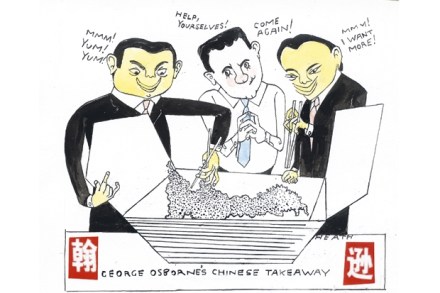
Home George Osborne, the Chancellor of the Exchequer, said that average energy bills would be brought £50 lower through government intervention to reduce the obligation of energy companies to subsidise insulation. The government also said it would cut subsidies for onshore wind turbines and solar energy, and increase those for offshore wind farms. David Cameron, the Prime Minister, said that new arrivals from Bulgaria or Romania found to be begging or sleeping rough would be thrown out of the country and barred from returning for a year, unless they had a job. He then flew to China to further British trade. A bridge across the Thames from Temple to the South Bank, the idea of Joanna Lumley, and designed by Thomas Heatherwick, attracted government support.

Portrait of the week | 28 November 2013

Home Alex Salmond, the First Minister of Scotland, outlined Scottish National Party plans for independence, which included keeping the pound and armed forces of 15,000, replacing the BBC with the Scottish Broadcasting Service and introducing random breath tests. The Ministry of Defence said it would investigate claims that in 1972 an Army plainclothes undercover unit shot dead people in Northern Ireland unconnected with paramilitary activity. A bomb containing 132lbs of home-made explosives failed to go off properly in a car parked at Victoria Square in central Belfast. Rape at the hands of under-age perpetrators is seen as ‘normal and inevitable’ among children in some areas, according to the Office of the Children’s Commissioner for England.

Portrait of the week | 21 November 2013

Home The government announced proposals for the National Health Service, including a law to criminalise wilful neglect by doctors and nurses, and a scheme to post online the numbers of nurses on wards. By the end of October, 219 households had seen work completed to insulate their houses under the government’s Green Deal, launched last January. Nick Boles, the planning minister, suggested that David Cameron, the Prime Minister, might like to revive the National Liberal Party, an organisation affiliated to the Conservative party from 1947 to 1968. The Foreign Office summoned the Spanish ambassador after a Spanish ship entered waters off Gibraltar and undertook surveying activity for 20 hours.

Portrait of the week | 14 November 2013

Home EDF Energy said it would put up prices by 3.9 per cent. BT Sport spent £897 million on the rights to show Champions League football for three years, provoking a 10 per cent fall in BSkyB shares. The rate of inflation fell from 2.7 per cent to 2.2, as measured by the consumer prices index; as measured by the retail prices index, it fell from 3.2 per cent to 2.6 per cent. Unemployment fell by 48,000 to 2.47 million. Barratts, with 75 shoe shops, went into administration. Flybe, the Exeter-based airline, announced plans to cut 500 jobs. Plans were published for an airport on an artificial island off Sheppey in the Thames Estuary, to be called Britannia airport.

Portrait of the week | 7 November 2013

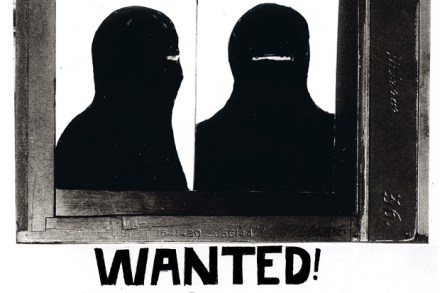
Home Three Police Federation representatives accused of giving misleading accounts of a meeting with Andrew Mitchell over the Plebgate scandal are to undergo a second investigation by the Independent Police Complaints Commission. Mohammed Ahmed Mohamed, 27, whose movements are restricted under a Terrorism Prevention and Investigation Measure (known as a T-Pim) went missing after changing into a burka at a mosque in Acton, west London. Paul Gambaccini, the BBC broadcaster, was arrested on suspicion of historical sexual offences unconnected with Jimmy Savile’s crimes. An eight-year-old boy shot and wounded a five-year-old at Wickford, Essex. London Gateway, a container port capable of taking the biggest ships, opened just west of Canvey Island, Essex.

Portrait of the week | 31 October 2013

Home A storm passed over England, with plenty of warning. The strongest gust, of 99mph, was recorded at Needles Old Battery, Isle of Wight. Of 570,000 households that lost power, 160,000 were left without it by sunset. About 200 trees fell on railway lines. A crane collapsed on to the roof of the Cabinet Office in Whitehall. A fourth big energy company, of Britain’s six, announced price rises, making the average increase 9.1 per cent. Tony Cocker, the chief executive of E.on, told the Commons energy committee that he had written to David Cameron, the Prime Minister, suggesting a full investigation of the market. A woman intent upon visiting the Alhambra found she was on an aeroplane to Grenada in the West Indies.

Portrait of the week | 24 October 2013

Home The government agreed a guaranteed price for electricity that persuaded a consortium led by the French-owned EDF Energy and including Chinese investors to agree to build the Hinkley Point C power station in Somerset. The strike price agreed was £92.50 per megawatt hour (compared with a current wholesale price of £45). Following an energy price rise by SSE of 8.2 per cent, British Gas said it was to raise prices by 9.2 per cent and NPower by 10.4 per cent. David Cameron, the Prime Minister, said that this was ‘extremely disappointing news’. Sir John Major, a former prime minister, helpfully suggested a windfall tax on energy profits. The Daily Mirror suggested that Mr Cameron was advising people to wear jumpers.

The week: Property price record; Lampedusa drownings; ‘basically’ banned

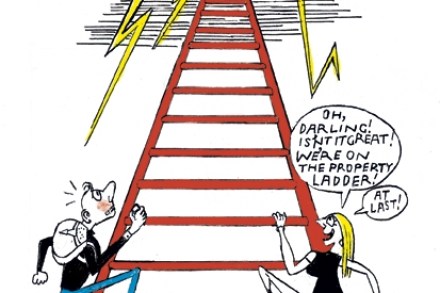
Home Shares in Royal Mail, floated on the stock market at 330p, began trading at 475p. SSE, the energy supplier, raised prices by 8.2 per cent, and other suppliers were expected to follow suit. Ofwat, the water regulator, said it would block Thames Water’s request to increase bills by up to 8 per cent next year. The rate of inflation, measured by the Consumer Prices Index, remained at 2.7 per cent, and, as measured by the Retail Prices Index fell from 3.3 to 3.2 per cent. The average price of a property in the United Kingdom rose to a record £247,000. Unemployment fell to 2.49 million, and those with work rose to a record 29.87 million. Eleanor Catton, aged 28, won the Booker prize with The Luminaries.

The week: Royal Mail shares; American shutdown; Afghan cricket

Home An issue of shares in Royal Mail was oversubscribed, pushing valuation well above initial forecasts of £3.3 billion. The IMF forecast British growth for 2013 to be 1.4 per cent; its estimate in July had been 0.9 per cent. The Commons Treasury select committee warned the Chancellor of the Exchequer that the government ‘Help to Buy’ scheme was likely to ‘raise house prices rather than stimulate new supply’. Peter Higgs, from Britain, and François Englert from Belgium, shared the Nobel prize for physics, for their work on the Higgs boson. Publicising GCHQ information ‘hands the advantage to the terrorists.

The week: ‘Land of opportunity’; Obama phones Iran; glow-in-the-dark robber

Home Shares in Royal Mail are to be sold by the middle of this month, before postmen can go on strike; the company is valued at between £2.6 billion and £3.3 billion. The Church Commissioners, an investment arm of the Church of England, became part owners of the resurrected Williams and Glyn’s bank which will open branches relinquished by the Royal Bank of Scotland. The minimum wage for those aged 16 or 17 rose by 4p to £3.72 an hour; for those aged 18-20 by 5p to £5.03; and for those older by 12p to £6.31. Poundland, which has 458 shops in the British Isles, said it wanted to open 1,000. Teachers belonging to the NUT and NASUWT unions went on strike for a day, closing 2,500 schools.

Portrait of the week | 26 September 2013

Home The General Medical Council said it was dropping cases against four doctors who worked at Stafford Hospital at the height of the scandal of neglect and abuse there. Bail until October was given to eight people, including five policemen, arrested during investigation of an incident last year in which Andrew Mitchell, the former chief whip, was accused of calling police ‘plebs’, which he denies. Two men were charged with the computer theft of £1.3 million from Barclays Bank in Swiss Cottage, north London. A photograph was published of the Queen in a cardigan entertaining the prime minister of New Zealand at Balmoral in a room with a tartan carpet, an electric fire, a stuffed toy corgi and twin beds for the real thing.

Portrait of the week | 19 September 2013

Home The government sold 6 per cent of Lloyds Banking Group to big investors for £3.2 billion. It still owns 32.7 per cent of the bank. Barclays published details of plans to raise £5.95 billion by issuing new shares. The Financial Conduct Authority warned Barclays of a £50 million fine for a deal with Qatari investors in 2008, in which it failed to ‘act with integrity’ towards shareholders; Barclays contests this. Blitz Games of Leamington, a computer games designers, closed its doors after 23 years. Inflation measured by the consumer prices index fell from 2.8 per cent to 2.7 per cent, but by the retail prices index rose from 3.1 to 3.3 per cent.

Portrait of the week | 12 September 2013

Home George Osborne, the Chancellor of the Exchequer, said that the British economy was ‘turning a corner’, with ‘tentative signs of a balanced, broad based and sustainable recovery’. Unemployment fell to 7.7 per cent for the quarter May to July from 7.8 in the previous quarter. Jaguar Land Rover is to create 1,700 jobs at Solihull, where it is planning production of aluminium chassis. The Highways Agency published details of a new 25-mile stretch of toll-road on the A14 bypassing Huntingdon. Churches on the Isle of Sheppey held prayers of thanksgiving that no one was killed in a crash in the fog involving 130 cars on the bridge to the island.

Portrait of the week | 5 September 2013

Home Having recalled Parliament to debate British military action over Syria, David Cameron, the Prime Minister, found the government defeated, much to his surprise, by 285-272, thanks to 30 Conservatives and nine Liberal Democrats voting with the opposition. He immediately told the Commons: ‘It is clear to me that the British Parliament, reflecting the views of the British people, does not want to see British military action. I get that and the government will act accordingly.’ Next day, Lord Ashdown, the former leader of the Lib Dems, tweeted: ‘In 50 years trying to serve my country I have never felt so depressed/ashamed.

Portrait of the week | 29 August 2013

Home The nation settled down to watch the Paralympic Games on television. Some 2.5 million tickets had been sold for events. The government reconsidered building a third runway at Heathrow after all. Grant Shapps, the housing minister, said that ‘all options should be considered’, even though the Transport Secretary, Justine Greening, whose constituency is under the flight path, has campaigned against it. The former minister Tim Yeo asked whether David Cameron, the Prime Minister, was a man or a mouse. Ms Greening said that there was no reason to delay signing a contract with FirstGroup to run the West Coast main line; Sir Richard Branson, whose Virgin Trains lost the franchise, called for a reconsideration by Parliament and then went to court.