Portrait of the week

Portrait of the week: Recognition for Palestine, victory for the Lionesses and no name for Corbyn’s party

Home Britain will recognise Palestinian statehood in September, Sir Keir Starmer, the Prime Minister, announced, ‘unless the Israeli government takes substantive steps to end the appalling situation in Gaza, reaches a ceasefire, makes clear there will be no annexation in the West Bank, and commits to a long-term peace process that delivers a two-state solution’. He had convened a cabinet meeting to discuss Gaza, although parliament was in recess, a few days after a meeting by telephone with Germany and France. President Emmanuel Macron had said that France would recognise a Palestinian state in September. Some 255 MPs, 147 of them Labour, had signed a letter to Sir Keir calling for the recognition.

Portrait of the week: Epping protests, votes at 16 and Ozzy Osbourne dies

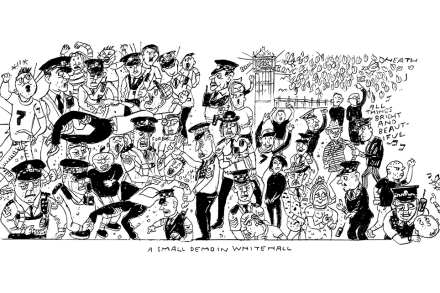
Home Six people were arrested during a protest by 1,000 outside the Bell hotel in Epping, Essex, which houses asylum seekers; an asylum seeker had earlier been charged with sexual assaults in the town. The Conservative leader of the council said: ‘It’s a powder keg now.’ The number of migrants arriving in England in small boats in the seven days to 21 July was 1,030. The Lionesses, the England women’s football team, decided not to take the knee before winning their semi-final Euro game, after a player, Jess Carter, had been inundated with racist abuse on social media during the tournament.

Portrait of the week: Inflation up, hosepipes off and grants for electric cars

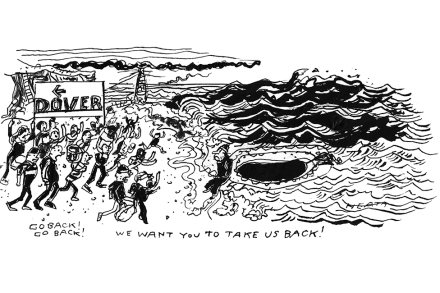
Home Sir Keir Starmer, the Prime Minister, agreed with President Emmanuel Macron of France that Britain could return perhaps 50 asylum seekers a week to France and accept in their place the same number of applicants through a regulated system. To celebrate, 573 people arrived that day in England in small boats, bringing the total for the week ending 14 July to 1,387. Moygashel Bonfire Committee in Co. Tyrone defended the placing of an effigy of a small boat with 12 migrants on a bonfire to usher in 12 July. Britain had, it was revealed, offered asylum to thousands of Afghan soldiers and their families caught by the accidental publication of their application for asylum in 2022; their resettlement was kept secret by a government super-injunction.

Portrait of the week: Rachel Reeves cries, Rishi Sunak joins Goldman Sachs and a six-month bin strike

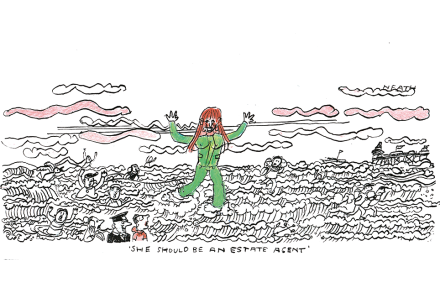
Home Rachel Reeves, the Chancellor of the Exchequer, had given a theme to the week by sitting weeping behind Sir Keir Starmer during Prime Minister’s Questions. She later said: ‘It was a personal issue.’ Sir Keir said: ‘She will be Chancellor for a very long time to come.’ No. 10 said she and the Prime Minister were ‘in lockstep’. The government found itself short of the £5 billion it had meant to save in the welfare bill, thwarted by its own MPs. The Office for Budget Responsibility said that, with rising debt, ‘The UK’s fiscal position is increasingly vulnerable’. Asked whether she would rule out tax rises in the autumn, the Chancellor said: ‘I’m not going to, because it would be irresponsible for a Chancellor to do that.

Portrait of the week: Welfare rebellions, Glastonbury chants and Lucy Letby arrests

Home Sir Keir Starmer, the Prime Minister, in the face of a rebellion by 120 backbenchers over the welfare bill, undertook to limit to new claimants restrictions on personal independence payments (Pip). Modelling by the Department for Work and Pensions predicted that 150,000 people might be pushed into ‘relative poverty’ by the revised welfare cuts, compared with 250,000 before. Still fearing defeat, the government made more last-minute concessions, postponing changes to Pip rules until after a review by Sir Stephen Timms, the disability minister. The government then won the second reading by 335 to 260, with 49 Labour MPs voting against. It was not clear that the eviscerated bill would reduce spending.

Portrait of the week: Assisted dying, Israel vs Iran and Zelensky’s visit

Home MPs voted by a majority of 23 – 314 to 291 – for the Terminally Ill Adults (End of Life) Bill, which says people in England and Wales may lawfully ‘be provided with assistance to end their own life’. In the free vote, the Health Secretary voted against and the Prime Minister voted for. The bill now goes to the Lords. ‘Iran never be allowed to develop a nuclear weapon and the US has taken action to alleviate that threat,’ Sir Keir Starmer, the Prime Minister, said. Seven men were charged with grievous bodily harm after protestors outside the Iranian embassy in London were attacked.

Portrait of the week: War in the Middle East, drought in Yorkshire and a knighthood for Beckham

Home Sir Keir Starmer, the Prime Minister, announced a full national statutory inquiry into grooming gangs (which he had previously opposed) on the recommendation of Baroness Casey of Blackstock, who had been asked to audit the matter. His announcement came after four men born in Pakistan and three Rochdale-born taxi drivers of Asian descent were convicted of offences against two teenage girls who were repeatedly raped and assaulted in Rochdale from 2001 to 2006. The Casey report said that Greater Manchester, South Yorkshire and West Yorkshire had ‘disproportionate numbers of men from Asian ethnic backgrounds amongst suspects for group-based child sexual exploitation’.

Portrait of the week: Spending review, LA protests and Greta Thunberg deported

Home Yvette Cooper, the Home Secretary, was the last minister to agree funding in the government spending review. Once the NHS and defence were settled there wasn’t enough to go round. The police wanted more. Everyone over the state pension age in England and Wales with an income of £35,000 or less will receive the winter fuel payment after all, at a cost of £1.25 billion, Rachel Reeves, the Chancellor of the Exchequer, announced. Capital spending included £39 billion on social housing over the next ten years. The government also committed £14.2 billion for the new Sizewell C nuclear power station, but did not say where the money was coming from. Rolls-Royce was selected as the preferred bidder to build the country’s first small modular reactors. Unemployment rose to 4.

Portrait of the week: More defence spending, more migrant arrivals and more Jenrick stunts

Home The government said that the armed forces had to move to ‘warfighting readiness’ and accepted the 62 recommendations of the Strategic Defence Review headed by the former defence secretary and head of Nato, Lord Robertson of Port Ellen. But the funding of the plans remained in doubt as the government insisted that a rise in defence spending to3 per cent by 2034 remained an ‘aspiration’; yet Nato was expected at this month’s summit to insist on a level of 3.5 per cent. The government committed £15 billion to its nuclear warhead programme; £1.5 billion to build six new munitions factories; an extra £1.5 billion for repairs to military housing; and the building of up to 12 conventionally armed nuclear-powered submarines.

Portrait of the week: Liverpool parade crash, Starmer sacrifices Chagos Islands and an octopus invasion

Home Sir Keir Starmer, the Prime Minister, announced that ‘more pensioners’ would qualify for winter fuel payments, but did not say how many or when. Nigel Farage of Reform said he would scrap net zero to fund things like abolishing the two-child benefit cap and reversing the winter fuel cut in full. Millions of public-sector workers such as doctors and teachers were offered rises of between 3.6 and 4.5 per cent. From July, typical household energy costs will fall by £129 a year, still higher than a year earlier. South Western Railway was renationalised. Thames Water was fined £122.7 million by Ofwat for breaching rules on sewage and shareholder dividends. Devon fishermen complained of Mediterranean octopuses eating crabs in their pots.

Portrait of the week: Starmer’s EU deal, Lineker’s BBC departure and an outbreak of camel flu

Home Sir Keir Starmer was joined by EU representatives in London to celebrate new agreements with the bloc. EU access to British fishing grounds would now be in place until 2038, but it would be easier to export fish from Britain. The government said agreements on food exports and energy trade would benefit Britain by £8.9 billion a year by 2040 – 0.3 per cent of GDP. The government emphasised a defence and security pact and gave a lunch aboard the frigate HMS Sutherland. Use of e-gates by British travellers would in future be decided by each EU state. A youth mobility scheme transmogrified into a youth experience scheme and remained to be agreed. Richard Tice of Reform UK said: ‘It’s a huge betrayal; it’s surrender on steroids.

Portrait of the week: Immigration pledges, trade agreements and a new pope

Home Sir Keir Starmer, the Prime Minister, said, ‘We risk becoming an island of strangers’ as the government published a white paper, Restoring Control Over the Immigration System. He stood by his words but ‘completely rejected’ suggestions that they echoed Enoch Powell’s phrase ‘strangers in their own country’ from his 1968 speech. The white paper said care workers would no longer be recruited from overseas. Migrants would have to wait ten years to apply to settle in Britain, instead of qualifying after five. Adult dependents would have to show basic English language skills. A tax on universities’ income from foreign students could also be introduced.

Portrait of the week: Reform party’s victories, Duke of Sussex’s defeat and Deliveroo’s takeover

Home In a day that upset the apple cart of party politics, Reform won the Runcorn and Helsby by-election by six votes, with 38.72 per cent of the vote, compared with Labour’s 52.9 per cent last year. Of 1,641 wards in England up for election, Reform won 677. The Tories lost 676, winning only 317. The Lib Dems gained 163, winning 370 in all. Labour lost 186, winning 99. Reform won control of ten of the 23 councils in contention. The Liberal Democrats won three councils. The Tories lost all their 16 councils. Dame Andrea Jenkyns, a former Tory minister, was elected Reform mayor of Greater Lincolnshire; Luke Campbell, the former boxer, became Reform mayor of Hull and East Yorkshire.

Portrait of the week: power cuts, local elections and the Pope’s funeral

Home Sir Tony Blair, the former Labour prime minister, attacked current net-zero policies, saying that ‘any strategy based on either “phasing out” fossil fuels in the short term or limiting consumption is a strategy doomed to fail’. Pay review bodies recommended rises for public-sector workers (4 per cent for teachers; 3 per cent for NHS employees) that are higher than the 2.8 per cent budgeted for by the government.

Portrait of the week: Pope dies, EU cheese banned and trans women aren’t women

Home Sir Keir Starmer, the Prime Minister, no longer believes that a trans woman is a woman, his official spokesman said at a lobby briefing. He was asked about this six days after the Supreme Court of the United Kingdom ruled that a woman is defined by biological sex in equalities law. The justices unanimously allowed an appeal by the campaign group For Women Scotland in a case against the Scottish government. Sex-based protections, notably in the Equality Act 2010, the court found, only apply to people who are born in that sex, not to those whose gender is reassigned. The court emphasised that transgender people still have protections against discrimination and harassment written into the Equality Act. J.K.

Portrait of the week: British Steel seized, army sent to Birmingham and slim told to stay home in Beijing

Home Parliament was recalled from its Easter recess to sit on a Saturday for the first time since the Falklands War of 1982 to pass a bill to take control of British Steel, which amounts to no more than the works at Scunthorpe owned by the Chinese company Jingye since 2020. Scunthorpe, which employs 2,700 directly and thousands indirectly, is the last plant in Britain capable of making virgin steel. The bill, passing through the Commons and Lords, received the Royal Assent on the same day. The race against time was to supply the blast furnaces with coal before they were ruined by going cold; supplies from the United States were unloaded at Immingham docks, 25 miles away. The Secretary of State for Business, Jonathan Reynolds, received powers to give orders to the board and staff.

Portrait of the week: Trump’s tariffs, a theme park for Bedford and a big bill for Big Macs

Home In response to President Donald Trump’s global tariffs, Sir Keir Starmer, the Prime Minister, said: ‘This is not just a short-term tactical exercise. It is the beginning of a new era.’ He wrote in the Sunday Telegraph: ‘We stand ready to use industrial policy to help shelter British business from the storm.’ The FTSE100 fell by 4.9 per cent in a day, its biggest such fall since 27 March 2020. The government published a 417-page list of US products upon which Britain could impose retaliatory tariffs after 1 May. Figures from the Office for National Statistics showed that, although in 2023 the UK imported £57.9 billion of goods from the US (10 per cent of all goods imports) and exported £60.4 billion’s worth (15.3 per cent of all goods exports), it exported £126.

Portrait of the week: Terrible Tuesday, W.H. Smith’s rebrand and no e-bikes on the Tube

Home For many, ‘Terrible Tuesday’ began ‘Awful April’ with increased bills for water, energy, council tax (to an average in England of £2,280), road tax, telephone charges, broadband, the television licence and stamp duty. Sir Keir Starmer, the Prime Minister, spoke to President Donald Trump of the US as makers of motor vehicles, Britain’s biggest export to the US, contemplated American tariffs of 20 per cent on car imports. Matthew Doyle resigned as Sir Keir’s communications director. Plans were afoot to ban cars from Hammersmith Bridge, which has been closed for repairs for six years, when it is reopened.

Portrait of the week: Spring Statement, Heathrow fire and Prince Harry quits his charity

Home In the Spring Statement, Rachel Reeves, the Chancellor of the Exchequer, made further cuts to benefits (such as freezing the Universal Credit health element for new claimants). The Office for Budget Responsibility had said that the cuts announced before would not let her meet her budget rules. She now planned a £9.9 billion surplus by 2030, but would borrow more in the coming financial year. Civil service running costs would be cut by 15 per cent, with about 10,000 of its 547,735 staff to go. She concentrated on a £2.2 billion increase in defence spending and proposed that Britain should become a ‘defence industrial superpower’. The OBR reduced its forecast of growth this year from 2 to 1 per cent, increasing to 1.8 by 2029.

Portrait of the week: Welfare war, gold prices soar and gang jailed for toilet heist 

Home Sir Keir Starmer, the Prime Minister, entertained 29 other national leaders online to seek a way of guaranteeing the future security of Ukraine. He then invited European defence leaders to meet in London. He spoke by phone to President Volodymyr Zelensky after the inconclusive conversation between President Donald Trump and President Vladimir Putin. John ‘Paddy’ Hemingway, thought to be the last Battle of Britain pilot, died aged 105. The government faced resentment in its own party against welfare cuts outlined by Liz Kendall, the Work and Pensions Secretary: the eligibility criteria for Personal Independence Payments would be tightened; incapacity benefits under universal credit would be frozen for existing claimants and those under 22 would not be able to claim it.