Portrait of the week

Portrait of the week: Spies in Norfolk, rats in Birmingham and Denmark ditches letter deliveries

Home Three Bulgarians were found guilty of spying for Russia as part of a cell that plotted to kidnap and kill targets in Europe, under a fellow Bulgarian who lived in a former guest house in Great Yarmouth, Norfolk. The court heard that the spies reported to Austrian-born Jan Marsalek, who sought refuge in Moscow after the collapse in 2020 of Wirecard, the German payments company he helped run. Walgreens Boots Alliance, the US owner of Boots the chemist, was taken over by a private equity firm, Sycamore Partners. The government introduced the Planning and Infrastructure Bill, which will enable councils to seize land. The cost of a first-class stamp will go up 5p to £1.70 on 7 April.

Portrait of the week: Zelensky at Sandringham, rail fare rise and Duchess of Sussex’s Chinese takeaways

Home After the humiliation of President Volodymyr Zelensky of Ukraine in Washington, Sir Keir Starmer, the Prime Minister, quickly convened a meeting at Lancaster House with 17 European leaders, including Mr Zelensky, and Justin Trudeau, the Prime Minister of Canada. Sir Keir outlined a four-point plan to form a ‘coalition of the willing’ to defend a peace agreement and to keep military aid flowing to Ukraine. Britain gave Ukraine £1.6 billion of export finance to buy 5,000 air defence missiles, to be made by the French-owned company Thales in Belfast. Mr Zelensky requested an audience with the King, which was granted with the government’s approval, and went to Sandringham for tea before a blazing fire.

Portrait of the week: Foreign aid cut, Pope in hospital and King pulls a pint

Home Before flying to Washington, Sir Keir Starmer, the Prime Minister, said: ‘We have to be ready to play our role if a force is required in Ukraine once a peace agreement is reached.’ He told the Commons that Britain would raise defence spending to 2.5 per cent of national income by 2027, funded by cutting development aid from 0.5 per cent to 0.3 per cent of GDP. The government surplus for January, when much tax comes in, was £15.4 billion, the highest ever, but far below the £20.5 billion predicted by the Office for Budget Responsibility. Average household energy bills will rise from April by £111 to £1,849 a year. BMW said it was shelving reintroduction of electric vehicle production at its Oxford Mini plant. BP dropped its goal of cutting oil and gas production.

Portrait of the week: US and Russia talk, Chiltern Firehouse burns and Duchess of Sussex rebrands

Home Sir Keir Starmer, the Prime Minister, said that, to guarantee the security of Ukraine, he was ‘ready and willing’ to put ‘our own troops on the ground if necessary. I do not say that lightly’. Parliament would be allowed a vote on such a deployment, the government said. Earlier, Sir Keir took an unannounced telephone call from President Donald Trump of America about their forthcoming meeting. Afterwards, Mr Trump said: ‘We have a lot of good things going on. But he asked to come and see me and I just accepted his asking.’ The Chiltern Firehouse hotel in Marylebone burnt down.

Portrait of the week: Andrew Gwynne sacked, Trump saves Prince Harry and a £30m refund over moths

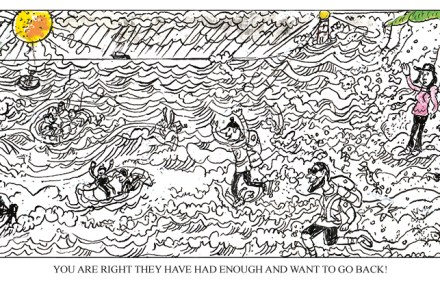
Home Andrew Gwynne was sacked as a health minister and suspended from the Labour party for making jokes about a constituent’s hoped-for death, and about Diane Abbott and Angela Rayner. Oliver Ryan, a member of the WhatsApp group where the jokes were shared, had the Labour whip removed and 11 councillors were suspended from the party. Asked about 16,913 of 28,564 medics registering to practise medicine in Britain last year having qualified abroad, Wes Streeting, the Health Secretary, said there was ‘no doubt’ that ‘the NHS has become too reliant’ on immigration. The government issued guidance saying that anyone who enters Britain by means of a dangerous journey will normally be refused citizenship. In the week to 10 February, 210 migrants arrived in small boats.

Portrait of the week: Shoplifting surges, Trump eyes Gaza Strip and Norway’s government collapses

Home Sir Keir Starmer, the Prime Minister, flew to Brussels for an EU summit, sought a ‘reset’ of relations and had celeriac soup and sea bream for dinner. AstraZeneca dropped plans to invest £450 million in a vaccine manufacturing plant in Speke, Liverpool, blaming the government’s ‘final offer compared to the previous government’s proposal’. Rachel Reeves, the Chancellor of the Exchequer, said that she supported the expansion of Leeds Bradford Airport; she had already backed a third runway at Heathrow and the reopening of Doncaster Sheffield airport. Water bills in England and Wales will rise to an average of £603. Some councils will be allowed to raise their tax by more than 5 per cent – Bradford by 10 per cent.

Portrait of the week: DeepSeek, Duke of Sussex’s damages and an iceberg the size of Cornwall

Home The government would invest 2.6 per cent of GDP a year to create growth, Rachel Reeves, the Chancellor of the Exchequer, said in a speech. Standing behind a placard reading ‘Kickstart economic growth’, she kept repeating the word ‘growth’. Welfare and the visa system would be reformed. A third runway at Heathrow would bring 100,000 jobs. But net zero, she said, was the ‘industrial opportunity of the 21st century’. Earlier she had said that the government’s own Finance Bill implementing October’s Budget would be amended to soften the effects of its tax measures against non-domiciled residents. The Ministry of Defence ordered £9 billion worth of nuclear submarine reactors from Rolls-Royce. Sainsbury’s was to cut 3,000 jobs.

Portrait of the week: Trump’s inauguration, Israel-Hamas ceasefire and cardboard humans comfort lonely fish

Home Axel Rudakubana, 18, pleaded guilty to the murder of three girls in a knife attack at a Taylor Swift-themed dance class at Southport on 29 July 2024, and to ten attempted murders as well as possessing al Qaeda literature and producing the poison ricin. He had been charged with murder on 31 July but police insisted then that the incident was not being treated as terror-related; the culprit was charged with two terrorism offences on 29 October. From 30 July, rioting had swept the country for a week. Now it was disclosed that the murderer had been referred three times to Prevent, the anti-terrorism programme, when he was 13 and 14. Sir Keir Starmer, the Prime Minister, gave a press conference.

Portrait of the week: Tulip Siddiq quits, Sturgeon splits from husband and Trump spared jail

Home Tulip Siddiq resigned as economic secretary to the Treasury, although she was found not to have broken the ministerial code; she had, however, lived in a flat provided by allies of her aunt, Sheikh Hasina, the deposed prime minister of Bangladesh, apparently under the impression that the flat was a gift from her parents, despite having signed a Land Registry transfer form for it. Rachel Reeves, the Chancellor of the Exchequer, flew to China and met He Lifeng, one of the four vice-premiers. In her absence the cost of government borrowing rose again, with the yield on 30-year gilts rising to 5.42 per cent, the highest for 27 years. Downing Street said she would remain in her role ‘for the whole of this parliament’. But people wondered.

Portrait of the week: grooming gangs, wildfires and a Littler victory

Home Responding to a rejection by Jess Phillips, the safeguarding minister, of calls for a government inquiry into historical child abuse in Oldham, Elon Musk tweeted that she was a ‘rape genocide apologist’ and ‘deserves to be in prison’. After a day or two of tweets suggesting such things as the dissolution of parliament by the King, Mr Musk tweeted: ‘The Reform party needs a new leader. Farage doesn’t have what it takes.’ Nigel Farage had dissociated himself from the far-right campaigner Tommy Robinson, who is serving 18 months for contempt of court. Robert Jenrick, the shadow justice secretary, tweeted: ‘Importing hundreds of thousands of people from alien cultures, who possess medieval attitudes towards women, brought us here.

Portrait of the week: Reform’s rising membership, peerages and an 11lb puffball

Home Nigel Farage, the leader of Reform UK, said that the party now had more members than the Conservatives. On Christmas Day, 451 migrants crossed the Channel; another 1,000 arrived in the next three days but three died off Sangatte. Lord Mandelson, having failed to be elected Chancellor of Oxford University, was appointed ambassador to the United States. Sue Gray, the Prime Minister’s former chief of staff, was made a peer with 29 other Labour nominations; among the six Conservative nominations were Nigel Biggar, a retired Oxford professor who has identified some good aspects of the British Empire, and Toby Young, founder of the Free Speech Union and an associate editor of The Spectator.

Portrait of the year: Subpostmasters scandal, Rishi in the rain and Syrian rebels topple regime

January After an ITV drama, the government suddenly proposed to do something about the unjust prosecution of sub-postmasters. Junior doctors went on strike. There was a surge in scabies. The King went to hospital and was later found to have cancer. The Princess of Wales was in hospital with what turned out to be cancer. Five migrants died boarding a boat for England off Wimereux. In Beirut, Israel killed the deputy head of Hamas. Israel said that it expected war in Gaza to continue throughout the year. The United States, with token British support, struck sites in Yemen to deter Houthi attacks on shipping. Russia mounted the biggest missile bombardment of its war against Ukraine. China’s population fell by 2.08 million to 1.41 billion.

Portrait of the week: Labour’s ‘plan for change’, falling productivity and 20,000 wolves in the EU

Home The Labour government announced a ‘Plan for Change’ that it refused to call a reset. Sir Chris Wormald was named Cabinet Secretary. In his Guildhall speech at the Lord Mayor’s banquet, Sir Keir Starmer, the Prime Minister, said that ‘the idea that we must choose between our allies, that somehow we’re with either America or Europe, is plain wrong’. He said ‘we must continue to back Ukraine’ against Vladimir Putin as something ‘deeply in our self-interest’. With the arrival of another 122 people on 1 December, more than 20,000 had crossed the Channel in small boats since Labour entered office.

Portrait of the week: Storm Bert, Israel-Hezbollah ceasefire and Putin gives cockatoos to North Korea

Home A white paper outlined measures to counter economic inactivity (which had risen by September to 41.2 per cent among those aged 16 to 24): everyone aged 18 to 21 would be offered an apprenticeship, training, education or help to find a job; Jobcentres would be rebranded as the National Jobs and Careers Service. Rachel Reeves, the Chancellor of the Exchequer, said: ‘What I haven’t heard are many alternatives’ to the tax rises imposed by October’s Budget; she was speaking to the Confederation of British Industry. A petition on the parliament website, accusing Labour of breaking promises and calling for a general election, gathered more than 2.

Portrait of the week: Rising inflation, electric car targets and a tax on flatulent livestock

Home Thousands of farmers protested in Westminster against inheritance tax on farms. Tesco, Amazon, Greggs and 76 other chains belonging to the British Retail Consortium said that costs introduced by October’s Budget ‘will make job losses inevitable and higher prices a certainty’. The annual rate of inflation rose to 2.3 per cent from 1.7 a month earlier. The British economy grew by 0.1 per cent in the third quarter, but shrank during September; in the second quarter it had grown by 0.5 per cent. Beth, the Queen’s Jack Russell, died. An additional 50,000 pensioners will live in relative poverty next year as a result of cuts to the winter fuel allowance, the government estimated.

Portrait of the week: Justin Welby resigns, interest rates cut and Trump announces appointments

Home Justin Welby resigned as Archbishop of Canterbury, after not reporting to the authorities what he knew in 2013 of the abuse perpetrated by John Smyth QC (who ran Christian summer camps in the 1970s and 1980s and died in 2018). An independent review by Keith Makin found last week that Smyth abused more than 100 young men and boys sexually and by beating. ‘When I was informed in 2013 and told that police had been notified, I believed wrongly that an appropriate resolution would follow,’ Mr Welby said. Gary Lineker, who had presented Match of the Day since 1999, agreed to stand down at the end of the season. Sue Gray turned down the job as the Prime Minister’s envoy to the nations; the mysterious role was said to be hers after she was dropped in October as his chief of staff.

Portrait of the week: Trump’s victory, Kemi’s shadow cabinet and footballer killed by lightning

Home Kemi Badenoch, the new leader of the Conservative party, appointed a shadow cabinet. She made Robert Jenrick, whom she beat for the leadership, shadow justice secretary; Dame Priti Patel, shadow foreign secretary; Chris Philp, shadow home secretary; Mel Stride, shadow chancellor. Alex Burghart was given Northern Ireland and the Cabinet Office, with Laura Trott at education, Edward Argar at health and James Cartlidge at defence. Badenoch had been elected leader by 56.5 per cent of the 95,194 members’ votes (compared with the 57.4 per cent for Liz Truss in 2022), in a turnout of 72.8 per cent (compared with the 82.2 per cent in 2022). The Pitt Rivers museum in Oxford returned to Borneo a sun hat acquired in 1923 from the Brooke family, who ruled Sarawak.

Portrait of the week: Tax rises, a cheddar heist and snail delivery man gets slapped

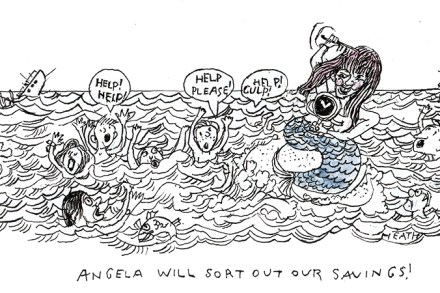
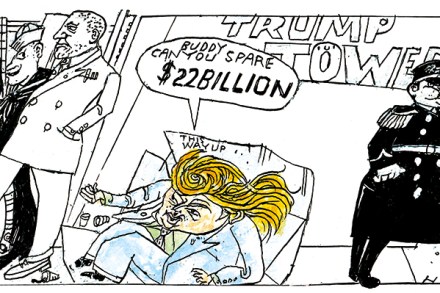
Home Rachel Reeves, the Chancellor of the Exchequer, repeatedly mentioning an inherited ‘£22 billion black hole’, raised taxes by £40 billion in the Budget, while saying she was abiding by Labour’s manifesto promise not to increase taxes on ‘working people’. A big hit came from increasing employers’ contributions to national insurance; the threshold at which it begins to be paid was reduced from £9,100 to £5,000. But income tax and NI thresholds for employees would be unfrozen from 2028. Capital gains tax went up; stamp duty for second homes rose. Fuel duty would again be frozen. The non-dom regime was abolished. Tobacco went up; a pint of draught went down a penny. The minimum wage would rise. Defence spending would rise by £2.9 billion.

Portrait of the week: Budget leaks, prisoners released and Israel kills Hamas leader

Home Rachel Reeves, the Chancellor of the Exchequer, was expected to freeze tax thresholds in the Budget on 30 October, to swell government income as more working people were brought into higher tax bands. Before Labour formed a government, she had said that the Conservatives, by freezing tax thresholds, were ‘picking the pockets of working people’. Weeks of speculation on the Budget were encouraged by leaks and by constant questioning of ministers about how Labour would keep to its manifesto undertaking not to raise taxes on ‘working people’ by increasing income tax, national insurance or VAT. The International Monetary Fund raised its growth forecast for the United Kingdom to 1.1 per cent this year, compared with the 0.7 per cent it forecast three months ago.

Portrait of the week: Weight loss jabs and England’s German manager

Home Neither Sir Keir Starmer, the Prime Minister, nor Rachel Reeves, the Chancellor of the Exchequer, ruled out a rise in employers’ contributions to national insurance in the Budget on 30 October. The annual rate of inflation fell from 2.2 to 1.7 per cent. Starmer backed an idea by Wes Streeting, the Health Secretary, to give fat unemployed people injections of weight-loss drugs in a scheme involving a £280 million investment from Eli Lilly, the pharmaceutical company that makes the diabetes medication Mounjaro. At the International Investment summit, the Chancellor announced that the UK Infrastructure Bank will become the National Wealth Fund. But the government came up with only £5.8 billion of new money, despite a promise that it would be ‘capitalised with £7.3 billion’.