Opera

Call of duty

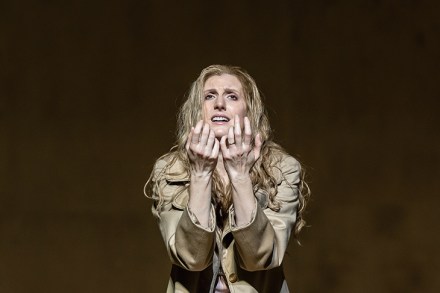
Is it possible to write a feminist opera about Jack the Ripper? Composer Iain Bell thinks it is, and his Jack the Ripper: The Women of Whitechapel tries very, very hard to prove it. But while the result is respectful, topical and agonisingly, paralysingly sincere, it’s also a sheep in wolf’s clothing. You can’t have your victims and kill them too. You have only to look at the opera’s title, bent awkwardly round its central colon, to see the conflict. Front and centre you have Jack the Ripper — a marketing department’s darling, promising Gothic horror and lashings of gore. Following behind (in slightly smaller type) you have his victims, the drab, downtrodden women whose lives and voices the piece hopes, laudably, to restore.

Forza majeure

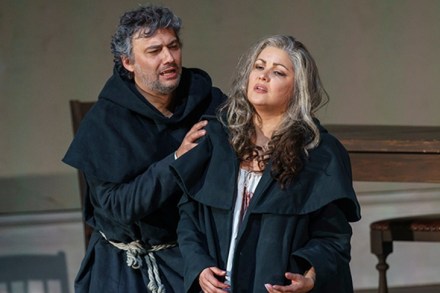
To stage Verdi’s Il Trovatore, they say, is easy: you just need the four greatest singers in the world. The Royal Opera has applied this principle to La forza del destino. Jonas Kaufmann sings Alvaro, Anna Netrebko is his beloved Leonora, and Ludovic Tézier her brother Carlo, with the mighty Ferruccio Furlanetto completing the set as the priest Padre Guardiano. The results have been pretty much as you might expect, ranging from the now-traditional speculation about whether Kaufmann would actually show up (he did) to reports of tickets changing hands privately for £5,000 apiece. And yes, it was extraordinary: a four-hour rush of some of the most glorious singing anyone born after 1970 will probably ever have heard in one place.

Resistance is futile

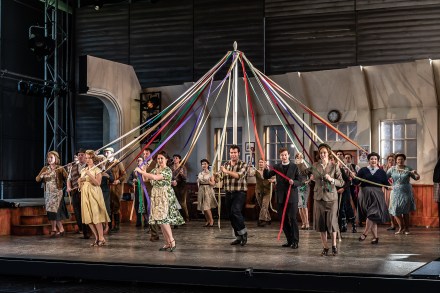
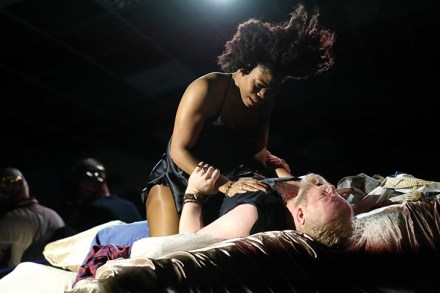
You can see Graham Vick’s work at La Scala or the New York Met. But if you want to be directed by him, you need to go to Birmingham. The Tower Ballroom is a sticky-floored former nightspot out by Edgbaston Reservoir, artfully trashed by Block9, the people behind Banksy’s Dismaland. You crunch across the tarmac, pass the humanoid rats and the drug dealer with his prostitute cards (‘Sonyetka: Exotic Dancing – Russian Lessons’) and enter the crowd. Suddenly Vick’s on you: barking under his breath that you need to move and, should you fail to comply, shoving you firmly out of the way. Seconds later, a double bed careens through, or the space fills with knife-wielding brides in blood-smeared dresses.

Deft and daft

Operas are like buses. Both are filled with pensioners and take ages to get anywhere, but more importantly they always seem to arrive en masse. You wait ages for a Magic Flute, then five come along at once. Opera North started us off in January, Welsh National Opera and English National Opera are currently following suit, with Scottish Opera and Glyndebourne covering the summer shift. It’s a mess and, when you consider that at least four of these are touring with inevitable overlap, a wanton, self-destructive splitting of an already small opera-going audience. With more Flutes than a school wind-band to choose from this season you can afford to be picky (assuming you haven’t already exhausted yourself with the three concurrent Katya Kabanovas).

Janacek’s rare gem

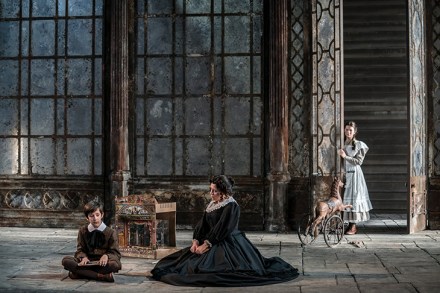
Janacek’s upsetting opera Katya Kabanova, which hasn’t been seen in the UK for some time, turned up in two different productions over the weekend, with a third to follow in Scotland. The Opera North production by Tim Albery dates from 2007, when it was conducted by Richard Farnes with the clarity and passion which characterises all his work. This revival had Sian Edwards making her Opera North debut, and all told it had a slightly muted quality. The paradoxical jagged lyricism of Janacek’s orchestral writing only struck home intermittently, and there were stretches which could almost have been by Smetana, against whom Janacek partly defined himself.

Dream ticket

Spoiler alert: it’s all a dream. At least, I think that’s what we’re meant to take away from the business with which director James Brining accompanies the overture to Mozart’s The Magic Flute. A little girl in ochre pyjamas is trying to sleep while in an adjacent room braying, guffawing adults sit down to a formal dinner. Servants bustle about, and there’s a suggestion that all is not well in the hosts’ marriage. Then sleep descends with a David Lynch-like fizzle of electric lights and we’re pitched into a world of princes, serpents and enchantment. Opera directors love unloading on overtures: obscuring the composer’s own musical pathway into their world with elaborately mimed footnotes to a text you haven’t yet read.

Voices of doom

It’s December, and while musical theatre is busy celebrating ‘warm woollen mittens’, opera, as usual, is far more interested in the tiny frozen hands inside them. Because nothing says Christmas quite like consumption, and I’m not talking turkey and mince pies. London’s opera companies are serving up a heaped sleighful of heartbreak this year. English National Opera is going traditional with La bohème, while the Royal Opera is thinking outside the snow-covered coffin with Carmen. There’s something for everybody, so long as it’s tragedy. ENO’s Bohème is the safe option, the show you take your granny to.

Sound and fury | 22 November 2018

The People are angry. In fact, they’re bloody furious. As the lights flash up on David Pountney’s production of Prokofiev’s War & Peace, the entire cast confronts the audience: grim, braced, defiant. And before you’ve had time to wonder if this sort of thing is just the long-term legacy of Les Misérables, or whether opera directors really are in love with totalitarian imagery, they unleash hell. This is the chorus of Welsh National Opera, after all. You just know they’re going to slay, and they do. The massive, world-historical Epigraph to Act One shakes the walls and your place is no longer to question, but to sit there and be overawed. To be fair, a Soviet composer during the second world war could hardly get away with anything less.

Chills and thrills

How do you solve a problem like Lucia? Murder, madness, abuse, possibly even incest, all set to a soundtrack of rollicking, rum-ti-tum tunes. Add to that a Scottish setting (nothing sabotages dramatic seriousness quite like a kilt, just ask Mel Gibson) and you have Gilbert & Sullivan in an Italian accent, Ruddigore with a cigarette and a suntan. Recently at the Royal Opera House Katie Mitchell tried to naturalise Donizetti’s opera into submission, but ended up tussling with a score she clearly didn’t trust and a cast who didn’t seem to trust her, giving her audience what she wanted Lucia to be, rather than what’s actually there.

On the road | 25 October 2018

Wolverhampton; Workington; Blackburn; Sheffield; Lancaster; Hackney. Every year English Touring Opera does what our national opera company doesn’t: packs up its props and takes to the road, bringing opera to the bits of the UK other companies don’t even think about reaching. And not just Traviatas and Toscas either, but properly interesting, often unusual, repertoire. With a core staff you can pretty much count on your fingers, and ticket prices that would scarcely buy you a sandwich at the Royal Opera House, let alone a seat, the whole operation is one of those minor miracles of the arts world — a company where a little bit of funding goes an awfully long way, and not just geographically. Then there’s the talent.

Top scorer

Gershwin’s Porgy and Bess springs to life fully formed, and pulls you in before a word has been sung. A whirlwind flourish; the hectic bustle of violins and xylophone, and then a quick fade into an image of a woman cradling a child and ‘Summertime’, the very first number we hear sung. The aria’s fame actually serves the drama. The thrill of musical recognition as the curtain rises on an unfamiliar world is replaced by astonishment at the dramatic instinct that allows Gershwin to expend a melody like that before his story has even started, in the certain knowledge that what follows can, and absolutely will, live up to what for any composer other than Gershwin would be a once-in-a-lifetime inspiration.

Ring leader

‘On Brünnhilde’s rock I drew the breath that called your name; so swift was my journey here.’ It’s Act Two of Götterdämmerung. Siegfried, entoiled in evil beyond his comprehension, has unwittingly committed the betrayal that will tip the whole vast drama into its final collapse, and at this point Covent Garden’s Ring cycle really does feel like it’s swept by in a breath. True, Keith Warner’s 2007 production is looking creaky. But there’s still no mightier assertion of an opera company’s ambition than to stage all four music-dramas of Der Ring des Nibelungen in the space of a week; and no artistic experience remotely comparable to witnessing it. So, about that experience.

The naked and the dead

Yes, Oscar Wilde never wrote it. No, Strauss didn’t intend it. In fact, the composer famously demanded the Dance of the Seven Veils be ‘thoroughly decent, as if it were being done on a prayer mat’. But that doesn’t stop this striptease and musical money shot being the look-but-don’t-touchstone of any Salome. A blonde, blank-faced Barbie doll in gym knickers, vest and shiny trainers stands in a spotlight, a baseball bat in her hands. Strauss’s oboe begins its suggestive arabesques but Salome remains quite still, her eyes fixed impassive, unblinking on the audience. Eventually her hips begin to twitch, her back arches and she goes sullenly through the motions of sensuality, never breaking her gaze, defying us to find her desirable.

Murderer or Madonna?

At the end of Act Two of Tosca there are some 30 bars of orchestral music — accompaniment to a very specific set of stage directions. During this time Tosca takes two candles and places them on either side of the dead Scarpia’s head. She then removes a crucifix from the wall and lays it on his chest. The tableau is a messy, bloody one, but the message is clear: here the politics of religion and the religion of politics are one and the same. A pietà or the body of a thug? A murderer or a Madonna? It’s all just a matter of spin. In a year of embattled Supreme Court nominations and moral muscle-flexing by our own DUP, Edward Dick’s new, 21st-century Tosca for Opera North relishes these slippery elisions and entanglements of church and state.

Great expectations | 9 August 2018

‘Outside this house the world has changed. Life is swifter than before; there is no time for idle gestures.’ Anatol, in Samuel Barber’s opera Vanessa, doesn’t pretend to be a romantic hero. The son of Vanessa’s old flame, he’s arrived by night at the remote mansion where she’s waited for 20 years with her elderly mother and niece Erika. He seduces the niece, beguiles the aunt and alienates the grandmother, but at no point is he anything less than honest. ‘I cannot offer you eternal love, for we have learned today such words are lies’, he sings, and Barber, remarkably, takes him at face value. Anatol’s music is lyrical and open; a shaft of light in Barber and his librettist Menotti’s claustrophobic world.

Ariadne’s thread

‘They’ve dined well, they’ve drunk their fill, their brains are dull and slow. They’ll sit snoozing in the dark until they hear some applause, and then, out of courtesy, they’ll wake up’. Hugo von Hofmannsthal’s words, not mine. I’ve never bought the notion that Strauss and Hofmannsthal’s Der Rosenkavalier somehow predicts the first world war. But what’s screamingly obvious is that their next collaboration, Ariadne auf Naxos, precisely skewers the non-existent (in 1916) world of English country-house opera. A millionaire patron has hired an opera company and a comedy troupe for an evening of champagne-fuelled hospitality, and he wants them both finished in time for the fireworks.

Too much information | 12 July 2018

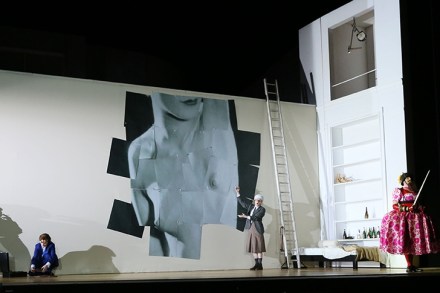
When Kasper Holten’s production of Don Giovanni was first staged at the Royal Opera in 2014, I disliked it intensely, even more than I have disliked most of his other productions, or for that matter most productions of Don Giovanni. I missed the first revival, but when I saw it this time round my reactions were more complex, though I still think there is a lot wrong with it. In the meantime, I have watched the 2014 production on Blu-ray. Holten and Es Devlin the set designer give a commentary throughout, which at least helped me to understand what was intended, even if it didn’t convince me that most of the producer’s ideas are helpful or even realisable.

Darkness and light

The femme fatale was invented in France. A giddy, greedy child in her first incarnation, as the antiheroine of Abbé Prévost’s L’Histoire du Chevalier Des Grieux et de Manon Lescaut (1731), she had no voice of her own. Reshaped as a sphinx by Alfred de Musset, made over as a gypsy by Prosper Mérimée, plumped out with fashionable sentimentality by Massenet and mordant sensuality by Puccini, her function was to beguile and elude, to want something that those who wanted her were unable to give her, then die. In Debussy’s Pelléas et Mélisande even that wanting is stripped away. ‘Ne me touchez pas!’ sings Mélisande, but Golaud, made ugly and old for want of love, cannot or will not listen.

Scent and sensibility

Patrick Mason’s new production of Gounod’s Roméo et Juliette reminded me of something, but it took a while to work out what. We saw shiny black walls with chrome Bauhaus details, and a swirl of mist through which beautiful people moved in black formal wear. Then Olena Tokar made her entrance as Juliette, and as she pirouetted about the stage, evening dress sparkling, it clicked. It’s a perfume advert. The artificiality, the chic, the sexy little hint of affluence with top notes of fascism: you half-expected billowing curtains to reveal a giant bottle of Chanel No. 5. It fitted right in at West Horsley, where the programme book contains adverts for private equity firms and first nights begin with an onstage shout-out to Laurent-Perrier.

Handel for hipsters

On a sward of AstroTurf somewhere off Silicon Roundabout, Mountain Media is hosting its summer party and, well, it’s the sort of bash you’d pluck your own eyes out to avoid. Hipsters sprawl on dayglo beanbags. Lads wearing fairy wings strike aftershave-advert attitudes as they swig bottled lager, while girls in vintage dresses pout into smart phones through cardboard Instagram frames. Naturally, it’s got its own hashtags: everything is flashed up on digital screens. The only thing that jars — though perhaps it’s some new straight-outta-Hoxton trend — is that instead of a DJ there’s a live band, and the music’s by Handel. Handel’s English-language tragedy Acis and Galatea was once one of his most bankable properties.