Opera

DIY Bohème

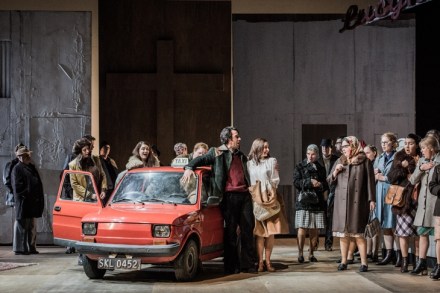
The Royal Opera’s one production that, it has always confidently been claimed, need never be replaced has been replaced. John Copley, vintage 1974, has given way to Richard Jones, in a production full of his trademark quirkinesses and mischief, though he is respectful enough of Bohème to keep his irony out of sight for the last two acts. Stewart Laing is the designer, with a separate movement director (I thought that’s what directors did) in Sarah Fahie. Snow falls continuously before the curtain rises, but the set of Act One inevitably strikes you as a gauntlet thrown down to Copley. Flat 7b, which is the abode of the bohemians, is nothing more than roof beams, with a single chair, no bed, a tiny stove that produces plumes of smoke emitted from a tall chimney.

Ave, Maria

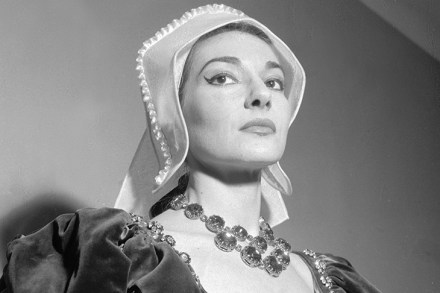
Anyone who thinks that an artist’s life is irrelevant to their artistic achievement, and for that matter anyone who thinks that it isn’t, must be given pause by Maria Callas. It is now exactly 40 years since her death and everything she recorded is available on multiple pressings. But of the huge body of material that has appeared about her, only a small percentage concerns itself with the recordings. There are innumerable biographies, memoirs, refutations of memoirs, studies of the influence of her fluctuating erotic life on her singing, her meteoric rise, the Great Decade, the tragic decline, and so on. All of these might be fascinating, but they draw attention away from the only thing that mattered about her: her art.

Viennese whirl

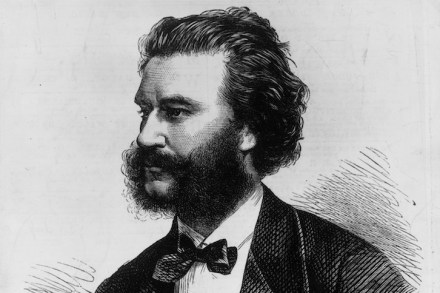
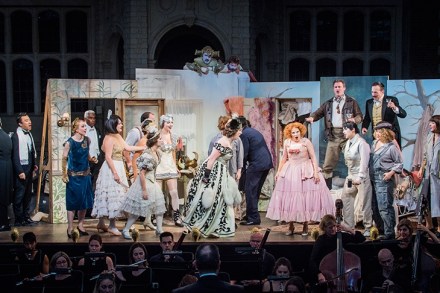
‘First performance: Vienna, October 3, 1880’ declares the programme for Opera della Luna’s new production of Johann Strauss’s The Queen’s Lace Handkerchief. ‘First British Performance: Wilton’s Music Hall, London, August 29, 2017’. They’re not joking: this really is the first full UK staging of the Waltz King’s single most successful (in his lifetime, anyway) operetta. It’s a major event, and the director Jeff Clarke duly follows up with one of those quasi-academic articles that you get in programme books at big opera houses explaining how La bohème predicted Mussolini, or whatever. Still kept awake at night by the liberal reform agenda of Crown Prince Rudolf of Austria-Hungary?

Grimes triumphant

‘Peter Grimes!’ Ranked high above us in the Usher Hall — a mob smelling blood, hot for the kill — the chorus let forth those three primal cries, and we were all lost. The modesty-curtain of civilisation was torn away, and our basest human urges — hate, revenge, suspicion of difference, delight at weakness — were exposed. Looking up at those faces, shielded by no proscenium, separated by no stage lighting, I don’t know when I have ever felt more horrified, more shaken by a performance. ‘A staged concert,’ writes conductor Ivan Fischer, ‘looks for complete harmony and coordination between music and theatre... for organic unity in which vocal and acting skills merge completely.’ He’s not wrong.

Classy and classic

The Edinburgh International Festival began with a double helping of incest. Curiously, Greek — Mark-Anthony Turnage’s East End retelling of the Oedipus myth, which was greeted with universal acclaim at its premiere in 1988, and which has gone on to be one of British opera’s biggest export success stories — was tagged on the Festival website as being suitable for ‘risk takers’. Whereas Wagner’s Die Walküre — which ends its first act in ecstatic celebration of a sex act so transgressive that even in 2017 it can draw appalled gasps from an audience — was described as being ideal for ‘traditionalists’. Bizarre. Perhaps brothers and sisters sleep together all the time in Morningside; I couldn’t say.

Strong stuff

The strings sweep upwards, the horns surge, and Leoncavallo’s Zaza throws itself into your arms. We don’t know it yet, but we’ve just heard the drama’s focal point: what David Lynch would call its ‘eye of the duck moment’. The same music recurs near the end of Act One, as the fumbling attempts at seduction of the small-time showgirl Zaza finally come good, and she locks lips with Milio Dufresne, the Parisian dandy who she imagines will take her away from the seedy, bustling demi-monde that we see laid out around her.

New kid on the block

The new Grange Park Opera at Horsley is amazing, as everyone who visits it must agree. In less than a year a pretty large, comfortable theatre, with excellent acoustics and a large stage, has been erected from nothing, and among the first productions is one of Die Walküre, a demanding work in all respects, and one which, when it is largely successful, as the performance I went to was, provides an exalting and moving experience such as few works can. You probably need to be as difficult and abrasive a personality as Wasfi Kani to bring it off, but there is no doubting that she has. The ‘creative team’ has as its most important members Stephen Barlow conducting, despite his concurrent work at Buxton; Stephen Medcalf directing, and Jamie Vartan designing the sets.

Risk assessment

Someone at the Buxton International Festival had a wry smile on their face when programming this year’s trio of operas. To sandwich together Verdi’s Macbeth and Mozart’s Lucio Silla — charged tales of political tyranny, both — with Benjamin Britten’s Albert Herring is a juxtaposition as canny as it is risky. Dictatorship takes many forms, it says, and whether your choices are prescribed, your desires proscribed, by a Roman dictator or by the tweed-bosomed ‘self-appointed chief constable’ of a small Suffolk village makes little difference.

Dressed to thrill

Mitridate, re di Ponto was Mozart’s fifth opera, written and first produced when he was 14 years old. Absolutely amazing. Now we’ve got that out of the way, what about the work? Is it worth reviving, and if so how? The Royal Opera evidently thinks so, since it is reviving for the second time Graham Vick’s production from 1991.

Roll over Beethoven

If you want to see an opera director kicking a genius when they’re down — and I mean really sticking the knife in and giving it a good old twist around — Fidelio is usually a safe bet. It’s one of Beethoven’s few undisputed masterpieces in which he’s not in absolute command of his medium; instead, the sheer moral and emotional conviction of the music carries it through. Confronted with such blazing sincerity, the instinct (possibly defensive) of many modern directors seems to be to subvert, to undercut, to belittle. I haven’t seen a production of Fidelio this century that’s been content simply to help the work speak (and Fidelio does need some discreet help).

Twin peaks | 22 June 2017

In an essay called ‘Wagner’s fluids’, Susan Sontag concludes, ‘The depth and grandeur of feeling of which Wagner is capable is combined in his greatest work with an extraordinary delicacy in the depiction of emotion. It is this delicacy that may finally convince us that we are indeed in the presence of that rarest of achievements in art, the reinvention of sublimity.’ For a performance of any of Wagner’s mature works, either we feel we are in the presence of sublimity or the whole thing is a frustrating waste of time, as almost all performances are.

Art of darkness | 15 June 2017

Brett Dean’s new opera for Glyndebourne is a big-hearted romantic comedy, sunny and life-affirming. Only joking — this is contemporary opera, after all. It’s about the usual stuff: neurosis, violence and toxic sexuality. Those seem to be the emotions most naturally suited to the language of mainstream contemporary classical music, and Dean speaks that language as brilliantly as Richard Strauss handled the idiom of an earlier generation. Whatever else this operatic adaptation of Hamlet might be, it’s a polished piece of work. That takes some doing: Shakespeare isn’t naturally suited to the opera house.

Myths and morals

Handel’s Semele, one of the most enjoyable operas (or opera-oratorio, if you insist) in the repertoire, is, in its upshot, an enchanting display of thoughtless hedonism and a warning about what may happen, or even what is bound to happen, if you take hedonism too far. Wormsley, to which Garsington Opera moved several years ago — this was my first visit — seems the ideal place to stage it. The opening of the season was a perfect early-summer evening, the countryside looking gorgeous, refreshments and supper delicious and prompt, the atmosphere friendly, and the performance in many ways excellent.

Music matters | 1 June 2017

The ancient Greeks had a word for it —katabasis, descending into the depths, to the underworld itself, in search of answers. To cross the threshold between life and death, innocence and knowledge, the everyday and what lies beyond, is an act woven through art, resurfacing in each generation. For Orpheus, and for Monteverdi, the journey may be a literal one, but for Bartok’s Bluebeard, imagined in the age of Freud and Jung, hell is not found outside, or even in other people, but within the darkest recesses of our own selves. When we speak of Orpheus it is of music, of birds and beasts beguiled, and men and women drawn into dance.

Death wish

Anyone who thinks they have experienced absolute boredom, or even doubts that such a state can exist, should go to Glyndebourne’s first offering of the season, Cavalli’s Hipermestra. The first two acts, played without any break, last for 130 minutes, the third for a mere hour. The audience broke into its normal rapturous applause at the end, no doubt to reassure itself that it still existed. This opera of the inordinately productive Cavalli has been revived only once since its first outing in 1658, and I can only hope that its present resurrection is temporary and its second death final. Arriving at Glyndebourne, we saw a couple of Arabian newlyweds strolling round the grounds, then another pair, then another, at which point my companion twigged that they were part of the act.

False start

When a composer begins an opera, they create a world. You don’t need a full-scale overture: the tear-stained violins that Verdi drapes over the opening bars of La traviata do the job perfectly. The orgasmic upswing that launches Der Rosenkavalier, the cosmic hum that sets the Ring on its course — those very first notes tell you exactly where you are and what’s at stake. Puccini gets it just right at the start of La bohème: a cheerful orchestral clap on the shoulders that shoves you straight into the boisterous, bantering world of these four incurable optimists. Not here. André Barbe & Renaud Doucet’s new production for Scottish Opera opens in modern Paris, with no Puccini to be heard.

Mild things

English Touring Opera is playing safe this spring, with Tosca and Patience, and was rewarded, in Cambridge at least, with full houses. Its Tosca has been moderately reviewed, and that is about what it deserves. There is only one set, designed primarily with the tableau of chorus and soloists at the end of Act One in mind. Not at all atmospheric, it has to conjure up for us a church, a room in a palace, and dawn at the Castel Sant’Angelo, but scarcely succeeds with any of them. The soloists have a heavy weight of responsibility, which only the Tosca of Paula Sides fully managed. She is fine-looking, slim, good at acting temperamentally, and a powerful singer, though a slightly short-breathed one.

Stand and deliver

Some opera-lovers prefer concert performances to full stagings. I don’t. It’s that whole Gesamtkunstwerk thing: opera needs to be seen as well as heard. There’ll always be circumstances in which concert performances are welcome — to rescue a neglected score, say, or if a symphony orchestra wants to stretch itself. But when a major company presents standard repertoire in concert, it feels like an admission of defeat. Opera North recently mounted a magnificent concert version of Wagner’s Ring — but for all the brave talk about a ‘radically stripped-back’ production, who seriously doubts that, if funds had allowed, it’d rather have gone the whole way? Now it’s doing Turandot in concert.

Fallen angel

The Adèsives were out in force at Covent Garden last Monday for the UK première of their hero’s third opera, The Exterminating Angel, unable to contain their rapture until the piece was over, yelling their excitement even at the interval. Thomas Adès’s opera is closely based on Buñuel’s film of 1962, with the text adapted by the composer and Tom Cairns, who also directs the production, which was first seen last July in Salzburg, with a cast mainly identical to the Royal Opera’s. I hadn’t seen it before Monday, but have listened several times to my pirate recording and hoped that seeing it (with indispensable surtitles) would clarify the opera for me and help me to sort out my responses.

Take a bow

Monteverdi 450 — the Monteverdi Choir and English Baroque Soloists’ tour of his three operas to 33 cities across two continents — began with his penultimate work Il ritorno d’Ulisse in patria, at Bristol’s Colston Hall. It was a marvellous occasion, uplifting and entertaining. I hadn’t been to the Colston Hall before, and was most impressed by its acoustics. Apparently it is due to have a £48 million makeover next year (call that £75 million) but it seemed new and with agreeably hard seats which counteracted any tendency the hall’s tropical heat might have to induce drowsiness. The opera was performed in a semi-concert version, which I am more and more inclined to hope is opera-in-general’s way forward.