Opera

Serves Ethel Smyth’s opera magnificently: Glyndebourne’s The Wreckers reviewed

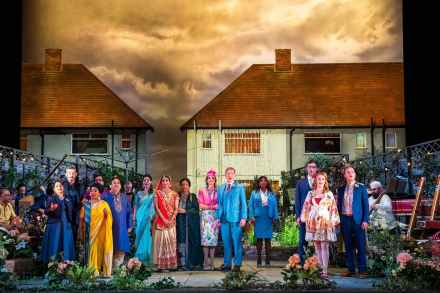
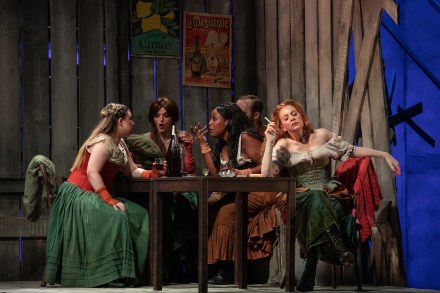
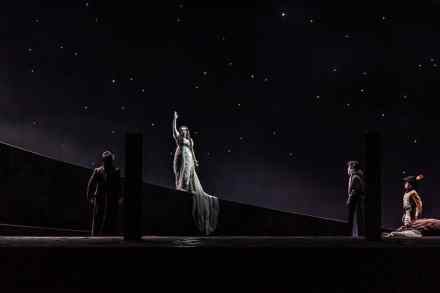
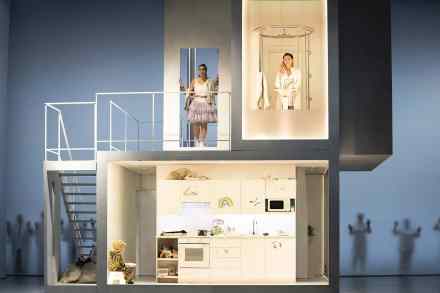
You’ve got to hand it to Dame Ethel Smyth. Working in an era when to be a British composer implied an automatic cultural cringe towards the continent, she didn’t miss a beat when Henry Brewster, the librettist of her 1906 opera The Wreckers, chose to write in French. The incoming music director at Covent Garden was the Frenchman André Messager; perhaps, Smyth reasoned, ‘to compose this opera in French would be the best chance of a performance in England of an English opera!’ Good call: 116 years later, you get the distinct impression that the opportunity to première the unheard French version of the opera (it’s been done numerous times in English) may have tipped the balance for Glyndebourne.

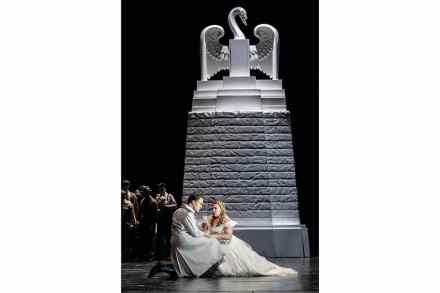
A fine cast, superbly conducted – just don’t overthink the production: Royal Opera’s Lohengrin reviewed

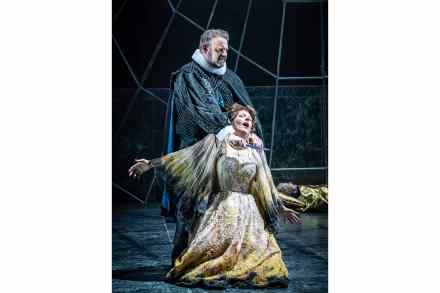
To be a Wagnerite is to enter the theatre in a state of paranoia. Mainstream culture has decided that Wagner was uniquely wicked; that’s just how it is, and it’s futile to retort that we seem comparatively relaxed about, say, Richard Strauss’s membership of the Reichsmusikkammer, or Stravinsky’s post-1945 anti-Semitism. Or that within recent memory Prokofiev’s October Cantata was presented in the UK as a bit of kitschy fun. (Never mind the dead kulaks: enjoy those accordions!) True, Wagner was an immeasurably greater artist, so he should be held to higher standards. No quarrel with that, at least not here and not now.

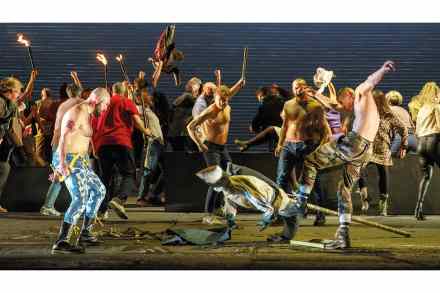
Comes so close to greatness but succumbs to prejudice: Royal Opera’s Peter Grimes reviewed

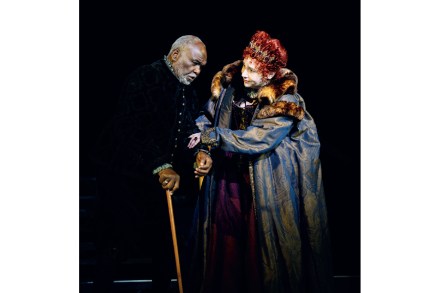
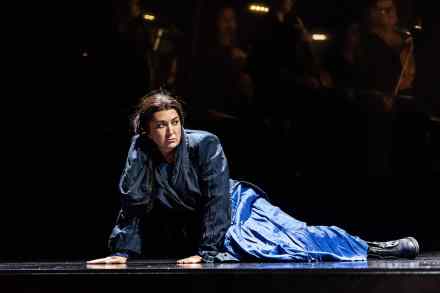
No question, the Royal Opera is on a roll. Just look at the cast list alone for Deborah Warner’s new production of Britten’s Peter Grimes. Allan Clayton sings Grimes, Bryn Terfel is Captain Balstrode, and John Tomlinson is Swallow, with Mark Elder conducting. Even before you get to a supporting cast that includes premium names such as James Gilchrist, Jennifer France and Catherine Wyn-Rogers, you’ve basically got the three pre-eminent British male singers of their respective generations, singing their boots off in the greatest of all British operas under the baton of the conductor who (it’s naive, but let’s dream) really ought to succeed Antonio Pappano when he leaves the Royal Opera in 2024.

Old-school excess, star power and spectacle: Royal Opera’s Tosca reviewed

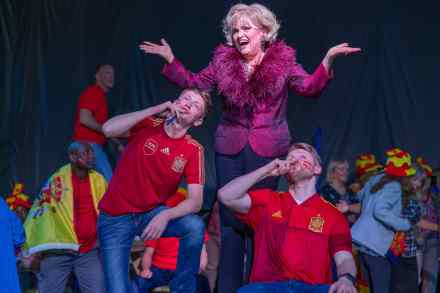
London felt like its old self on Friday night. Possibly it was just me; when you visit the capital once a week, your impressions will only ever be snapshots. Still, it’s been a while since I’ve battled such a flood tide of commuters on the ramp at Euston, or since the Royal Opera House seemed to be buzzing quite so excitedly. Crowds were four deep at the champagne bar; a latecomer in a spangly tux squeezed past and into his seat, grinning a slightly tipsy apology. And at the heart of it all — the succulent hunk of well-aged rump steak generating all this sizzle — was a revival of Jonathan Kent’s lavish period staging of Puccini’s Tosca, with a marquee name in the title role.

Handel as Netflix thriller: Royal Opera’s Theodora reviewed

The Royal Opera has come over all baroque. In the Linbury Theatre, they’re hosting Irish National Opera’s production of Vivaldi’s 1735 carnival opera Bajazet; unsurprisingly, its first appearance at Covent Garden. Upstairs in the big room, they’re doing Handel’s Theodora: premièred at Covent Garden in March 1750 and then ignored by the Royal Opera and its forebears for the next 272 years. In fairness, it isn’t actually an opera. It’s an oratorio, and it was a flop. Handel attributed its neglect to the fact that the story ‘is a virtuous one’, though the music’s emotional appeal is uncompromising, and the basic morality — Christians and virtuous pagans vs a tyrannical Roman governor — is clear-cut.

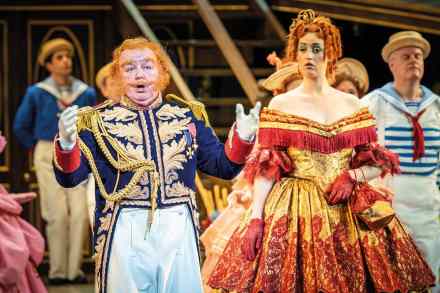
This is how G&S should be staged: ENO’s HMS Pinafore reviewed

Until 1881, HMS Pinafore was the second-longest-running show in West End history. Within a year of its première it had broken America too; at one point there were eight competing productions on Broadway alone. The single most wrongheaded notion that still clings to Gilbert and Sullivan’s operas is that they’re somehow low-rent or parochial. They were blockbuster international hits, superbly written, lavishly staged and exported far beyond the Anglosphere. Pinafore was performed in Denmark as Frigate Jutland and in Vienna, Johann Strauss was driven off stage by the runaway success of The Mikado. In the words of the operetta historian Richard Traubner, Gilbert and Sullivan’s collaborations were ‘simply the best musical productions of the Victorian age’.

We’ll be talking about Royal Opera’s Jenufa two decades from now

Leos Janacek cared about words. He’d hang about central Brno, notebook in hand, eavesdropping on conversations and trying to capture their exact rhythm and intonation in scribbled semitones and quavers. So there’s a tidy irony in the fact that the opera that made his name isn’t really called Jenufa at all. Janacek called it Jeji Pastorkyna, and if it’s easy enough for non-Czech speakers to understand why that was never likely to travel, it’s not without consequence. Another woman drives this story, and in the original title she’s present but unnamed: Jenufa’s stepmother, described simply as Kostelnicka, or churchwarden. Jeji Pastorkyna translates roughly as ‘Her Stepdaughter’. No matter.

Hits you where it hurts: Welsh National Opera’s Madam Butterfly reviewed

‘It’s generally agreed that in contemporary practice, this opera proposes significant ethical and cultural problems,’ says the director Lindy Hume in the programme book for her new production of Madam Butterfly, and if you’ve just shelled out 75 quid in the expectation of attractive scenery and luscious tunes, that’s you told. In truth, it’s rarely advisable to read what a director thinks about their own work, at least until after the show, when it can serve as a bemusing footnote to the evening’s entertainment. Ah, so that’s why they were wearing pink beehive wigs! If a director is any good at their job, it’ll come across on stage without any need for commentary.

Neither Tristan nor Isolde quite convinced: Glyndebourne’s Tristan und Isolde reviewed

Glyndebourne is nothing if not honest. ‘In response to the ongoing Covid-19 restrictions our 2021 performances of Tristan und Isolde will be presented as a concert staging, after the 2003 production by Nikolaus Lehnhoff’, says the programme, and what we get is not a full production but a compromise imposed by the peculiar circumstances of August 2021. The London Philharmonic Orchestra huddles on stage. Behind them the back wall glows and fades in washes of blue and pink; in front, a stepped apron extends over the redundant orchestra pit. The singers slip on and off from the wings or, in a basic but effective trick of lighting design, appear to materialise from the embracing darkness. It’s an approach to Wagner that can work well.

Springtime for Putin: Grange Park’s The Life and Death of Alexander Litvinenko reviewed

Alexander Litvinenko lies in a London hospital, dying of polonium poisoning. That photograph from 2006 haunts the memory: the medical robe, the electronic monitors, Litvinenko’s accusing gaze and bald, ravaged head. But in case we needed reminding, Grange Park Opera handed out copies of Death of a Dissident, the account of the crime by Litvinenko’s widow Marina, and the principal source for Anthony Bolton and Kit Hesketh-Harvey’s new opera The Life and Death of Alexander Litvinenko. Minutes later, a hospital bed rolled on stage replicating that exact image. And then Litvinenko — the tenor Adrian Dwyer — opened his mouth and started to sing. Opera plays a high-stakes game with dramatic realism at the best of times, but this was startlingly upfront.

Zips along with enormous vim: Malcolm Arnold’s The Dancing Master reviewed

Malcolm Arnold composed his opera The Dancing Master in 1952 for BBC television. It never appeared, the problem being the source material — William Wycherley’s 1671 farce The Gentleman Dancing Master. Jokes about wedding nights and ‘scarlet foppery’ might have flown in the reign of Charles II but the New Elizabethans at Broadcasting House were altogether more shockable. ‘Too bawdy for family audiences,’ was Auntie’s official verdict, leaving The Dancing Master largely forgotten until a premiere recording late last year, and now — conducted by John Andrews and using almost the same cast — its first ever professional production, at the Buxton International Festival.

The finest Falstaff you’ll see this summer

Comedy’s a funny thing. No, seriously, the business of making people laugh is as fragile, as mercurial as cryptocurrency — a constellation of shifting risk factors, many beyond control, any of which can kill a joke deader than Dogecoin. Opera is already at a disadvantage. Timing — comedy’s accelerant of choice — is predetermined, dictated by the demands of unwieldy choruses and slow-moving sets, pinned down to the second by a score whose creator may be anything but a natural comedian. Just ask Verdi, whose early farce Un Giorno di Regno was such a comprehensive flop that he gave up the genre altogether for almost an entire career. But at 75, all but retired after a sequence of bloody tragedies, the composer returned for one last shot at comic victory.

You’ll shrug where you should marvel: Garsington’s Amadigi reviewed

When you think of Handel’s Amadigi (in so far as anyone thinks about the composer’s rarely staged, also-ran London score at all) it’s as a magic-opera. Sorcerers and sorceresses do battle in a fantasy land not found on any map. The stage directions alone are enough to stir the commercial loins of any 18th-century impresario. Enchanted palaces are ‘split asunder’, caves transformed into ‘beautiful palaces’, monsters ‘ascend from the bowels of the Earth’ and a chariot ‘descends covered in clouds’.

Wow, this is good: Grange Park Opera’s Ivan the Terrible reviewed

There are worse inconveniences than having to wear a face mask to the opera. But there’s one consequence that hadn’t really struck home until an hour into Rimsky-Korsakov’s Ivan the Terrible. The citizens of Pskov are massing in the streets. The Tsar’s army is approaching, and Rimsky is building one of those surging Russian crowd scenes: bass-heavy chorus blazing away while ominous bell sounds — basses, horns and rasping gong — shake the orchestra to its bones. Suddenly a bloodstained figure staggers in and collapses; a refugee from nearby Novgorod. ‘Your brother-city sends its greetings, and asks you to arrange its funeral,’ he gasps.

Lush, elegant and vivid: Der Rosenkavalier at Garsington reviewed

At the turning point of Richard Strauss and Hugo von Hofmannsthal’s Der Rosenkavalier, all the clocks stop. Octavian has arrived at the house of the teenage bride-to-be Sophie von Faninal as bearer of the silver rose — the symbol of a love that is simultaneously as artificial and as eternal as any human creation can be. Sophie smells real roses; yes, says Octavian, there is a drop of Persian fragrance amid the silver petals. ‘Like a heavenly, not an earthly rose’, sings Sophie: and her voice soars higher and purer than anything we’ve heard so far, suspended in stillness while Strauss’s orchestra shimmers around her. The thing is, in Bruno Ravella’s new staging for Garsington Opera we already know the rose’s secret.

World-class music, heavily symbolic staging: Glyndebourne’s Katya Kabanova reviewed

At the first night of Glyndebourne Festival 2021 there was relief and joyful expectation as Gus Christie made his speech of welcome. Never mind the hit to takings from the closed bar and the necessarily half-empty auditorium; never mind the scaled-back orchestra and abridged score. The new production of Katya Kabanova provided the thirsty opera-goer with a long cool drink of world-class music and heavily symbolic staging. Janacek’s exploration of a yearning female psyche has parallels with Anna Karenina and Madame Bovary. It lives or dies by its lead, and the Czech soprano Katerina Knezikova excelled as Katya.

The two composers who defined British cinema also wrote inspired operas

It’s my new lockdown ritual. Switch on the telly, cue up the menu and scroll down to where the vintage movies gather — Film 4, or the excellent Talking Pictures TV. Then search through their early-hours offerings, and press ‘record’ more or less at random. Gainsborough costume flicks; Rattigan adaptations; anything with John Mills in a submarine — it’s all good. Then, next day, trawl through the catch to see what’s surfaced, and who wrote the music. On a good night you might get Vaughan Williams in 49th Parallel, Richard Rodney Bennett in Billy Liar or — bewilderingly — the fire-breathing serialist Elisabeth Lutyens, keeping herself in cigarettes and brandy with scores for The Skull or Dr Terror’s House of Horror.

Another cracking take on the opera film: Marquee TV’s Turn of the Screw reviewed

I’m still waiting for the Royal Opera to step up. Nearly a year into the Covid crisis and what do they have to show for it? One stonking concert staging of Ariodante, a couple of gala-ish performances and some operatic scraps. Where’s the creativity? Where’s digital ingenuity, the willingness to experiment, reinvent, adapt? Where, frankly, is opera? When companies with a far greater reliance on box office than the heavily subsidised Royal Opera can do their bit — look at Grange Park’s tireless stream of content, ENO and Scottish Opera’s various car-park Bohèmes, English Touring Opera’s monodramas and song cycles, Glyndebourne’s Offenbach-in-the-garden — it’s hard not to feel frustrated.

Hear the greatest Parsifal of our time sing like a Muppet: Jonas Kaufmann’s Christmas album reviewed

In classical music circles, Christmas arrives with the overture to Handel’s Messiah. Or so they’ll tell you. In truth, festivities kick off when you hear a ping from your phone and glance down at your inbox: OMG — you have to hear this! There follows, as tonic follows dominant, a link to YouTube and the 2014 Christmas in Vienna Medley — the occasion, still barely fathomable to anyone who believes that we share a common European culture, when a quartet of opera singers in full evening dress, and shimmying on the spot like a vicar at a Sunday School disco, attempted to cover George Michael’s ‘Last Christmas’. But not this year. Oh no.

A coherent evening of real opera: GSMD’s Triple Bill reviewed

Covid has been many things to the arts — most of them unprintable. A plague, a scourge, a disaster from which many institutions and artists won’t recover, it has also been a great equaliser. Suddenly there’s space to be heard, silence to be filled. In a digital world no one cares about the size of your stage. All you need is a laptop and a good idea and you’re competing alongside the Met or the Royal Opera. In the case of the Virtual Opera Project it was a shed and a homemade green-screen. Oh, and a cast, chorus and creative team of well over 100. And did I mention the London Philharmonic Orchestra?