Opera

To die for: Grange Park Opera’s Tristan & Isolde reviewed

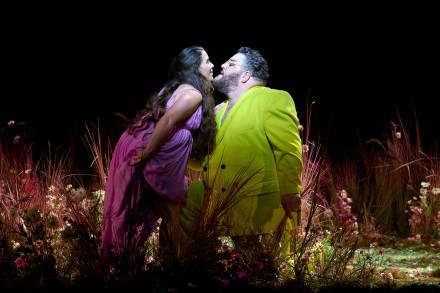
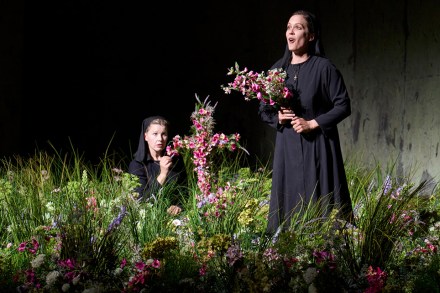
There are a lot of corpses on stage at the end of Charles Edwards’s production of Tristan & Isolde for Grange Park Opera. At this stage in the drama, directors tend to fade out the bloodbath, the better to focus on Isolde’s final dissolution into bliss. But as Michael Tanner argues, Tristan, like the Ring, offers no bearable solution to its central problem, however much the music – that great deceiver – might try to persuade us otherwise. You want art to tell you the truth? Wagner knew that you can’t handle the truth. He declared that in Tristan ‘from the first to the last, love shall for once find utter fulfilment’. So it does, and the result is carnage. So yes, here’s to the corpses, and to many other aspects of this attractive staging.

The final scenes are a knockout: Glyndebourne’s Don Giovanni reviewed

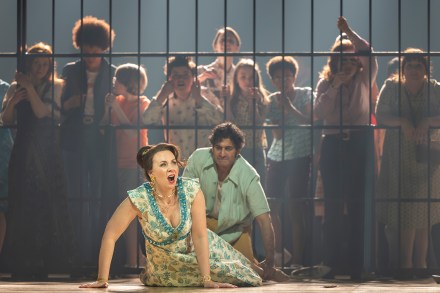
Are you supposed to laugh at the end of Don Giovanni? Audiences often do, and they did at the end of Mariame Clément’s new production at Glyndebourne. It’s usually the bit where Donna Anna’s fiancé Don Ottavio suggests that they get married sharpish, and she immediately asks him for a year’s delay. Readers of Middlemarch will know that a year’s formal mourning after the death of a close relative was a common pre-modern convention, and Mozart’s writings suggest that he (if not his librettist) questioned neither the sanctity of marriage nor the reality of Hell. That doesn’t bother many modern directors, though, and if they’ve presented Anna as a kickass girl boss and Ottavio as a clingy milksop (not that hard, to be fair) it generally gets a reliable guffaw.

Alert, inventive and thoroughly entertaining: Scottish Opera’s Carmen reviewed

Scottish Opera’s new Carmen begins at the end. ‘Take me away: I have killed her,’ intones a voiceover and as the prelude swaggers out, José is in a police interrogation cell, where an investigator is attempting to piece together his story. In other words, it’s CSI: Seville. In converting Meilhac and Halévy’s libretto into a police procedural, director John Fulljames has created a Carmen that’s ideally gauged to a TV-literate audience: told in flashback, with any confusion swiftly cleared up by spoken dialogue that never feels clunky because interrogation is central to the genre. And unless you want to be surprised by the dénouement, it works a treat. Is that whopping spoiler really such a big deal?

WNO sinks an unsinkable opera: The Magic Flute, at Birmingham Hippodrome, reviewed

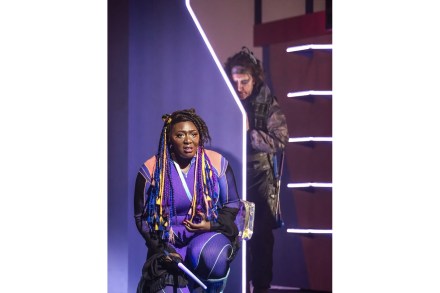
As stage directions go, the The Magic Flute opens with a zinger. ‘Tamino enters from the right wearing a splendid Japanese hunting costume.’ That’s right, a Japanese hunting costume. What does that even look like? More to the point, what would a Viennese theatrical costume designer in 1791 have thought it looked like? Surviving evidence suggests that the answer was ‘nothing on Earth’, which is handy because it gives subsequent interpreters a huge amount of licence. Schikaneder’s rag-bag libretto has its quirks and non sequiturs, but it’s an astonishingly robust piece of theatre. I’ve seen The Magic Flute done as panto, as manga, as gothic fantasy and as 1970s British sci-fi. As long as a director preserves the essentials, it’s basically indestructible.

Powerful and beguiling: Innocence, at the Royal Opera House, reviewed

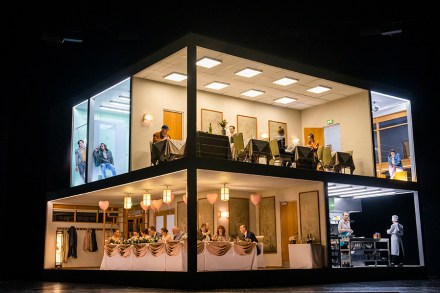
The big London companies gave two UK premières in the space of a week, both dealing with the subject of teenagers being shot dead. Kaija Saariaho and Sofi Oksanen’s new opera Innocence was premièred at the Aix-en-Provence Festival in 2021 and comes to the Royal Opera in exactly the same production by Simon Stone, the Australian director responsible for that lockdown favourite The Dig as well as a shattering staging (in Munich, in 2019) of Korngold’s Die tote Stadt. Innocence is a series of elastoplasts being pulledoff very slowly So Innocence was never likely to pull its punches. Chloe Lamford’s set – a brightly lit modernist structure that revolves as the plot moves between present and (traumatic) past – is simultaneously bold and simple.

The opera’s a masterpiece but the production doesn’t quite come off: ENO’s The Dead City reviewed

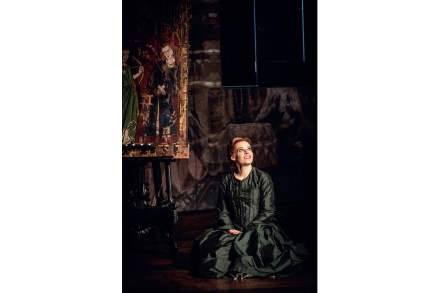
English National Opera has arrived at the Dead City, and who, before Christmas, would have given odds that this new production of Korngold’s Die tote Stadt would ever make it this far? This is late-Romantic music-drama on an exuberant scale; it simply doesn’t lend itself to pubs and car parks (even the reduced version staged – superbly – at Longborough last summer used an orchestra of some 60 players). Korngold deals with strong emotions (grief, delusion and obsessive love) with a melodic generosity that has historically provoked the prissiest instincts of the British operatic establishment. The Royal Opera held its nose and staged a brief run in 2009, before sweeping it hastily under the carpet. But not ENO.

Electrifying: London Handel Festival’s In the Realms of Sorrow, at Stone Nest, reviewed

Hector Berlioz dismissed Handel as ‘that tub of pork and beer’ but it wasn’t always like that. Picture a younger, sexier Handel, rocking into Rome aged 22 and challenging Scarlatti to a keyboard duel. The Italian elite couldn’t get enough of Il caro Sassone, ‘the darling Saxon’, and he repaid them with 80-odd short Italian cantatas: little controlled explosions of character, colour and flamboyant melody in which his whole future career as a musical dramatist can be heard in concentrated form. This was an encounter with a genuinely evil work of art For the London Handel Festival, the director Adele Thomas staged four of these pocket-operas. The setting was Stone Nest, a domed former church, and the performance took place in the round.

Crapcore: ENO’s The Rhinegold reviewed

Tubas and timpani thunder in The Rhinegold as the giants Fasolt and Fafner, having built Valhalla, arrive to claim their fee: Freia, goddess of beauty and youth. It doesn’t go well. Suddenly Fasolt drops his defences and declares his yearning (the translation is John Deathridge’s) for ‘a woman who’d lovingly and softly live with us lowly mortals’. At those words the music melts, and a solo oboe sings a melody so poignant that Ernest Newman thought it worthy of Mozart. This is the first instance in the whole cosmic drama where Wagner gives us a glimpse, however unformed, of something that an adult human might recognise as love.

Close to perfection: Opera North’s The Cunning Little Vixen reviewed

Opera North has begun 2023 with a couple of big revivals, and it’s always rewarding to call in on these things and see how they’re holding up. The long-lived, endlessly revived classic production is one of the quirks of operatic culture. It actually feels disconcerting, as a regular operagoer, to go to the conventional theatre (you know, the vanilla kind where they don’t sing) and discover that they’ve started again from scratch. A completely new Tempest? What was wrong with the 2016 staging? Possibly it’s to do with the financial realities of an art form that needs to keep a full orchestra and chorus on the payroll. A Year Zero policy every other season simply isn’t economically viable.

Reduced me to a tearful, choked-up mess: Royal Opera’s Magic Flute reviewed

‘The rays of the sun conquer the night’ sings Sarastro, at the end of Mozart and Schikaneder’s Die Zauberflöte. It was the Royal Opera’s first performance of January 2023 and there’s something profoundly consoling about seeing this of all operas at the midnight of the year. The lights dim; five chords ring out and that first triplet from the violins falls quietly into place as Mozart engages the gears and together we move off on our long, sweet journey towards light. In David McVicar’s staging, robed figures process down the auditorium bearing glowing orbs, while Tamino, in late 18th-century frock-coat and knee-boots, clambers out from the boxes and vanishes through a portal in the front-cloth. There is a world elsewhere. And then we’re off.

The sonic equivalent of a Starbucks Eggnog Latte: ENO’s It’s a Wonderful Life reviewed

Whoosh! A digital starburst, a sweep of orchestral sound and the stage of the Coliseum is alive with dancing, whirling snowflakes. Floating in the heavens is the soprano Danielle de Niese; below her in the darkness, the truss bridge that we all know – because we’ve all seen It’s a Wonderful Life – is where the turning point of the story will occur, a couple of hours from now. That being the case, the only question is how composer Jake Heggie, librettist Gene Scheer and director Aletta Collins are going to close the circle and get us there. It’s evident from the off that they’re not going to stint either on spectacle or on sentiment. And quite right too: this is a Christmas opera, and there aren’t too many of those about.

A towering achievement: ENO’s The Yeomen of the Guard reviewed

The screw may twist and the rack may turn: the Tower of London, in Jo Davies’s new production of The Yeomen of the Guard, is a dark place indeed, and that’s as it should be. ‘Men may bleed and men may burn,’ intones Dame Carruthers, as she delivers a magic lantern show about the history of the Tower, complete with colour slides of famous beheadings. In The Mikado Gilbert uses capital punishment as a particularly spiky punchline, but in The Yeomen of the Guard, sentence of death has been passed before the curtain has even risen. The shadows are lengthening from the off, and even Sullivan’s cheeriest melodies have a dying fall.

Bold, self-assured reimagining of Monteverdi: Opera North’s Orpheus reviewed

You wouldn’t like Tamerlano when he’s angry. ‘My heart seethes with rage,’ he sings, in Act III of Handel’s opera – spraying coloratura about the stage like Silly String on a 1980s kids’ TV show. That’s the deal with baroque opera: the emotional register is extreme and you’re either in the moment or you might as well leave the theatre. Literal realism, clearly, is not the point – making it even more necessary for a modern director to sketch in some hint of a social or cultural framework in which we can locate and comprehend these hyper-real characters. The music is too hot and too strong to work as drama in a purely abstract setting. Pare it back too far and you’re left with five maniacs screaming at each other in a black box.

More depravity, please: Salome, at the Royal Opera House, reviewed

The first night of the new season at Covent Garden was cancelled when the solemn news came through. The second opened with a short, respectful speech from Oliver Mears, the director of opera, and a minute’s silence in which the houselights were lowered and we could gaze at the curtains, from which the huge gold-embroidered EIIR cypher had already been removed. For the first time in King Charles’s reign, we sang the national anthem to unfamiliar new words. There were shouts of ‘God Save the King!’And then the lights dimmed once more and we proceeded with the business of the evening, and the life of the Royal Opera.

An electrifying, immersive thrill: Scottish Opera’s Candide reviewed

The first part of the adventure was getting there. Out of the subway, past the tower blocks and under the motorway flyover. A quick glance at Google Maps and into a patch of litter-blown scrub. Someone bustles up alongside me: ‘Are you looking for the opera?’ I am, yes: and my guess is that the cluster of clipboard-y types in high-vis tabards next to that warehouse probably marks the entrance. We’re waved in: ‘Big Cock’ proclaims a graffiti-covered wall.

Convincing performances and unexpected sounds: Opera Holland Park’s Delius/Puccini double bill reviewed

Delius and Puccini: how’s that for an operatic odd couple? Delius, that most faded of British masters, now remembered largely as a purveyor of wistful aquarelles. And…well, and Puccini. Early, neglected Puccini, true, but this is Opera Holland Park, where they make it their mission to rescue the waifs and strays of Italian late romanticism, and see how they scrub up. Demonstrable dud by unfashionable Englishman vs youthful ambition from Italian opera’s ultimate marquee name. We all knew, in advance, how that was likely to play out. And we were all wrong. It turns out that both Puccini’s Le Villi (1884) and Delius’s Margot la Rouge (1902) were written for the same long-running competition that gave us Mascagni’s Cavalleria Rusticana.

With everything working properly, this would have been a lot of fun: Grange Park’s La Gioconda reviewed

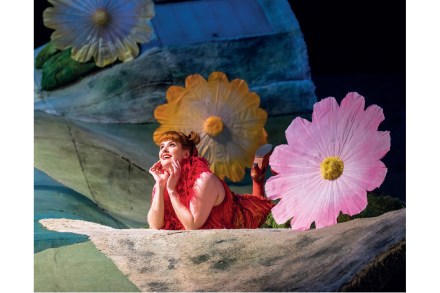
There are composers who are known for a single opera, and there are operas that are known for only a single aria. But to be a 19th-century Italian opera composer and to be remembered solely for your ballet music – well, that’s a bit special. As the orchestra tiptoed into the ‘Dance of the Hours’, in Act Three of Grange Park Opera’s production of Amilcare Ponchielli’s La Gioconda, the audience sighed with recognition. There were a few giggles, too. Ten minutes later, as the ballet slammed to its finish (without a note of actual – y’know – singing), they exploded into the loudest ovation we’d heard all night. It was probably always going to happen.

Had the air of a Blue Peter Christmas special: Grange Festival’s The Yeomen of the Guard reviewed

The Yeomen of the Guard has been called the ‘English Meistersinger’ but the more you think about that, the dafter it gets. It’s not just the very obvious difference in scale and means between Wagner’s five-hour national epic and Gilbert and Sullivan’s sprightly opéra comique. Wagner’s whole drama builds to a collective affirmation of German art. The Yeomen begins by setting up a fantasy of an English golden age – the Tower of London in the 16th century – then systematically cuts it to ribbons.

A thoroughly enjoyable grand old heap of nothing: The Excursions of Mr Broucek reviewed

Sir David Pountney, it appears, has been to Prague. He’s booked himself a mini-break, he’s EasyJetted out, and after (one assumes) necking a couple of pints of unfiltered Pilsner, he’s splurged the entire design budget for Janacek’s The Excursions of Mr Broucek on the loudest tourist tat that the Mala Strana has to offer. Scale it up, pile it on stage; job’s a good ’un. There’s a snow globe and a Lenin candle; there are dinky toy houses and a cardboard pop-up of the Charles Bridge. A massive souvenir plate (badly cracked) hangs over the stage, blazoned with a panorama of Hradcany Hill and the single word – at least two feet high – PRAHA.