Opera

Our half-time scorecard on the Royal Opera’s Ring cycle

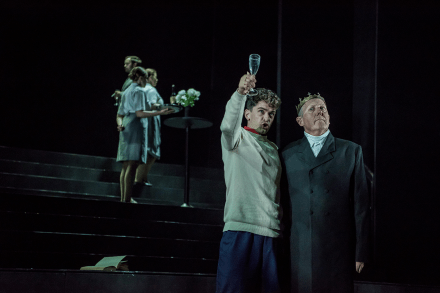
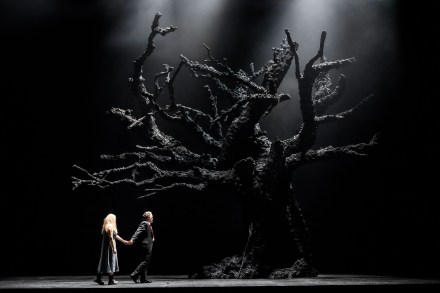
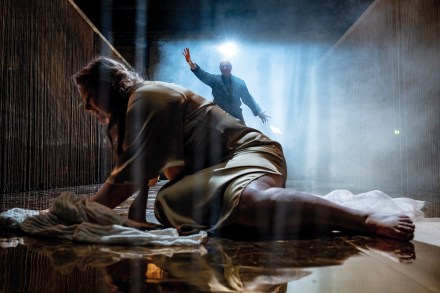
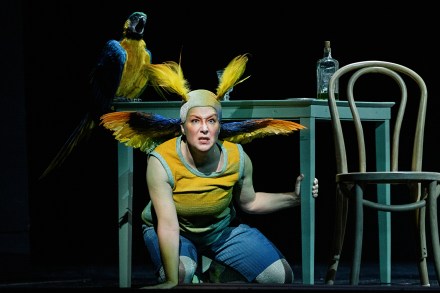
With Die Walküre, the central themes of Barrie Kosky’s Ring cycle for the Royal Opera are starting to emerge, and one of them seems to be wood. Not trees, so much; at least not as a symbol of life. After the rapid assembly of a world from theatrical nothingness (a bare stage), Hunding’s forest hall is simply a wall of blackened planks, with no World Ash Tree in sight. Then you notice the protruding hilt of the sword Nothung: no, that is the World Ash Tree, and Hunding has recycled it into building material. We knew he was a wrong ’un, but really: this is Sycamore Gap-level wickedness. Various ex-trees recur in Rufus Didwiszus’s designs. The huge, maimed log from Das Rheingold reappears during Siegmund and Hunding’s duel, spewing blood as the betrayed hero falls and dies.

Inspired: Scottish Opera’s Merry Widow reviewed

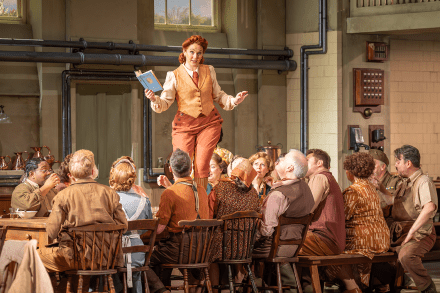
The Merry Widow was born in Vienna but she made her fortune in the West End and on Broadway. The original 1905 Viennese production was a shoestring affair. It was the English-language revivals in London and New York that made the Widow a global smash, and that happened only after extensive rewriting, done with Lehar’s wholehearted endorsement. Hanna Glawari (deemed unpronounceable) was renamed Sonia Sadoya, Zeta became Baron Popoff and the comedian George Graves inserted a humorous monologue about a chicken called Hetty. You probably had to be there. Anyway, the point is that operetta is protean. Rewrites, updates and changes of setting are not only forgivable; they’re intrinsic to the genre.

Devastating: WNO’s Peter Grimes reviewed

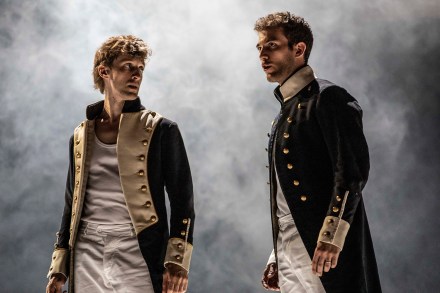
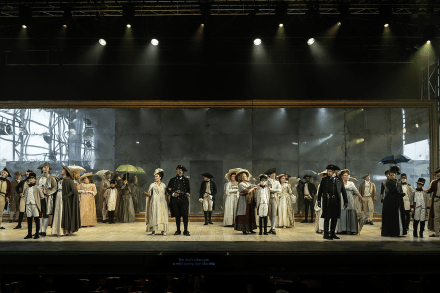
Britten’s Peter Grimes turns 80 this June, and it’s still hard to credit it. The whole phenomenon, that is – the sudden emergence of the brilliant, all-too-facile 31-year-old Britten as a fully formed musical dramatist of unignorable force. W.H. Auden had urged him to risk everything – to step outside his admirers’ ‘warm nest of love’ – and in the first moments of Peter Grimes, Britten does precisely that. The folk-opera bustle of the opening tribunal scene dissolves into the desolate bird cry of the first Sea Interlude and straight away, you’re in the presence of something unimaginably vaster and more true. It pins you to your seat. That was certainly the impression I had from Tomas Hanus, conducting the orchestra and chorus of Welsh National Opera.

Spreads emotions like jam: Festen, at the Royal Opera House, reviewed

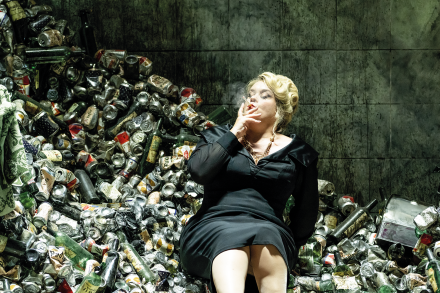
Mark-Anthony Turnage’s new opera Festen opened at Covent Garden earlier this month, and reader, I messed up. I broke my own golden rule with new operas: don’t do any homework, don’t try to memorise the plot, and whatever you do, don’t revisit the source material. The aim is to experience the new work on its own terms. That’s hard enough, given the PR onslaught that precedes any Royal Opera première – the way the classical establishment circles the wagons, and the unspoken consensus that certain living composers (including Adès, Benjamin and Turnage, though not Judith Weir, curiously) are simply too big to fail. But no: I rewatched Thomas Vinterberg’s 1998 Dogme movie, twice, and it was the wrong decision. Inevitably, and unfairly, you cross-reference.

Regents Opera’s Ring is a formidable achievement

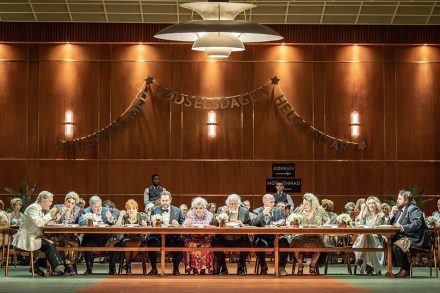
I saw the world end in a Bethnal Green leisure centre. Regents Opera’s Ring cycle, which began in 2022 in Freemasons’ Hall in Covent Garden, has found its culmination and completion at York Hall, a rundown public bath better known for championship boxing. Tower Hamlets security staff scan you for concealed weapons on the way in, which is not exactly typical at the opera. Still, the Ring is not a typical opera – and isn’t art supposed to feel dangerous? But once you’re inside – and as long as you’re not seated within earshot of the bar staff, who clatter and chatter throughout – Caroline Staunton’s scaled down production transfers seamlessly; in fact, the sightlines are better.

A committed performance of Lerner and Weill’s flop: Opera North’s Love Life reviewed

Once upon a time on Broadway, Igor Stravinsky composed a ballet for Billy Rose’s revue Seven Lively Arts. After the first night, Rose felt that Stravinsky’s efforts might benefit from the attention of Robert Russell Bennett – the king of Broadway orchestrators, who’d collaborated with Cole Porter and the Gershwins. ‘YOUR MUSIC GREAT SUCCESS,’ he telegrammed to Stravinsky. ‘COULD BE SENSATIONAL SUCCESS IF YOU WOULD AUTHORISE ROBERT RUSSELL BENNETT RETOUCH ORCHESTRATION.’ Stravinsky wired straight back: ‘SATISFIED WITH GREAT SUCCESS.’ If you’re mad enough to revive Love Life, you have to commit. Opera North did There were moments in this revival of the Lerner and Weill flop Love Life when I wondered whether Weill, too, might have profited from a Bennett makeover.

Meet the king of comic opera 

John Savournin has been busy. That comes with the territory for a classical singer – things often get a little hectic as the music world barrels towards Christmas. But with Savournin, it’s sometimes hard to keep track of which theatre – which city – he’s in on any given night. ‘This week has been Pirates of Penzance rehearsals at English National Opera,’ he says: we’re a fortnight away from opening night, and he’s playing the Pirate King. ‘On Thursday I was bobbing up to the Lowry in Salford for Ruddigore with Opera North.’ He’s been swirling his cape as Sir Despard Murgatroyd since late October. ‘And yeah – whenever I can, I’ve been checking in on panto rehearsals.

A keeper: ENO’s new The Elixir of Love reviewed

There was some light booing on the first night of English National Opera’s The Elixir of Love, but it was the good kind – the friendly kind, aimed not at the baritone Dan D’Souza but his character, the caddish charmer Belcore. In other words, it was what opera snobs call ‘pantomime booing’, and which, as a peculiarly British phenomenon, they affect to deplore. If it happened in Munich or Milan they’d brandish it as evidence of an advanced opera-going culture – proof that an audience has been so completely transported by a performance that they’re reluctant to step out of its world. But any singer who’s remotely familiar with British theatrical traditions knows that it’s a compliment, and D’Souza beamed. It had been a thoroughly good-natured evening all round.

Fails to ignite: Royal Opera’s Tales of Hoffmann reviewed

I couldn’t love anyone who didn’t love Offenbach’s The Tales of Hoffmann. Everything – everything – is stacked against this opera. Offenbach left the score unfinished when he died, tormented with gout and pilloried by bores, at the age of 61. Some of its best-loved numbers were upcycled from his earlier hits, and at least one isn’t by him at all. Yet somehow, it lives. More than that, it soars: a tale of disillusion that glows with wonder and hope; a hymn to the sweetness of life and the miracle of art, held together against all logic by the sheer charisma of a composer who shot for the moon and fell among the stars. ‘Opéra fantastique’ was Offenbach’s own description, and he’s not wrong. I’m not saying that Michieletto doesn’t care about this opera.

One beauty – one turkey: Wexford Festival Opera reviewed

‘Theatre within Theatre’ was the theme of the 2024 Wexford Festival and with Sir Charles Villiers Stanford’s The Critic, that’s exactly what you get. Conor Hanratty’s production showed the interior of an 18th-century theatre, viewed from the stage. In the second act it flipped around to reveal the audience’s perspective. Were we now the audience? Clearly we were; which was awkward because where does that leave a critic? Obviously, one can’t be the critic because there’s already one on stage (the clue’s in the title), and as it turns out, The Critic isn’t really about critics, at all. Whatever – you get the picture. It’s all very meta; and more than a bit silly.

You’re unlikely to see a better case made for this Bernstein double bill 

It’s rare nowadays to see a new opera production that’s set in the period that the composer and librettist intended, but they do occasionally come along. In the case of Leonard Bernstein’s operas Trouble in Tahiti and A Quiet Place, the time and place are basically the whole plot. Trouble in Tahiti dates from 1951; a sassy little one-act satire on America’s postwar consumer idyll. It’s practically perfect. A Quiet Place is from 1983 and it’s a sequel, set 40 years later – post-Vietnam and post-Woodstock, with the nuclear family in full meltdown. These performances, and this production, provoke thoughts that might rob you of sleep It’s a bit of a mess, in other words, and Bernstein never really made the pairing work.

Committed performances – but who was the granny? Northern Ireland Opera’s Eugene Onegin reviewed

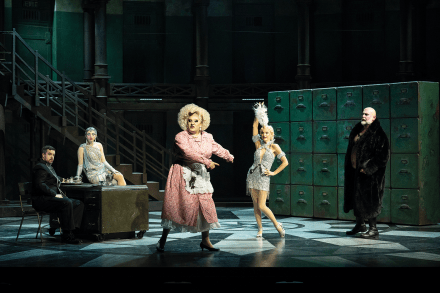
It’s a critic’s job to pick holes in the dafter aspects of opera productions, but in truth audiences are usually capable of detecting nonsense when they see it. ‘She must be at least 150,’ commented the gentleman sitting behind me, referring to the wheelchair-bound old lady who was trundled on stage at the start of Northern Ireland Opera’s new production of Eugene Onegin, and then parked there, pretty much for the duration. It really buzzed along, even if the set resembled a public lavatory (urinal chic seems to be an emerging trend) He had a point. Was she meant to be an elderly Tatyana? Then why was she dressed in modern clothes when the rest of the action played out in the era of Pushkin?

Aggressively jaded: Edinburgh’s Marriage of Figaro reviewed 

‘Boo!’ came a voice from the stalls. ‘Boo. Outrage!’ It was hard not to feel a pang of admiration. British opera audiences don’t tend to boo; we’re either too polite or too unengaged. But there we were in Act Three of Kirill Serebrennikov’s production of The Marriage of Figaro – just after the scene where Susanna, the Count and the Countess enjoy a three-in-a-bed romp while singing the trio ‘Soave sia il vento’ – and at least one person felt passionate enough to raise his voice. It was hard not to feel a pang of admiration. British opera audiences don’t tend to boo Obviously, there’s no such trio in The Marriage of Figaro.

Britain’s youngest summer opera festival is seriously impressive

Waterperry is one of the UK’s youngest summer opera festivals: it started up in 2018, at the northern limit of the species’ natural habitat. You leave the motorway at Oxford services and double back through the fields to the hamlet of Waterperry. Drive past the ‘Cats Crossing’ sign and the life-sized effigy of Rowan Atkinson (honestly) and you’re there. There’s a big house (slightly run to seed), a farm shop, a garden centre and a nursery containing the national saxifrage collection, which is not something you see every day. The opera festival squeezes in between them. Let’s do the show right here! Well, why not? The Barber was literally staged on the lawn. And if it rains? ‘We hope it won’t. Would you like a poncho?

In defence of Gilbert & Sullivan’s The Grand Duke

Artistic partnerships are elusive things. The best – where two creative personalities somehow inspire or goad each other to do better than their individual best – can seem so natural that they’re almost easier to identify by their absence. No one’s queuing up to revive Richard Rodgers’s Rex (lyrics by Sheldon Harnick). Pretending to rate Band on the Run above Revolver is a fun way to wind up boomers, but c’mon – honestly? With Gilbert and Sullivan, meanwhile, recordings have given us the chance to rediscover Grundy and Sullivan’s Haddon Hall and Gilbert and Cellier’s The Mountebanks: turkeys both.

A major operatic rediscovery: Birmingham Opera Company’s New Year reviewed

This prophecy Merlin shall make, for I live before his time. One of the most thrilling aspects of the Tippett revival has been the discovery that his late masterpieces seem to have been fitted with a four-decade time-fuse. Works that prompted bafflement in the 1970s and 1980s, and then sat there for years looking like duds, are suddenly acquiring their targets. A quarter of a century after Tippett’s death, they’re blinking into life, locking on, and detonating in huge, psychedelic sunbursts of precision-targeted beauty and truth.

Sparky and often hilarious: Garsington’s Un giorno di regno reviewed

Hang out with both trainspotters and opera buffs and you’ll soon notice that opera buffs are by far the more trainspotterish. It’s the pedantry, the one-upmanship (‘Really? You should have heard it with Goodall in 1976’). Above all, it’s the impulse to collect. You can’t actually buy little pocket books with lists of obscure operas to be underlined in biro once you’ve seen them (blue for a full staging, red for a concert performance) but there are certainly opera-goers who compile their own lists of personal stats – and they let you know it. The completist urge is powerful. Hardcore opera-spotters will cheerfully cross continents to cop a rare performance of Schreker’s Der Schatzgräber or César Franck’s Hulda.

An ensemble achievement that dances and sparkles: Glyndebourne’s Giulio Cesare reviewed

A classic opera production ages like wine. When David McVicar’s staging of Handel’s Giulio Cesare first opened at Glyndebourne in 2005, Michael Tanner – writing in these pages – loathed it. ‘A quite hateful betrayal’ was how he described a production that is now widely regarded as a classic. It would be easy to brandish those words now he’s gone – ha ha, no one ever erected a statue to a critic – ignoring the truth that any first night review can only ever be a snapshot, and that the big story back then was the hyperactive, neon-lit debut of Danielle de Niese as Cleopatra. Tanner did predict that de Niese would do well out of it, though no one guessed that she’d end up marrying the owner of the theatre.

‘Zings off the stage’: My Fair Lady, at Leeds Playhouse, reviewed

If you want to kill a musical, make it into a movie. Cats, Phantom of the Opera, South Pacific… cinema history is littered with dud remakes of world-conquering theatrical sensations. But it’s almost worse when a film musical succeeds on its own terms, and – like a mask eating into the face – proceeds to write over the original show in the collective memory. I once saw a newspaper describe a West End revival of The Sound of Music as a ‘stage version of the classic movie’, which is a bit like describing Pride and Prejudice as a novelisation of the hit BBC drama. Her coloratura is like sunlight on water.

A sugar rush for the eyes: Glyndebourne’s The Merry Widow reviewed

In 1905, shortly before the world première of The Merry Widow, the Viennese theatre manager Wilhelm Karczag got cold feet and tried to pull it. He offered Franz Lehar hard cash to withdraw the score, and when that failed, he rushed it on under-rehearsed, using second-hand sets from an older show. Or so the story goes anyway. Karczag couldn’t know that within a decade The Merry Widow would become the most successful piece of musical theatre in human history up to that point: an all-conquering global brand that gave its name to hats, corsets, cigarettes and a rather nice cocktail (equal measures gin and vermouth, splashed with absinthe, Bénédictine and bitters, in case you’re curious). In the 1920s an American firm even marketed Merry Widow condoms.