Music

How a City lawyer conquered the hardest piano work ever written

Charles-Valentin Alkan played the piano faster than Liszt and louder than Chopin. The dying Pole left instructions that only Alkan was to be trusted with completing his unfinished Études. Alkan cited Liszt and George Sand as his referees in a bid to be made head of piano at the Paris Conservatoire, but was rejected in what he perceived as an anti-Semitic snub. After one last concert in 1849, Alkan locked himself in his apartment for 20-odd years, emerging finally at the dead of night in the Salle Érard to play for a word-of-mouth audience of professional pianists. He was found dead 15 years later on 29 March 1888, supposedly crushed by a falling bookcase from which he was extracting a top-shelf tome from the Talmud.
In his new piano concerto Thomas Ades’s inspiration has completely dried up

There’s nothing like a good piano concerto and, sad to relate, Thomas Adès’s long-awaited first proper attempt at the genre is nothing like a good piano concerto. Not in the version we heard at its UK première in the Royal Festival Hall, anyway. What a disappointment! Perhaps Adès can rescue it, but he’d have to hack away at the score as ruthlessly as Bruckner dismantling his Third Symphony. That work wasn’t necessarily improved by its revisions but, honestly, almost anything would be an improvement on the first two movements of the 21-minute concerto performed by Kirill Gerstein and the LPO conducted by the composer. You knew there was something wrong after ten seconds.

Witty, clear-eyed and free of self-pity: Slowthai at Brixton Academy reviewed

Those who cherish the notion that the current prime minister really is ‘electoral Viagra’ should have paid a visit to Brixton last Friday evening to see what actual young people think about him. Before Slowthai — the young rapper from Northampton who ignored complaints about the toxification of political discourse by brandishing a dummy of Johnson’s severed head at this year’s Mercury Prize ceremony — even took to the stage, the 5,000 or so kids took up a chant of their own volition: ‘Fuck Boris! Fuck Boris!’ The Britain of Slowthai and his fans is not one in which anything can be overcome with a bit of Dunkirk spirit.

At their best the Psychedelic Furs are fantastic

It’s amazing what the movies can do. In 1986, the John Hughes teen flick Pretty in Pink — the one where poor girl Molly Ringwald and rich kid Andrew McCarthy get it together despite their friends’ disapproval — took its title from a Psychedelic Furs song, which featured heavily in the film. Whoosh! Suddenly they were proper stars. Or rather they were for a year or so. They reformed in 2000, but were just another band on the nostalgia circuit. Then along came another movie, the 2017 arthouse hit Call Me By Your Name, which featured their 1982 single ‘Love My Way’. Since then, the venues have grown again, the reviewers returned and the notices have been glowing. There are even whispers of another album.

Joyce DiDonato seduces you within the first 10 minutes: Royal Opera’s Agrippina reviewed

‘Laws bow down before the desire to rule…’ Centuries before ‘proroguing’ had entered British breakfast-table vocabulary there was Handel’s Agrippina, and centuries before that there was the woman herself. Sister of Caligula, wife of Claudius (who she may or may not have poisoned) and mother of Nero (by whom she was eventually executed), Agrippina was a true political animal: instigator, manipulator, machinatrix and far more. It’s a heady story in prose, so add a bit of poetic licence and a score by the 24-year-old Handel and you have a spicy blend of politics, satire and sex — Succession with a Roman accent.

An eight-year-old’s dream: Muse at the O2 reviewed

‘Butterflies and Hurricanes’ by Muse was on heavy rotation on MTV at a time, 15 years ago, when my infant son could be magically coaxed away from tears and back to sleep by pop videos. The only lasting effect of this proved to be my developing a deep and lasting aversion to Muse, because I saw that video what felt like 160 times a day for three months. Having watched them at the O2, I wish to apologise. Muse, my disdain was misplaced. You really are terrific. I’m still not sure I would want to listen to an unadulterated diet of their albums — a Christmas dinner of prog, glam and metal, seasoned with quasi-classical interludes and attempts to sound like Prince — but I’d run, not walk, to see them again from a good seat in an arena.

Simon Rattle’s Messiaen is improving with age

Two flutes, a clarinet and a bassoon breathe a chord on the edge of silence. As they fade, the sound quietly intensifies, morphing into the metallic buzz of cor anglais and muted horn. The third of Arnold Schoenberg’s Five Orchestral Pieces of 1909 doesn’t have a conventional melody, and there’s even less in the way of rhythmic or harmonic activity. It’s entirely about those minutely graded shifts in timbre. And having rendered this idea with such poetry, Schoenberg, being Schoenberg, duly slapped it with a label as clunky as his music was subtle: klangfarbenmelodie, literally, ‘sound-colour melody’. Apologies: it’s too easy to poke fun at Schoenberg.

The most exciting band I have seen for years and years: the Murder Capital reviewed

It’s entirely possible for a band to be quite the most brilliant thing in existence for the briefest of times, and for them to leave almost no trace on the world. The writer Jon Savage has been known to say that Vic Godard and the Subway Sect were the best band in the world for a few months in 1977, but that year’s mythology celebrates the Sex Pistols and the Clash. In the late 1980s, after seeing a handful of extraordinary, incandescent shows, I truly believed the House of Love would dominate rock music for the next decade. The House of Who? Quite. But I wasn’t wrong about how great they were for that short time.

The rude, ripe tastelessness of John Eliot Gardiner’s Berlioz is the perfect antidote to Haitink’s Instagram Bruckner

Conducting is one of those professions — being monarch is perhaps another — where the less you do, the more everyone loves you. Orchestral players, for example, tend not to complain about being let off early from rehearsals. I prefer my maestros to have their head under the bonnet: loosening, tightening, fixing, replacing. Much of the classical music world, however, fetishises the idea of ‘letting the music speak for itself’. As if ‘the music’ were an objective thing. As if the score were a rendering that could be printed out in 3D, rather than a map to be deciphered and interpreted.

Why did the Soviets not want us to know about the pianist Maria Grinberg?

Only four women pianists have recorded complete cycles of the Beethoven piano sonatas: Maria Grinberg, Annie Fischer, H. J. Lim and Mari Kodama. I’ve written before about the chain-smoking ‘Ashtray Annie’ Fischer: she was a true poet of the piano and her Beethoven sonatas are remarkably penetrating — as, alas, is the sound of her beaten-up Bösendorfer. Lim produced her cycle in a hurry when she was just 24; it’s engaging but breathless. Kodama’s set, just completed, is a bit polite. Which leaves Maria Grinberg (1908–78), whose recordings remain just where the Soviet authorities wanted them. In obscurity. That is shameful — and not because she was the first woman and the first Russian to record all the sonatas.

Why this première felt important: James MacMillan’s Fifth Symphony reviewed

All symphonies were sacred symphonies, once. Haydn began each day’s composition with a prayer, and ended every score with the words ‘Laus Deo’. ‘These thoughts cheered me up,’ he told his biographer Albert Dies. Haydn, like Mozart, was a lifelong Catholic, and the Swiss theologian Hans Küng has suggested that the daring, exuberance and glorious wholeness that characterises even Mozart’s secular music comes from a specifically Catholic understanding of the universe: of salvation perceived not as an object of struggle, but as an unshakable, all-embracing certainty. Sir James MacMillan’s Fifth Symphony concerns itself with the Holy Spirit, but he struggled to find an English phrase that did the job, so its title is Le grand inconnu.

Missing the beat

It was as though Damien Hirst had confessed a secret passion for Victorian watercolours, or Lars von Trier had admitted his life’s ambition to direct a rom-com. When it was announced that John Eliot Gardiner — pioneer of the early music movement — would conduct West Side Story at the Edinburgh Festival the reactions were extreme. What next? Harnoncourt conducts Hair? Les Arts Florissants sing Phantom? But is the leap from Bach to Bernstein really that big? Both live or die with rhythm, with the dances that pulse and lilt and churn through them. Minuet or mambo — really, what’s in a beat? And then there’s texture.

Golden threads

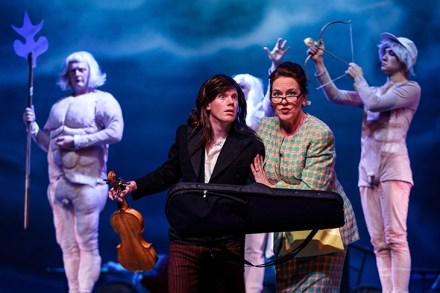
When it comes to the opening of Wagner’s Das Rheingold, Mark Twain probably put it as well as anyone: ‘Out of darkness and distance and mystery soft rich notes rose upon the stillness, and from his grave the dead magician began to weave his spells about his disciples and steep their souls in his enchantments.’ As at Bayreuth, so in Dalston. At the start of Julia Burbach’s production for Grimeborn, a man stumbles into a back  alley and, rummaging through discarded boxes, finds a pair of headphones. And there it is: that deep, eternal E flat. Don’t some people say they can hear an all-pervading global hum? Wagner’s world is turning, and for good or for evil the old sorcerer is weaving his spell again.

Can computers compose?

In 1871, the polymath and computer pioneer Charles Babbage died at his home in Marylebone. The encyclopaedias have it that a urinary tract infection got him. In truth, his final hours were spent in an agony brought on by the performances of itinerant hurdy-gurdy players parked underneath his window. I know how he felt. My flat, too, is drowning in something not quite like music. While my teenage daughter mixes beats using programs like GarageBand and Logic Pro, her younger brother is bopping through Helix Crush and My Singing Monsters — apps that treat composition itself as a kind of e-sport. It was ever thus: or was once 18th-century Swiss watchmakers twigged that musical snuff-boxes might make them a few bob.

Pole position | 18 July 2019

Of all the daft notions about the classical music business, the daftest is that it’s a business at all. Seriously: an industry that’s structured to make a loss, unable to survive without subsidy? If you enjoy conspiracy theories, classical music’s façade of white-tied affluence, combined with fading memories of Herbert von Karajan’s private jet, might imply the existence of some vast global musical-industrial complex. Perhaps it even existed, once. But the modern reality is a fragile network of (to quote Sir James MacMillan) cottage industries: ensembles, promoters, boutique record labels, all heads down in their silos, sweating away at whatever it takes for their own corner of this unsustainable ecosystem to break even.

Out of this world | 11 July 2019

In Stockhausen’s Klavierstück XI hands become fists, arms and elbows clubs, shoving, pounding and ker-pow-ing the keyboard to near oblivion. No wonder Pierre-Laurent Aimard had slipped on a pair of gloves before starting to stop his fingers from bruising or bleeding. The sound created is monstrous, alarming, thrilling. Aimard threw the full weight of his body behind each blow to such an extent that I could see his backside hovering above his stool. It’s not easy to beat up a Yamaha grand. We always dismiss Stockhausen when he claimed that he came from the star Sirius. But his work backs him up. His Klavierstücke are exactly what you might expect from a dazed alien.

Male order | 4 July 2019

Another turn around the block for David McVicar’s handsome 1830s Figaro at the Royal Opera — the sixth since the production’s 2006 premiere — scarcely raises an eyebrow, let alone a pulse. But a quick glance down the cast list of the current revival reveals some curiosities. First to catch the eye is Kangmin Justin Kim — the first countertenor in the company’s 250-year history to play sexually rampant page Cherubino, traditionally a trouser role for a woman. Read on and you’ll see starry German baritone Christian Gerhaher making an unexpected mid-career role debut as Figaro, as well as a main-stage house debut for his Susanna — young American soprano Joelle Harvey, who bewitched last summer as Glyndebourne’s Cleopatra.

King of rock

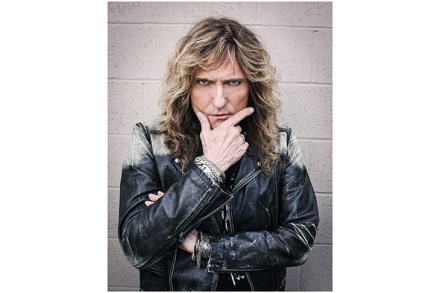
‘Invest in your hair,’ advises David Coverdale, a man with a shag of the stuff glossier than a supermodel’s and as big as a guardsman’s bearskin, even at the age of 67. (He won’t say that number. He insists his age is ‘three score and seven’.) ‘People say to me: “Do you colour your hair?” And I say: “Absolutely not.” ’ He pauses for half a beat. ‘ “I have a super hairdresser who does it for me.” Some guy came on Instagram, telling me: “Come on, David, it’s time to get rid of the wig.” It’s not something I bought from Frederick’s of Hollywood, you silly bastard! It’s a crowning glory!’ David Coverdale’s hair matters because of who and what he is.

Fashion victims

There is something inexplicably exciting about pop’s notion of a ‘scene’: young musicians of similar outlooks drawn together by a common aim to transform music, referring to the past to create something of the present. But enough of Fleetwood Mac and the British blues boom. Instead, to fashionable Dalston, where a young quartet called Black Midi played to an uncomfortably full room in a converted cinema.

The grrrls are back in town

The last time Bikini Kill played in London was in a room that now serves as the restaurant of a pub in Kentish Town. What a change 26 years can bring: on their return to the city last week, they filled the 5,000-capacity O2 Academy, Brixton, for two nights. That changed status, in truth, is not the result of the timelessness of their music — scrappy punk rock that at its most tuneful was pleasingly familiar and at its least tuneful approximated the sound of fingernails scraping down a blackboard at extreme volume. So why had 10,000 people bought tickets to see them in London?