Music

Apocalypse chic: Autechre, Last Days and Southbank’s Xenakis day reviewed

It was so dark, my friend noted, you could have had sex or done a Hitler salute. No stage lights, no stair lights, no desk lights, no door lights, no usher lights, no exit signs. The few wisps of illumination that did steal in created colossal shadows, giants freeze-framed on the walls. In these snatches the wooden ribcage interior of the Barbican Hall looked demonic. A few photons lit up the Autechre boys, Rob Brown and Sean Booth, who flickered like blue flames rising from a hob. A few more nudged into view the ceiling that had become a vast charcoal grisaille. When, occasionally, someone left, the tiny glowing portal that appeared made it feel as though we were at the bottom of a cavernous well.
Apocalyptic minimalism: Carl Orff’s final opera, at Salzburg Festival, reviewed

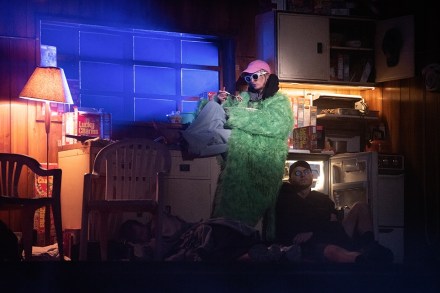
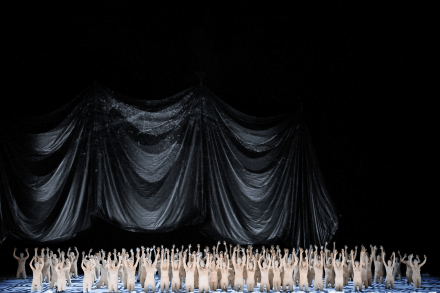
‘Germany’s greatest artistic asset, its music, is in danger,’ warned The Spectator in June 1937. Reporting from the leading new-music festival in Darmstadt, the correspondent mentioned only one première of the two dozen on offer: ‘The most important achievement was the scenic cantata Carmina Burana by Carl Orff, a piece that would have been impossible without the influence of the “cultural Bolshevik” Stravinsky.’ He’s not wrong: give Stravinsky’s Les Noces some nail clippers and a face scrub and you get Orff. Carmina Burana can today seem irredeemably boorish and kitsch. But you can see how the piece’s hiccupy primitivism might have once startled.

How I fell in love with the blues

I was never into the blues that much. I listened to a bit of Roy Buchanan and Rory Gallagher but only as accidental overspill from rock. I knew the Rolling Stones’s sound came out of their love of the blues but what they added was more important (to me) than what they took. And then there was Eric Clapton. In common with a discerning portion of the British population, I loathed Clapton after his drunken endorsement of Enoch Powell’s rivers-of-blood speech. Even if I’d somehow let that slide, I could never forgive him for ‘Tears in Heaven’ which was like having a bucket of oversweetened bilge water poured over one’s head.

The sound of a hunch coming good

Joan Wasser is New York loud. Her resting register is CAPS LOCK, rising to flashing neon when roused to laughter or, occasionally, indignation. ‘I was born a very expressive person,’ says the singer. ‘I was always talking to people in the street that I didn’t know. I’m not super afraid of expressing how I feel, and I take chances very quickly.’ Bold spontaneity has served her well. The Solution is Restless, Wasser’s latest album as her artistic alter ego, Joan As Policewoman, is the sound of a hunch coming good. The record stems from a single day spent extemporising with her friend David Okumu and the late and legendary Afrobeat drummer Tony Allen.

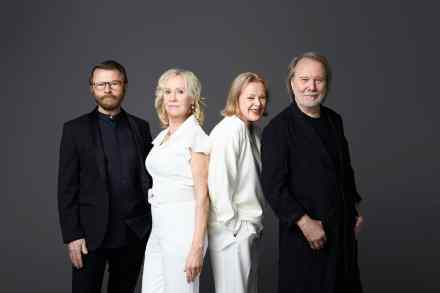
Oh dear, Abba’s new album is a bit of a dog: Voyage reviewed

I assume that somewhere on the guided ‘Piers and Queers’ walking tour of Brighton, the participants are enjoined to regard, in awe, the Dome — the venue at which Abba, on 6 April 1974, won the Eurovision Song Contest, thus both launching themselves as a wildly successful band and establishing the town (as it was then) as a mecca (probably the wrong choice of word there) for the UK’s swiftly growing gay community. Hitherto it had been a rather frowsy, Tory-voting seaside resort, best known for dirty weekends and petty villains. The Swedes won with ‘Waterloo’, of course, which may have provided our nation with some much-needed succour. A remembrance of good things past.

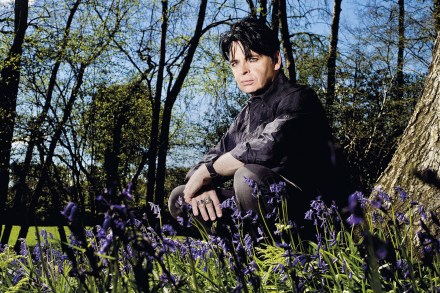
‘My voice is a curse’: Gary Numan interviewed

Reading the opening chapter of Gary Numan’s recent autobiography, (R)evolution, I start to get the odd feeling that I could just as well be reading about my own early life. Like Numan, I grew up near Heathrow and found the aircraft that flew over our house beautiful and magical. My parents were working class and worked hard and supported me all the way. Like Numan, I wanted to be a pilot, and a rock star. And like him, I never quite fitted in. Perhaps I could have formed a seminal band, become a pilot in my spare time and moved to LA. But then I don’t have that voice, or that talent. Never mind. I am chatting to him by Zoom. He’s in his LA home and eagerly awaiting the release of his 18th solo studio album, Intruder.

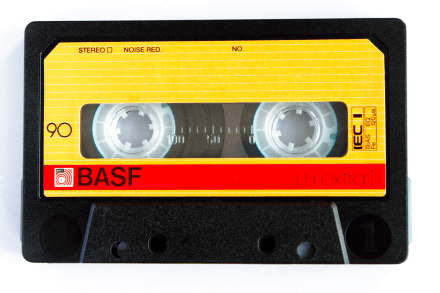
The mystery and romance of the cassette tape

May the gods of Hiss and Compression bless Lou Ottens. As head of new product development at Phillips, the Dutch engineer invented the compact cassette in 1963 and changed music for ever. Ottens died last week at 94. A good age, and a good number. You could get a full album on each side. For many of us born in the 1970s, who came of age musically in the 1980s and 1990s, the blank cassette has an unkillable romance. We measured our lives in spools of magnetic tape: C60, C90, the occasional C46. Inside those hard plastic shells we surfed the thin end of the aural wedge, composing scrappy love letters in the medium’s notoriously tinny register — no bass, all treble. Tapes were desirable not for their audio quality, which was sub-prime, or aesthetic appeal.

In Chet Baker’s albums you can hear America’s romantic self-image curdling

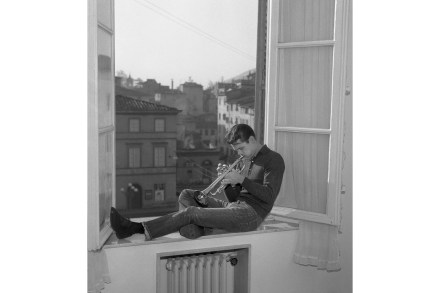
The thing to remember about Chet Baker, an old acquaintance says of the errant jazz musician in Deep In A Dream, James Gavin’s exemplary 2002 biography of Baker, is that ‘he can hurt people even after he’s dead’. Baker could be dangerous but mostly he hurt himself. He died, squalidly, in 1988, and his music, at least, can still wound. In Baker’s oeuvre the ballads are deep blue and the up-tempo tunes are somehow tinted even darker. The ‘jazz James Dean’, the ‘Prince of Cool’, Baker was extremely pretty in his younger days and made music that cast a similar enchantment. His trumpet style was lyrical, his singing voice light and seductive.

‘I like upsetting people’: Steven Wilson interviewed

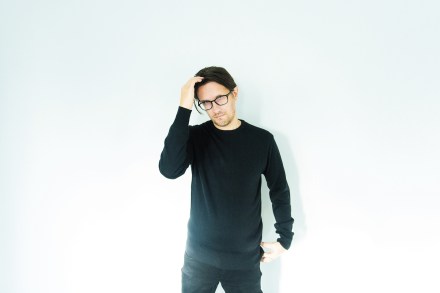
Steven Wilson is going about becoming a pop musician entirely the wrong way. For one thing, he’s into his fifties, not typically the point in life at which budding chart-botherers launch their assault on hearts and minds. For another, in an age in which pop stardom and identity politics have become entwined — in cultural discourse, at least, even if not necessarily in your teenager’s listening habits — he has everything going against him. ‘I come from a very well-adjusted family. I’m heterosexual. I’m white.’ Of course, Wilson doesn’t really expect to be competing against Stormzy and Dua Lipa and Cardi B.

‘We knew there was greatness in these songs’: Steve Diggle of the Buzzcocks interviewed

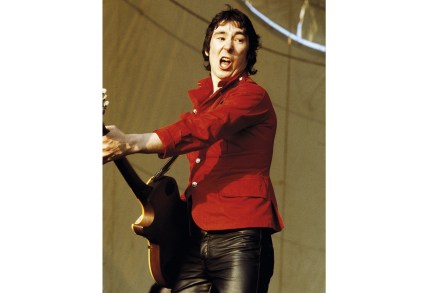
Steve Diggle hasn’t spent this long away from a stage in 40-odd years. For the Buzzcocks guitarist, like everyone else, 2020 was a year of thwarted plans. Instead of touring Britain and America, Diggle spent the year in ‘self-analysis’ and writing a new album. What else for an ageing punk to do? Except, of course, curate your legacy, grapple with the past. When Diggle joined Buzzcocks in 1976, originally as the bass player, he didn’t imagine he would still be flying the flag 45 years later. It’s both a blessing and a curse. Though his band remains a going concern, the songs that shift tickets were written half a lifetime ago. ‘Ever Fallen In Love (With Someone You Shouldn’t’ve)’, ‘What Do I Get?

‘You can’t have opinions any more’: Rick Wakeman interviewed

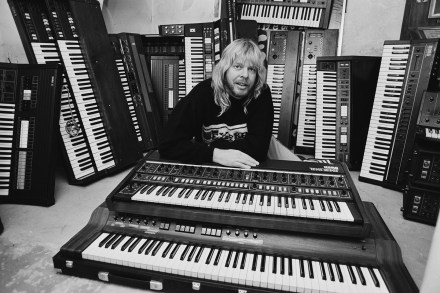
‘Classic rock’ is a rather fusty old oxymoron, but then the term ‘classic’ is applied these days to chocolate bars and that most in-demand of consumer undurable, lavatory paper, so I suppose one shouldn’t complain. Covid-19 will probably be remembered as a ‘classic virus’ one day not too soon, when there are other more baleful new-wave viruses with spiky hair pogoing around. ‘Classic rock’, meanwhile, is a term applied to the sort of chest-beating rawk that people of my generation admire: the Who, Bad Company, Blue Oyster Cult insisting, in timely fashion, that we should embrace death, and Lynyrd Skynyrd informing us, with unforeseen irony, that they can fly, free as a bird.

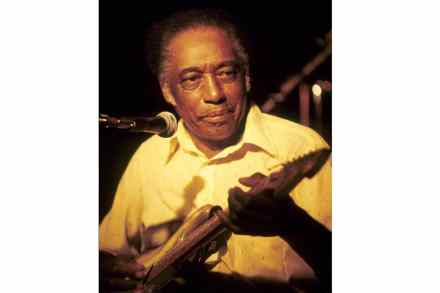
The dazzling, devious, doomed sound of James Booker

Dr John called James Booker ‘the best black, gay, one-eyed junkie piano genius New Orleans has ever produced’. Booker died in 1983 at 43, ruined by drugs, drink and madness. Though he appeared on plenty of other people’s records and stages — Dr John, Aretha Franklin, B.B. King — Booker recorded only three studio albums in his lifetime. Classified, recorded in October 1982 and now re-released on vinyl, was the last of them. It might not be the best of them, but it shows why Booker was one of the greats. The studio was booked for three days, but Booker had a breakdown the week before and couldn’t get a good take in the first two days. He revived on the third and recorded Classified in four hours.

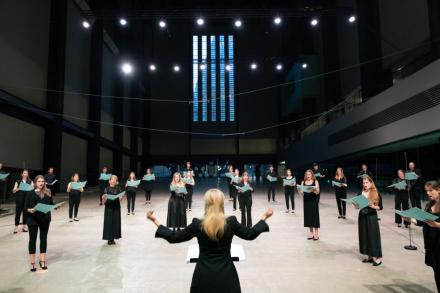
I don’t know when I’ve been more moved: Ora Singers at Tate Modern reviewed

It’s the breath I miss most. The moment when a shuffling group of men and women in scruffy concert blacks breathe in as one and become an ensemble. Now that our breath is diseased, shrunk from, masked, now that performances are digitally distanced and filtered, smoothed and flattened out on screens, there’s something dangerously poignant about that physical swell of inhalation and exhalation that sets the air in motion at the front of a concert hall. Which is why, when I heard that 40 singers would be coming together in Tate Modern’s Turbine Hall to sing Thomas Tallis’s Spem in alium, I twitched with need to be there.

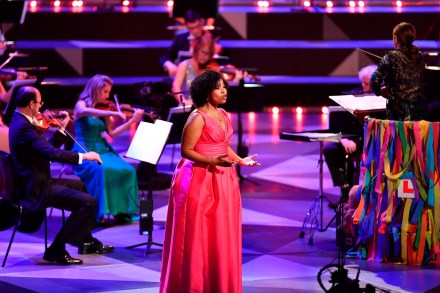
Affectionate and unthreatening, just like usual: Last Night of the Proms reviewed

The Last Night of the Proms came and went, and it was pretty much as anyone might have predicted, if they’d given it a moment’s thought. A sprinkling of popular classics, a pair of unthreatening premières, the familiar landmarks tastefully and affectionately done, and some show tunes and arias, sung by the soprano Golda Schultz with a generosity and warmth that couldn’t have been more potent if she really had been singing to a packed and cheering Royal Albert Hall, rather than TV cameras and emptiness. It was recognisably a Last Night of the Proms: celebratory in that slipper-wearing BBC way, without ignoring the unavoidable truth that you can’t have audience participation without an audience. And after all that fuss, too.

Why orchestras are sounding better than ever under social-distancing

Our college choirmaster had a trick that he liked to deploy when he sensed that we were phoning it in. He ordered us out of the choirstalls and positioned us at random all over the chapel. It was sadistic but effective. With nowhere to hide, there could be no quiet fudging of that awkward leap in ‘O Thou the Central Orb’, and no waiting until after a more confident neighbour had begun their note before scooping hastily (and hopefully unnoticeably) upwards to match their pitch. Every singer became a reluctant soloist. The result was usually either mutiny, or an immediate and dramatic improvement in tone, tuning and ensemble.

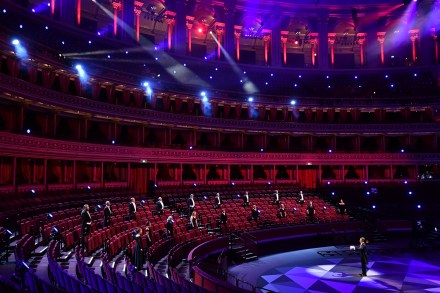
Couldn’t the BBC have filled at least some of the seats? First night of the Proms reviewed

The Royal Albert Hall, as Douglas Adams never wrote, is big. Really big. You just won’t believe how vastly, hugely, mind-bogglingly big it is. Which is great if you want a colossal audience; less great as a venue for classical music. True, sound engineers have brought us a long way from the 19th century, when one critic (it might have been Bernard Shaw) described a Weber overture wafting around that cavernous acoustic like a feather caught in a draught. If you tune in to Radio 3 — which is how most listeners have always heard the Proms — it sounds fine. But it wouldn’t be anyone’s first choice of venue for a series of classical concerts unless, as mentioned, you’re expecting a vastly, hugely, mind-bogglingly big audience.

Enter the parallel universe that is the Lucerne Festival

There wasn’t going to be a Lucerne Festival this year. The annual month-long squillion-dollar international beano got cancelled, along with the rest of Europe’s musical life, round about the time that we were all starting to get bored of banana bread. Then suddenly, in late July, it was on again. The Swiss government authorised distanced and masked audiences of up to a thousand, and a series of nine concerts was rapidly improvised with locally available talent — which, when you have the determination, contacts and (crucially) bank balance of the Lucerne Festival, means people such as Cecilia Bartoli, Igor Levit and, for these opening concerts, Martha Argerich and Herbert Blomstedt, plus a scaled-down Lucerne Festival Orchestra.

Britain’s choirs are facing oblivion

Britain’s choirs are facing oblivion. Yet they’re also terrified of returning. One story explains why. Picture this innocent choral-society scene in Skagit County, Washington State, on the evening of 10 March. One-hundred-and-twenty singers, most of them elderly sopranos, gathered in the Presbyterian church to rehearse for two hours, their chairs 15cm apart. At half-time they took a break for shared snacks, and at the end the helpful ones stayed to stack the chairs. Fifty-two of those singers came down with Covid-19, supposedly through the release of aerosol droplets in the ether. Thus began the swirling of rumours across the world about the grave dangers of singing.

After weeks of silence, Royal Opera reopened with a whimper

It was the fourth time, or maybe the fifth, that I found myself reaching for the tissues that I began to feel suspicious. Somewhere between the poignant gaiety of A.E. Housman’s ‘…lads that will never be old’, Shakespeare’s tender valediction ‘Fear no more the heat o’ the sun’ and Strauss’s ‘Morgen!’, with its rapturous vision of a never-reached tomorrow, emotion turned to manipulation. You can’t engineer catharsis (though you can score it to music), and this attempt felt like something a visit to the Royal Opera House has rarely felt like before — cheap. It wasn’t that there was anything wrong with the performances at this first in a series of live-streamed concerts.

Drunk singers, Ravel on film and prime Viennese operetta: the addictive joys of classical YouTube

The full addictive potential of classical YouTube needs to be experienced to be understood. And let’s be honest, there are only so many lockdown videos the human spirit can take. Which is why, on a sunny spring afternoon, in the prime of life and health, I find myself watching the late John Cage stroking bits of wire with a feather. The haircuts suggest that we’re in the early 1980s, and a Ron Burgundy type is floating across the screen in a little box. ‘It’s been said that listening to John Cage’s music is like chewing sand,’ he explains, unhelpfully. It seems that we’ve also been watching a live performance by the German artist Joseph Beuys. And that we’re now going over to a firework display at the Pompidou Centre.