Music

The best recordings of the greatest symphony

I am daunted. Bruckner’s Eighth Symphony is a work that I regard with love, awe and even anxiety. I always wonder whether I’ll be able to cope with such large and deep demands on me and, if I hear a performance or recording that doesn’t disappoint me, be able to articulate why I find it so powerful, one of the supreme masterpieces of Western music, the greatest of symphonies. With musical works that one has the strongest kinship with, there is, as everyone finds, an urgent need to locate the qualities that make it so penetrating an experience, combined with misery at the gap between how one responds and what one feels able to say.

Michael Tanner remembers the greatest musical experience of his life

No surprise: the greatest musical experience of my life was Parsifal at Bayreuth in 1962. I thought at the time that I would never again be so moved by a performance of anything. I have kept an open mind ever since, and still it takes me no time or effort to answer the question. Obviously I can’t discuss here why I regard Parsifal as a supreme work, but even if I thought that Wagner had written greater ones, or that some other master composer had — in fact, I do think there are several works by four composers that are as great as Parsifal, though at that altitude rankings and comparisons become absurd — what I experienced in Bayreuth that year was unique and unpredictable.

The musical benefits of not playing live

Glenn Gould considered audiences ‘a force of evil’. ‘Not in their individual segments but en masse, I detest audiences.’ He retired from public performance on 10 April 1964, at the age of 31, having given fewer than 200 public recitals. The Canadian classical pianist had longstanding philosophical objections to the ritual of performing live. He found applause automatic and insincere, and often asked spectators not to bother. He even wrote a (partly) tongue-in-cheek manifesto, the Gould Plan for the Abolition of Applause and Demonstrations of All Kinds, in which he called for clapping to be banned. Gould believed that the most useful and honest response to music came following a period of solitary reflection, rather than as instantaneous public display.

The best recordings of my favourite Passion

In the autumn of 1632, a man called Kaspar Schisler returned home to the small Bavarian town of Oberammergau. He didn’t walk through the gates in daylight, but waited until night, sneaking in past the tower guards. A few days later he was dead from the plague that was swelling and blistering its way across Europe — a plague which, until that point, strict quarantine had kept out. Within a year it had killed a quarter of the town. The remaining residents gathered together and made a vow: if they were spared, they would stage a play of the life and death of Jesus, and would continue to do so every ten years in perpetuity.

If your instinct is to undermine Beethoven, you’re directing the wrong opera: Fidelio reviewed

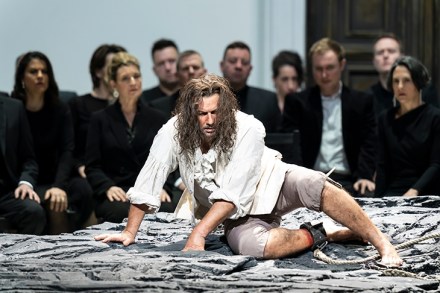
‘People may say I can’t sing,’ said the soprano Florence Foster Jenkins, ‘but no one can ever say I didn’t sing.’ There were groans of dismay as an official walked out before the start of the Royal Opera’s new Fidelio: Jonas Kaufmann was not feeling on top form, but he was going to perform the role of Florestan regardless, and begged our indulgence. The mind plays tricks and after an announcement like that it’s hard to be entirely sure whether you’re hearing a skilfully proportioned interpretation or a singer dialling it down. But let the record show that Kaufmann did sing, and if you’ve booked for this production on the strength of that magic name alone, you can breathe easy.

Grimes has talent – but not at writing songs: Miss Athropocene reviewed

Grade: B The old axiom no longer applies. In modern popular music, it is possible not only to gild a turd, but to gild it so copiously that consumers scarcely catch a whiff of the ordure underneath. The studio is everything: you no longer need to be able to sing, write a tune or play an instrument — with enough electronic manipulation your turd can still become an epic and convince the perpetually gullible rock and pop press that something Important is taking place. In a sense, then, the other old axiom is also redundant: in pop music today, you can fool all of the people all of the time. The Canadian musician Grimes is not quite at turd level: there is some talent there, although I’m not sure quite what it is.

Weill’s Broadway opera is made for telly: Opera North’s Street Scene reviewed

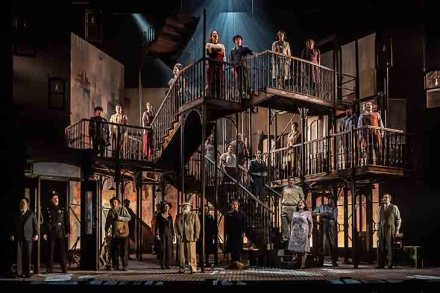
It’s a sweltering night in Manhattan, circa 1947, and on the doorstep of a brownstone tenement three women are waiting for their menfolk to return. There’s plenty to gossip about. The Hildebrands upstairs are being evicted tomorrow, and the Buchanans are expecting a baby. And what’s the deal with Mrs Maurrant and Steve the milkman? Old Mr Kaplan reads the newspaper and denounces the bourgeoisie. A kid cadges a dime and big, kind Lippo Fiorentino arrives home from work with ice creams for everyone. At which point it becomes fairly safe to conclude that the America of Kurt Weill’s Street Scene is not the America of his Mahagonny. Forget the acid harmonies and hard-left caricatures of his Berlin collaborations with Bertolt Brecht.

The rancid meanderings of a long-spent wankpuffin: Justin Bieber’s Changes reviewed

Grade: D– For my first review of popular music releases in 2020 I thought I’d deposit this large vat of crap over your heads. This is the fifth album from Canada’s androgynous, tattooed bratlette — purveyor of corporate trap dross to the world’s pre-pubescent thots, skanks and wannabe hos. Trouble is, even for the dumbest of the world’s unter-mädchens, Bieber’s schtick has long since worn a little thin. So his new album is called Changes, which is the only echo of David Bowie you will find within. But as Justin puts it on the title track: ‘Tho I’m goin thru changes, don’t mean that I’ll change.’ No indeed, well put.

Best gig of the week: the fuzzy, slacker melodies of teenage quintet Disq

Come January, when the proper pop stars are all in the gym working off the pounds before they emerge, blinking and svelte, into the watery winter sun, the small venues of London attempt to pack in the curious by filling their schedules with seasons of up-and-coming artists. In east London this past week, the excellent promoter Eat Your Own Ears ran three free nights of new acts. In Islington, the Lexington offered first the Winter Sprinter — five nights of sweet-toothed indie pop, where you might have caught the Portland Brothers, the occasional duo featuring Steven Adams, once of the Broken Family Band, and the best songwriter almost no one in the country has heard of — and then the Five Day Forecast, in conjunction with the new music website the Line of Best Fit.

Beer, sweat and jockstraps: the real history of the CBSO

In childhood, the theme tune to The Box of Delights was the sound of Christmas. The melody was ‘The First Nowell’ but that wasn’t what cast the spell. It was the way the harp glinted and pealed, and the eerie wisp of the ‘Coventry Carol’ that drifted through on muted violins: a masterclass in orchestration for a BBC teatime audience. After inquiries at Circle Records in Liverpool (this was pre-Amazon), my father established its identity: the Carol Symphony, by a composer with the pleasingly Edwardian name of Victor Hely-Hutchinson. And that was that, for me anyway, until three decades later, rifling through the archive of the City of Birmingham Symphony Orchestra, I noticed the initials ‘VHH’ on files from the 1940s.

A son-et-lumière spectacular: The Chemical Brothers at the O2 Arena reviewed

How does one account for the phenomenon that is the Chemical Brothers, a quarter of a century on from their first records, just getting bigger and bigger? Only now are they touring the arenas of the UK for the first time. They’re nominated for a Grammy. Their current album, No Geography, is a top-five hit. Wasn’t the 1990s dance-music explosion meant to have ended with, well, the 1990s? They’re not alone either: Underworld, too, are now playing arenas, and not just to people who want to shout the refrain to ‘Born Slippy’: ‘Lager! Lager! Lager! Lager!’ Perhaps there’s something in the fact that neither group was completely contained by dance music.

One hell of a concert: Opera North’s Bluebeard’s Castle reviewed

Freud knew something about fear. Not the sudden shock of terror, but the creeping, sickening, slow-burn horror of the uncanny. A haunted house might make us jump, but how much more pervasive is that fear when the house is our own home, the monsters our own family, our own self even? It’s when the familiar becomes the unfamiliar, when the telephone call is coming from inside our own psyche, that the chills really build. Bartok knew this too. ‘Where is the stage — outside or within?’ asks the spoken Prologue to his one-act opera Bluebeard’s Castle — the young composer’s take on the classic fairytale of a curious wife, her mysterious new husband and his many locked doors.

Sadistic and repellent and thrilling: Mascagni’s Iris reviewed

If you’ve ever felt that poor Madama Butterfly had a bit of a raw deal, then you really, really don’t want to know what happens in Mascagni’s Iris. Take that as a spoiler alert: our Japanese heroine is so young that as the opera opens, she’s playing with a doll. She’s abducted, installed in a brothel and offered up for the delectation of a noble client, whose advances she is too innocent to comprehend. Disowned by her blind father, by the beginning of Act Three she’s literally lying in a sewer listening to disembodied voices telling her that nothing could have prevented this outcome. Obviously, it sounds exquisite. You don’t have to be a social justice warrior to find Iris a bit much.

Rap that feels like a sociology lecture: Loyle Carner at Alexandra Palace reviewed

A few years ago, I asked the young American soul singer Leon Bridges — a latter-day Sam Cooke, with the old-fashioned song arrangements to match — if he ever pondered the incongruity of being a black man, backed by a white band, playing music in the African-American tradition to audiences that (in the UK at least) were almost entirely white. ‘I have a song called “Brown Skin Girl”,’ he replied, ‘and I ask “Where my brown-skinned girls at?” And there’s maybe one or two in the crowd. It’s a little awkward sometimes.’ His words came to mind watching Adia Victoria.

Handsome and revivable but I wasn’t moved: Royal Opera’s Death in Venice reviewed

Premièred within two years of each other, Luchino Visconti’s film and Benjamin Britten’s opera Death in Venice both take Thomas Mann’s novella as their starting point. But from shared beginnings the two works diverge dramatically. The cloying visual beauty of the film, its pink-and-grey vision of Venice swaddled in Mahler strings, couldn’t be further from the stern, self-loathing austerity of Britten’s last opera, whose beauty is much harder won. The sea that pounds and dashes the Suffolk coast in Peter Grimes is lulled in Death in Venice into the queasy, syncopated swell of the lagoon, a miasma of heat and sickness rising from its waters.

Range and power – and amazingly she sang all her songs: Christina Aguilera at Wembley reviewed

In every respect bar its austere pews, the Union Chapel is one of the best venues in London: beautiful and atmospheric, it encourages concert-goers to listen rather than chat. There’s no bringing in booze from the bar, so you’re not disturbed by people going hither and thither (though the couple next to me had smuggled in a thermos of tea and a pack of Choco Leibniz). It suited the Delines, from Oregon, down to the ground. Though they released their first album only five years ago, the Delines are hardly a young band. They’re middle-aged and their songs are middle-aged: sad and weary laments for lives that have slipped out of focus.

Ravishing and poignant: ENO’s Orphée reviewed

Billy Wilder, asked for his opinion of Andrew Lloyd Webber’s musical version of his movie Sunset Boulevard, famously replied: ‘Those boys hit on a great idea. They didn’t change a thing.’ I don’t think you could say exactly that about Netia Jones’s new staging of Philip Glass’s Orphée, a piece that takes the script of Jean Cocteau’s 1950 film and turns it into — well, into an opera by Philip Glass. Cocteau’s shimmering cinematic imagery (think Man Ray come to life) defies physical realisation, so Jones and her designers Lizzie Clachan (sets) and Lucy Carter (lighting) have found poetic, often blindingly beautiful theatrical equivalents.

Why are Haydn’s operas so lousy? La fedelta premiata reviewed

There’s a book about musicals that every opera lover should read. Not Since Carrie by Ken Mandelbaum is a history of musical theatre’s greatest flops: a comprehensive study of the thousand ways in which a collaborative artform can crash and burn. It’s unbelievable stuff. The Broadway cast of 1961’s Kwamina participated in a voodoo ritual to neutralise the show’s critics (English National Opera is rumoured to be planning something similar). Adverts for Jule Styne’s Subways Are for Sleeping were banned from New York public transport after vagrants took them as an invitation to spend the night on board.

Fascinating and compelling: Bruce Hornsby at Shepherd’s Bush Empire reviewed

In the unlikely event that Bruce Hornsby and Morten Harket, A-ha’s singer, ended up featuring in the Daily Mail for, I don’t know, getting into a fight in a supermarket over the last luxury Scotch egg, they would be described as ‘“The Way It Is” hitmaker’ and ‘the “Take on Me” star’. In neither case, I suspect, would that be how they would choose to be remembered. In Hornsby’s case, I know it’s not, because he told me so earlier this year. And when he played that song — a piece of high-class MOR so persuasive that it’s been sampled by hip-hop stars and used incessantly in TV montages since 1986 — at his London show, he introduced it by saying it was ‘why some of you are here.

The open-hearted loveliness of Hot Chip

Squeeze and Hot Chip are both great British pop groups. But they never defined a scene. Their ambitions extended further than being hailed by a few hundred people in bleeding-edge clubs. Squeeze piggybacked on punk, but they were quite evidently never a punk group, even if they dressed up as one. They were of the street rather than the art school, but they had no interest in gobbing, and Chris Difford was able to turn vignettes of everyday London life into three-minute comic dramas. (Perhaps he had more in common with John Sullivan — another south Londoner whose characters combined humour and pathos in his scripts for Only Fools and Horses — than he did with Joe Strummer.